
File | Version | LU | Date | Modifications |
| Reporting | 39.0 | Reports | 21.11.2025 | there was a double chapter 34 and 39; I deleted the chapter 39 and Icorrected the numbering 40 41.. |
Horizontal and Vertical Integration | 36.0 | 12. Payroll entries – automated Homere interface | 12.03.2025 | Permois import: to display a clear error message in the case that the column “name” is empty |
Reporting | 35.0 | 39. Liquidity position and Liquidity balances | 20.Dec.2024 | OCA : Improvement in the liquidity balance report (legal report) |
Horizontal and Vertical Integration | 34.0 | 12. Payroll entries – automated Homere interface | 16.09.2024 | Add the UUID check in the PERMOIS import |
Horizontal and Vertical Integration | 34.0 | 12. Payroll entries – automated Homere interface | 16.09.2024 | Homere interface – take employee from the new file staff_l |
Reporting | 31.0 |
| 14.Dec.2023 | Reporting: “Field Balance specification report” |
Reporting | 28 | 34. Liquidity position and Liquidity balances | 03.03.2023 | To improve the Liquidity Balances report: to be able to select from the HQ all the liquidity balances (Coordo and project) |
Horizontal and Vertical Integration | 28 | 16. Import-Export | 03.03.2023 | Remove the possibility of partial import for automatic import of international staff (employees) (let possible ONLY the TOTAL import) |
Horizontal and Vertical Integration | 26 | HQ Entries (chapter 13) | 15-Sep-22 | To sync up the HQ Entry if the CC is not targeted |
UNIFIELD V25.0 RELEASE NOTES
Release Details
Release version: UF 25.0
Date of production synchronization server patch: 15-June-2022 / 18:00 Geneva time
Latest user rights files updated: UF24.1 can be found here
Note that no user rights need to be loaded at each HQ. This will be done at the Sync Server by the Core team and will update the user rights via Sync for all HQs and missions.
JIRA filter for all integrated tickets: https://jira.unifield.org/issues/?filter=12420
Supply
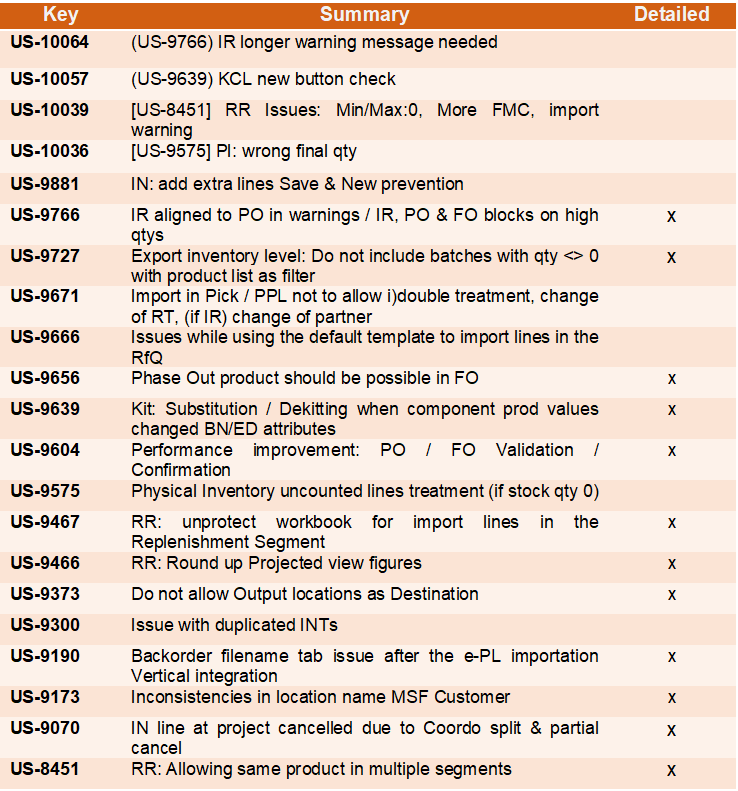
(US-9766) IR aligned to PO in warnings / IR, PO & FO blocks on high qtys
This ticket aligned the warning messages in the IR to the ones in the PO/FO, and also added some extra checks to avoid excessive digits for Qty / amounts which previously had caused issues. Now for IRs, FOs and POs, adding a line with Qty more than 10 digits is not allowed and warning message is displayed. For IRs, line-level check is made on result of the Quantity x Unit Price that it does not exceed 10 digits, and also for IRs at document level there is a check if total amount/value has more than 15 characters. Warning messages are displayed for all of these cases.
(US-9727) Export inventory level: Do not include batches with qty <> 0 with product list as filter
This ticket raised by OCA, for the inventory level export, when a location and a specific product list have been chosen, and in case there is a product with many batches and zero stocks, reports will exclude the batches with 0 stocks and include one line for the product with zero qty.
(US-9656) Phase Out product should be possible in FO
This ticket raised by OCA to assure that FO with external and internal customer could have “Phase out” products added/validated, and the check for sourcing external or internal will be in OST.
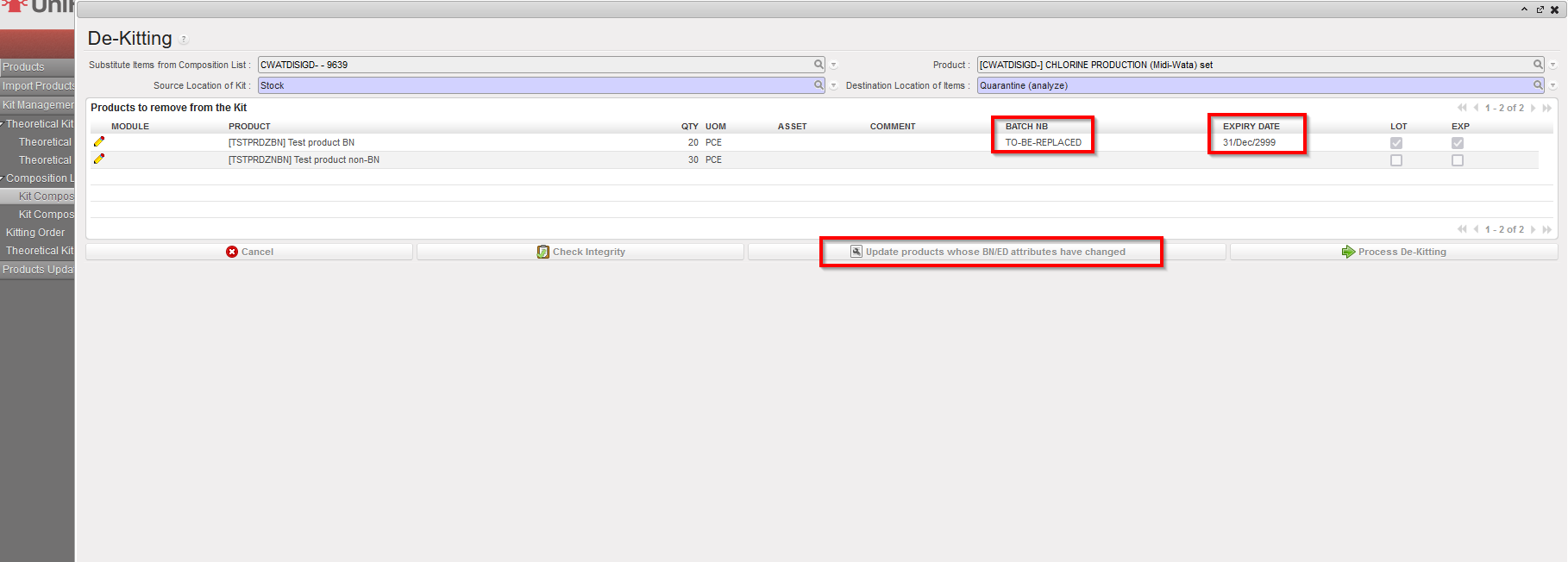
(US-9639) Kit: Substitution / Dekitting when component prod values changed BN/ED attributes
This improvement requested by OCG, will enable the processing of KCL De-kitting or Substitution for products with BN/ED attributes which have changed. Now there is an extra button “Update products whose BN/ED attributes have changed” which appears in KCL processing window. When button is used, any affected products will have their BN/ED info removed, or have default BN/ED info added (as per original ticket ). Action only updates products in this KCL window.
(US-9604) Performance improvement: PO / FO Validation / Confirmation
This ticket raised by OCB, to improve the system performance and decrease the time needed in PO validation/confirmation, and for applying the CDD on all lines, especially for the POs which consists of many lines.
(US-9467) RR: export empty template in the Replenishment Segment
This request raised by OCB, is to enable users to export improved template from an empty RR Replenishment Segment. Now if user exports excel (via Action menu) from an empty Replenishment Segment, the export template has 5 empty lines. These can be filled in the normal way to import lines onto the Segment.
Menu: Warehouse > Replenishment Rules > Configuration > Replenishment Segment
(US-9466) RR: Round up Projected view figures
This improvement raised by OCB, to decrease the digits of the months of supply and projected months in the Replenishment Rules Inventory Review excel export:
The values in the following columns are now rounded to 2 decimal places:
- months of supply (RR-AMC)
- months of supply (RR-FMC)
- Projected MX (month)
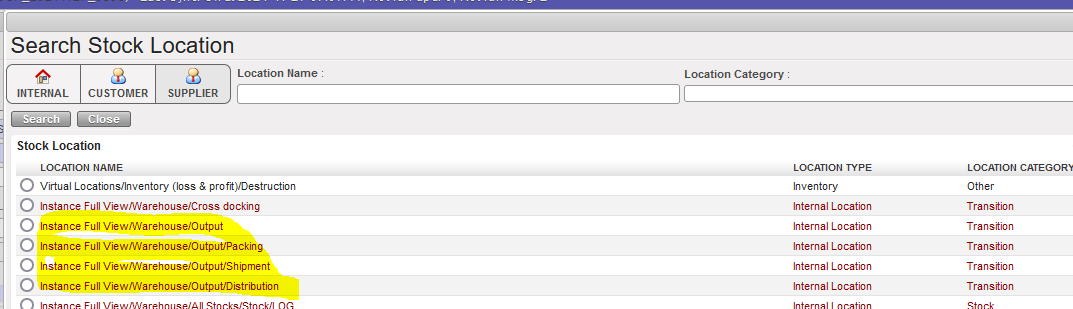
(US-9373) Do not allow Output locations as Destination
OCA requested this improvement to remove the output locations (Output, Packing, Shipment, Distribution) from the destination location in the INT from scratch, to avoid any inconsistent data in these locations, and to be consistent with the IR’s destination locations as well as including Quarantine and Destruction.
(US-9190) Backorder filename tab issue after the e-PL importation Vertical integration
This improvement requested by OCB, means that in the Incoming shipment from ESC, which is updated through the e-PL importation, in the Notes tab, any “filename” relates only to files imported on the specific IN which was updated by import. Back order INs without direct VI import should have this field blank.
(US-9173) Inconsistencies in location name MSF Customer
This ticket raised by support team after noticing that some instances in different sections contain created / configured locations with the same name “MSF Customer” as the default location. With this ticket, all those manually configured locations which have the same name or some variation of name of MSF Customer location have their location(s) changed to “Other_MSF_Customer”, and then users can de-activate the locations which are not in use.
(US-9070) IN line at project cancelled due to Coordo split & partial cancel
This important ticket was raised by OCA, and had previously led to many issues with incomplete/incorrect flows as the splitting of a line and then cancellation of one part of a split line led to all of the line in other document or instance being cancelled. This has now been resolved for all of the Test cases outlined in ticket.
(US-8451) RR: Allowing same product in multiple segments
This ticket, raised by OCA introduces more flexibility into Replenishment Rules Replenishment Segments, and means that one product may be present across several segments belonging to the same Location Configuration as long as the product does not have an active value (FMC/Min Max or Auto Supply) in overlapping periods. When a product is active in one period of an RS, any other RS in which it is present must have the value “0” for this period. A product can be present in up to 3 active Replenishment Segments belonging to the same Location Config, and these Segments can have different types of RR applied. Having the same product in multiple RSs implies that all of the RSs involved must have the “Specific Periods only” checkbox ticked if the RR types are either Auto Supply or Min/Max, as was developed in US-8449 and implemented in release UF24.0
N.B. Please see Finance section of Release Notes to see further details of US-6475 ticket of addition of VAT corner to POs. and US-8567 also treatment of intermission partners.
All Supply tickets integrated in UF25.0
Finance
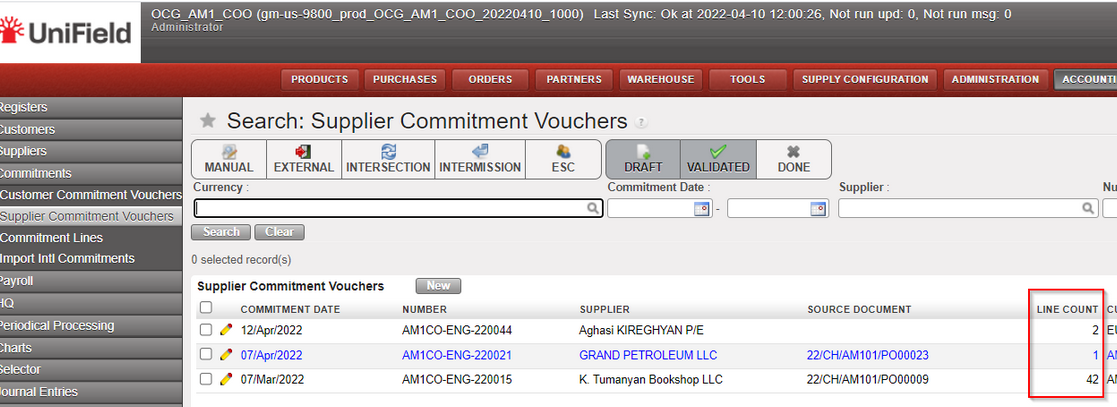
(US-9800) To add an additional count LINE column on the supplier and customer Commitment Voucher screens.
In the Supplier Commitment Voucher screen and in the Customer Commitment Voucher screen, we added the “Line count” column between “source document” and “currency”.
Go to Accounting >Commitments > Customer Commitment Vouchers /Supplier Commitment Vouchers
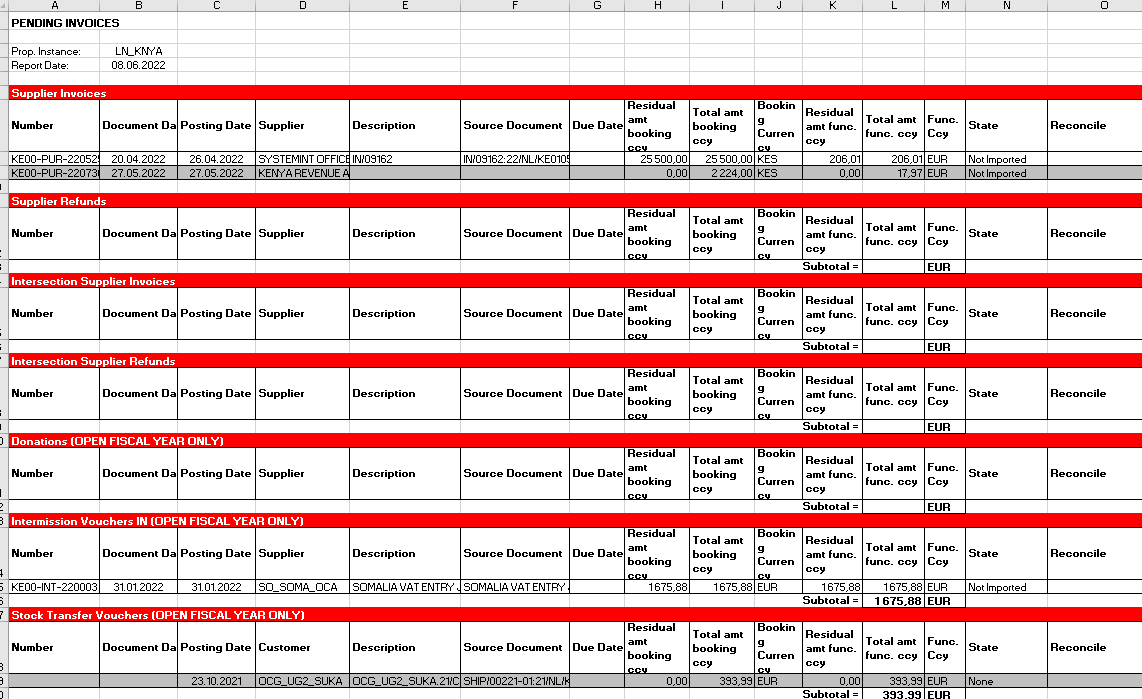
(US-9355) Changes in the “Open Invoices” Report (suppliers right action menu) – to add draft invoices and other
In the accounting/Suppliers/and submenus Supplier Invoices, Supplier Direct Invoices, Supplier Refunds, Intersection Supplier Invoices, Intersection Supplier Refunds, Donation, Intermission Voucher In), we have amended the content of the report named “Open Invoices”. The main issue is the addition of the drafts.
The new name is “Pending Invoices “. In French; “Rapport de factures en attente”.
It is placed in the right menu of the screen, with the other reports.
- For the Supplier invoices: we will have the open invoices before and the draft invoices after (drafts in light grey in order to distinguish Draft from Open).
- For the Donations: we will have the open and draft donations of the Open fiscal year + the donations in draft.
- For the Intermission Vouchers IN: we will have the Intermission Vouchers IN of the Open fiscal year + the IVI in draft.
- For the Stock Transfer Vouchers: we will have the Stock Transfer Vouchers of the Open fiscal year + the STV in draft.
Example:
(US-9213) Intermission/intersection: remove the step “missing information” IVI/ISI/ISR
When validating an IVI, ISI or ISR (Intermission Voucher IN, Intersection Supplier Invoices or an Intersection Supplier Refund), the user was asked to retype the total amount of the invoice. In the case it was not done, there was an error message, and the process was blocked.
This step did not have any added value and create an unnecessary step in a long and lasting process flow, so this step has been removed.
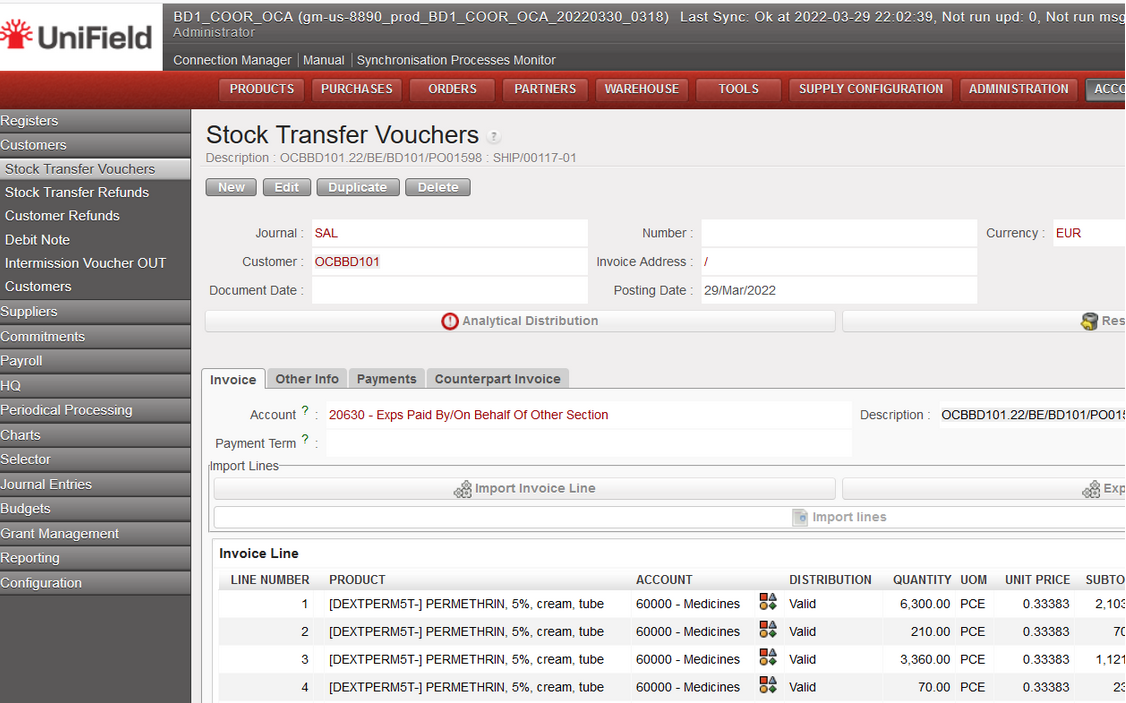
(US-8890) Intermission / Intersection: black color of the STV lines instead of blue
In order to align the behavior of STV invoice lines to the IVO or SI lines, we decided to put the lines in black (and not in blue).
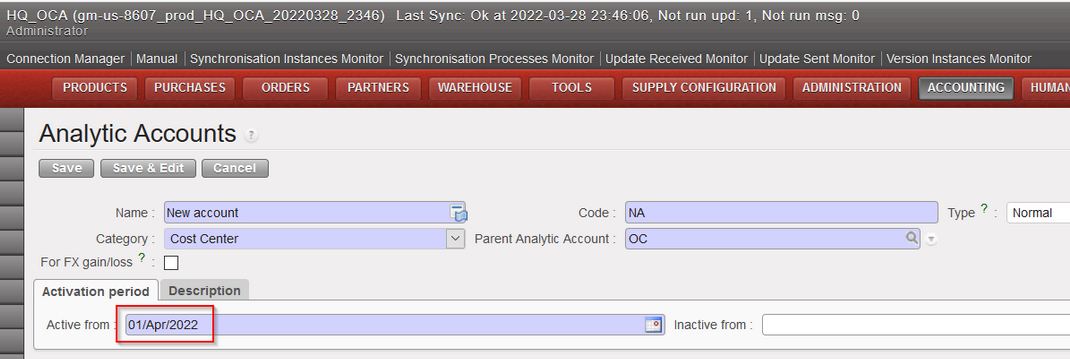
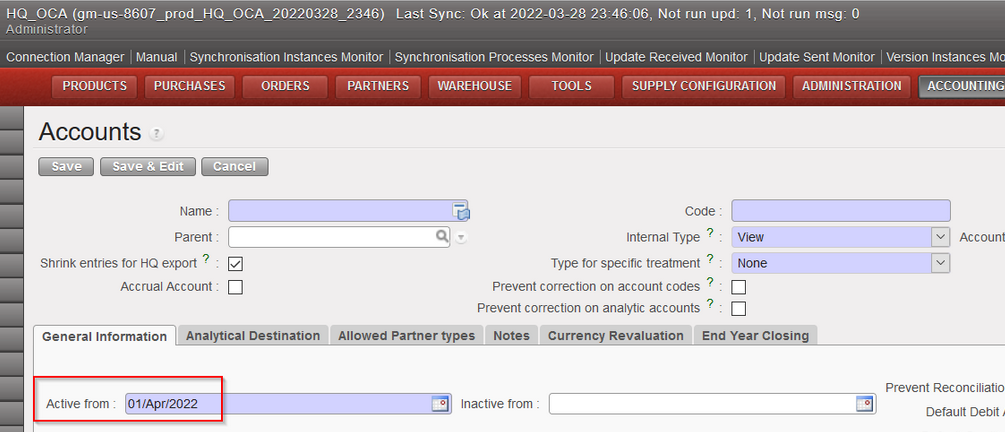
(US-8607) Set the first day of the current month at [active from field] when creating a new analytic account or a new GL/account
Now, when you create a new GL Account or a new Analytic Accounts the field “Active from” will have by default the first day of the current month.
(US-8567) Do not allow to activate the intermission partner when an internal partner already exists with the same name
When activating a partner type intermission, the system will check if the same name exists in the internal partners; if yes, the system will not allow to activate the partner (regardless of the status of the internal partner and whatever the letter case) and we will have an error message as follows:

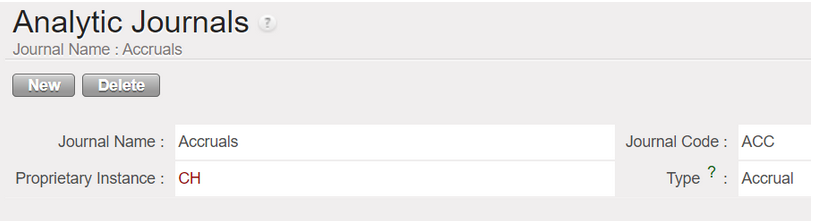
(US-8023) In the analytic journal items please add the journal ACC (accruals) in the “Journal type” filter
In Accounting/configuration/analytic accounting/analytic journals : the accrual journal was tagged to the journal type named “GENERAL”. Now the journal type “GENERAL” has been renamed to journal type “ACCRUAL”.
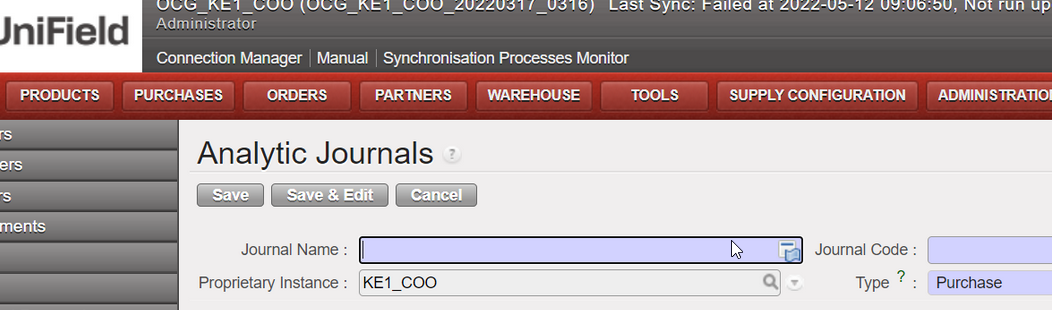
When opening a new Analytic Journals form, the type selected by default was “General”. Now it will be “Purchase”:
(US-7961) To allow to settle one advance in cash or bank register, even it has been originally booked in a cheque register.
Before, if an operational advance was created through a cheque register, it was not possible to close it through a cash nor bank register and we received a warning message “The register journal is not compatible with an advance return.”
Now after this improvement, it is possible to settle an advance created in a cheque register through a cash or a bank register.
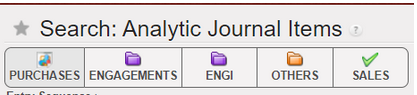
(US-7857) Button filters on AJI: Engagements and ENGI journals
Some improvements have been done in the filter buttons naming and in the searching options regarding AJI.
We go to Accounting/Journal Entries/Search: Analytic Journal Items:
- If we toggle on search button “ENGAGEMENTS”, the result of the search will be the journal code column with “ENG” only.
- If we toggle on search button “ENGI”, the result of the search will be the journal code column with “ENGI” only
- If we toggle on both search buttons “ENGAGEMENTS” and “ENGI”, the result of the search will be the journal code column with both “ENG” and “ENGI”
We have also changed the order of the filters and the name of one filter:
- BEFORE

- AFTER: The filter ORDERS has been renamed to SALES and replaced at the end of the filters
(US-7791) To update the HR information needed by UF to run payroll and third party: to remove values:
This improvement was done in order to assess the GDPR compliance of UF, given the facts below: we synchronized databases between continents in and out of EU and everyone having the Fin_HR group could access to the info.
In this improvement:
- we deleted from the database the “not used” personal information from the staff list.
- and we changed the import of the permois by not taking a list of fields anymore. This is the list of the fields that will not be retrieve anymore from the permois to Unifield:
Field | Name | Homere file | Column in Homere file |
|---|---|---|---|
|
birthday |
Date of Birth |
staff.csv |
datenaissance |
|
gender |
Gender |
staff.csv |
sexe |
|
marital |
Marital Status |
staff.csv |
Statut familial |
|
mobile_phone |
Mobile |
staff.csv |
portable |
|
notes |
Notes |
staff.csv |
commentaire |
|
private_phone |
Private Phone |
staff.csv |
tel_prive |
|
work_email |
Work E-mail |
staff.csv |
|
|
work_phone |
Work Phone |
staff.csv |
tel_bureau |
|
country_id |
Nationality |
staff.csv |
nation |
|
ssnid |
SSN No |
staff.csv |
num_soc |
3.12 (US-6475) VAT corner for the PO – like VAT corner for SI
In this improvement we created a tax part in the PO (the same part as we have already in the Supplier invoice).
Go to PURCHASES > Purchase Management > Purchase Orders:
- Click Edit “yellow pen” any PO
- Click on tab “invoices”
- The new part has been added at the bottom, after the Down Payments and it is named “Taxes”:
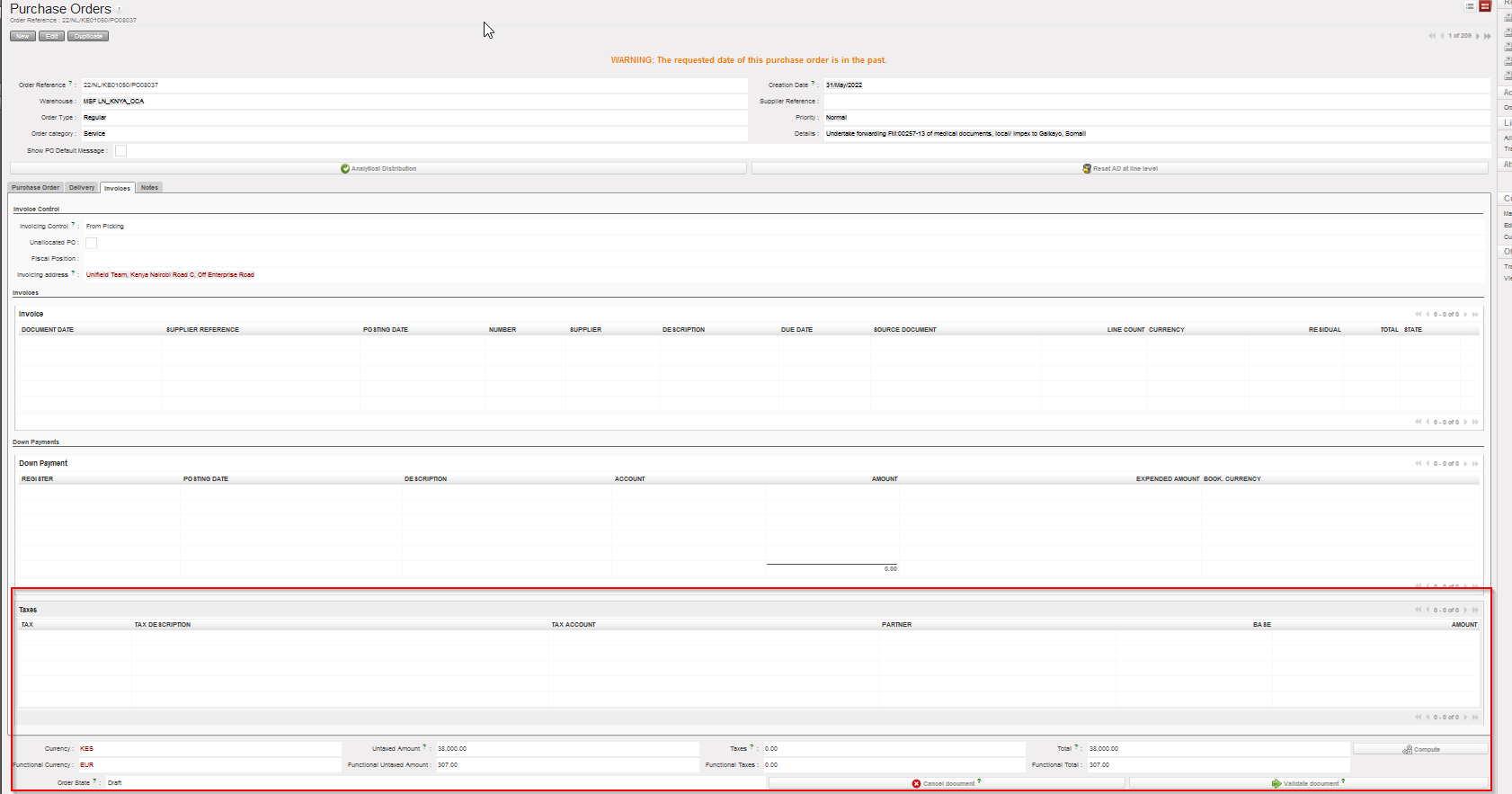
To consider below points:
- The new box “Taxes” is available for External PO only.
- If relevant, there is a new button on PO footer to remove the taxes at line level.
- Adding a tax line or removing it, will affect in the total amount of PO.
- SI Tax corner is populated from the PO Tax box.
(US-5722) Accruals Management improvements release
We have done new improvements in the accrual functionality in terms of display and we have also added a new option: we can use more than one expense account in the accrual lines.
These changes have made the functionality user friendly.
Here you can visually see some of the improvements:
Go to Accounting > Periodical Processing > Accruals management > It will display “Search: Accruals Management”
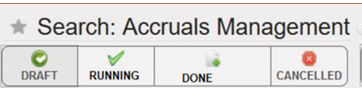
We renamed the status from: draft, posted, partially posted and cancelled
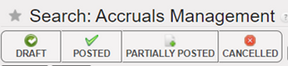
to: Draft, running, done and cancelled.
The new search options: 2 new buttons have been created “ONE TIME ACCRUALS” and “REVERSING ACCRUALS” as below, to search by toggle on/ toggle off:

We can also search by filters as below:

Here we have the new display of the screen “Search: Accruals Management” linked with the columns related.
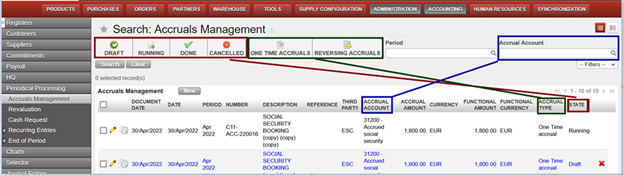
Note that name of the column “Status” changed to “State”.
The display of the Accruals Management screen has also changed as follows:
Go to Accounting > Periodical Processing > Accruals management > Click on “New”
- Screen for the Accrual type One Time Accrual

- Screen for the Accrual type Reversing Accrual

- Example with data:
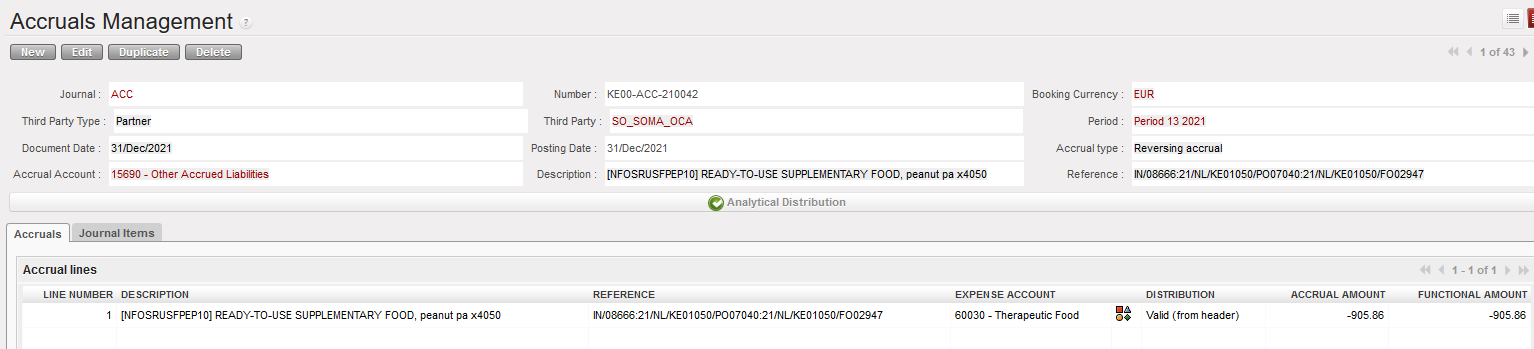
We have now two tabs (instead of one before): Accruals and Journal Items:
- Tab named Accruals: which include the below columns:
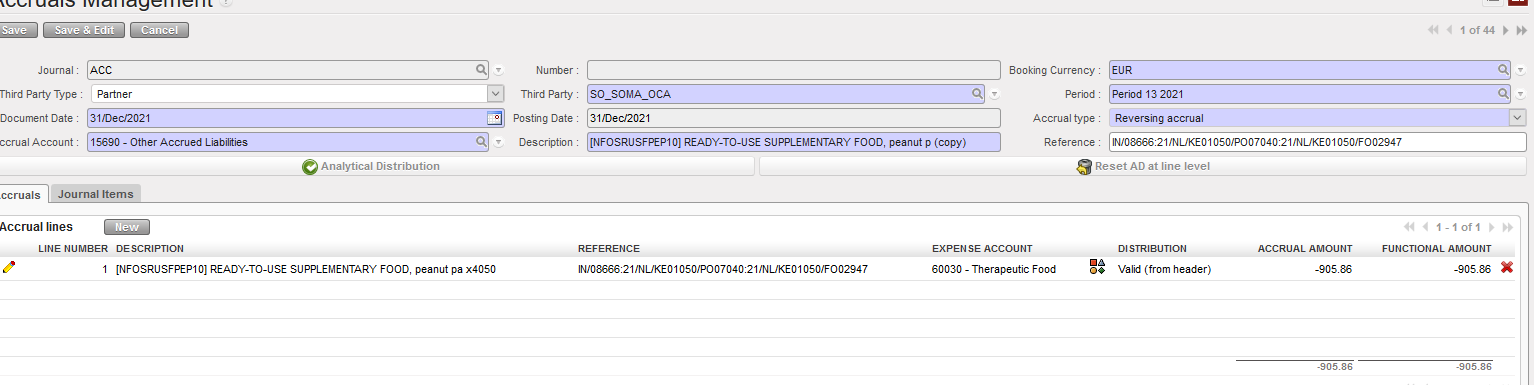
- The pencil (to edit only at draft status).
- Line number.
- Description of the line: it will be reported in the AJI and JE
- Reference
- Expense account.
- Analytic distribution at line level.
- Accrual amount.
- Functional amount
- And the X button to delete in draft status
- The state (draft, running, done or cancelled)
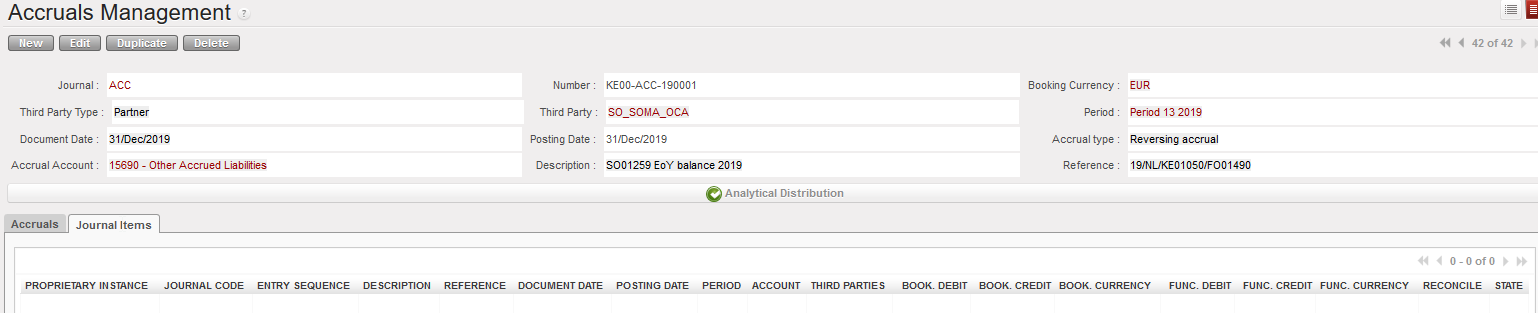
- Tab named Journal Items: Including all accruals lines of the transaction (Expenses, Payables and receivables) as below:
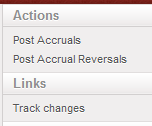
In the right action menu, we have renamed the actions to “Post Accruals” and “Post Accrual Reversals” and we have also added the track changes:
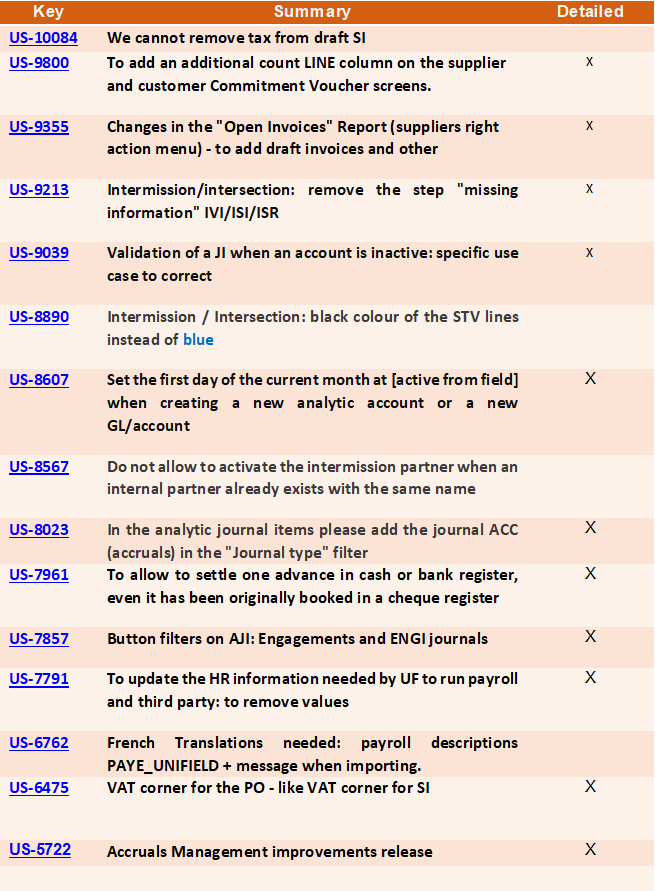
All Finance tickets integrated in UF25.0
Non- functional
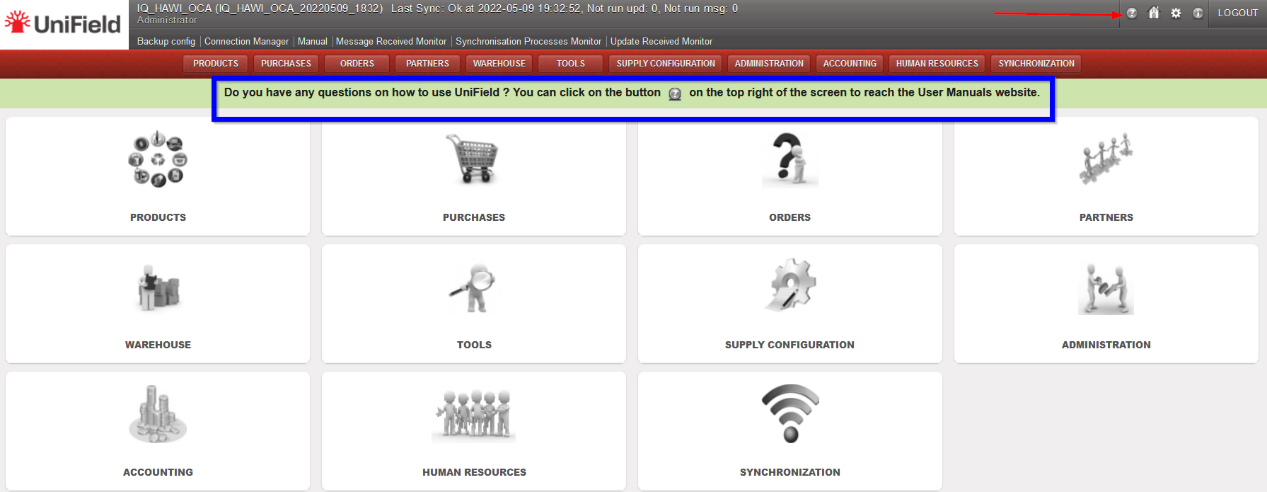
(US-9815) Create a link button to the User Manual Online.
Following the release of UniField documentation online, we have created a link inside UniField to the user manual. The icon  has been added to the top right corner next to the Home button. Clicking on this icon will open the documentation site https://doc.unifield.org/, in a new tab.
A banner has been added to alert the users of this new feature. The banner will disappear once the user clicks on any menu.
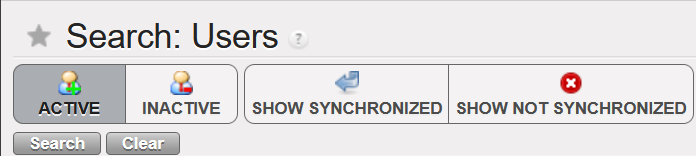
(US-9736) Users Filter: Show not Synchronized
A new filter [SHOW NOT SYNCHRONIZED] has been added to the Users search menu to allow one to search for only non-synchronized users. Previously, it was only the Active, Inactive and Show synchronized filters.
All Non-functional tickets integrated in UF25.0

UNIFIELD V24.1 RELEASE NOTES
Release Details
Release version: UF 24.1
Date of production synchronization server patch: 27-April-2022 / 18:00 Geneva time
Latest user rights files updated: UF24.1 can be found here
Note that no user rights need to be loaded at each HQ. This will be done at the Sync Server by the Core team and will update the user rights via Sync for all HQs and missions.
JIRA filter for all integrated tickets: https://jira.unifield.org/issues/?filter=12413
Supply
In this intermediate release, the following tickets are included:
(US-9849) UD: Correction of product synch if Standardization level changed
This ticket corrects the issue found whereby products changed from NSL (Non Standard Local) to NST (Non Standard) / STD (Standard) were keeping their old behaviour and remaining inactive at Mission level. With this change, when UniData send any combination of updates including this change to standardisation level, any product which is STD or NST should now be active at Coordo & Project. This ticket also corrects products which already had this issue due to past UD updates.
(US-9833) Prevent addition of new lines on pick
This ticket corrects issue found so that it is no longer possible to add new lines onto a Picking Ticket. In the past this issue implied need for Data Fixes but this will no longer be the case.
(US-9826) prevent removal of Partner address due to IN maniplulation
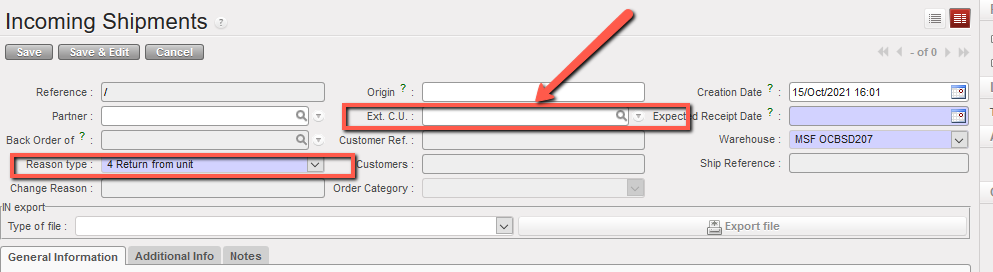
This issue which caused multiple issues with sourcing and shipping was a regression introduced with changes of US-9021/US-9219. It meant that if a user created an IN from scratch, added a partner, changed the Reason Type to “Return from Unit” and then added the the Ext Cu, then the address of the original partner added (same as that of creator’s instance) was automatically removed, which prevent actions such as those listed above from being completed. This has now been corrected.
(US-9637) Export Inventory Level change to format to allow generation
This issue was flagged by OCG as they were unable to access the generated Export Inventory Level due to the generated file being too large to store on the database. With this ticket, the format of the report has been changed to native xlsx, meaning it should be possible to access this report.
All Supply tickets integrated in UF24.1

Finance
(US-9818) UR: User with User_Manager is not able to export the list of staff + department field
Users with the User_Manager profile are now able to export the list of staff and department field.
(US-9813) Possibility to inactivate journals (UF24): last fix to do in the new functionality
We discovered after the release UF24 a bug to be fixed for some use cases of inactivation of journals. The part of the code used to “get the last register” doesn’t work properly, so the register checked is not always the right one (that means that in the instances that could inactivate journals, the balances must be checked manually because for now we can’t rely on this automatic check). With this ticket this bug has been fixed.
Remember that to use the functionality you go here:
Go to >Accounting/configuration/financial accounting/journals/journals:
We have created the 2 filters Active and Inactive to do filters.
And then when you enter into the journal, there is a new field box to tick (Active Journal) or unticked (Unactive Journal)


All Finance tickets integrated in UF24.1

UniField v24.0 Release Notes
Release Details
Release version: UF 24.0
Date of production synchronization server patch: 16th March 2022 / 18:00 Geneva time
Latest user rights files updated: UF24.0 can be found here
Note that no user rights need to be loaded at each HQ. This will be done at the Sync Server by the Core team and will update the user rights via Sync for all HQs and missions.
JIRA filter for all integrated tickets: https://jira.unifield.org/issues/?filter=12407
Supply
(US-9219) IN from scratch, field Ext. Unit mandatory if RT is Return from unit
An improvement implemented for the IN from scratch: when user wants to choose “Return from Unit” as a Reason type, Ext. C.U becomes mandatory to be filled, this is to be consistent with check already done if products are added via import.
(US- 9361) Historical Consumption report – AMC per location, Adjusted AMC
As raised by Pharma, the following changes to the Historical Consumption report have been developed:
It’s possible now to select a new Consumption Type “RR-AMC”. This will be the 3rd option and the other 2 options remain. When this 3rd option is selected, it is possible to select one or multiple Source Locations and one / multiple Destination locations. This means it will be possible to see consumption for a specific location or group of locations or see consumption to a specific destination location or set of destinations. Source location(s) must be internal but destination location(s) can be internal or external.
When 3rd option (RR-AMC) is selected, there is a checkbox named “Display Adjusted RR-AMC”. When selected, the report will take into account and show the adjusted AMC based on any stock outs / substitution for products recorded via a recorded “Stock Out” with selected period. When the 3rd option RR-AMC is selected, it is still possible to see and use the “Remove negative AMCs” as before meaning no negative AMC figures (due to returns) will be displayed. 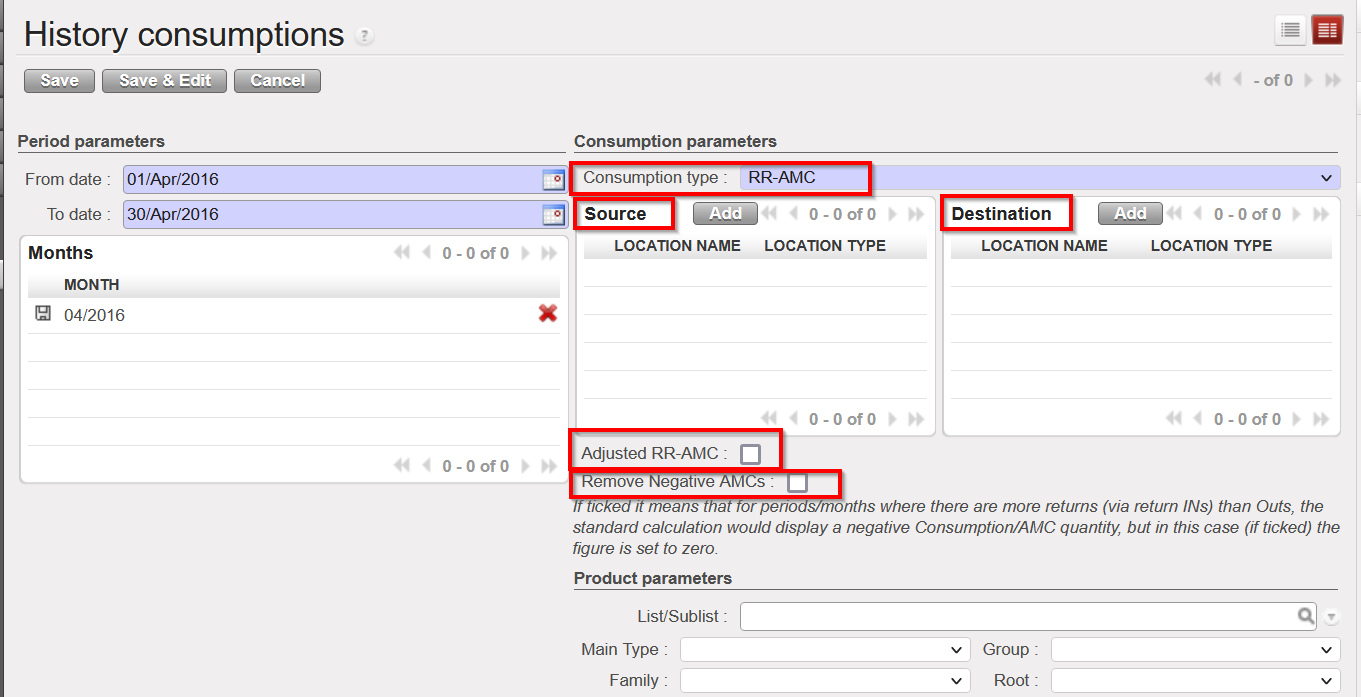
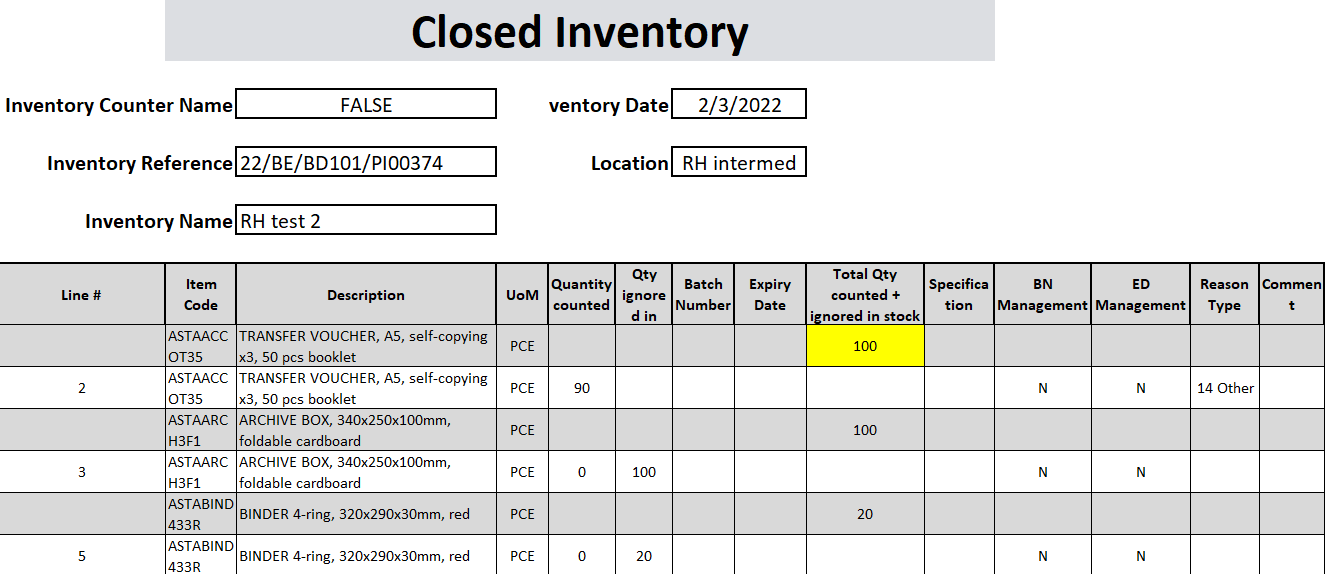
(US-9359) Physical Inventory new export
As per request from Pharma, a new excel export named “Closed Inventory” is available from Physical Inventory when in Closed Status via the Action menu.
- Similar to the Discrepancy report but with additional information: any counted qty which does not result in a discrepancy will also appear in this report.
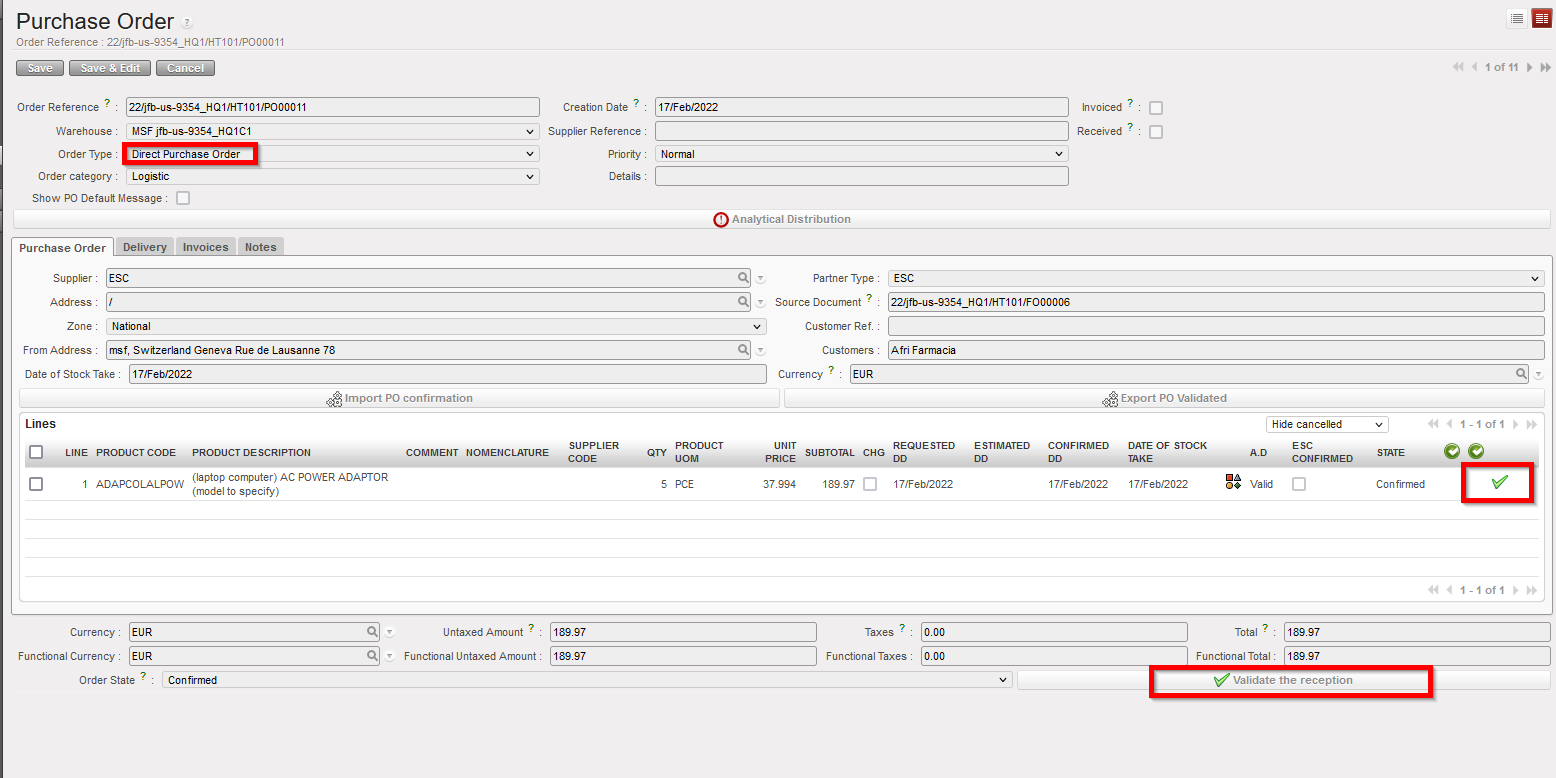
(US- 9354) No validate reception button for DPO to ESC
Improvement for consistency requested by OCP, for the DPO Flow, when DPO (coming from FO sourced to external partner) is done to an ESC, it’s possible now to confirm the reception at line level (and so close the line).
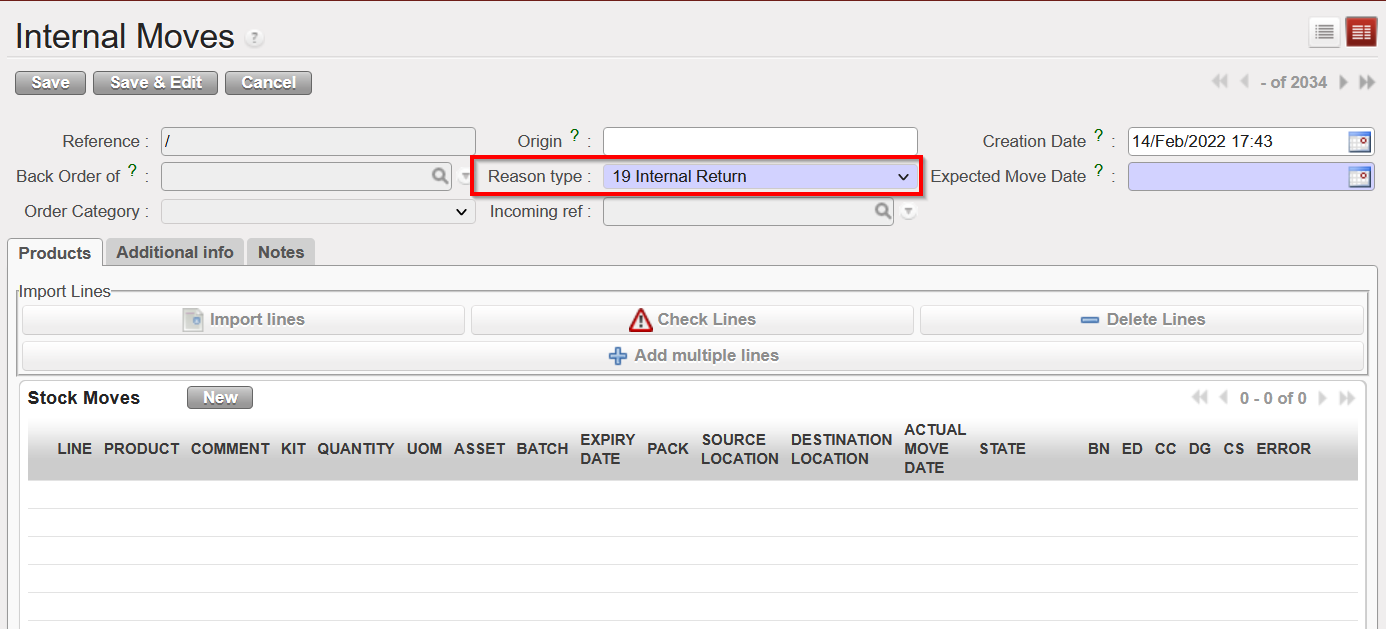
(US-9266) New Reason Type for INTs: Internal Return
Improvement requested by Pharma and necessary for the RR-AMC report modification described above: a new Reason Type now exists for Internal Movements (INTs). This can be selected manually in the INT, and there is no change to the default RTs proposed by system.The INTs with “Internal Return” will be treated in the same way as INs with RT “Return from Unit” when there is calculation on the RR-AMC of a specific location.
(US-9129) IN: PDF displays cancelled lines
Improvement requested by OCA, a change to the PDF of Incoming Shipments has been implemented: PDF will no longer show any lines which have been cancelled. Closed and Available lines will still be displayed.
(US-8955) BN/ED added to the Receptions & Deliveries Reports
Improvement requested by OCA, to extend the Receptions/Deliveries Reports by the two following columns: Batch Number / Expiry Date
(US-8867) (E-Validation) IR PDF signatory changes
Improvement in preparation for E-Validation development to update the signatories displayed for the IR PDF in Eng and in Fr: They now contain “Technical Responsible” FR: Responsable Technique and “Supply Responsible” FR: Responsable Approvisionnement
iii)Remove “Storekeeper” (the space for the other 2 above can be increased)
(US-8862) Page number and Document references are missing
Improvement requested by OCB, for the PDFs of IR, INT, & OUTs, all pages now contain the page number and the document reference as for the first page of each document.
(US-8843) Claim: Message to clarify that product/batch/ED not on doc
Improvement requested by OCA, in processing the Claims, when batches/Expiry Dates of products being returned are different to those received. Warning message displayed will be more accurate: (Prod/BN/ED not available in the IN/OUT)
(US-8699) Estimated DD on PO, reports to update
Improvement raised to ensure reports aligned with dev already made in US-8076 where an additional date field “Estimated Delivery Date” or EDD was added to the PO.
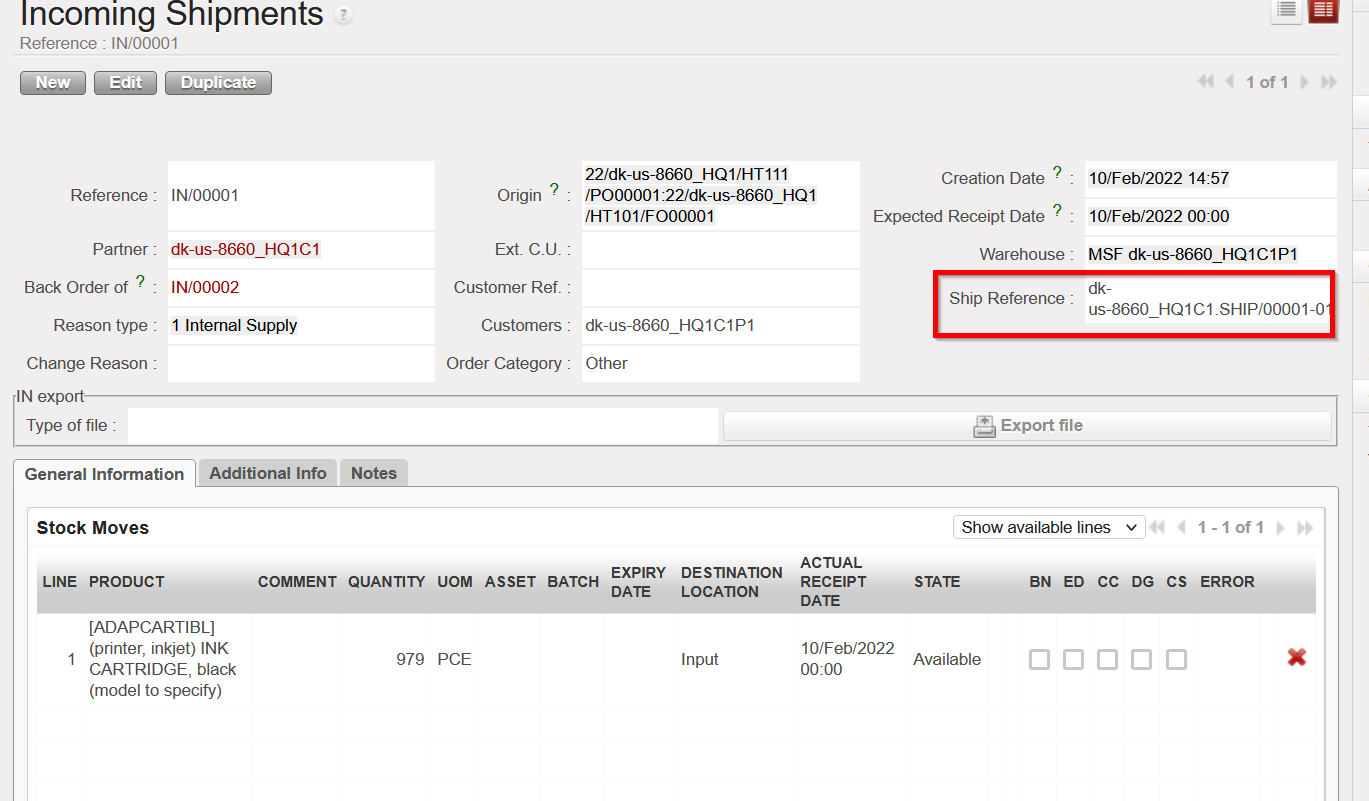
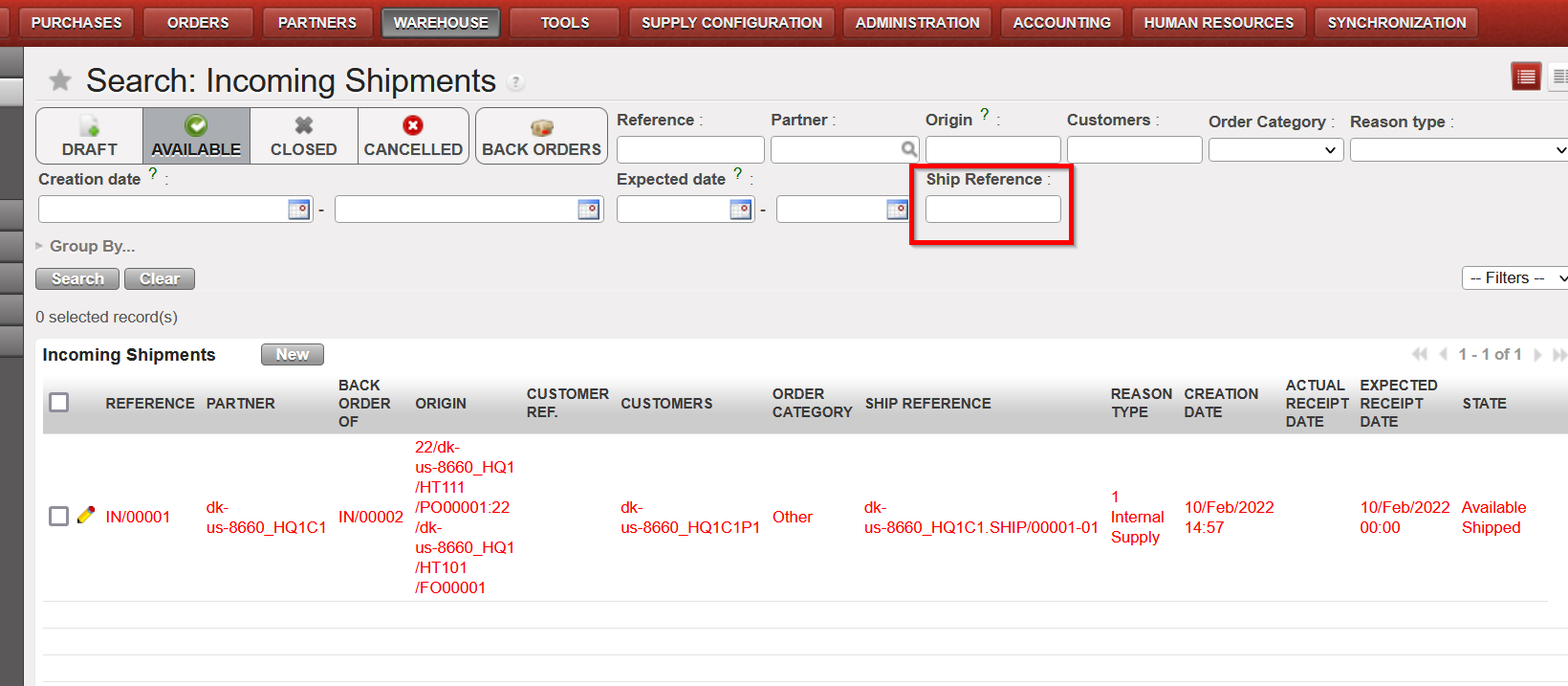
(US-8660) (Automated) VI: Display freight name in “Ship Reference”
Improvement requested by OCA , affecting Incoming shipments, meaning the “Ship Reference Field” will now be updated when this value is filled in IN/EPacking Vertical Integration (VI) file. This will not impact how this field displays for INs which are updated by synch. An additional filter on “Ship Reference” at header level for the IN list view has been added.
. 
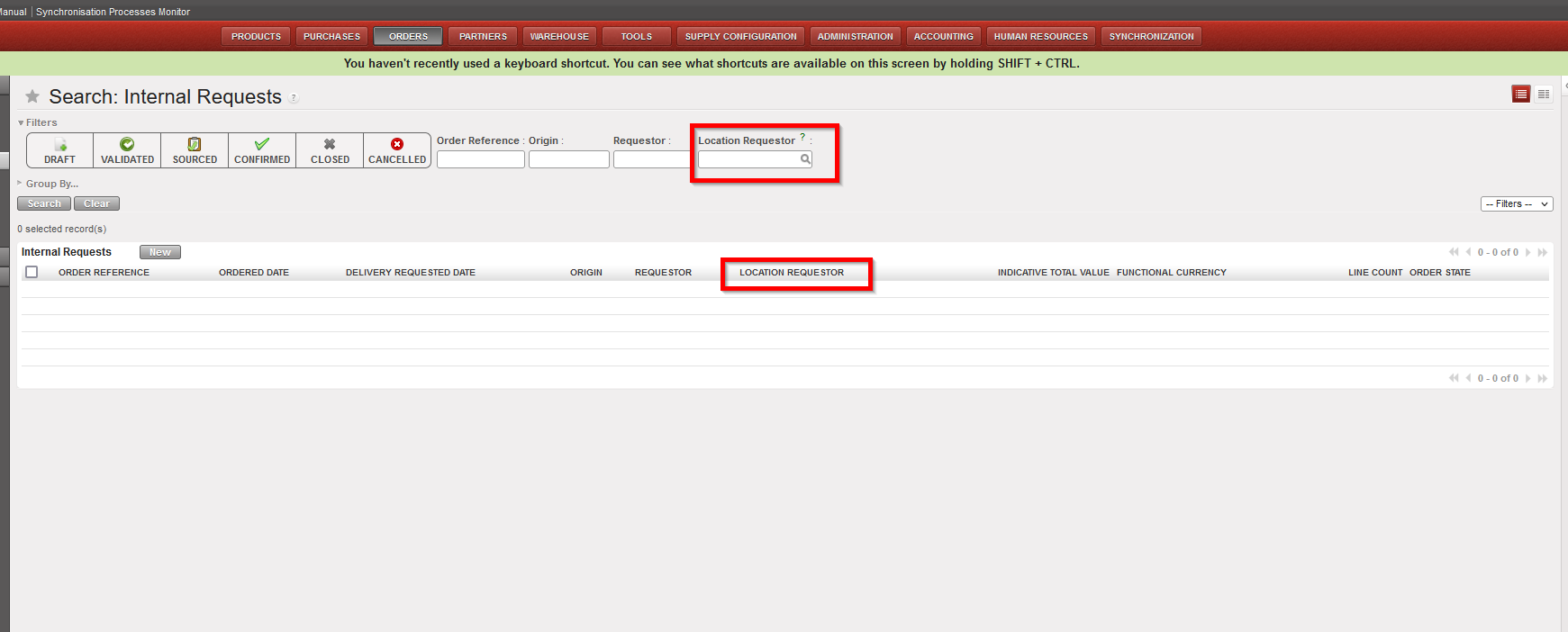
(US-8608) IR additional search/view on Location Requestor
Improvement requested by OCB, search field “Location Requester” has been added to the Internal Requests (IR) List view and is also reflected in same via by additional column there.
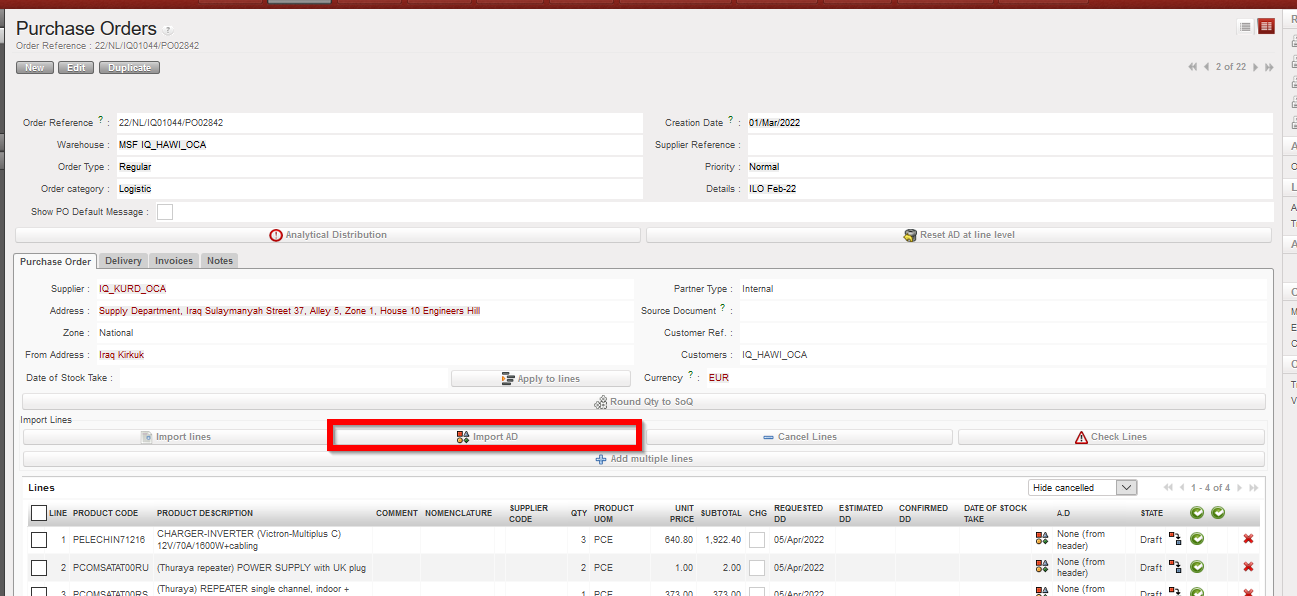
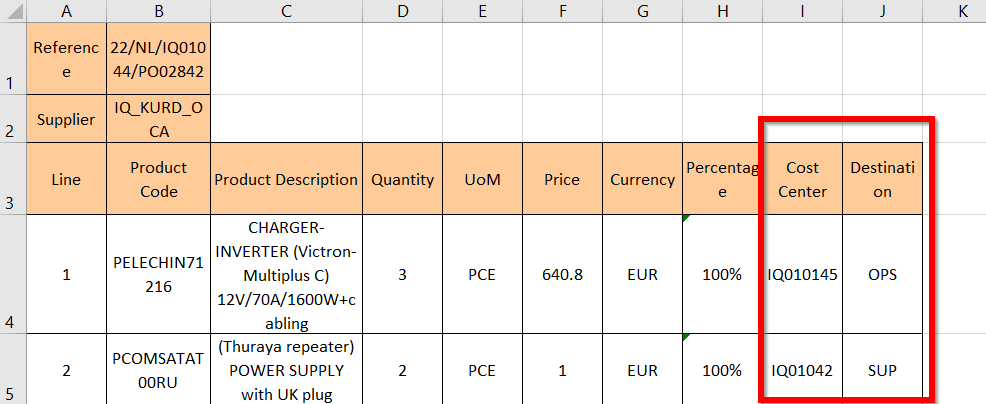
(US- 9603, US-9517) Import of AD into Draft PO/FO
Two requests from OCB, with these it is now possible to import Analytical Distribution directly into a Draft PO/FO at line level. Only 1 AD (1 Cost Centre and 1 Destination) can be added onto each line. The action to export / import templates are both via the “Import AD” button.
In the import file, only the AD values will be imported. No other information can be modified or added via the import file. Percentage must be “100%” and system will check that Line number and Product Code match those of onscreen PO.
If there is already an AD added in onscreen PO, exported template will show this. If at header level there are multiple ADs added, the exported template will show percentage value as “Mix” and ADs will be blank. In the case that there are already ADs in the onscreen PO, it is possible to remove (delete) them by importing the file with blank AD values. However if there are multiple ADs at header level and export and import have “Mix” as percentage value, then the values will remain if AD fields are blank. At import, there is a check that AD values exist, but the main/secondary check will remain after import, when line/PO/FO is validated.
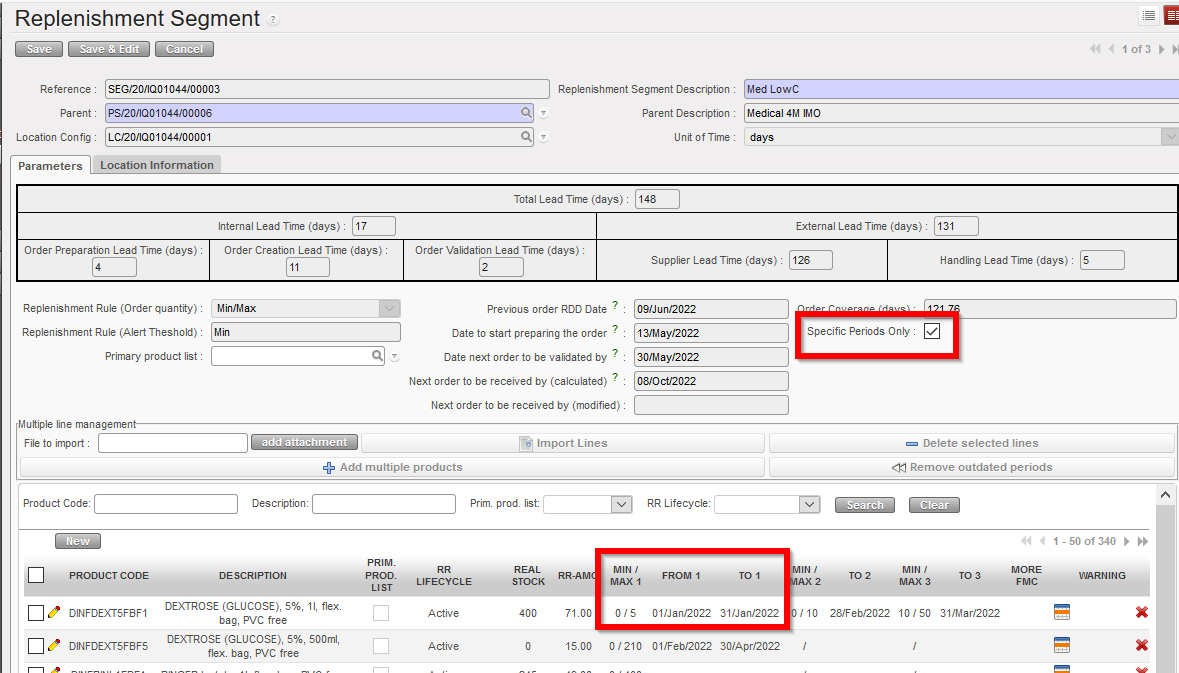
(US-8449) RR: Min/Max and AutoSupply validity dates added
Improvement to Replenishment Rules (RR) functionality requested by OCA, affecting the RR Product Segment and Inventory Review. In this RR product segment:
>The RR types Min / Max & AutoSupply can now be applied with specific validity dates, in the same way as was already the case for RR type Order Cycle.
>The default is that validity periods are not applied for Min/Max & AutoSupply but they can be applied by ticking onscreen checkbox “Specific periods only” or changing value in import/export of Segment. If unselected, values other than 1st column cannot be filled / are not accepted at import.
>Import/export of Segment now has multiple columns to allow for these values: “Min / Max 1” “From” “To”, Min / Max 2″, “To” etc.
For the Inventory Review: 3 columns which display Min / Max and Auto Supply values, are replaced by just one column “RR Type” which will display the RR of that Segment: “”Order Cycle” “Min/Max” “Auto Supply”. The columns at end of the report which previously showed FMC values for each month “RR-FMC M0 Aug” have been renamed to “RR value M0 Aug” to reflect relevant value for any of the 3 RR types.
(US-8122) Consolidated MSR : improvement
Improvement raised by OCP for the Consolidated MSR Dates: Last Update value to be added at header of export. 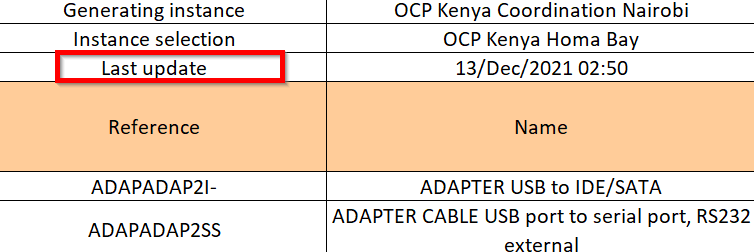
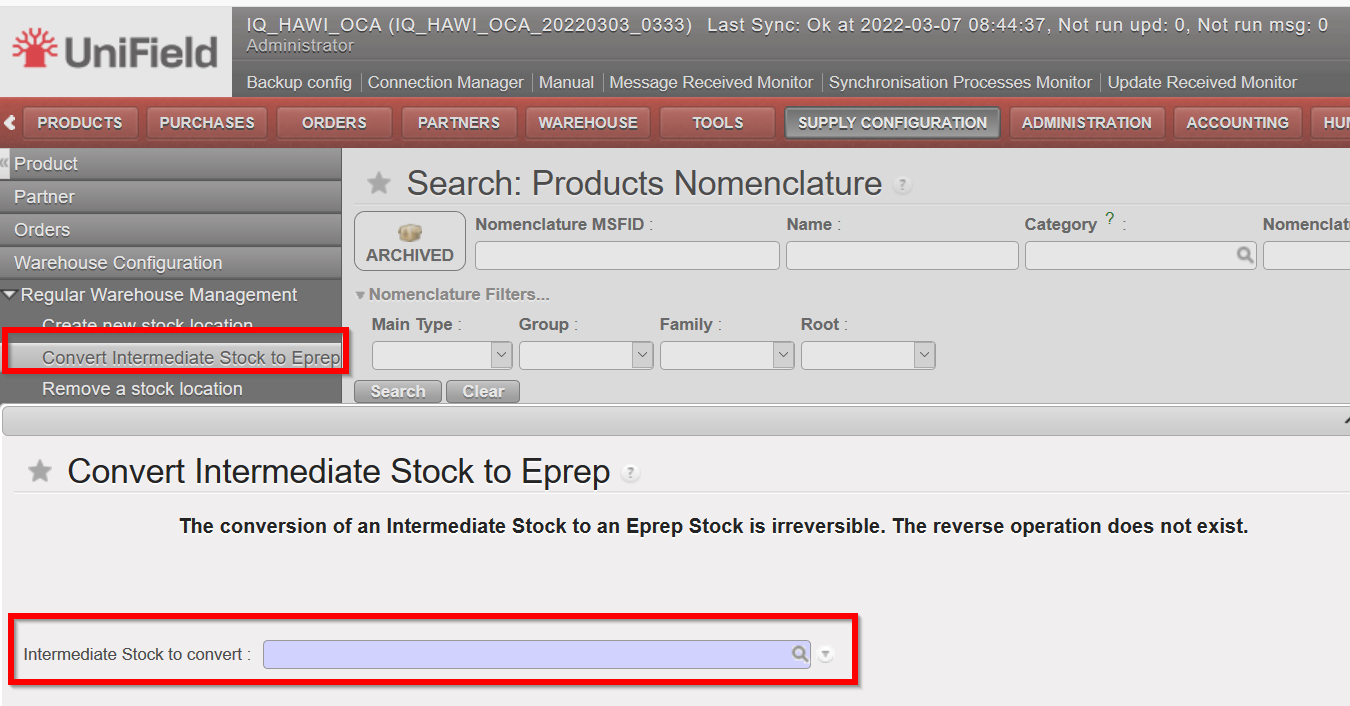
(US-4642) Creation of and conversion to EPREP locations
Improvement requested by OCG and raised and supported also by Pharma for EPREP Locations:
i)All newly-created configurable locations which have “Eprep” type selected will be flagged automatically as of “EPrep” type, a check will be made at creation that the name contains the word “Eprep” in Eng / Fr.
Pre-existing intermediate locations, can be converted into being “Eprep” according to user rights via the menu:
Supply Configuration>Warehouse configuration>Regular Warehouse Management>Convert Intermediate Stock to Eprep
Once a location has been created as Eprep type or converted to it, this cannot be reversed. The EPrep type of location now is reflected as a sub type of location under Configurable Locations in the warehouse structure, and appears in pink as per previous dev (US-9044) to apply colour coding to location types. MSReport has an additional column which shows EPrep stocks qties.
(US-9143) OCA : Patch script to automatically set AD destination to OPS
As per OCA’s request, exceptionally there will be a Patch script included in this release to change AD Destination to OPS for all Validated POs to ESC type suppliers across all OCA instances.
(US-9391) Patch script to rename incorrect references in INs and INT
A second patch script is to be included to rename INT and IN documents which have incorrect prefixes ( ”PICK/XXX”). They will have the correct document prefix added in front of their existing reference (so IN/PICK/XXXXX ) to allow for traceability. The issue causing this problem has been solved via US-9312.
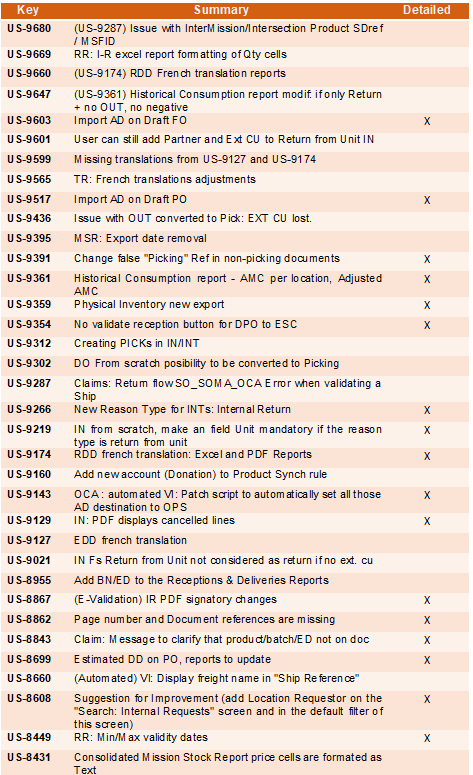
All Supply tickets integrated in UF24.0
Finance
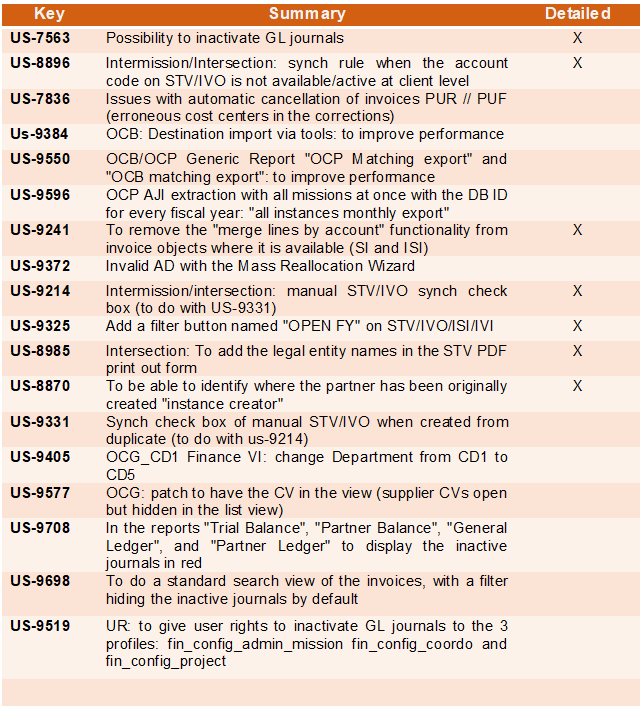
(US-7563) Possibility to inactivate GL journals
In the [Accounting/configuration/financial accounting/journals/journals] screen, we have created a filter with [active] or [inactive] status on the header of the journal list for activation and inactivation of the GL journal.
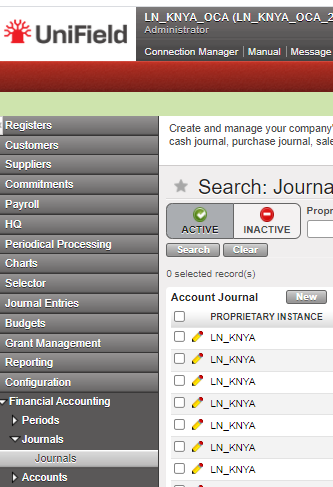
The standard display is [active]: Only active journals are displayed in the standard display screen. Registers related to inactive journals are not listed anymore on the register creation screen on [accounting/registers/register creation].
In the Journals we have the field Active:
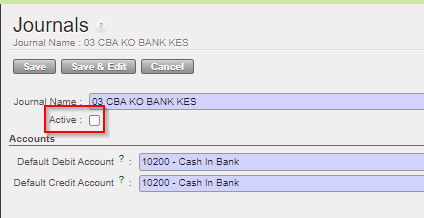
The [inactive] journals cannot be used anymore in the interface:
-
- as third party of an entry
- to book a manual journal entry
- We cannot import a file to the journal from manual journal entry, or into a register for register lines should check the active status of the journal code seen in the import.
The creation of a journal with the same code as an inactive journal it is not allowed.
We have added in the exportable fields the [Active] status in the export of the list of journals.
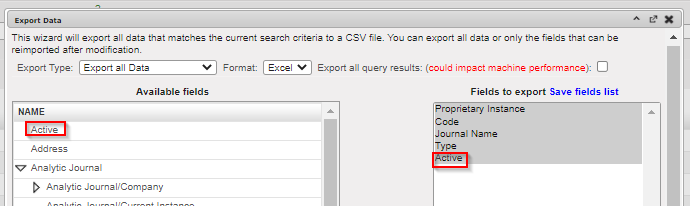
The conditions to allow the inactivation will be:
- For liquidity journals, before allowing the inactivation check:
- all registers have been closed
- all manual journal entries have been posted
- the balance of the last register is zero
We will receive error messages as the following one:

- For non-liquidity journals: all entries have been posted on the journals.
The activation-deactivation will synchronize to the other instances. We will prevent the deactivation if there are draft, or temp posted entries / documents. For the GL journals that have been deactivated, we will show the correction wizard in AJI and JI.
We have added the field “Active” in the Journal Track Changes.
We will not allow:
- The selection of inactive journals in the invoices
- The duplication of JE and invoices on inactive journals
- The re-opening of a register on an inactive journal
- The selection of inactive journals in the Recurring Models
- The inactivation of a journal if a Recurring Plan which isn’t “Done” uses it
- The selection of a Recurring Model on an inactive journal, in the Recurring Plans
- The duplication of a Recurring Model on an inactive journal / of a Recurring Plan using a Recurring Model on an inactive journal
- The selection of an inactive Bank Journal in the Cheque Journal form
- The selection of inactive journals as Refund Journal in the Refund Wizard
- The Refund Type “Modify” for the invoices booked on an inactive journal
Reporting
- We will not show the registers related to inactive liquidity journal in the [liquidity position report]
- We will show the inactive journals in the [liquidity balances] report as far as there have been movements within the period considered in the report. So, the related line won’t be displayed on the condition that the journal is inactive, and the “Starting Balance”, the “Movements”, and the “Closing Balance” are all 0.00.
- We have added a new column in the [liquidity balances] report: [Journal Status].
- (US-9708) In the reports “Trial Balance”, “Partner Balance”, “General Ledger”, and “Partner Ledger” the inactive journals will be displayed in red.
- (US-9698) In the Search views of the invoices, we have done a standard search view, with a filter hiding the inactive journals by default.
(US-8896) Intermission/Intersection: synch rule when the account code on STV/IVO is not available/active at client level
We have changed the synchronisation rule of balance sheets at STV lines between 2 sections using different sets of balance sheets (B/S) accounts. Before this change, UF synchronized the lines booked in B/S, as far as the account codes used were the same. OCA balance sheet numbers are completely different than other OCs.
When an ISI or IVI is created at synch time, the account on each line is taken from (by order of priority) the related CV line if any, else on the product or product category, else directly from the account used on the line in the other instance. In case the account is not found or is inactive, the related line is created without account and is displayed in red (until the account is set). The lines concerned are listed in the related “Synch Message Received” which appears as “Partially Not Run”.
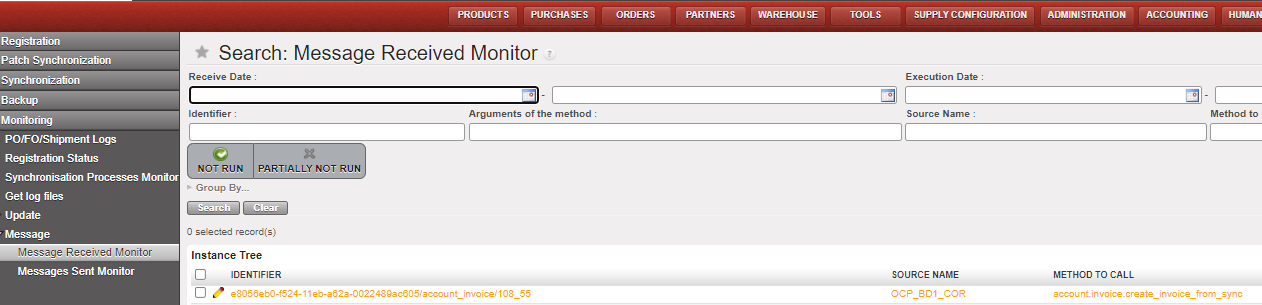
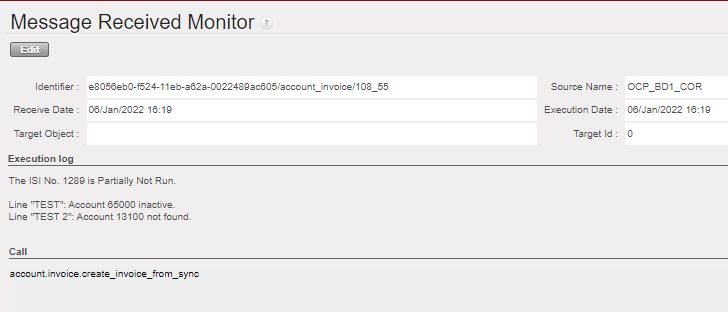
It is not possible to validate the invoice if the accounts are still missing.
This should be the only use case (UC) where invoices can be created with “empty” accounts. Therefore, it is not possible to create an invoice by duplicating another invoice with missing accounts: all the accounts must be filled in first.
(US-9241) To remove the “merge lines by account” functionality from invoice objects where it is available (SI and ISI)
We have removed the “merge lines by account” functionality.
(US-9214) manual STV/IVO synch check box and (US-9331) Synch check box of manual STV/IVO when created from duplicate
US-9214: Intermission/intersection: manual STV/IVO synch check box:
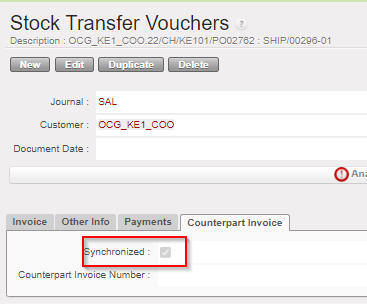
- if the partner chosen is intermission/intersection, the check box is ticked.
- if the partner chosen is not intermission/intersection, the check box is Unticked:
- when the user creates a partner, the user clicks on [validate] button, we will always make a check to ensure the consistency between type of partner at [partner] field and [synch] check box.
- if the partner is not intermission/intersection and the synch check box is active, we will not allow to validate. Error message: ” You are not allowed to synch an invoice to this partner. Please remove the tick from the check box “sychronization” from the tab Counterpart invoice”.
(US-9325) Add a filter button named “OPEN FY” on STV/IVO/ISI/IVI
We have added a filter button named “OPEN FY” on STV/IVO/IVI/ISI screens.

The Fiscal year to consider is the FY of the posting date.
The following statuses are considered as NOT open: draft, mission closed and HQ closed.
This filter button “OPEN FY” is ticked by default.
When the filter button “OPEN FY” is unticked ==> all objects are displayed.
When the filter button “OPEN FY” is activated:
- we can see all draft invoices (whenever their posting date).
- we can see all invoices if their posting date is in the FY Open.
- we can see just the cancelled posting date in the FY Open and the invoices with NO posting date.
(US-8985) Intersection: To add the legal entity names in the STV PDF print out form
In accounting/customers/STV and then in the first tab “invoice”, we are talking about the report pdf named “print invoice” only related to the STV (intersection flow).
- We have added the legal name of the supplier (in the pdf is in the first line on the left) and of the customer (in the pdf it is in the first line on the right).
- The legal name was not currently in the system, so we have added a field containing this information in the “Partners form”.
The field legal name is placed below the field “Name”:
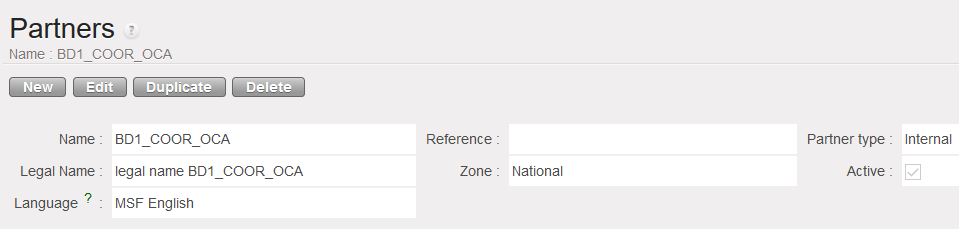
(Note: when we create an instance, the instance must also be created as an internal partner).
It has been decided that the legal name will appear in the pdf document for all partner types (because there are still intersection instances that are not using Unifield)
- If the legal entity name is not available in the system, it will be empty.
- The second line is the Name and this remains the same.
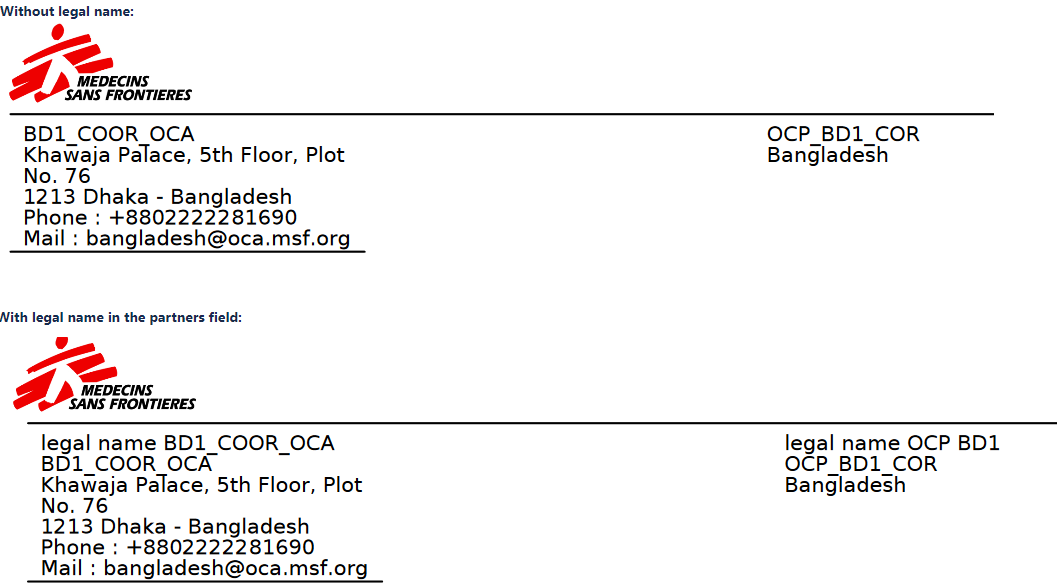
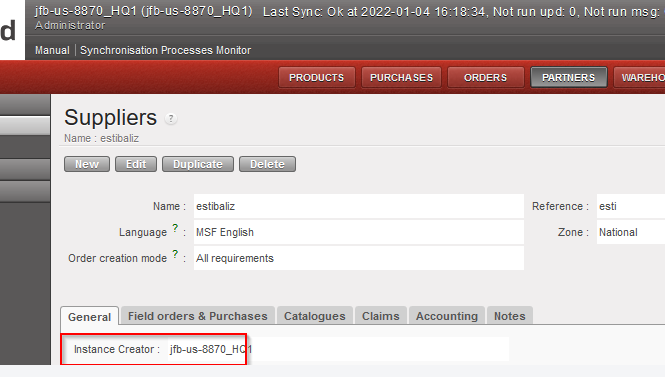
(US-8870) Intersection: To be able to identify where the partner has been originally created “instance creator”
In the Suppliers form we have created a new field “Instance Creator” in the tab “General”.
We have added this field in all partners type synchronisation rules.
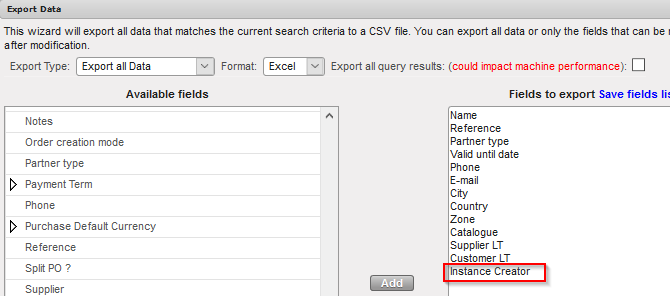
We have also added this field in the export action menu.
All Finance tickets integrated in UF.24.0
Non- functional
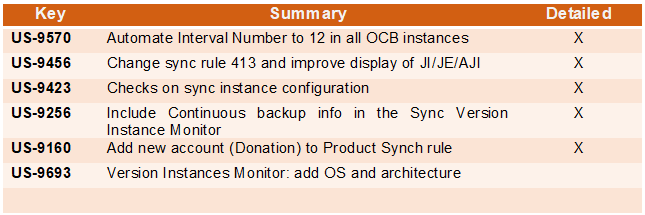
US-9570 Automate Interval Number to 12 in all OCB instances
This change is only for OCB instances as they requested to set the automatic sync to only run 2 times before office hours. As the auto sync interval must always match the auto patch interval, we included a patch script in the UF24.0 release to implement this change for only OCB instances.
US-9456 Change sync rule 413 and improve display of JI/JE/AJI
Failed datapush at OCBHQ, (Data Push create: OperationalError: out of memory). The memory error was raised when the instance tried to compute the sync rule #413 to sync JI (account.move.line).
The rule was created in 2012 for the pilot 0.4 used to flag a JI as corrected but currently only posted JI can be corrected so the domain is not needed anymore. We therefore changed the rule to ensure that with this release:
- Performance during sync is improved
- Display of JI/AJI/JE has been largely improved. This will largely benefit all OCs (HQ) users
US-9423 Checks on sync instance configuration
Checks on sync instance configuration will ensure register actions in the instances leading to wrong sync groups as seen in US-9412 are prevented. The checks in question have been implemented in the sync server at instance validation to ensure:
- A coordination must have exactly 4 groups of each type (Mission, HQ + Mission, Coordinations and OC), all in the same OC,
- A project must have 3 groups: Mission, HQ + Mission, OC. All in the same OC.
- The HQ + Mission group used on an instance must contain the parent instance
- The Mission group used on a project must contain the parent instance
Otherwise, the instance validation is denied.
US-9256 Include Continuous backup info in the Sync Version Instance Monitor
For all versions of UF23.0 and below, the report Administration/HQ Monitor/Version Instance monitor available at HQ only includes info regarding cloud back up. With the UF24.0 release, new columns as below have been added to accommodate continuous backup info too:
- Backup type
- basebackup_date
- rsync_date
US-9160 Add new account (Donation) to Product Synch rule
The Donation account has been added to the product sync rule. Users in the past have not been able to add this account at field level. Even if, they attempted to add it at HQ, it was not synched so there was no way for it to be filled at mission level as seen in US-9106. This release fixes this. Donation expense account once filled at HQ will be synced down.
US-9693 Version Instances Monitor: add OS and Architecture
Following this release, The Windows version information and the architecture (32-bit vs 64-bit) of UniField servers will be added to the Version Instances Monitor.
All Non-functional tickets integrated in UF24.0
UniField v23.0 Release Notes
Release Details
Release version: UF 23.0
Date of production synchronization server patch: 8th December 2021 / 18:00 Geneva time
Latest user rights files updated: UF23.0 can be found here
Note that no user rights need to be loaded at each HQ. This will be done at the Sync Server by the Core team and will update the user rights via Sync for all HQs and missions.
JIRA filter for all integrated tickets: https://jira.unifield.org/issues/?filter=12396
Supply
(US-9044) Change to Stock locations display
As per request from Pharma, the view of stock locations has been changed. In all views, the name of the location “Quarantine before scrap” has been changed so it is now “Expired/ Damaged /For Scrap”, and its parent location has been renamed from “Quarantine” to “Quarantine / For Scrap”. In the “Location Structure” screen (Warehouse>Inventory Management>Location structure) and in the “Search Stock Location” window (which appears when user must add a location to a document e.g. to choose the “Location requestor” in the IR, stock movements etc), different types of location appear in different colours.

Location colours are: Internal Consumption Units and Intermediate Stocks: Blue; External Consumption Unites: Green; Input and Cross docking: Purple; MED, LOG and Stock: Grey, Expired / Damaged / For Scrap: Light Orange; Quarantine (analyze): Dark Orange.
For all locations which were previously displayed with their location path, this has been removed and only the name of the Location is displayed.
(US-8452) Replenishment Rules: Outdated FMC removal + Segment export
As per request from OCA, a new button has been added to Replenishment Rules (RR) Replenishment Segment screen called “Remove Outdated FMCs”. It can only be used when the Replenishment Segment is in Draft status, and the type of RR is “Order Cycle”.
When clicked it will remove any FMC values and their dates for any FMC which is wholly in the past. FMCs which are valid will be moved to the left to fill any removed ones.

Also the name of the file which is exportable from the RR Replenishment Segment has been corrected to display “SEG_ XXDBXXXXDATE”.
(US-1128) Theoretical Kit Composition (TKC) import for creation
As per request from OCG, when creating a new Theoretical Kit Composition (Products>Kit Management>Theoretical Kit>Theoretical Kit Composition), it is now possible to choose an existing TKC and import its products directly into the new TKC. The new TKC can have products from existing TKCs added multiple times, and then these products can be removed or more added directly in the screen.

(US-8972) IN synched to receive Inactive product and message
Now when an IN receives an update via synch from a sending instance, containing a product which is not active in the receiving instance, the IN is still updated (to Available Shipped) and there is a warning on the relevant line(s) indicating issue with product. Line(s) containing inactive product cannot be processed until product is activated.
(US-8433) VI: IN simulation screen more accurate
As requested by OCB, now when a Vertical Integration (VI) import file is imported onto an Incoming Shipment and file does not contain all lines in original IN, in the simulation screen, the change “CHG” flagged is now “Ign” meaning line not in import file is ignored. Previously the CHG column showed “Del” (Delete) for these lines, which was inaccurate.
(US-8794) Correction on products to allow correct UR control of Active status
Development has been made which means User Rights can now be used to correctly control products which should be able to be Activated/Deactivated, depending on the Product creator, Standardization Level and level of instance (HQ, Coordo, Proj).
Of the Products which descend from HQ to Coordo, only the ones which have UniData as Product creator and which are “Non-standard Local” can be de-activated at Coordo, and this by a user with appropriate User Rights.
(US-9176) Claim: IN of returned goods uses wrong Source Location
The ticket raised by OCA to resolve a BUG, when products are returned by claim, now the IN of the returned products bears the name of the partner, and in the stock move reports of the returned items, it shows the MSF supplier in the source location and not the stock therefore, there is no negative stock of the product due to this transaction, previously, the name of the partner was not shown in the IN, the location of the source was a stock, resulting in a negative stock of the returned item.

(US-9147) RDD field in Validated PO should not be modifiable
New improvement for validated purchase orders which is consistent with previous improvement US-8076 “Management of PO 2 RDDates Estimated Delivery Date”. After validation, users will not be able to change RDD anymore at header or line level. Via VI, any change to the RDD will be reflected in the EDD line level, without changing the original RDD (this remains unchanged and is as per previous ticket).
(US-8951) Synched INs: warning if Cancel line & Track changes update
New improvement for Synced incoming shipments between instances, A non-blocking warning message will appear for processing or cancelling any line in the INs linked to synchronised flow with Available status, and in Track changes reports, correct status for IN (Available, Available Shipped, Available Updated) appears.

(US-8923) PPS: not possible to return packs from Sub-Ship
A Bug has been solved, users can now return packs from the sub-ship, after picking/packing lines to draft shipment, processing partial packs to sub-ship, adding more packs from the remaining packs to sub-ship, and then it is possible to return packs from sub-ship, and add parts of the packs to sub-ship again.
(US-5357) Product Nomenclature Status to be received from UniData
An extra field has been added to receive the Nomenclature “status” from UniData.
The aim of this improvement is to prevent UniField users from creating new products with obsolete Nomenclatures.
UniData already manages the status of Nomenclatures and sets those which are no longer Valid to Archived. Now this field is present also in Nomenclatures in UniField.
Before any update is received from UniData, the default Nomenclature status for products in UniField is valid. For any Nomenclature status which is updated to “Archived” by UniData linkage, any existing product with this Nomenclature can still be used, but no new product can be created using Archived Nomenclature. The Nomenclature status is visible on Root level of Nomenclatures.
N.B.: The equivalent development on UniData side to send status via linkage is due in release early next year so no update to UniField for these values is expected before then.
(US-8847) Inconsistent/missing status label in Delivery Order PDF
The ticket raised by OCA to fix a BUG, in the Delivery Out PDF, the State is now compatible with the correct status of the delivery out, Dispatched and Received status appear now correctly in the pdf.
(US-8732) RR: Improve pipeline synchronization to project
On OCA’s request for new improvement, for purchase orders synchronized between instances, date changes to Validated supplier POs even if PO lines status does not change, now are synched to project/requesting instance and appear in the pipeline report, such as in EDD/CDD changes in validated/confirmed POs.
All Supply tickets integrated in UF23.0

Finance
(US-7929) Whenever REV/COR are generated, their posting date must be within the same FY as the posting date of the original entry.
In this ticket we have put in place a new generic rule: the possibility to correct the transaction only when the posting date of the transaction is in the same fiscal year of the original entry posting date.
For example:
- Initial document date in 2020.
- Initial posting date in 2021.
- FY 2020 closed and FY 2021 open.
- Correction with posting date in 2021.
==> In this situation we can correct the transaction in 2021, as the correction posting date is in the same fiscal year of the original entry posting date.
(US-8459) OCG: Funding Pool and financing contracts: to add new filters.
We have added a new filter:
Go to Accounting/Grant management/Financing contracts/ tabs Funding pools and tab Reporting lines:
Funding Pools analytical account => In the Search Account/Destination view (click Add in the tab Accounts/Destinations), we have added a new filter ‘Analytical Destination Account’ as a free text (no magnifying glass) so search can be based with text.

Financing Contract => in the reporting line tab, when adding Account/Destination, add a new filter ‘Analytical Destination Account’ as a free text (same as for FP)

(US-8585) Intersection: create a specific journal and new name for SI from intersection flow.
A new improvement has been done in the intersection flow by the creation of a specific journal ISI (Intersection Supplier Invoice) and a new name for the invoices coming from an intersection flow (ISI Intersection Supplier Invoice).
By the past, all invoices received from an intersection partner were created as Supplier Invoices.
For the refunds:
- The Stock Transfer Refund (STR) correspond to the STV refund and it will stay in the existent journal SAL.
- The Intersection Supplier Refund (ISR) correspond to the ISI refund and it will stay in the new created journal ISI.
The new ISI in the new journal ISI (new) has the similar behaviour to the SI on Intersection partners currently (same menu, same buttons, same filters…). Only exception: everything related to taxes is removed.
STR (new) are generated at STV refund time, with POSITIVE amount (just the sense of the JI/AJI will change). They can also be manually created (no check whether the amount is negative or not). Their behaviour is similar to the one of the Customer Refunds currently (they appear in the same menu, have the same buttons, the same filters…).
They DO NOT replace the Customer Refunds which are kept as they are (but not generated via STV refund anymore).
ISR (new) are generated at ISI refund time, with POSITIVE amount (just the sense of the JI/AJI will change). They can also be manually created. Their behaviour is similar to the one of the Supplier Refunds on Intersection partners currently (they appear in the same menu, have the same buttons, the same filters…). Only exception: everything related to taxes is removed.
The Intersection partners will be removed from SI and from SR: the SI and SR currently linked to Intersection partners will still be named “Supplier Invoices” and “Supplier Refunds”, and won’t be moved to the new menus, as they use different journals (so different Entry Sequences).
STR and ISR are not synced.
- STV can be refund cancel and modify (no refund refund).
- ISI can only be refund cancel if the counterpart invoice status is in closed state (no refund modify / refund possible).
- STR and ISR have no refund button possible.
(US-8839) Customer Commitment Vouchers from Field Order – Intermission/intersection.
In UF22 we did the CV linked to the PO to intermission and intersection partner type at the requester side. The objective is now to generate a CV from the provider side so credit of expense are triggered via CV when the FO lines are confirmed.
When related to intermission and intersection provider partners, they often have to purchase goods externally before to ship them to the requester instance.
During the time the supplier instance buy the goods and ship the goods, they generate expenses that are on behalf of the requester that are only offset when the shipment is triggered and the draft client invoice (STV or IVO) are validated.
This functionality tends to generate credit of expenses in the engagement accounting entries (positive Analytic Journal Items) in between the field order is confirmed and the time the credit of expenses are generated when the invoice is validated.
The function is optional and defined in the reconfigure menu. Indeed, not all OCs will use this functionality and within each OC, only instances that are playing the role of regional supplier shall fully benefit from this functionality. Other instances that sometimes play the role of provider will decide to use it or not.
(US-8845) Inactive cost centers block update of Incoming Shipment
The update of an IN/Incoming shipment will not be blocked if the linked cost centres/destinations are not valid. However, in this case, it is not possible for the user to validate the SI unless a Finance user modifies the cost center/destination and sets it to an active one.
The use case that we correct was this one:
- HQ1C1: PO validated to HQ1C2, AD: HT101 / OPS, sync
- HQ1C1: set HT101 and OPS as inactive
- HQ1C2: source FO to stock or PO, P/P/S, sync
- HQ1C1: no more NR to confirm the PO, IN is available shipped
(US-8900) STV’s invoice Excel Export – Equivalent of IVO’s Invoice Excel Export (intermission/intersection).
You will be able to have a new excel file called “Invoice Excel Export” from the STV in order to follow the flow. This file exists already for the IVO.
Go to: Accounting > Customers > Stock Transfer Vouchers > select STV line > go to the right menu “Reports” and you will find the “Invoice Excel Export” report.
Details of columns:
Column A: Document number: As documents are in the same page we will give a number per document to distinguish them. Ordinal number of the document as per selected STV. Ex. there are 3 STV selected, the numbers would be 1, 2, and 3.
Column B: Line number: Number of the line on each STV. In the same example below, if the 1st STV has 3 lines, the 2^nd^ has 2 and the last 4, the numbers on this column would be 1,2,3 (related to 1st STV) ,1,2 (related to 2nd STV), and 1,2,3,4 related to the last STV.
Column C: Product: fill the product code related to the line. Leave empty or write FALSE when the product code is not filled for the manual STV.
Column D: Description: Description of the line in the STV.
Column E: Quantity: quantity of the line in the STV.
Column F: UOM: Unit of measure of the line in the STV.
Column G: Percentage: 100% if the line is not split or percentage of the analytic split if line split.
Column H: Unit price: unit price as it is on the STV line. In booking currency.
Column I: Sub-total: subtotal of the line as what is it in the STV In booking currency.
Column J: Account: account code of the line in the STV.
Column K: Cost center: Cost center of the line in the STV.
Column L: Destination: Destination on the line in the STV.
Column M: Voucher number: SAL number of the voucher. In case the voucher is not posted leave blank or fill FALSE.
Column N: Voucher status= status of the voucher (invoice object: draft, open, paid, closed).
Column O: Posting date: posting date of the STV.
Column P: Ship#: Number of the shipment generating the STV. Leave blank or fill FALSE for manual STV.
Column Q: Partner: the partner visible from the header of the STV.
Column R: FO number: number of the FO source of the process as it is seen in the supplier and customer sections. Leave blank or fill FALSE for manual STV.
Column S: PO number: Number of the PO to external partner in order to buy the goods. Leave blank if sourced from stock. Leave blank or fill FALSE for manual STV.
Column T: Counterpart invoice number: as per on the counterpart invoice tab of the STV.
Column U: Counterpart invoice status: as per on the counterpart invoice tab of the STV.
Please note that the Funding Pool is excluded from the list.
All Finance tickets integrated in UF23.0

Non- functional
US-8367 Add the version to the UR files exported from Tools
New improvement when working on URs, we need to extract the files from Tools, then update them and import them in the sync server for release into productions.
The system will automatically add the current version (same as version next to log out button) when exporting UR files from Tools. As we can see below:
Access_Controls_List_Export_UF20.0rc3_20210304.
To perform this action: Go to Tools > Import/ Export > Non-Functional > choose Object to Import/Export > Export all data
US-5357 Product Nomenclature Status for Unidata linkage
The ticket is both supply and IT and already described in supply section above.
US-9217 OCP-NE1-COR admin account unable to view Hardware id
This ticket raised by OCA resolves a bug in the French version of UniField when accessing the entity ID. When the user logs in with the admin account to a French instance, the user is not able to see the entity ID, just the value of the last update. As you can see in the example below:

This issue is resolved in this 23.0 release. Admin users should now be able to view and access the entity Id as seen in the French instance example OCP_NE1_COR below:
Go to synchronization > Maintenance > Entity ID:
The result of this action:

All Non-functional tickets integrated in UF23.0

Suivi des Modifications Finance
| File | Version | LU | Date | Modifications |
| 5. 5. Outils et recherche | 40.0 | LUFI-50302 clôture comptable mensuelle | 10.03.2026 | Implémenter une notification non bloquante lors de la clôture de période afin de signaler la présence d’IVI (Intermission Voucher IN) non validés. |
| 2. Finance configurations | 40.0 | 2.3 gestion multidevise | 10.03.2026 | Table de devises : définition des boutons de filtrage, des champs de filtrage et du filtrage par défaut |
| 2.11 Company set up | 39.0 | LUFI-21101 | 21.11.2025 | Champ rajoutée dans la configuration de l’instance : Comportement des périodes extra-comptables. |
| 5. 5. Outils et recherche | 39.0 | LUFI-50301 Clôture d’un registre en fin de mois | 21.11.2025 | Nous avons modifié le message d’erreur lors du “freeze” de la caisse. Il est plus grand pour plus de visibilité. |
| 2. Finance Configurations | 38.0 | LUFI-20803 désactivation de partenaires | 25.09.2025 | Formulaire du partenaire : on a ajouté dans le suivi des modifications la désactivation et la réactivation des partenaires. |
| 2. Finance Configurations | 38.0 | LUFI-20803 désactivation de partenaires | 25.09.2025 | paramétrage des partenaires/fournisseurs : désactivation (statut en phase de sortie) |
| 4. Imports | 37.0 | LUFI-40101: Staff expatrié: gestion de la base de données | 07.06.2025 | Il n’est plus possible de sélectionner un employée inactive quand on enregistre dans le registre de caisse |
| 5. Outils et recherche | 37.0 | LUFI-50105 Sélecteur Balance Générale (GL) LUFI-50105 Sélecteur analytique LUFI-50107 Rapport des Journaux aggrégés | 07.06.2025 | Nous avons rajouté dans tous les rapports la possibilité de mettre 365 digits dans le champs de la séquence comptable |
| 3. Paiments | 37.0 | LUFI-30305 enregistrement d’entrées directes | 07.06.2025 | Transfers internes: nous avons ajouter des règles pour ne pas pouvoir changer le code comptable dans la ligne d’écriture de la contrepartie comptable |
| 2. Finance Configurations | 36.0 | LUFI-20705 Déactivation de registres | 12.03.2025 | Nous pouvons désactiver un registre de banque que si on a désactive le registre de chèques correspondant à la banque qu’on souhaite désactiver |
| 2. Finance Configurations | 36.0 | 2.8 Fournisseurs et clients | 12.03.2025 | Lors de la création de fournisseurs, on doit avoir au moins une case tickée : soit fournisseur soit client |
| 2. Finance Configurations | 36.0 | 2.8 Fournisseurs et clients | 12.03.2025 | Nous avons rajouté des restrictions lors de la modification des fournisseurs. Nous ne pouvons pas modifier un fournisseurs s’il a le même nom et la même ville d’un fournisseur déjà existant |
| 5. Outils et recherche | 35.0 | LUFI-50104 GL Selector | 16.01.2025 | Sélecteur G/L Export PDF : on a amélioré l’en-tête en ajoutant 2 champs : « tableau des devises » et « devise de sortie ». |
| 4. Imports US-13096 (JIRA) | 34.0 | LUFI-40105 H: Comment Valider les Entrées de Paie du Personnel National | 16.09.2024 | PAYE SAGA : Importation des entrées de paie : on a amélioré le message d’erreur lorsqu’il y a déjà des entrées de paie en brouillon. |
| 3. Paiement US-12732 (JIRA) | 34.0 | LUFI-30301 Statuts des Entrées dans le Registre | 16.09.2024 | Maintenant on est en mesure de supprimer en masse les entrées en brouillon dans les registres de liquidité. |
| 5. Outils et recherche US-12479 (JIRA) | 34.0 | LUFI-50306 Immobilisations | 16.09.2024 | Immobilisations: maintenant c’est obligatoire d’avoir une répartition analytique (AD) avant le statut OUVERT (et juste après le status brouillon). |
| 5. Outils et recherche US-12283 (JIRA) | 34.0 | LUFI-50401 Clôture de l’Exercice Fiscal | 16.09.2024 | Vérification de clôture de l’exercice : vérifier si tous les projets actifs ont signalé le statut Mission clôturée pour toutes les périodes de l’exercice. |
| 3. Paiement | 33.0 | LUFI-50301 Clôture des Registres de Fin de Mois | 22.07.2024 | Blocage du solde du registre pendant le mois : on a rajouté une case supplémentaire à cocher avec un message d’avertissement. |
| 3. Paiement | 32.0 | LUFI-30301 Status des registres | 18.04.2024 | Les entrées en état de brouillon, donc provisoires, doivent toujours apparaître en haut du registre pour une meilleure visibilité |
| 5. Outils et recherche | 32.0 | LUFI-50306 Immobilisations | 18.04.2024 | On a renommé les immobilisations corporelles : on a corrigée la question d’activation de la reconfiguration “Le système gère-t-il les immobilisations corporelles ?” |
| 2. Configurations finances | 32.0 | LUFI-20202 Ouverture de la période comptable | 18.04.2024 | On peut maintenant modifier le statut d’une période de “ouverte” à “brouillon” (lorsqu’il n’y a pas des écritures comptabilisées) |
| 32.0 | Intégration vertical/ entrées de la paye | 18.04.2024 | Ne pas reprendre le compte bancaire d’Homere dans Unifield. Loi GRDP sur la sécurité des données. | |
| 2. Configurations finances | 32.0 | LUFI-20705 Déactivation de registres | 18.04.2024 | Maintenant on peut clôturer le mois uniquement si les registres correspondant à tous les journaux actifs ont été créés. |
| 3. Paiement | 32.0 | LUFI-30201 Bon de commande : pas 1 processus de commande | 18.04.2024 | On a remplacé le nom “Donation” par “Donation reçue” |
| 5. Outils et recherche | 31.1 | 5.3 Clotûre mensuelle | 12.12.2023 | Nouvelle fonctionalité: gestion des immobilisations |
| 2. Configurations finances | 31.1 | 2.6 Journaux financiers | 12.12.2023 | Nouveau filtre pour les journaux crées automatiquement ou manuellement |
| 3. Paiement | 31.1 | LUFI-30204 factures fournisseurs | 12.12.2023 | Possibilité d’importer dans les fichiers excel des lignes de factures avec un AD avec des % différents |
| 5. Outils et recherche | 31.1 | 5.5 Rapports LUFI-50501 | 12.12.2023 | Création du “Reporting Field Balance specifications report” |
| 3. Paiement | 30.0 | LUFI-30501 Auto Refacturation (inter-mission / inter-section) | 02.09.2023 | Pour les IVO et les IVI: on a mis la liste des comptes de type regular, charges, payables et receivables comme on a déjà dans les factures fournisseurs |
| 2. Configurations finances | 30.0 | LUFI-20703 Creation registres mensuels | 02.09.2023 | Registres de banque et caisse: on ne pourra plus les créer dans des périodes spéciaux |
| 5. Outils de Recherche | 30.0 | LUFI-50101 Recherches / filtres | 02.09.2023 | Recherche : On a enlevé le champs Journal et on l’a remplacé par le champs “monnaie d’enregistrement” |
| 5. Outils de Recherche | 30.0 | 1.LUFI-50103 Recherche journal 2.LUFI-50105 Selector 3.LUFI-50107 Journaux combinés 4.Finance system documentation 8. Paramètres dans “Compagnie” | 02.09.2023 | On va avoir maintenant dans le Rapport Combiné, la recherche journal ; et dans le Selector, la possibilité de voir les mapping avec les comptes HQ. Attention, pour pouvoir voir ceci dans les rapports, on doit l’avoir paramétré en amont dans la configuration de l’instance |
| 2. Configurations finances | 30.0 | LUFI-20502 Centre des coûts et instances propriétaires | 02.09.2023 | On peut maintenant filtrer par centre de coûts actifs et on aura les centres des couts inactifs en rouge |
| 5. Outils de Recherche | 30.0 | LUFI-50101 Recherche / Filtres | 02.09.2023 | On peut avoir la somme total des bons d’engagements en choisissant des lignes |
| 3. Paiement | 30.0 | LUFI-30305 | 02.09.2023 | On a amélioré les transferts internes: écritures automatiques |
| 3. Paiement | 29.0 | LUFI-30409 Lignes d’écritures comptables | 27.06.2023 | On ne peut plus utiliser le journal REV pour faire des écritures manuelles |
| 2. Configurations finances | 29.0 | LUFI-20502 Instnace propriétaires | 27.06.2023 | Ce n’est pas possible à partir de maintenant de créer une commande si on n’a pas parametré le centre de coût selectionné pour PO/FO dans les parametres de l’instance propriétaire |
| 5. Outils de Recherche | 29.0 | LUFI-50101 Filtres dans la donation et status | 27.06.2023 | Nous avons maintenant trois status: brouillon, terminé et annulé. |
| 2. Configurations finances | 29.0 | LUFI-20505 Activation et inactivation des comptes analytiques | 27.06.2023 | On ne peut pas créer un compte qui depend d’un compte parent dans un espace dans le temps pas compris dans l’activation du compte analytique parent. |
| 5. Outils de Recherche | 29.0 | LUFI-50109 Synchronisation des requêtes finance | 27.06.2023 | Maintenant on peut accéder au requêtes finances via le menu comptabilité. Auparavant on le voyait que dans le menu Outils. |
| 2.8 Partners | 29.0 | LUFI-20801 création de partenaires | 27.06.2023 | Dans le formulaire des partenaires quand on choisi la devise par default dans le champ appelé “Achat-Devise par Défaut”, automatiquement on aura le champ de “Commandes de projet-Devise par Défaut” rempli |
| 2. Configurations finances | 28.0 | Chapitre 2.8. | 03.04.2023 | On a amélioré la recherche des partenaires avec le rajout des 3 nouveaux filtres |
| 5. Outils de Recherche | 28.0 | LUFI-50104 LUFI-50107 | 03.04.2023 | On a additionné dans le selector GL et Rapports des Journaux Agrégés un filtre pour exclure les journaux inactifs |
| 5. Outils de Recherche | 27.0 | LUFI-50105 | 06.12.2022 | Utiliser le output currency dans le Selector |
| 5. Outils de Recherche | 27.0 | LUFI-50101 | 06.12.2022 | Nous avons rajouté les nouveau filtres pour les donations, le filtre pour l’année fiscal et le fait qu’on peut utiliser que le journal IKD en manuel |
| 3. Paiements | 27.0 | LUFI-30501 | 06.12.2022 | Nous avons rajouté les statuts des contreparties (brouillon, ouverts, payés et fermés) |
| 5. Outils de Recherche | 27.0 | LUFI-50103 | 06.12.2022 | On a rajouté les filtres pour les engagements ENGI et ENG |
| 5. Outils de Recherche | 27.0 | LUFI-50302 | 06.12.2022 | Nous avons mis comment avoir les périodes des instances filles en étant dans une instance mère. On a aussi le nouveau filtre instances actives. |
| 4. Imports | 27.0 | LUFI-40201 | 06.12.2022 | Maintenant on a rajouté dans l’Export/Import les bons d’engagements (en anglais, commitment vouchers) la possibilité de faire un import et un export de lignes et d’avoir la distribution analytique |
| 5. Outils de Recherche | 27.0 | LUFI-50207 | 06.12.2022 | Maintenant on a rajouté dans l’Export/Import des lignes de factures la possibilité d’avoir la distribution analytique |
| 4. Imports | 26.0 | LUFI-40101 | 04.10.2022 | Importation de PAYE_UNIFIELD et PAYE_SAGA : demande d’avoir tous les messages d’erreur d’importation en une seule fois |
| 2. Configurations finances | 26.0 | LUFI-20703 | 04.10.2022 | Création des registres mensuels |
| 3. Paiements | 26.0 | LUFI-30209 | 04.10.2022 | Mise à jour de l’onglet [Responsable] d’un registre projets en Coordination |
| 3. Paiements | 26.0 | LUFI-30304 | 04.10.2022 | Maintenant, vous pourrez sélectionner un tiers de type Journal sur l’entrée de retour d’avance opérationnelle si les codes comptables “14120 – Transfert Interne Dans La Même Devise” ou “14130 – Transfert Interne Avec Changement De Devise” sont sélectionnés. |
| 3. Paiements | 26.0 | LUFI-30306 | 03.10.2022 | Mise à jour du module des écritures périodiques pour la gestion des immobilisations |
| 5. Outils de Recherche | 26.0 | 5.5 Rapports LUFI-50501 | 03.10.2022 | Grand Livre Employé et balance des Employés (Menu rapports / rapports officiels/ rapports de comptabilité / employées) |
| 5. Outils de Recherche | 25.0 | LUFI-50303 Gestion de régularisations | 07.07.2022 | Revision totale de la fonctionalité des régularisations: plus ergonomique, possibilité d’avoir des comptes different des charges pour une seule régularisation… |
| 3. Paiements | 25.0 | 1.LUFI-30101 Bon de commande étape numéro 1 2.LUFI-30106 Fournisseurs et TVA | 07.07.2022 | Nous avons crée dans le bon de commande un espace dédié à la TVA |
| 5. Outils de recherche… | 25.0 | LUFI-50103 Recherche de Journaux | 07.07.2022 | Nous avons amélioré les filtres de recherche pour les bons d’engagements |
| 3. Paiements | 25.0 | LUFI-30304 Avance operationnelle | 07.07.2022 | Nous pouvons clôturer / fermer une avance crée à partir d’un compte de chèques, à partir d’un journal de banque ou de caisse. |
| 2. Configurations finances | 25.0 | 2.8 Fournisseurs et clients. | 07.07.2022 | Il n’est pas possible d’activer un fournisseur intermission s’il existe déjà avec le même nom et sous le type internal |
| 2. Configurations finances | 25.0 | 2.4 Compte comptables 2.5 Comptes analytiques | 07.07.2022 | Quand on crée un journal ou un compte, la date par defaut de création sera celle du premier jour du mois en cours |
| 5. Outils de recherche… | 25.0 | LUFI-50302 Clôture mensuelle | 07.07.2022 | On a amélioré le rapport de factures ouvertes |
| 4. Imports | 22.0 | LUFI-40201 | 04-Mai-22 | Nouveau bouton “forcer Terminé” |
| 2. Configurations | 24.1 | LUFI-20705 Inactivation de journaux | 04-Mai-22 | Posibilité d’inactiver les journaux |
| 3. Paiements | 23.0 | LUFI-30401 Auto Refacturation (inter-mission / inter-section) | 25-janv.-22 | STV Excel Export – Equivalent au IVO Excel Export (intermission/intersection) |
| 2. Configurations | 23.0 | 2.7 Journaux financiers | 25-janv.-22 | Intersection: creation d’un journal spécifique appelé SI pour le flux intersection. |
| 4.Imports | 23.0 | LUFI-40201 Bon d’engagements | 25-janv.-22 | Bon d’engagements ordre terrain – Intermission/intersection |
| 3.Paiements | 22.0 | LUFI-30102 Bons d’engagement : étape 2 du processus d’achat. | 15-sept.-21 | Demande pour avoir des bons d’engagements pour les l’intermission et l’intersection. |
| 3.Paiements | 22.0 | LUFI-30102 Bons d’engagement : étape 2 du processus d’achat. | 15.Sep.21 | La distribution analytique AD du bon d’engagement et des lignes de factures sera celui du bon de commande. |
| 3.Paiements | 21.0 | LUFI-30101 Bon de Commande : étape 1 du processus d’achat | 16.Jun.2021 | Amélioration générale de la fonction donations. |
| 4.Imports | 21.0 | LUFI-40202 F: 40202 Headquarter (HQ) Dépenses | 16.Jun.2021 | Suivre les changements dans les entrées du siège |
| 5.Corrections | 21.0 | LUFI-50206 OD Journaux | 16.Jun.2021 | CODE FIX: ne pas génerer des écritures REV and COR quand on corrige a FP d’une écriture comptable du siège HQ en utilisant le wizard de correction. |
| 2. Configurations Finance | 21.0 | 2.2 Gestion Multidevise | 16.Jun.2021 | Suivi de modifications pour les devises et les tables de devises. |
| 2. Configurations Finance | 21.0 | LUFI-20401 Destinations | 16.Jun.2021 | Déactivation et activation des combinaison Cost center / Destination. |
| 3.Paiements | 20.0 | LUFI-30401 Autofacturation – Rebilling (Intermission / Intersection) | 5.May.2021 | Intermission/intersection: nouveau rapport STV/IVO Suivi Finance per client. |
| 3.Paiements | 20.0 | LUFI-30401 Autofacturation – Rebilling (Intermission / Intersection) | 5.May.2021 | Intermission : Ajouter l’information sur le paiement pour l’IVO et le STV comme les factures fournisseurs. |
| 3.Paiements | 20.0 | LUFI-30104 Factures fournisseurs : étape 4 du processus d’achat. | 5.May.2021 | Amélioration de la function de séparation/split de tout type de factures d’une fois. |
| 3.Paiements | 20.0 | LUFI-30104 Factures fournisseurs : étape 4 du processus d’achat. | 5.May.2021 | Amélioration de la function de séparation/split de tout type de factures d’une fois: montrer ce qui reste sans spliter / diviser au lieux des montrer les lignes qu’on retire. |
UniField V22.1 Release Notes
Release Details
Release version: UF 22.1
Date of production synchronization server patch: 20-October-2021 / 18:00 Geneva time
Latest user rights files can be found here.
Note that no user rights need to be loaded at each HQ. This will be done at the Sync Server by the Core team and will update the user rights via Sync for all HQs and missions.
JIRA filter for all integrated tickets: https://jira.unifield.org/issues/?filter=12394
Supply
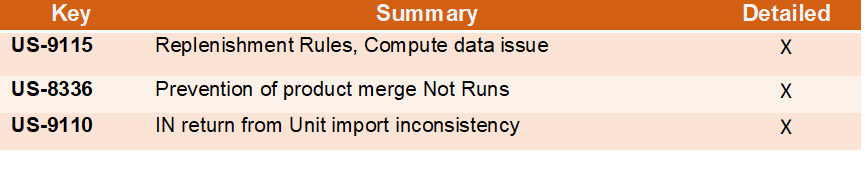
(US-9115) Replenishment Rules, Compute data issue
This issue, flagged by OCA, meant that any Replenishment Rule Segment containing both whole FMC periods in the past and products which were expiring was blocked from having its data recomputed, meaning the order calculation and reports could not be accurately generated. This issue has now been corrected.
(US-8336) Prevention of product merge Not Runs
Previously, the merge products functionality, used at Coordo to merge Local products with Standard, Non-standard or Non-Standard Local products only checked on 2 aspects of product usage at project level: Quantity in Stock and Quantity in pipeline. Both needed to be zero. This caused issues as at Coordo; a product could be merged if both criteria were fulfilled, but the merge of products was then blocked at project level due to the product being in use in a transaction.
With this ticket a 3rd check is added: if the product is in any transaction at project level. When a product is in a transaction, this will now be flagged and visible in the onscreen Mission Stock report, via the checkbox “Used in a transaction” being ticked. This information is now used by the merge functionality to check that only products which can be fully merged in all mission instances are able to be merged at Coordo.
(US-9110) IN return from Unit import inconsistency
This bug, found by Pharma, meant that when the template for the Return from Unit import into INs from scratch did not contain Batch / Expiry information for products which were BN or ED mandatory, the import was ignored, which was inconsistent with the checks and behaviour of the import of standard IN import. Now both imports behave in the same way, and products lacking Batch / Expiry information are now imported. This information can be added manually to lines after import.
All Supply tickets integrated in UF22.1
Non- functional
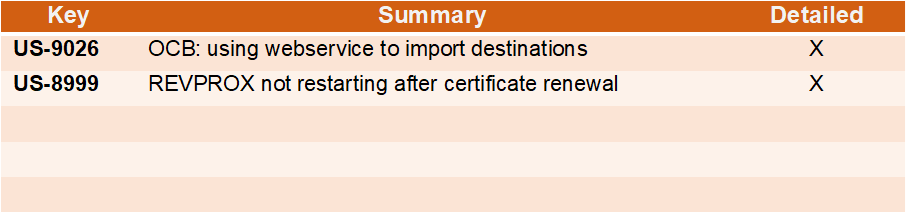
(US 8019) OCB: using webservice to import destinations
Tools’ import functionality now supports, apart manual import, direct call to XMLRPC port and allows to automate ingest of imports to Unifield.
(US-8999) REVPROX not restarting after certificate renewal
The issue reported on several instances where revprox reverse proxy exits after certificate renewal is now fixed in this UF22.1 patch.after certificate renewal is now fixed in this UF22.1 patch
All Non-functional tickets integrated in UF22.1
UniField v22.0 Release Notes
Release Details
Release version: UF 22.0
Date of production synchronization server patch: 15-September-2021 / 18:00 Geneva time
Latest user rights files updated: UF22.0 can be found here.
Note that no user rights need to be loaded at each HQ. This will be done at the Sync Server by the Core team and will update the user rights via Sync for all HQs and missions.
JIRA filter for all integrated tickets: https://jira.unifield.org/issues/?filter=12383
Supply
(US-8646, US-8584, US-8432, US-8560) Changes to Products & how they are synched
With this release there are several changes to products to improve their alignment and also for user-friendliness.
For products with the type ESC, ITC, HQ, if they are deactivated in the higher instance (HQ level for all except Local products, which would be de-activated at Coordo level) this de-activation is synched to all lower instances. This was already the case before. However, previously, where a product in the lower instance was still in use (Stock / in an open document), the product could not be de-activated and there was no Not Run synch update. With this change, the de-activated product will automatically be set as UF status “Phase out” meaning that if a product can be de-activated by synch, it will be. If product cannot be de-activated by synch, it will remain Active, but status will change to Phase Out, and there will be a Not Run synch update. These 2 changes should help users identify where such a case has occurred. This is consistent with how UniData products already behave.
Where a product is de-activated in a higher instance, and in the lower instance the product is not in any open document or in stock, but it is in a product list, now its existence in a product list will no longer block its deactivation. Product will be de-activated, and it will be possible to see in the product list “Old products” tab, that this product was removed.

For the case of synched flows between Instances with different products (e.g. Intermission or Intersection), for the case that a PO or FO is created by synch and includes a product which does not exist in the receiving instance, there is now a message onscreen on the relevant document (PO or FO) warning the user that a product code could not be created. As with before, there is still a Not Run created, and the message on this has been made clearer.
(US-8520) New Import into IN from scratch
An improvement for Pharma, there is a new import file with specific checks for INs which are created from scratch (i.e. not linked to a PO) and which are for returns from external consumption units. There is a specific button for this import (see screenshot) and before the file can be imported, the header fields “Ext CU” and “Reason Type” and of course “Expected Receipt date” fields must be filled. Reason Type must be “Return from Unit”. The import file has a specific format, but the same checks are made as for the original import lines functionality.

(US-8280) IN Physical Reception date field change
As initiated by OCB, the already-existing “Physical Reception date” field on Incoming Shipments (INs) has been moved to appear on the pop-up “Products to process” displayed once the “Process” button has been clicked.

Any date entered here and then processed with lines will appear in Closed IN in the “Additional Info” tab. As per before, if no date is entered here when processing the IN, the Actual Reception date will be taken for this field.
(US-7927, US-8076) Modification to PO RDD date management & pipeline
Previously, a second RDD field “Requested Delivery Date (modified)” had been added at header level to POs in order to manage the updated delivery dates from suppliers for lines which were not yet confirmed. With this ticket, the 2nd Requested DD is renamed to “Estimated Delivery Date” (EDD). As well as being present at header level, this field has also been added at line level, and is visible onscreen directly in POs, and in FOs it is visible only in line pop-ups. The line level can be filled manually or pushed from the header level field. There is no change to the format of the Vertical Integration PO import and export files. The date value is synched in the same way as the original RDD value was.
Labels for the other dates have been modified to be consistent with the naming, “Delivery Requested Date” has become “Requested DD” etc and also in the OST the original “Estimated DD” label has been changed to “Calculated DD” with the same value, so as not to be confused with the term in POs.


There has also been work done to align how the pipeline and its dates are displayed in different screens and reports, taking into account that Validated PO lines are considered as pipeline.
(US-8014) New AMC report not showing negatives
As requested by Pharma, a parallel report has been developed in the Historical Consumption report. Warehouse>Reporting>Consumption Reports>Historical Consumption
There is a new checkbox which appears when Consumption Type is “Average Monthly Consumption”. The checkbox “Remove Negative AMCs” has a fuller explanation below it, and when ticked, the “Historical Data report” can be generated which does not show any negative AMCs at the month level, and the “Entire Period AMC” is based on the figures shown for each month. When the checkbox is not ticked, a similar report can be generated showing the figures as per the regular calculation for AMC (including negatives), and it is still possible to view the (original) onscreen version for this via the View Historical Data button.

(US-8719, US-8558, US-9028) Replenishment Rules changes
Some improvements and corrections made to the Replenishment Rules include: The Inventory Review report excel export had had grouping added to its columns to make it more readable. These can be expanded and contracted.
It is now possible to add a value of “0” for FMC values for any status of product
When UI is viewed in French, the comma character “ , “ is accepted to indicate a decimal place.
(US-8944) Migration of Local Products to new Thermosensitive codes/values
As per the mapping agreed by Pharma, and already implemented by UniData for UniData products, all Local products in UniField which had old Thermo values have been migrated to the new equivalent Thermo values. No active ITC, ESC and HQ products had old Thermo values, so none needed to be migrated.
(US-8364) Display of Physical Inventory Counting Sheet
In the Physical Inventory, when adding products, it was already possible to specify system should add products with movements in the last X months. With this change, the number of months specified to add products can be used to filter and display also the batches of the added products based on this timed selection. Where user has added products specifying products with movements in the last 5 months, this would be the default option ticked in the new checkbox on the “Generate Counting sheet” pop-up (see below) and only batches which have been moved in the last 5 months will be displayed in the counting sheet.
If this checkbox is unticked, the original product selection remains unchanged, so all products with movements in the last 5 months will be displayed, but all of their batches will be displayed even those which were last moved several years before.
If the checkbox “only count lines with stock different than 0” is ticked, the new checkbox cannot be ticked. All previous displays of the Counting Sheet are still possible.

For the case that multiple additions of products were performed, the system will propose the greatest number of months used during the additions.
(US-8175) Forced reception, Not Run management & New Not Run type
With this ticket there is a correction to specified flows where lines in a project IN belonging to a synched flow have been manually changed (e.g. cancelled) by a user, without waiting for the synch to update the IN, and then the Coordo has sent the line.
In order for the update by synch of the other lines in the IN to not be blocked, a new type of Not Run synch message has been created. It is called a “Partially Not Run” meaning the message itself was run for the document (so the IN has been updated with all lines where possible), but the flagging of Synch message as “Partially Not Run” indicates there were problematic lines in the document which could not be updated.
This type of Not Run is automatically displayed in the Message Received Monitor in the same way as standard Not run messages, but its line is displayed in Orange rather than Red, and there is a specific filter button for this type in the header.

This type of Synch message has a button “Set as Totally Run” to allow user to set to fully Run in order to remove from this filter on the dashboard:

All Supply tickets integrated in UF22.0
Finance
(US-7903) Request to have Commitment vouchers linked to the PO with Inter-section / intermission partner types
Operational centers have agreed to implement commitment vouchers for intersection and intermission flows.
- All Funding Pools are allowed in the Commitment Vouchers “Automatic – Intersection” and “Automatic – Intermission” (i.e. we don’t restrict to PF only).
- We will use the AD directly from the PO for the invoices generated by synch (so for these invoices, we will not use the AD of the CV).
- When we synch and the synch creates IVI /SI, we use the account of the CV (this account can be modify in the CV that have a status draft).
Behavior to take into consideration:
- CV will still be deducted from amount of IVI or SI until the CV full amount is reached.
- CV will be set to done if total amount is reached, whatever the state of the PO, the remaining backorders / invoices to come.
- CV will be set to done once a IVO/STV is validated and if the PO or PO line is in closed state (even if the amount of the CV is not reached).
- CV will not be set as done once a IVO/STV is validated and if the PO or PO line is not in closed state and the total amount of the CV is not reached.
- CV will not be set as done in case the PO or PO line becomes closed after reception and if no IVI or SI are validated at a later stage (cancel invoices).
- In case a line is added on the FO of C2, no added line on the CV of C1 for consistency.
- Pushed FO from C2 to C1, no CV are created at C1.
(US-7449) The AD of the CV and SI lines will be the one of the PO
We have changed the way AD is calculated in Invoice and in CV. The objective is to align PO/Invoices and CV aligned on the PO analytical distribution behaviour:
Please be aware that the CV in progress that were created before this change will keep the former behaviour, the improvement is just for the new POs and their CVs (this improvement is not retroactive).
Some notes:
- When transferring AD from PO to Invoice, system use the product as linked object (note that it is not possible anymore to delete products coming from PO in invoices).
- When transferring AD from PO to CV, system use the product as linked object.
- It will not be possible to delete product lines in CV but it will be possible to change the account code in draft status (not in validated status); for manual CV the account code is editable at validated status (current behaviour).
- AD will be per product in SI and CV the same as it is in POs.
- Each CV line or SI line will generate AJIs according to the AD of the line, AD being the one from the PO.
- The updates between SI and CV will be based on the product line and not anymore – based on the account code.
(US-9003) Set all Intermission partners with the functional currency (EUR / CHF)
We noticed there were some intermission partners that have another currency than the functional currency while only functional currency is allowed for Intermission partners so we proceeded with a patch script to set all intermission partners with the functional currency.
All Finance tickets integrated in UF22.0
Non- functional
(US-9026) Invalid date in a wizard pop-up generates a Pink Screen
Since UF21.0, an invalid date value into the date field for example inputting an invalid physical reception date when processing an IN would return a pink screen. The UF22.0 release fixes this by returning an invalid date error message instead of the pink screen.
(US-8869) Remove stocked internal files from IR (doc) import
As reported in US-8853, all files used to import IRs are being retained by the database. This causes abnormal growth of db size. With the UF22.0 release, import files will be deleted automatically after a successful import since these files are not needed or available functionally.
(US-8866) Add the last update sequence pulled next to hardware id
When the Core team is updating the hardware id of an instance, we have to ensure also that the “Last update sequence pulled” at the sync server corresponds to the last update sequence pulled” at the instance level. This is to ensure that the restored dump is the correct one to avoid any missing/discrepancies of data. We have noted several incidents following a request for hardware id update where we found out that the backup restored is not the latest one.
In this release, we have added the last update sequence pulled next to the hardware id in the sub menu “Entity id”. This field is read only and is updated after each sync. This will ensure that when requesting hardware id update, requesters will copy the hardware id as well as the last update sequence pulled to ensure it matches with the sync server.
(US-8865) Huge Sync Message to Process Blocks Synchronisation
Huge sync messages to process for example a PO with 1000+ lines would block synchronisation due to memory error. The UF22.0 release fixes this issue.
(US-8776) Code fix to remove the tag on users created by duplication
Duplicating a synched user in a coordination or project instance has been retaining the synced flag on the duplicated local user. With the 22.0 release, the sync flag is removed when a sync user is duplicated. The login field of a synced user in coordination or project cannot be changed either (only read, no write access/edit)
All Non-functional tickets integrated in UF22.0

F. LU-SU4304 Comment générer le Rapport des Livraisons
Manuel de l’Utilisateur Supply -> 5. Entrepôt -> 5.18 LU-SU4304 Rapports de Mouvements -> F. LU-SU4304 Comment générer le Rapport des Livraisons
Comment générer le « Rapport des Livraisons »
Suite à l’intégration du “Rapport des Réceptions” (voir ci-dessus), ce nouveau rapport reflète le précèdent en rassemblant l’ensemble des informations clés liées au processus de livraison.
Ce rapport exporte seulement les lignes des OUT (et OUT-CONSO) au statut “Fermé” ou “Livré” et des SHIP au statut “Expédié” ou “ Reçu”.
Aller à: Entrepôt / Rapport / Rapport des Livraisons
- Sélectionnez tout critère voulu parmi les suivants: Date du; Date au; Partenaire; Zone Source; type principal du produit et/ou Zone de Destination.
- Cliquez sur le bouton on the “Rapport Excel”.
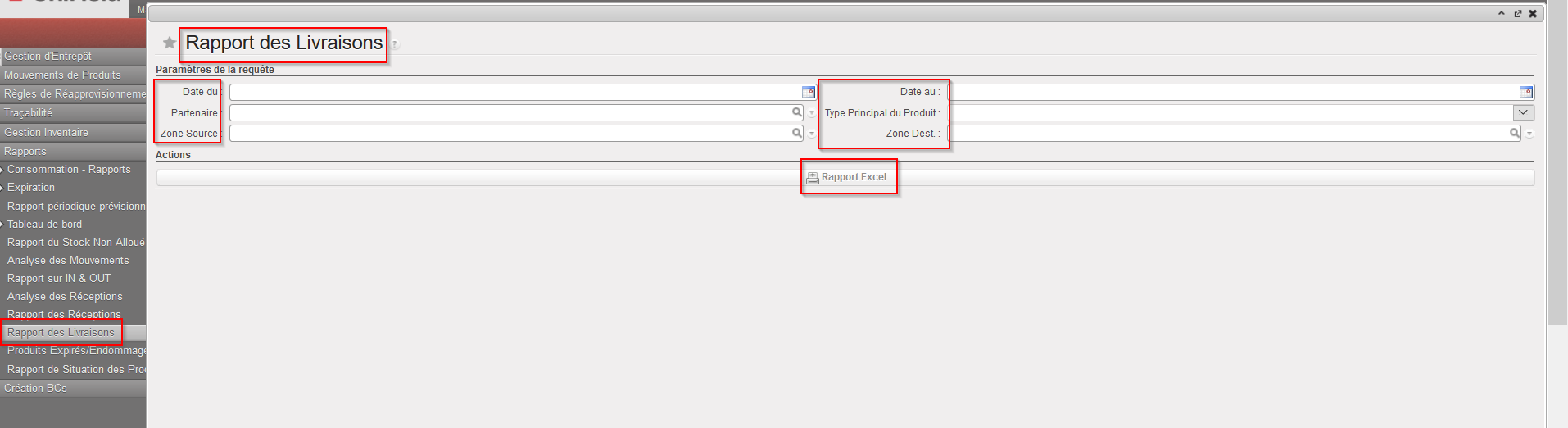 |
| Rapport des Livraisons |
 |
| Rapport des Livraisons – Excel |