The Liquidity Position report (PDF or XLS) This report is showing the capability of the project/coordo to pay its short-term due debts using all its liquid assets, cash, bank, cheque. Shows us an overview of the liquidity position of the project/Coordination at a specific point in time (given period). We can see the state of the registers, Starting Balance, Calculated Balance and Bank Statement Balance Additional note: Please note that when you export the Liquidity Position, UniField will display the entire status of Bank, Cash, and Pending Cheque..
The Bank reconciliation report (PDF) PDF report; displays starting balance, calculated balance and bank register balance w/gap. Note that the Comments field displays in the report; it can be used to explain any cash discrepancy. Separate field for the Bank Account Number. Additional note: Paper evidence to be signed-off and acknowledge bank reconciliation was properly done..
The Open Advances report (XLS) Excel output of all the internal open advances, including 13000; 13010, not yet settled
The Full report report (XLS) Excel output showing all entries in a register, including breakdown of invoice lines for imported invoices and analytical allocation. This report provides full detail to cross reference paper receipts and invoices. Additional note: It includes also record of deleted entries and all manual journal entries on corresponding liquidity journal..
The Full report PDF report (PDF) PDF output showing all entries in a register, including breakdown of invoice lines for imported invoices and analytical allocation. This report provides full detail to cross reference paper receipts and invoices. The full report in PDF format can be considered an accounting or financial document because it has validation fields. Additional note: It includes also record of deleted entries and all manual journal entries on corresponding liquidity journal..
LUFI-50502 Registers / Cheque Registers
The Cheque Inventory report (XLS) Excel output displaying all outstanding cheques of the current period:
The Pending Cheque report (XLS) Excel output showing outstanding cheques without any period limitation:
The Full report report (XLS) Excel output showing all entries in a register, including breakdown of invoice lines for imported invoices and analytical allocation. This report provides full detail to cross reference paper receipts and invoices. Additional note: It includes also record of deleted entries and all manual journal entries on corresponding liquidity journal..
The Full report PDF report (PDF) PDF output showing all entries in a register, including breakdown of invoice lines for imported invoices and analytical allocation. This report provides full detail to cross reference paper receipts and invoices. The full report in PDF format can be considered an accounting or financial document because it has validation fields. Additional note: It includes also record of deleted entries and all manual journal entries on corresponding liquidity journal..
LUFI-50503 Registers / Cash Registers
The Cash Reconciliation report (PDF) PDF cash count report; displays opening balance, calculated balance and cash count balance w/gap Additional note: Paper evidence to be signed-off and aknowledge cash reconciliation was properly done, with potential gaps explained.
The Liquidity Position report (PDF or XLS) Shows us an overview of the liquidity position of the project/Coordination at a specific point in time (given perid). We can see the state of the registers, Starting Balance, Calculated Balance and Bank Cash Box Balance Additional note: Please note that when you export the Liquidity Position, UniField will display the entire status of Bank, Cash, and Pending Cheque..
The Open Advances report (XLS) Excel output of all the internal open advances, including 13000; 13010, not yet settled
The Full report report (XLS) Excel output showing all entries in a register, including breakdown of invoice lines for imported invoices and analytical allocation. This report provides full detail to cross reference paper receipts and invoices. Additional note: It includes also record of deleted entries and all manual journal entries on corresponding liquidity journal..
The Full report PDF report (PDF) PDF output showing all entries in a register, including breakdown of invoice lines for imported invoices and analytical allocation. This report provides full detail to cross reference paper receipts and invoices. The full report in PDF format can be considered an accounting or financial document because it has validation fields. Additional note: It includes also record of deleted entries and all manual journal entries on corresponding liquidity journal..
LUFI-50504 Suppliers reports
The Pending invoices report (XLS) A list of open supplier invoices, supplier refunds, customer refunds and stock transfer vouchers in open state, showing outstanding amounts. If the invoice has been imported or partially imported you can also see the related register sequence numbers. Additional note: Reports shows invoices in open status: imported, not imported and partially imported..
The Paid Invoices report (XLS) A list of paid supplier invoices, supplier refunds, customer refunds and stock transfer vouchers in paid state, for the dates selected. Shows the sequence number of the invoice as well as the register sequence number where the invoice was imported.
The Allocation Synthesis report (XLS) Shows split of the invoice amount per accounting code and cost centre.
The Invoice Allocations report (PDF) Shows invoice lines allocation: analytical distribution (Destination, Cost centre, Funding Pool), Accounting code, quantity, unit price etc per invoice line. Additional note: To avoid certain corrections after validation of a Supplier Invoice, it is best to check the analytical allocations using this report, which gives a brief overview of all the important fields in the Supplier Invoice..
The Print report report (PDF) Invoice hard-copy, available for all kinds of invoices / refunds, donations and inter-mission vouchers. It can be used for filing or internal communication purposes.
LUFI-50505 Selector reports and journals view
The G/L Selector report (List view in the system or PDF) List of journal items that is produced after user entered a series of criteria Additional note: The G/L Selector is a tool to search Journal items when you need to use multiple or complex criteria that cannot be easily done in Journal Items..
The Analytic Selector report (List view in the system or PDF) List of journal items that is produced after user entered a series of criteria Additional note: The Analytic Selector is a tool to search Journal items and their corresponding analytic allocation when you need to use multiple or complex criteria that cannot be easily done in Analytic Journal Items..
The Combined Journals Report report (PDF or XLS) List of journal items that is produced after user entered a series of criteria Additional note: Combined Journals Report is a tool to search Journal items when you need to use multiple or complex criteria that cannot be easily done in Journal Items and Analytic Journal Items..
LUFI-50506 Journal Entries Reports
The Journal Items report (List view in the system) Raw list of journal items that can be refined thanks to a series of filters Additional note: All accounting lines of the journal accounting,.
The Journal Entries report (List view in the system) Raw list of journal entries (consisting of 2 to n journal items) that can be refined thanks to a series of filters Additional note: All journal accounting entries (debits and credits)..
The Analytic Journal Items report (List view in the system) Raw list of analytic journal items that can be refined thanks to a series of filters Additional note: All analytical lines of journal accounting entries.
The General Ledger report (PDF or XLS) PDF or Excel report, a complete record of financial transactions on all G/L accounts. The ledger holds accounting information that is needed to prepare financial statements. This report can be used e.g. to verify the amounts on reconciled and unreconciled balance accounts. Additional note: The General Ledger report is a complete record of all financial transactions on G/L accounts. The ledger holds account information that is needed to prepare financial statements, and it includes accounts for assets, liabilities, equity, revenues and expenses..
The Trial Balance report (PDF or XLS) PDF or Excel report, lists the balance on all accounts. Additional note: The Trial Balance shows the balance on all accounts at a selected point of time..
The Profit & Loss report (PDF or XLS) PDF or Excel report, lists expense and income account balances. Additional note: The Profit & Loss reports expense and income per accounting code and potential under spending (net profit) or overspending (net loss)..
The Balance Sheet report (PDF or XLS) PDF or Excel report, lists Balance Sheet account balances, reflects the assets and liabilities. Additional note: The Balance Sheet is a reflection of your assets and liabilities at any given point of time..
The Liquidity Balances report (PDF or XLS) PDF or Excel report of the Liquidity Position – starting and closing balances of all the register – for the selected period.
The Balance by account report (XLS or list view) Excel report or viewed in UniField, lists the balance on all accounts. This report can be used e.g. to verify the amounts on reconciled and unreconciled balance accounts. Additional note: The Balance by account is a reflection of the G/L accounts balance per account.
The Balance by analytic account report (XLS or list view) Excel report or viewed in UniField, lists the balance on all analytic accounts (Cost center, Destination, Funding Pool, Free 1 and Free 2). Additional note: The Balance by analytical account is a reflection of the analytical accounts balance per account.
LUFI-50508 Reporting / Generic reporting
The Local Expenses report (XLS) Excel report of all expenses purchased or settled locally, in order to get a better overview of cash flow needs or to meet specific requirements from local auditors asking MSF to report on local expenses.
The Export to HQ system (OCB) report (ZIP) Used in UniField HQ instance to export field data into HQ system (OCB compatibility)
The OCB matching export report (ZIP) To check if all entries reconciled in UniField are reconciled in CODA
LUFI-50509 Configuration / Currency Management
The Currency Tables report (XLS) Shows the FX rate per month, per currency (all currencies)
The Currencies report (XLS) Shows the FX rate per currency (all currencies)
The FX rates by currency report (XLS) In some cases, you might want to use the same FX rate for a defined currency over several periods. The “FX rate by currency” function will produce a report in xls showing the rates used for given periods. Additional note: Go to chapter 02 Configuration / LUFU – 20204 Applied FX Rate over multiple periods for more details.
LUFI-50510 Reporting / Legal reports / Employees
The Employee Ledger report (PDF or XLS) PDF or Excel report, a complete record of all financial transactions on all employees. It is important to note that an individual employee cannot be selected for the report; all employees will be listed.
The Employee Balance report (PDF or XLS) PDF or Excel report, a complete record of all financial transactions on all employees. It is important to note that an individual employee cannot be selected for the report; all partners will be listed.
Two new reports have been created for employees following the partner ledger and balance model.
Employee Ledger:
This report is an analysis done by employee. It is a report showing all B/S entries linked to a staff depending on your selection (periods, reconciled or not, etc..).
Go to Accounting > Reporting > Legal Reports > Accounting Reports > Employees > Employee Ledger:
You will have several possibilities to do our selections using the filters.
Employee Balance:
This report will give you for each staff the balance by B/S account code + currency. This one can be reported either in the interface or exported in excel file.
Go to Accounting > Reporting > Legal Reports > Accounting Reports > Employees > Employee Balance:
You will have several possibilities to do our selections using the filters and the option to tick on “Only active employees”.
LUFI-50511 Reporting / Legal reports / Field Balance Specification Report
The Field Balance Specification Report report (XLS) Excel, provides a detailed overview of all transactions or operations carried out during a given period.
Field Balance specification report is to track liquidity balances and B/S line’s history.
Main features of the report:
It shows the booking rate for the line to compare with the rates of the extracted report.
It displays currency amount to compare functional amount with current period rate
It displays “Reconcile No” for line reconciled later to compare with month of the report.
How to extract the report:
Go to Accounting > Reporting > Legal reports > Accounting Reports
Click on ” Field Balance Specification Report ” it will open popup with “Field Balance Specification Report ” .
The filters as below:
“Top proprietary instance” it shows only instance code where you are if from project instance, and all mission’s instances if from coordo.
“Period” >> in project shows only regular periods (closed + open only), in coordo display more extra accounting periods
“Select” with 2 options either “Total of entries reconciled in later period” or “Details of entries reconciled in later period”.
“End of Year” box, this box can be ticked if we have an active currency table.
How to access “Field Balance Specification Report “
Closing a Fiscal Year is a hierarchical process in UniField and it follows the principles of period closing: closing is done in cascading steps. Fiscal Year is only closed at coordination and HQ level, not directly at a project level. The hierarchical flow means that all coordinations must close their fiscal year before HQ can close it.
Closing a Fiscal Year at coordination level will automatically close the fiscal year at project level through the synchronization mechanism. The same applies for re-opening a fiscal year at coordination level, it will re-open the fiscal year at all projects, too.
Once the Fiscal Year is closed at the coordination and the fiscal year state has changed to {Mission-closed}, the fiscal year state at project level is updated through synchronization and becomes {Mission-closed} as well.
It is possible to re-open the Fiscal Year at coordination level only with the Administrator profile and only if HQ didn’t HQ-close the Fiscal Year yet. Yearly closure will become frozen without the possibility to re-open it or to reverse related actions when it’s done at HQ level – therefore HQ-closing is the last step after all coordinations have mission-closed their Fiscal Year.
Three functions of which two optional are available to proceed with when the Yearly Closure button is launched at Coordination level:
Action 1 “Move regular B/S accounts to 0”
This function is optional (box to tick depending of your OCs procedure)
Objective is to set the balances to 0 for all B/S regular type accounts that are not reconcilable at mission level (HQ, Intermission and Intersection accounts)
The B/S accounts to set to 0 will have to be preliminary activated in the Chart of Accounts at HQ level
The counterpart accounts to the move to 0 will have to be recorded in the company settings of the coordination in case of a debit or credit move will be recorded
Entries will be booked in period 16 and will be visible in the G/L journals but no analytical entries will be created (no impact on the budget)
Entries booked in these accounts throughout the fiscal year are automatically reconciled with the year-end entry. In order to allow automatic reconciliation, the accounts have to be set as non-reconcilable (tickbox for reconciliation needs to remain unticked) in the account master data.
Action 2 “Book the P&L result in the fiscal year to close”
This function is optional (box to tick depending of your OCs procedure)
The accounts to be used have to be set in the company settings of the coordination
P&L entries result will be booked in period 16 and will be visible in the G/L journals but no analytical entries will be created (no impact on the budget)
Action 3 “Carry over all B/S account balances in the next fiscal year” (All OCs)
This function is not optional and is the final aim of the Year end Closure
Initial Balances will be booked in period 0 of the next fiscal year
These entries are not visible in the journals, and it is not possible to edit or delete them
Entries are only visible in reports like Balance Sheet, General ledger and Trial Balance
Note that the company configuration of each instance must be done before launching the yearly closure. For more details, see Chapter 2 – Configurations and IT User manual guideline.
How to Close a Fiscal Year at Coordination Level
Go to Accounting/Periodical Processing/End of Period/Yearly Closure/Close the fiscal year
Choose the FY to close.
Tick checkbox “Move regular B/S account to 0” depending of your OC procedure
Tick checkbox “Book the P&L results” depending of your OC procedure
Click on {Close FY}
Go to Accounting/Configuration/Financial Accounting/Periods/Fiscal Years/ to see that the status changed from {Open} to {Mission-Closed}
Fiscal Year Status is mission-closed
Conditions for mission-closing the Fiscal Year:
Two conditions prevail for mission-closing the Fiscal Year at coordination level:
Previous fiscal year must be {Mission-closed}
All coordination periods 1 to 15 of the Fiscal Year to close must be {Mission-closed}
All active projects received state “Mission-closed” by sync , if the project not received the state you will receive warning message ( Periods are not at least mission-closed on the following projects: XE1_ZZZ )
If these conditions are not met, Fiscal Year cannot be mission-closed
Impact and behaviour of mission-closing the Fiscal Year
Entries are booked as {Unposted} in the {End Of Year} journal in period 16 of the fiscal year to close (Action 1 and 2)
Entries are booked as {Unposted} in the {Initial Balance} journal in period 0 of the next fiscal year (Action 3)
Only Journal Items are created, no Analytical Journal Items
Period 16 and 0 become {Mission-closed}
Fiscal Year becomes {Mission-closed}
Note that it is not possible to edit the fiscal year entries, journals or the periods.
How to Close a Fiscal Year at HQ Level
Go to Accounting/Periodical Processing/End of Period/Yearly Closure/Close the fiscal year
Choose the FY to close.
Click on {Close FY}
Go to Accounting/Configuration/Financial Accounting/Periods/Fiscal Years/ to see that the status changed from Open to HQ-Closed
Conditions for a HQ-closing the Fiscal Year
Three conditions prevail for HQ-closing the Fiscal Year at HQ level :
Previous fiscal year must be {HQ-closed}
All HQ periods 1 to 15 of the Fiscal Year to close must be {HQ-closed}
All missions must have mission-closed their Fiscal Year
If these conditions are not met, Fiscal Year cannot be HQ-closed.
Impact and behaviour of the HQ-closing the Fiscal Year
Entries booked in period 16 and 0 becomes {Posted}
Period 16 and 0 becomes {HQ-closed}
Fiscal Year becomes {HQ-closed}
All status updates synchronize down to all missions
HQ-closing the Fiscal Year is the final step of Year End closing process after all coordinations have mission-closed the Fiscal Year.
HQ-closing the Fiscal Year is not reversible: it is not possible anymore to re-open the fiscal year neither at HQ nor at Coordination level.
How to Produce a Fiscal Year States Report
As for the period status, it is possible at a parent instance level to have an overview of the fiscal year states of the children instance. For example, at HQ level, it is possible to see the status of the periods of all its missions.
The Fiscal Year states report is an overview of the fiscal year status of all children instances.
Go to Accounting/Configuration/Financial Accounting/Periods/Fiscal Years/
The Cash Request function allows missions to plan their cash needs based on UniField data and synchronize the request directly to HQ. The Cash Request is always created at coordination level, where an automatic input from the liquidity position, pending payables and engagements calculates the needed cash amounts by proprietary instance. In addition to the automatically filled data, a manual input for planned expenses not yet in UniField can be included in the Cash Request.
The Cash Request also includes the details of all past internal transfer entries. This makes it easy for the mission to follow up all the transfers between the HQ and the mission.
How to create a Cash Request
At coordination level, go to Accounting/Periodical Processing/Cash Request
The search view for Cash Request is opened
Click on {New} to start creating a new Cash Request
A new Cash Request form is opened
A Cash Request form waiting to be filled out
Fill in the mandatory fields of {Request Date}, {Month} and {Bank}.
The {Request Date} needs to be the date of today, i.e. the date on which the request amounts are calculated.
The {Month} is therefore a future period until which the pending payable amounts are taken into account.
The {Bank} is the bank account into which the money will be transferred to.
Fill in the currency in which the transfer is to be made.
If past transfers from HQ are to be followed on the cash request, the {Transfer Account Code} needs to be filled in.
Main Tab with basic information filled in
Click on {Save} and a {Generate} button along with the mission details will appear. Calculate the Cash Request amounts by clicking on {Generate}.
The Cash Request amounts are ready to be generated
At this point the Cash Request is in {Open} status and it will synchronize to the projects and to HQ
The data is automatically generated in the different tabs:
Data automatically filled in in {Banking} tab
Data automatically filled in in (Liquidity Position} tab
Data automatically filled in in {Payables} tab
Data automatically filled in in {Commitment} tab
Data automatically filled in in {Transfer Follow-up} tab
The {Planned Expense} tab remains empty at this point as it requires manual input. This tab should be filled in separately in all the mission’s instances, e.g. coordination fills out their own planned expenses, and projects fill out their own planned expenses. In case the projects do not fill out their expenses, coordination instance can fill these in on the project’s behalf, but the data will not synchronize down to the project.
To fill out the planned expenses at coordination, click on “New”
Creating planned expenses at coordination level
2. Fill out each expense line that is not yet recorded in UniField as pending payments or commitments and that will occur in the month the Cash Request is made for. You can add as many lines for as many accounts and currencies you need.
Adding planned expense lines at coordination level
3. After finishing encoding the planned expenses, go back to the {Main Tab} where you still see an empty field for the transfer amounts
4. Click on {Compute recap lines & totals to transfer}
The total amounts by instance are created
Total transfer amounts are computed without planned expenses from the projects
5. At project level, after the Cash Request is synchronized, click {Edit} to open the correct Cash Request
Cash Request search view at project level
Cash Request at the project level with only {Main Tab} and {Planned Expense} tab
6. In the {Planned Expense} tab, fill in the expense lines
Planned expenses at project level
7. Save the expense lines and synchronize. The coordination will then receive the amounts entered.
8. After synchronization at coordination level, the planned expenses from the project are now visible:
Planned expenses at coordination level after receiving amounts from the project
9. In the {Main Tab}, click on {Compute recap lines & total to transfer}
10. The total recap amounts per instance are now computed and the final transfer amount is computed. This data will now synchronize to HQ level, in which a transfer can be prepared.
The total transfer amount seen at coordination level
11. A PDF report can be run in the Action menu to get appropriate validations for the Cash Request
Cash Request Export in the Action menu
Cash Request Report ready to be authorized
12 . When the Cash Request has been authorized, it can be set to {Done}. It is up to each OC to decide when the Cash Requests are closed (e.g. upon validation, upon transferring the money). Until it is set to {Done}, the Cash Request can still be edited.
Revaluation function is used to adjust the value of assets and liabilities in functional currency according to a specific FX rate at month-end and/or at year-end closing. Revaluation function creates accounting entries only in functional currency, meaning that balances in booking currency are not affected.
The revaluation entry amount is the difference between the account balance at the end of the period in Functional Currency (total functional balance of journal items) and the balance at the end of the period in Booking Currency revalued at the period’s FX rate.
Revaluation entries are created per account per booking currency and it concerns accounts like cash, bank, outstanding cheques, payables and receivables.
Revaluation is an optional function in UniField. It is included in the period closing checklist, but if it is not run, the period can still be normally closed. Revaluation can be run in two ways:
Monthly liquidity accounts revaluation: calculated based on liquidity account balances (cash, bank and outstanding cheques) in each period at month end with that month’s FX rate. This revaluation can be run in any period.
Year-End revaluation: calculated based on liquidity and other B/S account balances at year-end with a specific currency rate table (e.g. average FX rate for the year, closing rate for the year etc.). This revaluation can only be run in one of the extra accounting periods 13-15. Year-End revaluation entries are automatically reversed and reconciled in January the following year.
Note! In order to run the Year-End revaluation, the January period of the following year needs to be open!
Before the revaluation can be run, the accounts to be included in revaluation have to be set up at HQ level. Please refer to 02 – Configurations, LUFI-20301 Account Properties for instructions on how to set up accounts for revaluation. In addition, the revaluation counterpart account (e.g. 67050 – Unrealized ExchRate Loss) needs to be set up in the Company Configuration in each coordination instance using revaluation function. Please refer to 02- Configurations, LUFI-21001 Company set up for further details.
Revaluation is the last step before closing a period and it should only be run when all the registers have been closed, all journal entries are posted and all journal items from the projects have synchronized to the coordination instance. Revaluation takes into account all account balances from the whole mission and therefore it can only be run at a coordination instance. In order to ensure all journal entries have been received at coordination, revaluation can only be run when the period state of all its project instances is {Field-closed}.
Revaluation is irreversible and it can only be performed one time in any selected period. The revaluation entries are automatically posted and they can’t be manually edited or deleted.
Revaluation can be run once and only once for each accounting period (January to December and Period 15). When the revaluation is acted, the revaluation entries are posted and the period is tagged as “revaluated”. If there is no revaluation entry to be booked, the system does not book empty entry, it tags the period as “revaluated”. Prior to revaluation, the system will check if the period has been already tagged as “revaluated”. If yes, the operation will be denied.
The system will calculate revaluation amounts against this specific FX table. The FX table should be in “valid” status. Closed FX table cannot be used.
The user must indicate a specific currency table in “valid” status to calculate the revaluation amount.
How to Run Monthly Revaluation
Go toAccounting/Periodical Processing/Revaluation
Open the Revaluation wizard and select {Liquidity (Month-end)} from the drop down menu for the {Revaluation method}
Selecting the revaluation method
2. Select the period in which revaluation will be run. The system automatically proposes current fiscal year and current period. Fields {Entry period}, {Entry date} and {Entry journal} are automatically filled and they cannot be edited.
Selecting the revaluation period
3. Click on {Validate}
Revaluation entries are created and posted
Revaluation entries created in REV journal:
Monthly revaluation is only required for OCA Coordination and it’s a part of the monthly closing check. If the monthly revaluation was not performed at an OCA Coordination instance, the closing of the period will be blocked with an error message as below:
How to Run Year-End Revaluation:
Go to Accounting/Periodical Processing/Revaluation
The year-end revaluation has to be done in two phases. First, open the revaluation wizard and select {Liquidity (Year-end)} from the drop down menu for the {Revaluation method}.
Selecting the revaluation method
2. Select the currency table that will be used for the year-end revaluation calculations. Refer to Chapter 2 – Configurations, LUFI-20201 Currency Files Loading for instructions how to set up a currency table.
Selecting the currency table
3. Select the Entry period in which the year-end revaluation will be run. {Entry date} and {Entry journal} are automatically filled and they cannot be edited.
Selecting the period for year-end revaluation.
All extra-accounting periods 13-15 are selectable in the first step of year-end revaluation.
Click on {Validate}
Revaluation entries are created and posted, revaluation reversal entries are created and posted
Revaluation entries and their reversals created in REV journal
Open the revaluation wizard again and select {Other B/S (Year-end)} from the drop down menu for the {Revaluation method}.
Selecting the revaluation method
2. Select the same currency table that was used in Step 2
3. The Entry period will be the same as in Step 3. It cannot be changed.
Period 13 will be used automatically, because it was used already in the first year-end revaluation
4. Click on {Validate}
Revaluation entries are created and posted, revaluation reversal entries are created and posted
Revaluation entries and their reversals created in REV journal
It is possible to handle both, accrued and deferred expenses in the Accruals Management module. Accrued expenses are expenses recognized before they are recorded with proper supporting documents. They are recorded as liabilities based on the best estimation of the expected charge. For MSF, accrued expenses mainly concern purchases received but not yet invoiced by the supplier, employee costs (like severance costs), and payroll taxes. For accrued expenses, the accrual entry amount is positive.
Deferrals are expenses that are already entered in accounting (e.g. invoice is already paid and expense booked) but where the expense amount belongs partially or fully to a following period. An example of deferred expenses is insurance fees that may concern multiple periods. For deferred expenses, the accrual entry amount is negative.
Accruals are managed at coordination level. There are two possible ways of creating accruals: Reversing Accrual and One Time Accrual.
In Reversing Accrual, accrual entries booked in one period are automatically offset at the beginning of the following period. The automatic reversal can only be created if the next period is open. The automatic reversal is created once the accrual lines are posted. Booking an accrual with an automatic reversal helps users re-think their accruals each month and decide if they should be repeated or not, lowered or increased.
In One Time Accrual, the system does not create any automatic reversal entries. The user will manually set the Document and Posting Date for the reversal entry and post it at a selected point of time. The reversal entry can only be booked on an open period.
The accrual should be either repeated (Reversing Accrual) or remain unreversed (One Time Accrual) until the expense is booked in the accounting and the accrual can be offset.
Account moves for an accrued electricity bill of USD 5,650 booked in December 2022. Automatic reversal created in January 2023. The accrual is re-estimated and re-booked (USD 5,000) at end-January 2023 as the invoice is not received and its reversal created in February 2023. The invoice is received and booked in February 2023 and paid the next month.
Description
Account codes
De
Cr
Entries matching
Accruals booking Dec-22
Other Accrued Liabilities
31300 or 15690
5650
R-1
Utilities & other energy consumable
65200
5650
Reversal created next period Jan-23
Other Accrued Liabilities
31300 or 15690
5650
R-1
Utilities & other energy consumable
65200
5650
Accruals re-booking Jan-23
Other Accrued Liabilities
31300 or 15690
5000
R-2
Utilities & other energy consumable
65200
5000
Reversal created next period Feb-23
Other Accrued Liabilities
31300 or 15690
5000
R-2
Utilities & other energy consumable
65200
5000
Invoice booking Feb-23
Trade Payables
31300 or 15690
4500
R-3
Utilities & other energy consumable
65200
4500
Invoice payment Mar-23
30020 or 15600
4500
R-3
2. Description and definition of the accrual fields and behaviour
Go to Accounting/Periodical Processing/Accrual Management
Two filter bubbles per “status” and “per type” are available on Accrual Management list view allowing to display the accrual objects depending on their status or type.:
Status: draft, running, done, and cancelled.
Type: One-Time Accruals and Reversing Accruals.
The standard display is per date of creation: the newest accruals on top.
Click on the {New} button to create new accrual entry.
a. Accrual object header.
The accrual header is organized in 3 columns with the following fields:
blue fields are mandatory and white fields are optional.
Note: When editing a draft accrual, the header update is not automatically saved. A warning message is shown when leaving the page or posting the accrual:
Click on {Cancel}, then click on {Save and Edit} button from the screen, if not the changes will be lost.
Field
Description
Journal
System defaults to ACC journal, this cannot be changed.
Number
Automatically filled when the accrual entry is posted.
Booking currency
Select the booking currency of the accrual entry. Active currencies are available.
Third party type
Drop-down selection. Default display is “partner”: – Empty – Partner – Employee Select the Third Party if needed Third party requirement per header account code applies.
Third party
Select a third party based on type selected before.
Period
Select the booking period of the accrual entry. The period should be in open status: Jan-Dec and P13-P15 are available. P0 and P16 are not available.
Document Date
Document date is automatically set to the last day of the selected period. The document date can be changed.
Posting Date
System defaults to last day of the period and cannot be changed. If need to change the posting date, change the period field.
Accrual Type
Select the type of accrual to book: there are two options – Reversing Accrual (the reversal is booked immediately in next period) – One Time Accrual (only the accrual is booked. To be reverse manually)
Accrual account
Select an accrual account. Account codes ticked as “accrual account”, as per account codes configuration, are available.
Description (header)
Enter a description of the accrual entry. Header description is mandatory free typing field. Header description is populating: – Description field of the JI related to the header account. – Description field on the accrual list view. – Automatically populating the description at line level (but editable)
Reference (header)
Enter a free reference for the accrual entry. Header reference is optional free typing field. Header reference is populating: – Reference field of the JE related to the accrual entry. – Reference field of the JI related to the header account. – Reference field of accrual list view. – Automatically populating the reference at line level (but editable)
Expense account
Choose an expense account. Account codes type expense, as per account codes configuration, are available.
AD header
Analytic distribution from header. If the analytic distribution is filled from header, it will apply to all the lines.
Reset AD at line level
Button to rest AD at line level. This button allows to reset Analytic distribution to line level.
b. Accrual tab.
The accrual lines are booked from the “Accrual” tab. It allows to create multiple expense lines related to one accrual entry: e.g. an accrued invoice with two or more expense accounts could be managed via a single accrual entry.
Click on {New} button to create new expense line. Blue fields are mandatory, white fields are optional. Save the line with the floppy disc.
Field
Description
Edit button
Edit (pencil) button is available on draft accruals.
Line number
System counts of lines. There is jump of line number in case a line has been deleted while the entry was still in draft status.
Description
Mandatory field, automatically filled from header but could be edited. Description at line level populates the description field of the JI/AJI on the expense account of related line.
Reference
Mandatory field, automatically filled from header but could be edited. Reference at line level populates the reference field of the JI/AJI on the expense account of related line.
Expense accounts
Select the expense account related to the accrual entry line. Account codes type expense, as per account codes configuration, are available.
Distribution
Line level analytic distribution. Analytic distribution could also be filled from line level.
Accrual amount
Line amount in booking currency.
Functional amount
Line amount in functional currency
Floppy disc
Save icon to save the line in edit mode. Press on {enter} key saves also the line.
Delete button
x is available to delete draft accrual line.
c. Journal Items tab
A second tab was added to the accrual screen after UF25.0. This tab lists the Journal Items from the accruals as per standard display of journal items. The sequence numbers and reconciliation codes are visible in this screen. It does not however allow to export the list in Excel.
All entries booked on ACC journal and related to the accrual are listed in this tab. The oldest number on top of the screen.
Depending on the status of the accrual object, the Journal Items tab is filled with:
Draft status: No related Journal items.
Running status: For One-Time accruals only. 1 JI sequence numbers is displayed: accrual entry.
Done status: 2 JI sequence numbers are listed, related to the accrual and its reversal. The reversal journal items are displayed below the accrual journal items. The description of the reversal is preceded by REV-
Cancelled status: 4 JI sequence numbers are listed,
Accrual entry
Reversal entry.
Cancellation of the accrual entry.
Cancellation of reversal entry.
The description of the cancellation is preceded by CANCEL- and cancellation of the reversal is CANCEL-REV-
Any entry booked on other journals and reconciled/related to the accrual account at header is not visible from this screen. To search them, use the reconciliation number on the accrual account.
d. Accrual object footer
Field
Description
Total amount
Accrual lines total amount is displayed at the bottom of the screen in booking and functional amounts. This field is updated when the lines are edited and saved.
State
The status of the accrual object is displayed at the bottom of the screen. – Draft: just created/edited and not posted – Running: only for accrual type “One-time”, when posted and not reversed. – Done: when posted and reversal is posted. – Cancelled: when posted and then cancelled.
e. Color code at accrual list view
Colour
Description
Blue
Draft status with valid analytic distribution
Red
Draft status with invalid analytic distribution.
Black
Running or done status
Grey
Cancelled status.
f. Accrual action menus:
There are 2 action menus available in accrual screen: “Post Accruals” and “Post Accrual Reversal”.
Field
Accrual type
Consequences
Post Accruals
One-Time Accruals
Working on One-Time Accruals in draft status only. Post the accrual entry in the selected booking period. The related JI is visible in “Journal Items tab” The One-Time Accrual object becomes in “Running” status.
Post Accruals
Reversing Accruals
Working on Reversing Accruals in draft status only. Post the accrual entry in the selected booking period and related reversal entry in next period. The next period should be in open status. The related JIs (accrual and reversal) are visible in “Journal Items tab” The Reversing Accrual object becomes in “Done”
Post Accruals reversal
One-Time Accruals
Working on One-Time Accruals in “running” status only. Post the reversal entry in the selected booking period. The related JIs(accrual and reversal) are visible in “Journal Items tab” The One-Time Accrual object becomes in “Done” status.
Post Accruals
Reversing Accruals
This action does not work on Reversing Accruals.
g. Cancel button
{Cancel} button is available on both accrual types in “Done” status. To cancel a One-Time Accrual in “Running status”, reverse it in the same booking period. The booking period should be in open status.
h. Accruals and period status
The period has to be in open status to allow creation, posting, reversing, cancellation of accruals.
It is possible to duplicate an accrual from closed period. The duplication being a draft exact match of the initial accrual object will have a posting date in closed period. Having draft accrual object is not blocking the closing of the period nor the fiscal year.
It will however not possible be to post a draft accrual object in closed period. Either change or reopen the posting period to allow the posting of the accrual entry.
i. Accruals journal entries, journal items and analytic journal items
The accrual journal entries (and related items and analytic items) are booked in the journal code “ACC” – journal type “Accrual”. It is possible to search them via the selector or the journal search methods.
3. Similar process for One-Time and Reversing accruals
a. How to create One-Time or Reversing Accruals in draft
Go to Accounting/Periodical Processing/Accrual Management. Click on {New} button.
Fill the header, blue fields are mandatory. While fields are optional. Select accrual type “One-Time Accrual” or “Reversing Accrual”
For more details about the definition of each field see Description and definition of the accrual fields above.
Create the accrual lines, blue fields are mandatory, white fields are optional.
Save the change with the floppy disc or by pressing on the {enter} key. It is possible to have multiple lines. Click on {New} button to add new lines. Total amount is updated when new line is added.
Fill the analytic distribution from header or line level.
If the analytic distribution is not valid, the line will turn in red.
Fill valid analytic distribution and save before posting.
Save the accrual in draft status. It turns to blue = “Draft”+ valid analytic and is now ready for posting.
b. How to edit a draft One-Time or Reversing accruals
Locate the accrual line to change and click on the pencil to edit the fields on the form.
Notes:
The changes on line level are automatically saved after clicking on the floppy disc.
The change at header is saved via a header {save} or {save and edit} button. User {cancel} button to discard the changes.
c. How to duplicate a One-Time or Reversing accruals (all statuses)
Duplicate is possible for all statuses of accrual objects. There are 2 ways of duplicating an accrual.From the list view, click on the duplicate icon.
From the form view, click on {duplicate} button at screen header. If duplicate button is now shown, click on {save} button to make it appear.
A new draft accrual object is created. The duplication is the exact match of the accrual including the analytic distribution and is always created in draft status. The only difference between the original and the copy is that the header description field of the copy is followed by “(Copy)”.
The draft copy could be edited and later posted. Do not forget to save the changes on the header (e.g. removal of “(Copy)”) with the {save} or {save and edit} button before posting a duplicated accrual.
d. How to delete a draft One-Time or Reversing accruals
Click on the {delete} button from the accrual form view or red X icon on list view to delete draft accruals. Later statuses (running, done, cancelled) could not be deleted.
A deleted accrual is removed from the system and not visible anymore.
e. How to cancel a “done status” One-Time or Reversing accruals
When an accrual (One-Time or Reversing) is “done status” the {cancel} button is available.
A pop up button shows. Click on {OK}. The posting and reversing periods should be in open status to allow cancelation.
If one of the periods are not open, an error message will pop up. Reopen the period to allow the cancellation.
As consequence of cancellation of a “done” accrual,
The accrual entry is cancelled in its booking period. The reversing entry is cancelled in the reversing period.
The functional value of the cancellation entries is the same as the accrual and its reversal. There is no FXA created
The cancellation of the accrual is reconciled with the cancellation of the reversal.
The accrual status becomes “Cancelled”.
A cancelled accrual is listed in the accrual management screen in grey. It can be duplicated.
4. Specific process related to One-Time Accruals
Go to Accounting/Periodical Processing/Accrual Management and click on the {New} button, fill the header, select accrual type: One-Time Accrual. Fill the analytic distribution and accrual lines. Save the accrual in draft. More details on how to create or to edit an accrual see above.
a. How to post One-Time accruals in order to turn it to “Running” status
When the One-Time accrual is in draft status, the action menu “Post Accruals” allows to post the “One-Time Accruals” in the ACC journal. The posting period should be in open status. Click on {YES} to process or on {No} to cancel the action.
If the posting period is not open, an error message appears. Click on {OK} and either change the period of the accrual or (re)open the period.
As consequence of posting of One-Time Accrual:
The accrual turns to “Running” status.
Accrual journal entry is posted in ACC journal with related Journal Items and Analytic journal items.
The related JI are listed in “Journal Items” tab of the accrual.
The accrual is not anymore editable. It is not possible to delete nor to cancel.
It is possible to use the “Post accrual reversals” action menu to reverse the accruals.
Notes: When posting an edited accrual, ensure changes have been saved before clicking on {Post Accrual Reversals”. To do so, click first on {save and edit} button at header before {Post Accrual Reversals}
To cancel a “running” One-Time Accrual, reverse it in the same posting period.
b. How to reverse a One-Time accrual in order to turn it to “Done” status
When an accrual type One-Time is in “Running” status, the action menu “Post Accrual Reversals” allows to post the reversing entry, in the ACC journal. The reversal posting period should be in open status. Select the document and posting date of the reversal. Click on {YES} to process or on {No} to cancel the action.
If the posting period is not open, an error message appears. Click on {OK} and either change the period of the accrual or (re)open the period.
As consequence of reversing of One-Time Accrual:
The accrual turns to “Done” status.
Reversing Journal entry is posted in ACC journal with related Journal Items and Analytic journal items. The functional value of the reversing entry is the same as the accrual entry.
The B/S account is reconciled with the B/S account of the accrual entry.
The related JI are listed in “Journal Items” tab of the accrual, below the JI of the accrual entry.
The accrual is not anymore editable. It is not possible to delete.
It is possible to use the “cancel” button in order to cancel the accrual entry and its reversal.
A “Done” One-Time Accrual is listed in the accrual management screen in black.
c. Manual reconciliation of “Running” One-Time Accrual
It is possible to manual reconcile the B/S journal item from the accrual entry. When the item is fully reconciled:
The One-Time accrual status turns to “Done”.
In the “Journal items” tab of the accrual object, the B/S line bears the reconciliation code. The related entries which are not from ACC journal is not listed.
The {cancel} button appear. It is however not possible to cancel the accrual because there is no reversing entry in ACC journal.
Click on {ok}. If the B/S entry is unreconciled, the accrual object will turn to “Running” status and could be reversed and later cancelled.
5. Process specific related to Reversing Accruals
Go to Accounting/Periodical Processing/Accrual Management and click on the {New} button, fill the header, select accrual type: Reversing Accrual. Fill the analytic distribution and accrual lines. Save the accrual in draft. More details on how to create or to edit an accrual see above.
a. How to post Reversing Accruals in order to turn it to “Done” status.
When the Reversing Accrual is in draft status, the action menu “Post Accruals” allows to post the “Reversing Accrual” in the ACC journal with the reversing entry at the same time. The posting period and the next period should be in open status. Click on {YES} to process or on {No} to cancel the action.
If one of the posting periods is not open, an error message appears. Click on {OK} and either change the period of the accrual or (re)open the period.
As consequence of posting of Reversing Accrual:
The accrual turns to “Done” status. There is no “Running” status for Reversing Accruals.
Accrual journal entry and its reversal are posted in ACC journal with related Journal Items and Analytic Journal Items. The functional value of the reversing entry is the same as the accrual entry.
The B/S account of the reversal is reconciled with the B/S account of the accrual entry.
The related JI are listed in “Journal Items” tab of the accrual object.
The accrual is not anymore editable. It is not possible to delete. It is possible to duplicate.
It is possible to use the “cancel” button in order to cancel the accrual entry and its reversal.
It is NOT possible to use the “Post accrual reversals” action menu in reversing accruals.
A “Done” Reversing Accrual is listed in the accrual management screen in black.
Notes: When posting an edited accrual, ensure changes have been saved before clicking on {Post Accrual Reversals”.
To do so, click first on {save and edit} button at header before {Post Accrual Reversals}
Account reconciliation refers to the process of matching the credit and debit entries on a specific balance sheet account from a selection of records. When entries are balanced, it means that the total debit amount equals the total credit amount. Account reconciliation should be completed before proceeding to month end period closing.
Reconciliation provides the user with more accurate information of:
Settled vs. to be settled transactions
Accruals reversed or not
In UniField, account reconciliation is performed in Journal Items. A common and unique reference (alpha-numerical) is assigned to the group of accounting entries which have been matched together.
The conditions necessary to be able to reconcile selected entries are:
They are Posted
They are recorded on the same G/L account which should be configured as a reconcilable (see LU20301 chapter 2 – Configurations)
They have the same third party
Except for transfers or
If the account has been selected with Type of Specific Treatment “Reconciliation – Disregard 3rd party” or
If the account has been set as salaries default account in Company Configuration
Their booking currency amounts are balanced otherwise the reconciliation is only partial
Except for transfers with change and other entries in which the debit and credit lines are with different currencies
Entries in Journal Items automatically reconciled
At the time entries are reconciled together, UniField performs an additional check on periods. If the entries that are matched together have a different amount in functional currency but the same booking amount, UniField generates an additional entry in functional currency (exchange rate adjustment) to balance the movement.
An entry on the same account as the one concerned by the reconciliation (to be reconciled with the same reference)
An entry on a FX rate gain/loss account as a counterpart
By nature, reconcilable account should eventually have a zero balance, e.g. transfers in should match transfers out, accounts payable should match paid invoices. There are situations, however, where a balance is carried over to the next period, (e.g. guarantee deposits, uncashed cheques, unpaid invoices). Entries can also be partially reconciled: in this case the selection of entries is unbalanced (total credit amount ≠ total debit amount). This will assign a unique reconciliation reference to the records selected and it will automatically calculate the remaining unbalanced amount.
UniField automatically reconciles entries in the following use cases:
Entries that are imported in the registers through:
Pending Payments (e.g. Supplier Invoices and Payroll entries)
Import Cheques wizard
Direct Invoice wizard
Advance Return wizard
Year-End Revaluation and Accrual entries are automatically reconciled with their reversal entries
Supplier Refunds created through the refund wizard as well as Down Payments are automatically reconciled with the original Supplier Invoices.
Fiscal year closing “Move to 0” entry is automatically reconciled with the entries in the accounts included in the “Move to 0” function.
Manual reconciliations are made by an advanced user for example in the following use cases:
Internal transfers between registers
Direct entries in registers
Manual journal entries (e.g. prepayments or correction entries)
How to Perform a Manual Accounting Reconciliation or Unreconciliation:
Go to: Accounting/Journal Entries/Journal Items
Before reconciling, make sure that the entries are {Posted}
In the {Journal Items} Search view, activate the filters {Unreconciled} and {Posted}
A list of unreconciled posted entries appears
{Unreconciled} and {Posted} filters in the {Journal Items} Search view
Tick the checkbox of entries you want to reconcile together
{Reconcile Entries} Menu
On the right-hand side of the screen, select the Action {Reconcile Entries}
A {Reconcile Entries} wizard appears
Select {reconcile}. The Journal Items Search view will refresh and the reconciled entries will not appear in the search results.
{Reconcile Entries} Wizard
In Journal Items Search view, deselect the {Unreconciled} filter button
Go to the field {Is Reconciled} and select {Yes} to find the reconciled entries.
The selected entries are reconciled with a unique reconciliation reference.
In the {Journal Items} Search view, in the box {Is Reconciled}, select {Yes}.
A list of reconciled posted entries appears
Tick the checkbox of entries you want to unreconciled
On the right side of the screen, select Unreconciled Entries
Unreconcile Entries Action
Confirm the action by selecting Unreconcile.
Unreconcile entries
The Journal Items Search view will refresh and the entries will display unreconciled if you select the filter Unreconciled.
Note! If you unreconcile entries that have already triggered an FX adjustment entry, a reversal FX adjustment for the offsetting amounts is automatically crated upon reconciling the entries. The two FX adjustment entries are then automatically reconciled together.
Closing a Period:
Closing a period is hierarchical in UniField: all projects should close their period before coordination should close, and coordination must close its period before HQ should close the period. Closing happens in cascading steps.
This means that closing a period at coordination level will automatically close this period at project level through a synchronization mechanism. Same applies for re-opening a period at coordination level: re-opening one project period at coordination automatically re-opens all other projects’ period.
Once the period is closed at coordination and the period state becomes {Mission-closed}, the period state at project level is updated through synchronization and becomes {Mission-closed} as well.
It is thus important to note that coordination is an instance where periods need to be {Field-closed} prior to moving on the next {Mission-closed} status.
Only an administrator can re-open a mission-closed period. To remember, re-opening a mission-closed period at HQ level sets this period to {Open} for all coordinations and all projects. Closing a period at HQ level spreads the closure across all field instances through synchronization.
An upper instance (coordination, HQ) can see all lower instances’ period states by accessing the {Period states} screen in the Action menu of the Periods window. The information available on this screen is fully relying on synchronization: if lower-level instances do not sync, the information is not up-to-date at coordination or HQ. Please refer to section G. How to Produce a Period States Report in this chapter for further details.
Closing process in UniField
Before closing the period at project level:
All registers must be closed
All FX rates must be updated with synchronized rates from HQ
All imported payroll entries must be validated
All recurring entries must be booked
Before closing the period at coordination level:
All projects’ periods should be closed
All coordination registers must be closed
All FX rates must be updated with synchronized rates from HQ
All imported salary expenses must be validated
All recurring entries must be booked
All HQ entries must be validated
How to Close a Period at Project Level
Go to Accounting/Periodical Processing/End of Period/Close a Period
In the {Close a Period} Search view, open the period to close
A list of Actions displays on the form. It is a checklist you need to review so that you can close your period.
Close a Period Form view and associated actions
Select one action button i.e. cash register and the system will open a new tab with the object itself.
Linking an action to a UniField object
2. When you are done with the checking, select {Close Period (Field)} at the bottom of the form.
3. The period state changes to {Field-Closed}. Only Coordination can re-open the period in project instance.
Field-Closed Period at project
How to Close a Period at Coordination Level:
Coordination should close a period only if it has been field-closed for all projects.
To review the period states of project instances, go to the {Period states} screen in the Action menu of the Periods window.
{Period States} function in the Action menu
Period states of coordination and projects for selected period
Go to Accounting/Periodical Processing/End of Period/Close a Period
In the {Close a Period} Search view, open the period to close
A list of Actions displays on the form. It is a checklist you need to review so that you can close your period.
Close a Period Form view and associated actions
If you have a draft IVI (Intermission Voucher IN), you will receive a pop-up asking,” Are you sure you want to close the period while there is an IVI with an empty posting date ? ” as shown below :
notification message for closing period with “not validated IVI”
Select one action button i.e. cash register and the system will open a new tab with the object itself.
Linking an action to a UniField object
When you are done with checking, select {Close Period (Field)} at the bottom of the form.
The period state changes to {Field-Closed}. Coordination can Re-open period (Field) or Close period (Mission). Select {Close period (Mission)}.
Field-Closed Period
The period state changes to {Mission-Closed}. Only an administrator or HQ via synch can re-open a mission-closed period.
Mission-Closed Period
How to Close a Period at HQ level:
HQ should close the period only if the period has been closed for all missions. To review the period states of coordination and project instances, go to the {Period states} screen in the Action menu of the Periods window.
Go to Accounting/Periodical Processing/End of Period/Close a Period
In the {Close a Period} Search view, open the period to close
A list of Actions displays on the form. It is a checklist you need to review so that you can close your period.
Close a Period Form view and associated actions
Select one action button i.e. HQ entries and the system will open a new tab with the object itself.
When you are done with checking, select {Close Period (Field)} at the bottom of the form.
The period state changes to Field-Closed. You can Re-open period (Field) or Close period (Mission). Select {Close period (Mission)}
Field-Closed Period
The period state changes to Mission-Closed. You can Re-open period (Mission) or Close period (HQ). Select Close period (HQ).
Mission-Closed Period
The period state changes to HQ-Closed.
HQ-Closed Period
How to Produce a Period States Report:
It is possible at a parent instance level to have an overview of the period states of the children instance. For example, at Coordination level, it is possible to see the status of the periods of all its projects.
The Period states report is an overview of the period status of all children instances.
Go to Accounting/Configuration/Financial Accounting/Periods/Periods/
In Action menu, click on {Period states}
The {Period states} overview opens
Note! You can use the filters for {Proprietary instance}, {Period} or {State} to limit the view according to what you need to review. By default, all periods for all children instances are shown.
It is possible at a parent instance level to have an overview of the period states of the children’s instances. For example, at Coordination level, it is possible to see the status of the periods of all its projects.
Go to Accounting > Configuration > Periods > Periods
Button “Active Instances” selected by default showing active instances only.
Filter of active instances through period states
Producing Financial Reports
In addition to the reporting options found in each business application, UniField provides various financial and analytical reporting options. They can be used for ad hoc analysis, monthly reporting and year-end reporting. Please see your section’s financial policy to see which reports are used for monthly and year-end reporting requirements.
PDF or Excel report, a complete record of financial transactions on all G/L accounts. The ledger holds accounting information that is needed to prepare financial statements. This report can be used e.g. to verify the amounts on reconciled and unreconciled balance accounts.
Excel report or viewed in UniField, lists the balance on all accounts. This report can be used e.g. to verify the amounts on reconciled and unreconciled balance accounts.
PDF report, a complete record of all financial transactions on all partners/suppliers. It is important to note that an individual partner cannot be selected for the report; all partners will be listed.
Partner Balance
PDF report, an analysis done per partner/supplier which contains one line representing the cumulative credit and debit balance per partner. It allows the project to identify any outstanding payable or receivable balances for a partner. This report is also available in Excel format and also in a view built in the system.
Excel report of all expenses purchased or settled locally, in order to get a better overview of cash flow needs or to meet specific requirements from local auditors asking MSF to report on local expenses.
Used in UniField HQ instance to export field data into HQ system (OCP compatibility)
How to Produce a General Ledger Report
The General Ledger report is a complete record of all financial transactions on G/L accounts. The ledger holds account information that is needed to prepare financial statements, and it includes accounts for assets, liabilities, equity, revenues and expenses.
Go to Accounting/Reporting/Legal Reporting/Accounting Reports/General Ledger
The {General Ledger} window displays
Set the desired report options
General Ledger report options
Field
Description
Chart of accounts
System defaults to the existing chart of accounts
Fiscal year
System defaults to no fiscal year, but any fiscal year can be selected
Target Moves
Drop-down selection:
All Posted Entries: for entries that have been hard posted in the registers or posted in the journals
All Entries: temp and hard posted in registers, unposted and posted entries in journals. Draft entries will not be included.
Display Accounts
Drop-down selection:
All
With movements, i.e. with any entries (un) posted to the account
With balance is not equal to 0
Export Format
PDF
Excel
Include initial balances
Adds initial balance rows on report to show the opening balance of the fiscal year for each balance account
B/S / P/L account
Drop-down selection for accounts to be included:
All
Profit & loss Profit & loss
Balance Sheet
Reconciled
Drop-down selection to choose either reconciled, unreconciled or all entries
At
Allows to set a date until which reconciled entries are included
Open Items At
Shows only entries that were unreconciled at the end of selected period
Prop. Instances
Allows to select one or multiple proprietary instances
Filter by
Drop-down selection:
No filters
Document Date
Posting Date
Period
Start Date
If using a Date filter, enter the date to restrict the starting Document or Posting Date
End Date
If using a Date filter, enter the date to restrict the ending Document or Posting Date
Start Period
If using a Period filter, enter the period to restrict the starting Period
End Period
If using a Period filter, enter the period to restrict the ending Period
Journals
Default to all children instances’ journals which can be added or removed
Accounts filter
Allows to add accounts to be included in the report
Select {Print} at the bottom of the window
A PDF report of the General Ledger displays
General Ledger report
General Ledger report (including the accounting code for each line)
How to Produce a Trial Balance Report
The Trial Balance shows the balance on all accounts at a selected point of time.
Go to Accounting/Reporting/Legal Reporting/Accounting Reports/Trial Balance
The {Trial Balance} window displays
Set the desired report options
Trial Balance report options
Field
Field
Description
Chart of account
System defaults to the existing chart of accounts
Fiscal year
System defaults to no fiscal year, but any fiscal year can be selected
Target Moves
Drop-down selection:
All posted entries: for entries that have been hard posted in the registers or posted in the journals
All entries: temp and hard posted in registers, unposted and posted entries in journals (appropriate in between month end closure while entries are still in Temp/Unposted status). Draft entries will not be included.
Display Accounts
Drop-down selection:
All
With movements, i.e. with any entries (un) posted to the account
With balance is not equal to 0
Include initial balances
Adds initial balance rows on report to show the opening balance of the fiscal year for each balance account
Export Format
PDF
Excel
B/S / P/L account
Drop-down selection for accounts to be included:
All
Profit & loss
Balance Sheet
Reconciled
Drop-down selection to choose either reconciled, unreconciled or all entries
At
Allows to set a date until which reconciled entries are included
Prop. Instances
Allows to select one or multiple proprietary instances
Filter by
Drop-down selection:
No filters
Document Date
Posting Date
Period
Start Date
If using a Date filter, enter the date to restrict the starting Document or Posting Date
End Date
If using a Date filter, enter the date to restrict the ending Document or Posting Date
Start Period
If using a Period filter, enter the period to restrict the starting Period
End Period
If using a Period filter, enter the period to restrict the ending Period
Journals
Default to all children instances’ journals which can be added or removed
Accounts filter
Allows to add accounts to be included in the report
description
Select {Print} at the bottom of the window
A PDF report of the Trial Balance displays
Trial Balance report
How to Produce a Profit & Loss Report
The Profit & Loss reports expense and income per accounting code and potential under spending (net profit) or overspending (net loss).
Go to Accounting/Reporting/Legal Reporting/Accounting Reports/Profit and Loss
The {Profit and Loss} window displays
Set the desired report options
P & L report options
Field
Description
Chart of account
System defaults to the existing chart of accounts
Fiscal year
System defaults to current fiscal year but can be changed
Target Moves
Drop-down selection:
All posted entries: for entries that have been hard posted in the registers or posted in the journals
All entries: temp and hard posted in registers, unposted and posted entries in journals (appropriate in between month end closure while entries are still in Temp/Unposted status). Draft entries will not be included.
Display Accounts
Drop-down selection:
All
With movements, i.e. with any entries (un) posted to the account
With balance is not equal to 0
Export format
PDF
Excel
Prop. Instances
Allows to select one or multiple proprietary instances
Filter by
Drop-down selection:
No filters
Date
Period
Start Date
If using a Date filter, enter the date to restrict the starting Posting Date
End Date
If using a Date filter, enter the date to restrict the ending Posting Date
Start Period
If using a Period filter, enter the period to restrict the starting Period
End Period
If using a Period filter, enter the period to restrict the ending Period
Journals
Not in use
Select {Print} at the bottom of the window
A PDF report of the Profit & Loss displays
Profit & Loss report
How to Produce a Balance Sheet Report
The Balance Sheet is a reflection of your assets and liabilities at any given point of time.
Go to Accounting/Reporting/Legal Reporting/Accounting Reports/Balance Sheet
The {Balance Sheet} window displays.
Set the desired report options
Balance Sheet report options
Field
Description
Field
Description
Chart of account
System defaults to the existing chart of accounts
Fiscal year
System defaults to current fiscal year but can be changed
Moves
Drop-down selection:
All posted entries: for entries that have been hard posted in the registers or posted in the journals
All entries: temp and hard posted in registers, unposted and posted entries in journals (appropriate in between month end closure while entries are still in Temp/Unposted status). Draft entries will not be included.
Display Accounts
Drop-down selection:
All
With movements, i.e. with any entries (un) posted to the account
With balance is not equal to 0
Export Format
PDF
Excel
Prop. Instances
Allows to select one or multiple proprietary instances
Filter by
Drop-down selection:
No filters
Date
Period
Start Date
If using a Date filter, enter the date to restrict the starting Posting Date
End Date
If using a Date filter, enter the date to restrict the ending Posting Date
Start Period
If using a Period filter, enter the period to restrict the starting Period
End Period
If using a Period filter, enter the period to restrict the ending Period
Journals
Not in use
Select {Print} at the bottom of the window
A PDF report of Balance Sheet displays.
Balance Sheet report
How to Produce a Liquidity Balances Report:
The Liquidity Balances report displays the liquidity account opening, calculated and closing balances divided by liquidity journal (cash, bank and cheque). The balances reflect the register balances at coordination and project level for bank and cash register. For cheque register, the calculation of the opening balance reflects the pending cheque of N-1 and before, the calculated balance is always 0 and the closing balance is the sum of all pending cheque of N or before.
Go to Accounting/Reporting/Legal Reporting/Accounting Reports/Liquidity Balances
Select the top proprietary instance (coordination), fiscal year and a period
Select {Print} at the bottom of the wizard
Liquidity Balances Report
How to Produce a Balance by Account Report
The Balance by account is a reflection of the G/L accounts balance per account
Go to Accounting/Reporting/Legal Reporting/Accounting Reports/Balance by account
The {Balance by account} window displays.
Set the desired report options
Balance by account report options:
Field
Description
Fiscal year
System defaults to current fiscal year but can be changed
Moves status
Drop-down selection:
Posted entries: for entries that have been hard posted in the registers or posted in the journals
All entries: temp and hard posted in registers, unposted and posted entries in journals (appropriate in between month end closure while entries are still in Temp/Unposted status). Draft entries will not be included.
Unposted entries: for entries that have been temp posted in the registers or unposted in the journals
Include initial balances
Tick the checkbox if you want to include initial balances
Periods
Enter the period to restrict the starting and ending Period
Instance
Allows to select one or multiple proprietary instances
Show Inactive accounts
Tick the checkbox if you want to display inactive accounts
B/S / P&L Account
Drop-down selection:
All: shows all accounts
Profit & Loss: shows only income and expense accounts
Balance Sheet: shows only balance sheet accounts
Granularity
Drop-down selection:
By account: arranges the report by account
By parent account: arranges the report by parent account
Currency
Add a currency if you want to filter by currency
Show Balances
Displays on the screen Balance by account using the expand button
Export
Excel report showing Balance by account
Description
Select {Export} at the bottom of the window
A xls report of Balance per account displays.
Balance per account report
How to Produce a Balance by Analytical Account Report:
The Balance by analytical account is a reflection of the analytical accounts balance per account
Go to Accounting/Reporting/Legal Reporting/Accounting Reports/Balance by analytical account
The {Balance by account} window displays.
Set the desired report options
Balance by analytical account report options
Field
Field
Description
Fiscal year
System defaults to current fiscal year but can be changed
Periods
Enter the period to restrict the starting and ending Period
Instance
Allows to select one or multiple proprietary instances
Inactive accounts
Tick the checkbox if you want to display inactive accounts
Granularity
Drop-down selection:
By account: arranges the report by account
By parent account: arranges the report by parent account
Currency
Add a currency if you want to filter by currency
Show Balances
Displays on the screen Balance by account using the expand button
Export
Excel report showing Balance by account
Description
Select {Export} at the bottom of the window
A xls report of Balance per account displays in each xls worksheet.
Info worksheet, displaying the selected report options
Cost center worksheet, displaying the balance per cost center. It reflects actual expenses per cost center.
Destination worksheet, displaying the balance per Destination. It reflects actual expenses per Destination.
Funding Pools worksheet, displaying the balance per Funding Pool. It reflects actual expenses per Funding Pool.
Separate worksheets for {FREE 1} and {FREE 2} analytical accounts are also available.
How to Produce a Partner Ledger Report
The Partner Ledger report is a PDF or Excel report that is a complete record of all financial transactions on all partners/suppliers. The overall total amounts are shown in functional currency, but each individual entry is shown in both, booking and functional currencies.
Go to Accounting/Reporting/Generic Reporting/Partners/Partner Ledger.
The {Partner Ledger} window displays
Set the desired report options. These are the same as the Partner Balance report.
Partner Ledger report options
Field
Field
Description
Chart of account
System defaults to the existing chart of accounts
Fiscal year
System defaults to current fiscal year but can be changed
Target Moves
Drop-down selection:
All posted entries: for entries that have been hard posted in the registers or posted in the journals
All entries: temp and hard posted in registers, unposted and posted entries in journals (appropriate in between month end closure while entries are still in Temp/Unposted status). Draft entries will not be included.
Partner’s
Drop-down selection:
Receivable accounts: primarily for customer partners who owe money
Payable accounts: primarily for supplier partners for whom we owe money
Receivable and payable accounts: for both e.g. if a partner is a customer and supplier
Include initial balances
Tick the checkbox if you want to include the opening balances of the fiscal year
With currency
Add a currency if you want to filter by currency
Include reconciled entries
Tick the checkbox if you want to include reconciled entries
One partner per page
Tick the checkbox if you want to have each partner on a separate page
Exclude Tax
Exclude the tax accounts from the report
Only active partners
Limits the search results only on active partners
Proprietary instances
Limits the search on the selected proprietary instances only
Partners
Allows choosing one or multiple partners for the search
Accounts
Allows choosing one or multiple accounts for the search
Filter by
Drop-down selection:
No filters
Date
Period
Start Date
If using a Date filter, enter the date to restrict the starting Posting Date
End Date
If using a Date filter, enter the date to restrict the ending Posting Date
Start Period
If using a Period filter, enter the period to restrict the starting Period
End Period
If using a Period filter, enter the period to restrict the ending Period
2. Select {Print} at the bottom of the window
A PDF report of the Partner Ledger displays
Partner Ledger report
How to Produce a Partner Balance Report:
The Partner Balance report is a PDF or Excel report showing a cumulative total balance per partner/supplier. It allows the project to identify any outstanding payable or receivable amounts for a partner.
Go to Accounting/Reporting/Generic Reporting/Partners/Partner Balance
The {Partner Balance} window displays
Set the desired report options
Partner Balance report options
Field
Field
Description
Chart of account
System defaults to the existing chart of accounts
Fiscal year
System defaults to current fiscal year but can be changed
Target Moves
Drop-down selection:
All posted entries: for entries that have been hard posted in the registers or posted in the journals
All entries: temp and hard posted in registers, unposted and posted entries in journals (appropriate in between month end closure while entries are still in Temp/Unposted status). Draft entries will not be included.
Partner’s
Drop-down selection:
Receivable accounts: primarily for customer partners who owe money
Payable accounts: primarily for supplier partners for whom we owe money
Receivable and payable accounts: for both e.g. if a partner is a customer and supplier
Display Partners
Drop-down selection:
All
With balance is not equal to 0
Include reconciled entries
Tick the checkbox if you want to include reconciled entries.
Include initial balances
Tick the checkbox if you want to include the opening balances of the fiscal year
Prop instances
Allows to select one or multiple proprietary instances
Exclude Tax
Tax entries will not be displayed in the report
Only active partners
Limits the search results only on active partners
Filter by
Drop-down selection:
No filters
Date
Period
Proprietary instances
Limits the search on the selected proprietary instances only
Partners
Allows choosing one or multiple partners for the search
Accounts
Allows choosing one or multiple accounts for the search
Start Date
If using a Date filter, enter the date to restrict the starting Posting Date
End Date
If using a Date filter, enter the date to restrict the ending Posting Date
Start Period
If using a Period filter, enter the period to restrict the starting Period
End Period
If using a Period filter, enter the period to restrict the ending Period
Balance view
Displays on the screen Partner Balance Payable
Description
Balance View on Payable
Select {Print Excel} to show the report in xls. format or {Print PDF} to produce a PDF. report at the bottom of the screen
A XLS or PDF report of the Partner Balance displays
Partner Balance report, xls format
For Suppliers (PUR journal), the Debit amount represents the total amount paid; the Credit amount is the total amount owed, so the Balance is the amount still outstanding to be paid or received. It is important to note that the amounts are in functional currency not booking currency. Save, print or email as desired.
How to Produce a Local Expenses Report
The Local Expenses report provides direct information about all expenses purchased or settled locally, in order to get a better overview of local cash flow needs or to meet specific requirements from local auditors asking MSF to report on local expenses. This report excludes entries booked in the HQ journal, Engagement journal, and In-kind donation journal.
Go to Accounting/Reporting/Generic Reporting/Local Expenses
The {Local Expenses} window displays
Set the desired report options
The Local Expense report options
Field
Description
Cost center
List of cost centers for the instance and it’s children
Fiscal year
System defaults to current fiscal year but can be changed
Period From/To
Enter the period to restrict the starting and ending Period
Breakdown
Drop-down selection:
Total figure
By month
Granularity
Drop-down selection:
By parent account
By account
Booking currency
If this field remains empty, all bookings will be retrieved regardless of the currency; if one currency is indicated, the system will pick only expense lines recorded in this currency
Output currency
The functional currency is set by default, conversion is at standard rates recorded in the system, so no specific currency table can be chosen to value expense in this report
Field
Description
3. Select {Print} at the bottom of the window
An Excel report of Local Expenses displays
Local Expenses report
How to Export Field Data to HQ System OCG
Go to Accounting/Reporting/Generic Reporting/Export to HQ system (OCG)
In the Top proprietary instance field, select an instance (Coordination) using the magnifying glass
A window Export to HQ system displays
In the Period field, select a period
Field data export for January 2016
Select
Confirm
Two files display (export and import files). Save them
How to Export Field Data to HQ system OCA
Go to Accounting/Reporting/Generic Reporting/Export to HQ system (OCA)
In the Top proprietary instance field, select an instance (Coordination) using the magnifying glass
A window Export to HQ system displays
In the Period field, select a period (The fiscal year defaults to the current FY but is editable)
Field data export for September 2014
Select
Confirm
Three files display (export and import files). Save them
Remember, unlike OCG and OCB, Free1 and Free2 lines will be excluded from the export to HQ system of OCA.
How to Export Field Data to HQ system OCB
Go to Accounting/Reporting/Generic Reporting/Export to HQ system (OCB)
In the Top proprietary instance field, select an instance (Coordination) using the magnifying glass
In the Period field, select a period (The fiscal year defaults to the current FY but is editable)
Finally select if you want to export all lines or lines not yet exported
Field data export for January 2016
Select
confirm OK
Files display. Save them
Remember, unlike in OCA and OCG, unposted entries are excluded from the export to HQ system of OCB and entries from the FXA journal are included.
How to Export Field Data to HQ system OCP:
Go to Accounting/Reporting/Generic Reporting/Export to HQ system (OCP)
In the Top proprietary instance field, select an instance (Coordination) using the magnifying glass
In the Period field, select a period (The fiscal year defaults to the current FY but is editable)
Fixed assets, also known as long-lived assets, or property, plant, and equipment, are items in physical form that:
– are held for use in service of organizational activities, or for administrative purposes; and
– are expected to be used more than once (not consumable); and
– are expected to be used during more than one year period; and
– can uniquely be tracked and monitored; and
– are with value greater than a defined materiality amount.
HQ Configuration:
Fixed assets must be activated from HQ. To activate the function, the following must be done:
Go to ADMINISTRATION > Configuration > Parameters > Reconfigure.
Follow the ‘Next’ button until you find “Activate the Fixed asset configuration.”
Tick the box with “Does the system manage Fixed assets ? ” then click on “Finish”
How to reconfigure fixed assets
Then go to Accounting > Periodic processing, you will find “Assets” is active with 3 sub-menus:
How to access assets in search view
>> Asset Forms: Assets data shall be recorded in an asset form to enable fixed asset events monitoring.
>> Asset Events: Assets form will have a specific tab that follows Asset Events
>> Generate Asset Entries: Automatically generate entries based on what has been entered in the system until a specific period.
Asset accounts:
Asset accounts configured as below:
>> Internal type as Regular
>> Account type as an Asset for B/S , Expense for P&L
View of accounts to be used in events
Product categories configuration:
At HQ level, product categories linked to assets must be defined with asset accounts as follows:
>> Asset Balance Sheet Account
>> Asset B/S Depreciation Account
>> Asset P&L Depreciation Account
Here an example configuration product “TOYOTA VEHICLES”:
Go to Accounting > Configuration > Miscellaneous > Product Categories > Product categories.
Search in “Name” by “TOYOTA VEHICLES”
View of product categories with accounting properties
Assets Configuration:
To configure assets, proceed as follows:
Go to Accounting > Configuration, there are two sub-menus, ‘Asset Type’ and ‘Asset Event Types’ .
>> To create a new asset type:
In “Search: Asset Types” click on “New”
Update fields “Name” and “Description”
To update “Useful Life (years)” click on “New” to update with numbers.
Click on “Save”
Below samples of asset types:
View of asset types
>> To create a new Asset Event Types to use for example for disposal:
In “Search: Asset Event Types” click on “ New ”
Update fields “Name” & “P&L account”
Asset Event Types view
Fixed assets management in the mission:
Each mission’s coordination office is responsible for asset management.
How to create asset form:
Go to Accounting > Suppliers > Supplier invoices.
Click on “New” to create new SI
In “invoice lines” create new line
Update “PRODUCT” and “UNIT PRICE”
Tick the box in the “ASSET” column (Once ticked “ACCOUNT” will change from 6xxxx to 2xxxx)
Click on “save record”
Creation asset form through supplier invoice
When you click in “Validate” you will receive “The following lines will generate asset forms”
After approval of SI will create asset form as draft
Asset Forms view
Update “Asset type” and “useful life” manually
It is mandatory for an asset form to have a valid analytical distribution (AD) before it can be set to “OPEN” status. If the analytical distribution is not valid, the asset cannot be moved to “OPEN” status.
If the analytical distribution is incorrect, you will receive an error message, and the asset cannot be moved to “OPEN” status.
Click on “Open”
It will create “Asset Code” and change the state to “Open”
To create monthly depreciation entries, click on “Generate asset entries “select the oldest month then click on “Generate entries” ,the entry generated is “unposted”
– To post the generated entry, click on the “Checkbox” of the line, then click on “Asset Journal Items” on the right-side menu.
How to view asset journal items
– It will open a new window, tab “Search Asset Rows”, select both rows and click on “Post Journal Entries”.
How to post asset journal items
Disposal:
It is possible to lose the assets in different ways (damage, theft, donation etc.), so in this case it is possible to use “Dispose” to end the use of the life.
To do “Dispose” as blow:
In “Asset form” form view clicks on “Asset form”
Click on “Dispose” it will open popup “Disposal”
Update mandatory blue fields as below, to create an even you must tick on “Register an Even” :
Click on button “Dispose” :
How to dispose of assets
Disposal will reverse all amount into Acc 67xxxx
Posting the disposed line changes the status of the asset form from Running to Done.
To see the event created, go to accounting > Periodic processing > Assets > Asset events:
At the end of each month all registers will have to be checked, validated and closed before closing the entire period and sending documents to Coordination/HQ. Cash, cheque and bank registers all require confirmation that the information on the paper copies matches what is in UniField and the physical amount of money matches the information in UniField.
Before closing any register you must:
Enter all remaining receipts/expenses paid in this period
Enter all open advances and close all justified advances
Confirm all information in UniField matches the information on the hard copy receipt/invoice
Confirm all register entries have been hard-posted
Confirm salary payments and all salary advances have been booked in UniField
Confirm your physical cash balance matches your register closing balance
Please note, procedures vary from one OC to another, so please refer to your own Section’s procedures. For example, you may not need to record open advances.
Cash Register Closing
After all transactions have been completed for the month and hard-posted, an authorized user needs to confirm the month-end cash count and close the cash register. Only if the balance in UniField matches with the actual physical cash count can the cash register be fully closed.
If the cash register balance does not match the actual physical balance then the cash register can only be partially closed. Partially closed registers can be re-opened in order to book additional entries.
If the user cannot identify and resolve the issue which caused the cash difference, the user must create an entry for the amount of the cash difference (the account to use depend of each OC procedures, e.g. 67000 – Cash difference). The balance in UniField will be updated to eliminate the gap. After that, the register can be fully closed.
Once the register is fully closed, only a user with an Administrator profile can re-open the register and the related cash count.
From the cash register you can print the Cash Reconciliation report. This report is the paper evidence to sign-off and acknowledge the cash reconciliation was properly recorded.
Cashbox view where the physical cash balance is reported and the location of Cash Reconciliation button
N.B. Remember if your section does not record operational advances in UniField, you can report the total amount of open advances in the cash box inventory before confirming the cash box closing balance and closing the cash register.
Field used to report {Unrecorded Advances} in the cashbox
How to Conduct a Cash Count
At the end of each month, your cash count can be entered into UniField in order to confirm the balance in UniField is the same as the physical amount in the cash box. Frequency of cash counts depends on the policy of each section.
Go to: Accounting/ Registers/Cash Register
Open the cash register that you want to check in {Edit} mode
The cash register Form view appears
Open the {Cashbox} tab
The {Cashbox} tab appears
Click on the pencil to edit the corresponding {Number} of the cash denomination lines {Values}
Use pencil icon to edit denomination lines
Enter the quantity of each denomination in {Number}
Enter cash count quantities
Save () each denomination line. Click {Save} at the top of the register form
The CashBox values in UniField are updated. The CashBox balances as well as the Gap field are updated.
2. Depending on your OC’s policies, enter open advances in {Unrecorded Advances} and any outstanding receipt in {Unrecorded Expenses}. For a detail definition and use of Unrecorded Advances and Expenses, see LU30201 of Chapter 3 – Payments. Click {Save} at the top of the register form to update the Theoretical Balance.
How to Close a Cash Register without a Cash Discrepancy:
Go to: Accounting/ Registers/Cash Registers
Open the cash register you want to close
Open the {CashBox} tab and enter the value of your physical CashBox in the {CashBox} tab
Click {Confirm month-end cash count}
{Confirm Month-end cash count} button
Confirm the action if you want to freeze the month-end balance
A pop-up window “Closing balance freezing warning!” will appear with the message “Are you sure you want to freeze the closing balance?” or “are you sure you want to freeze closing balance while the previous period is still open? , Check the box and click the “Confirm” button.
Confirmation month-end cash count wizard
2. At the bottom of the screen, select {Close Register}
A wizard asks you if you want to close the CashBox
{Closing CashBox} wizard
Check the box of the field {Are you sure?} and {Confirm}
The register state has changed from {Open} to {Closed} if there is no gap between the UniField cash balance and your physical cash balance.
Once the register is fully closed, only a user with an Administrator profile can re-open the register and the related cash count.
How to Unfreeze a confirmed cash-box balance:
In case the balance was confirmed wrongly, the confirmed end of month balance can be un-freeze by the option of {Re-open month-end cash count}. This option is only available for an Admin user at HQ level only.
How to Produce a Cash Reconciliation Report:
Go to Accounting/Registers/Cash Registers
In the Search Cash Registers view, select the filter and tick the checkbox of the register you want to run the {Cash Reconciliation}
Go to Reports on the right side of the screen, and select {Cash Reconciliation}
Cash Reconciliation Report Action
A cash reconciliation report is generated in PDF as below:
Cash Reconciliation Report
N.B.: In some cases, you may run the report right after you have closed the register so you would not go back again to the Cash Registers Search view. From the Cash Register Form view, you would simply click on the report link.
Cash Reconciliation
PDF output by register with closing balance, opening balance and a placeholder for signatures. This report is the paper evidence to sign-off and acknowledge the cash reconciliation was properly performed.
How to Produce an Open Advances Report
If your section manages operational advances in the system, you will be able to generate an Open Advances report.
Go to Accounting/Registers/Cash Registers
In the Search Cash Registers view, tick the checkbox of the register for which you want to run the {Open Advances report}
Go to Reports on the right-hand side of the screen, and select {Open Advances}
Open Advances report action
A window {Open Advances} displays
3. Select {OK}
An Open Advances report is generated in Excel.
Open Advances report
Open Advances
Excel output showing all open advances booked to date and that have not been cleared.
Open Advances
Excel output showing all open advances booked to date and that have not been cleared.
Cheque Register Closing
Before closing a cheque register, all entries must be hard-posted and all cheques which have been cashed into the bank register must have been imported to the related bank register (for the cheque import process, refer to LUFI-30206 of Chapter 3 – Payments). Cheques imported into the bank register are then reconciled.
Cheque payments are usually processed by the bank during the same month of the booking. However, if the bank cashes the cheque during the next month, the user should NOT import the cheque in the current month’s bank register. At the end of the month cheques not reconciled may remain open – even after the register is closed. This means they are available to be imported into the next month’s bank register. In the Cheque Register, the Cheque Inventory report displays the open cheques in booking and functional currencies.
How to Close a Cheque Register
Go to Accounting/Registers/Cheque Registers
Select the cheque register you want to close
Select at the bottom of the form. The cheque confirmation wizard window opens. Click {Yes}.
Confirming reconciliation process was done
The {Closed on} date field is automatically populated. The status changes from {Open} to {Closed}.
The Calculated balance is the total sum amount of Open cheques.
The field State gets updated when Register is closed
How to Produce a Cheque Inventory Report:
Go to Accounting/Registers/Cheque Registers
In the Search Cheque Registers view, select the filter and tick the checkbox of the register for which you want to run the {Cheque Inventory}
Go to {Reports} on the right side of the screen, and select {Cheque Inventory}
Cheque inventory report action
A window {Cheque Inventory} displays
Select {OK}
A cheque inventory report is generated
Cheque inventory report shows the cheque 567899 has not been reconciled yet
Cheque Inventory
Excel output displaying all outstanding cheques of the current and previous period:
– Open cheques not imported
– Open cheques imported in Temp state
– Draft cheques
N.B.: In some cases, you may run the report right after you have closed the register so you would not go back again to the Cheque Registers Search view. From the Cheque Register Form view, you would simply click on the report link.
How to Produce a Pending Cheque Report:
In the Search Cheque Registers view, select the filter and tick the checkbox of the register for which you want to run the {Pending Cheque}
Go to Reports on the right-hand side of the screen, and select {Pending Cheque}
Pending Cheque report action
A window {Pending Cheque} displays
Select {OK}
A pending cheque report is generated
Pending cheque report showing outstanding cheques for Nov and Dec periods
The Full report production is explained further down.
Pending Cheque Report
Excel output showing outstanding cheques without any period limitation:
– Open cheques not imported
– Open cheques imported in Temp state
Bank Register Closing
Bank reconciliation is the process of matching your actual bank statement entries with the bank register entries in UniField.
In UniField, the user imports all cashed cheques in the bank register to adjust the bank account balance. If bank transfers are performed, they should be entered in the bank register. Bank fees should also be booked directly in the bank registers.
Cheque payments are usually processed by the bank during the same month of the booking. However if the bank cashes the cheque during the next month then the user should NOT import the cheque in the current month’s bank register.
When you have imported only the cashed cheques into the bank register (for the cheque import process, refer to LU30304 of Chapter 3 – Payments) and hard-posted all entries, you can close the bank register. The bank register balance should always reflect the bank statement balance and the difference between them should be zero.
You can then generate a bank reconciliation report showing starting, calculated and bank register balances. This report is the paper evidence to sign-off and acknowledge the bank reconciliation was properly performed.
How to Close a Bank Register
Go to Accounting/Registers/Bank Registers
Open the bank register you want to close
Enter the bank statement balance in the field {Bank Statement Balance}
Bank statement balance reported
3. Save and the calculated balance as well as the Gap field is updated
Calculated Balance and Gap updated
Click on {Confirm End-of-the Month Balance}. A warning message displays. Select {OK} to freeze the bank register balance, which cannot be edited anymore.
Warning message when closing balance
5. Select at the bottom of the form. The bank confirmation wizard window opens. Click {Yes}.
The closing date is automatically generated and the register status changes from {Open} to {Closed}.
Status changes to Closed
How to Produce a Bank Reconciliation Report
Go to Accounting/Registers/Bank Registers
In the Search Bank Registers view, select and tick the checkbox of the register for which you want to run the {Bank Reconciliation}
Go to {Reports} on the right-hand side of the screen, and select {Bank Reconciliation}
Bank reconciliation action
A window {Bank reconciliation} displays
Select {OK}
A bank reconciliation report is generated in PDF as below:
Bank Reconciliation Report
Bank Reconciliation
PDF report showing starting, calculated and bank register balances. This report is the paper evidence to sign-off and acknowledge the bank reconciliation was properly performed.
N.B.: In some cases, you may run the report right after you have closed the register so you would not go back again to the Bank Registers Search view. From the Bank Register Form view, you would simply click on the report link.
How to Produce a Liquidity Position Report:
Go to Accounting/Registers/Bank Registers
In the Search Bank Registers view, on the right side of the screen, expand the {Reports} menu and select {Liquidity position} report.
Selecting Liquidity position report when the report menu is expanded
A window {Liquidity Position} displays
Select the period for which the report should be generated and select the export format
Select {Export}
A {Liquidity Position} report is generated
Liquidity Position report displaying a calculated balance and a register balance. The calculated balance is the difference between the opening balance and the sum of transactions. The register balance is the physical liquidity balance in the cash box or at the bank.
Liquidity Position
Output of each bank, cash and cheque register of the instance (at project level) or the mission (at coordination level) with opening, calculated and closing balances (cashbox balance / bank statement balance / pending cheque amounts).
How to Produce a Full Report:
Go toAccounting/Registers/Cash Registers
In the Search Cash Registers view, on the right-hand side of the screen, expand the {Reports} menu and select {Full Report}.
A window {Full Report} displays
Selecting Full Report
Select {OK}
A {Full report} report is generated
Full Report
In the full report we have the corrections of the advance expense’s entries.
This is already the case for the direct entries that are corrected via the correction wizard.
The color codes are corrected (original entry) and reversal and correction = new entry
Display of corrected and reversal lines
Full Report
Excel output showing all entries in a register, including breakdown of invoice lines for imported invoices, direct invoices and justified advances. Subsequent corrections on these elements are also reflected in this report.
In additon, entry sequences with no liquidity account lines (deleted entries, automatic down payment reversal entries and trade payable entries originating from direct entries) are shown in this report for reference.
How to produce the Pending Invoices Report
The pending Invoices report will help you identifying which invoices are in draft or in open status.
Go to Accounting > Suppliers: Under Suppliers there are seven sub-menus creating different documents as below:
Supplier Invoices
Supplier Direct Invoices
Supplier Refunds
Intersection Supplier Invoices
Intersection Supplier Refunds
Donation
Intermission Voucher IN
When you open one of the above sub-menus, go to the right-side menu called “Reports”:
Under “Reports” there are five reports to produce, the first one is the report named “Pending Invoices “:
Click in “Pending invoices”:
You will have this window:
then you will get the downloaded file “Pending Invoices_Instance code_YYYYMMDD” which includes the following columns:
1. Number
2. Document Date
3. Posting Date
4. Supplier
5. Description
6. Source Document
7. Due Date
8. Residual amt booking ccy
9. Total amt booking ccy
10. Booking Currency
11. Residual amt func. ccy
12. Total amt func. ccy
13. Func. Ccy
14. State
15. Reconcile
16. Payment Sequence Number
17. Down Payment Sequence Number
How to extract “Pending Invoices” reportDisplay of the “Pending Invoices” report
For the Supplier invoices: we will have the open invoices before and the draft invoices after (drafts in light grey in order to distinguish Draft from Open).
For the Donations: we will have the open and draft donations of the Open fiscal year + the donations in draft.
For the Intermission Vouchers IN: we will have the Intermission Vouchers IN of the Open fiscal year + the IVI in draft.
For the Stock Transfer Vouchers: we will have the Stock Transfer Vouchers of the Open fiscal year + the STV in draft.
New functionality to do modifications in an easy and quick way in the invoice lines
There will be a new functionality to export and to import the invoices lines via an excel file in order to do modifications in an easy and quick way (this feature exists already for the Purchase orders).
The following restrictions in the forms regarding the fields “Product” and “Quantity” will be applied in the Excel file. The fields will be not editable if:
for SI: the doc either is linked to a Supply workflow or has been generated via the synchro
for STV: the doc is linked to a Supply workflow with an intersection partner
for IVO: the doc is linked to a Supply workflow
for IVI: the doc either is linked to a Supply workflow or has been generated via the synchro
The deletion and the creation of new lines will not be possible;
The import will be possible just in draft status and the export in all status.
There will be checks at import time:
The currency, partner and line numbers must exist and be valid, as they are used to determine the doc lines to modify.
The posting date must be valid if it exists. If it doesn’t, which may happen because the doc is in Draft state, the date used to check account’s validity will be the current date.
The accounts chosen at line level must be allowed in the document where the import is made.
We Export the invoice by clicking “Export invoice”
In our case we can change the fields that are in white: account and unit price:
We import the file with the changes:
We import the excel file with the changes and we check that they were correctly done.
In the excel file the last columns are dealing with the analytical distribution:
Analytic distribution: we have the % 100%. If the % is not 100% it means that the line was split son we will have the word EMPTY and the last 3 columns will remain empty.
If the analytic distribution is 100% I will have the cost center, the destination and the funding pool filled in.
In case that a line is SPLIT:
You splits a line and when you export the file, the word SPLIT appears automatically in the excel file with no analytic distribution (AD).
This is the same for the export of the commitments vouchers. Same principle.
In case we import the file with the wrong information we will have error messages:
Doing correction through the correction journal is called OD. The OD journal itself has different types depending on how and where you do the correction. We have different journals for journal entries corrections to be able to distinguish manual from automatic corrections and also a separate journal for the HQ corrections entries. This is to enable having a better follow-up of these sensitives’ entries.
Code
Journal Name
Type
OD
Corrections
Correction Auto
ODM
Correction Manual
Correction Manual
ODHQ
Correction Automatic HQ
Correction HQ
ODX
Extra-Accounting corrections
OD-Extra Accounting
OD: Analytic Journal Items => perform a correction in one line to change the accounting code by clicking in the envelope => Validate => The reversal and the correction will be booked in OD Journal.
Click on the envelope.
2. Correct the accounting code, then save the changes and click on {Correct}.
3. Both correction and reversal were booked in OD journal.
ODM (Manual OD): Journal Entries => Journal Entries=> {New}=> In the Journal field, choose ODM=> Complete all other information=> Save or {Approve}=> This manual correction will be booked in ODM Journal. Manual correction (OD) is mainly used when you want t0o correct a balance sheet account, third party, description and reference…etc for entries that were already posted, an any other correction that cannot be done in an automatic way.
Create a manual journal entry to correct a balance sheet account, you must choose ODM as a journal and you should never choose OD as a journal when you create a manual entry through Journal Entries. Once you are done, click on {Approve} to post the manual OD entry (ODM).
2. When you check in Journal Items, you will see that all the lines in the manual OD that created were all booked in ODM.
ODHQ: When correcting HQ entries through HQ => HQ Entries to validate=> Do the needed correction => the correction of an HQ entry before validation will be booked in ODHQ Journal. HQ entries are imported at HQ instance and after the synchronization, the coordination will receive the HQ entries related to the mission.
Only Coordination can correct and validate the HQ entries, any correction done at HQ entries will be booked in the HQ DO journal (ODHQ).
Change the accounting code for instance in an HQ entry, save and then validate.
3. The correction of the HQ entry for both the reversal and the correction will be booked in the HQ correction journal (ODHQ).
ODX: Same procedures as before. Same as we do with ODM. Just select ODX in the Journal field if it was regarding extra accounting corrections.
We use cookies to ensure that we give you the best experience on our website. If you continue to use this site we will assume that you are happy with it.

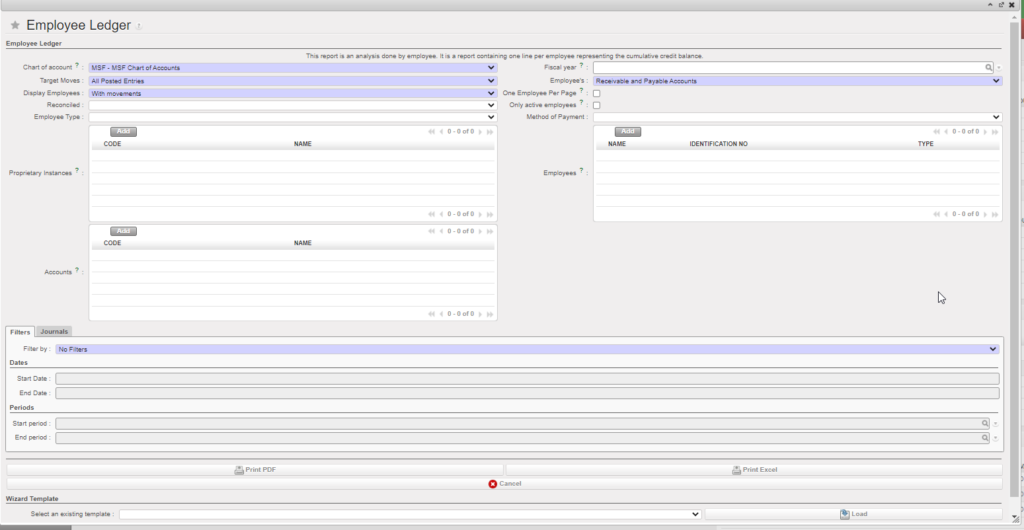
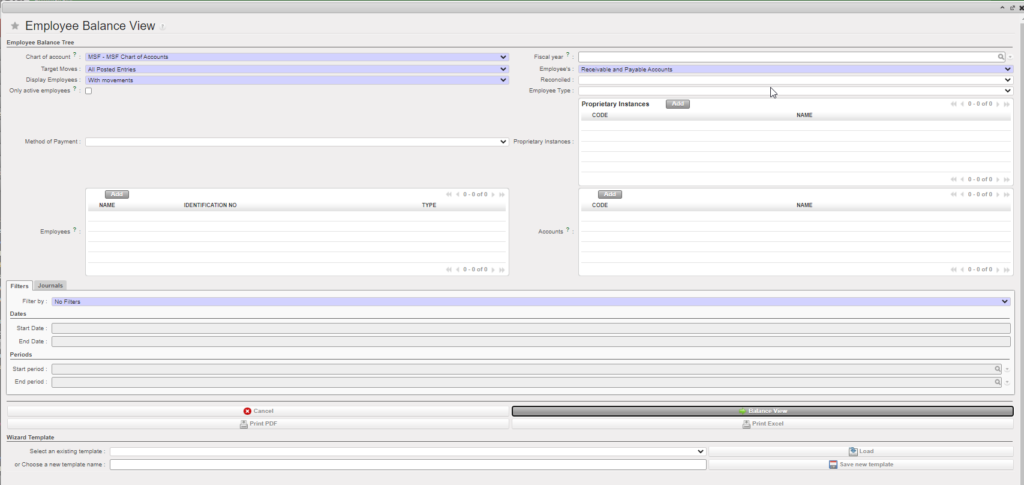
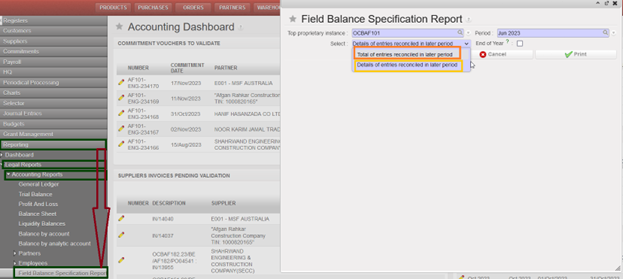
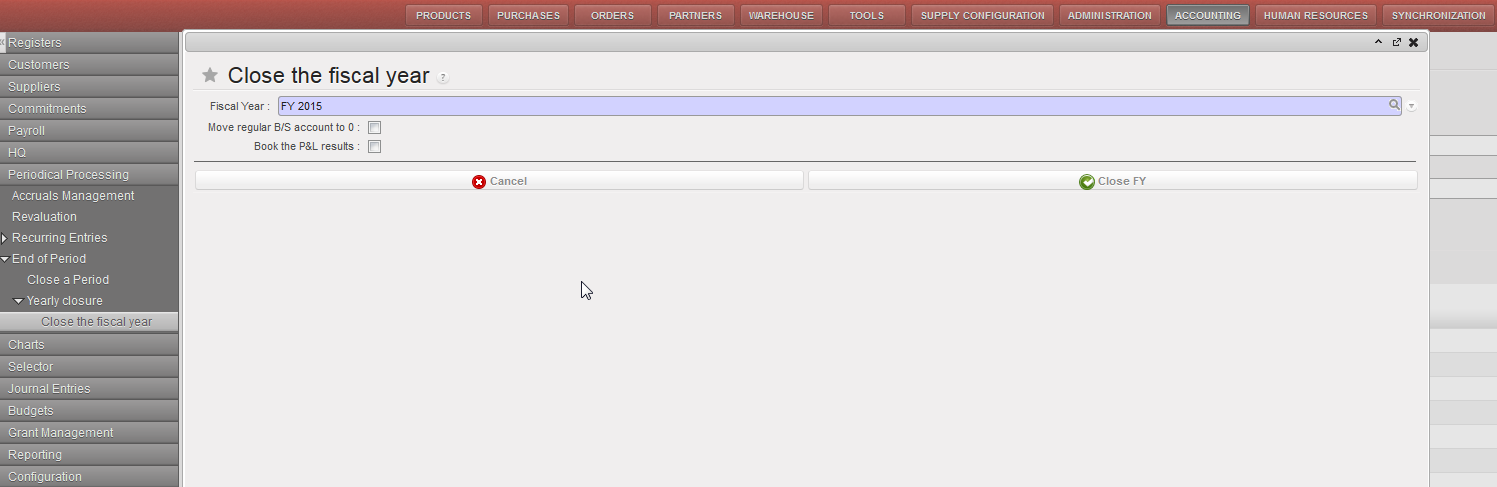

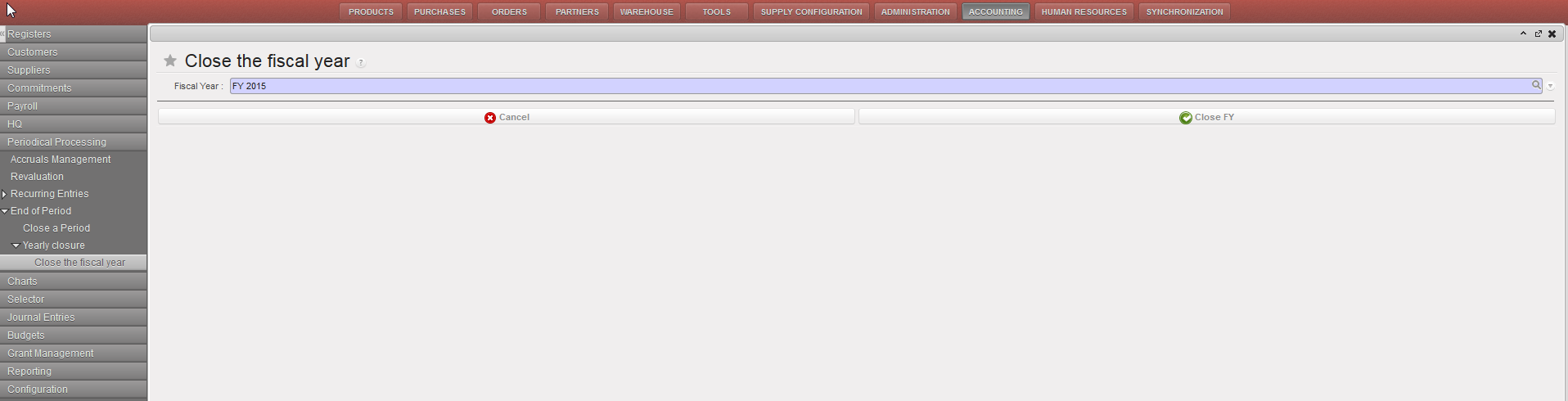
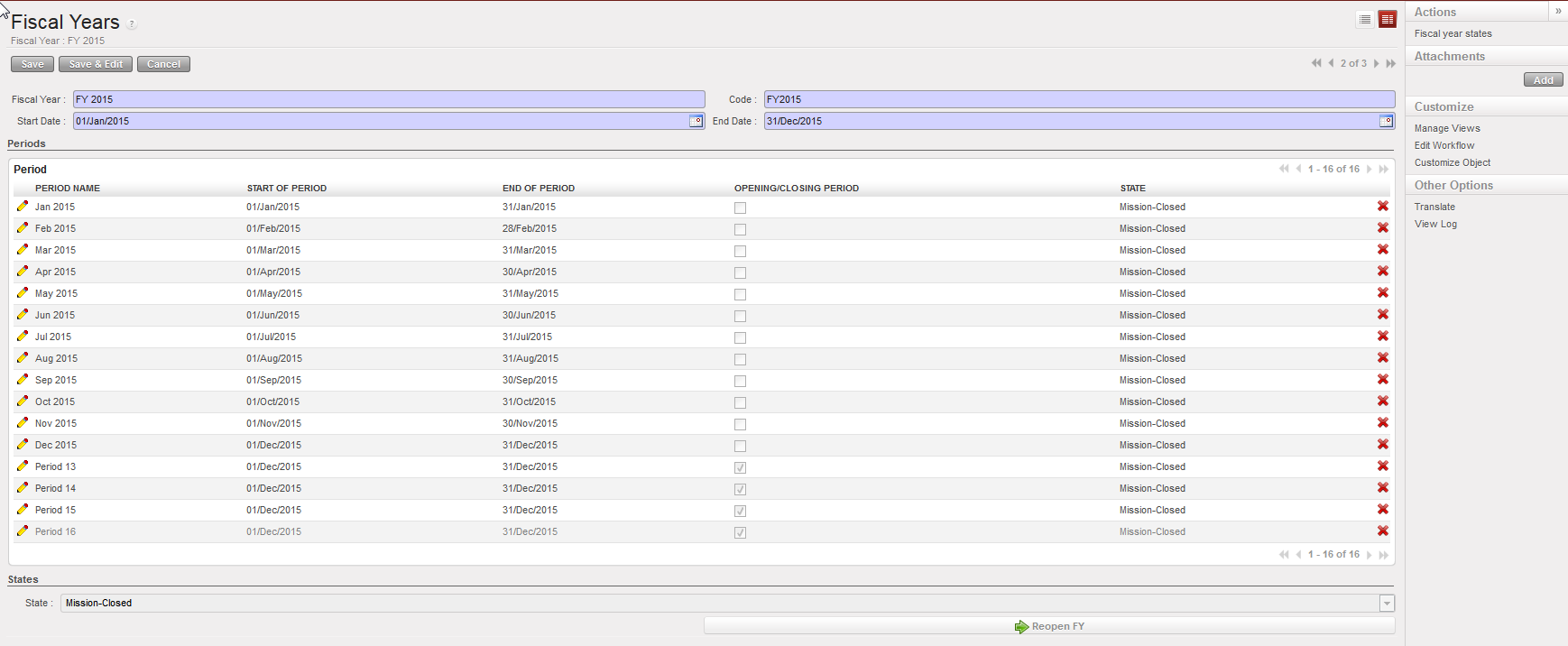
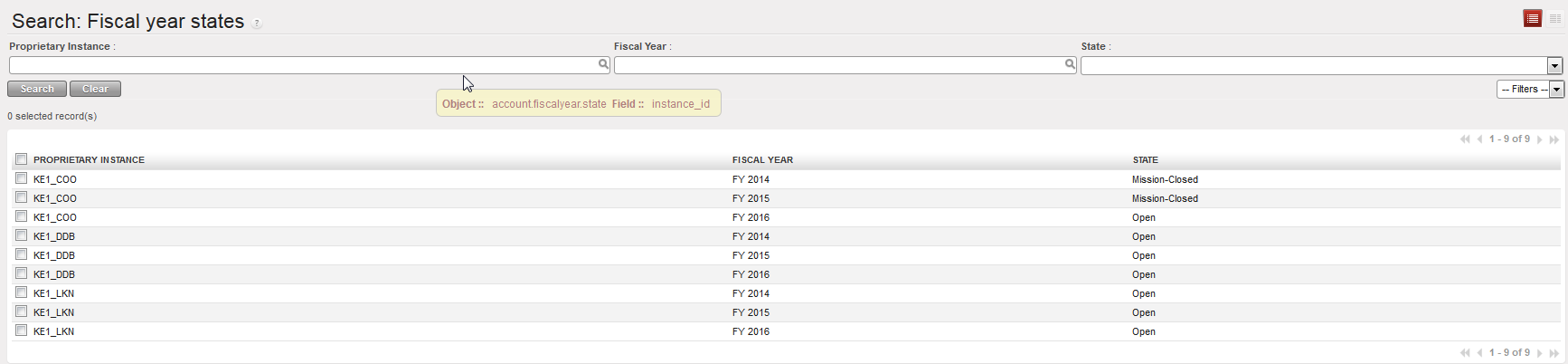
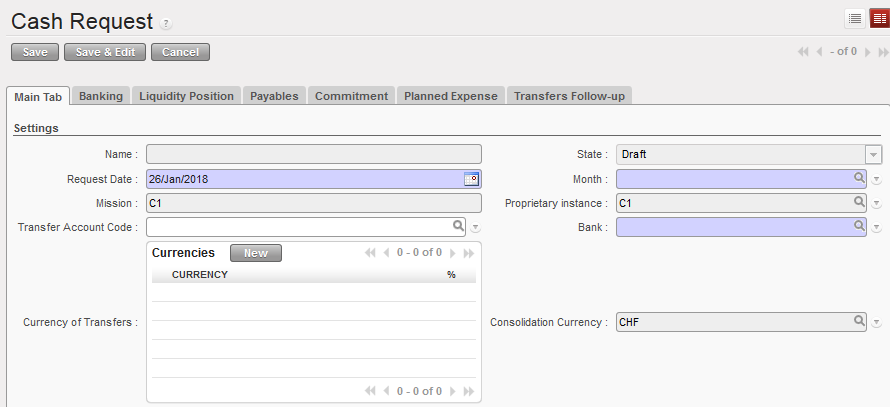 A Cash Request form waiting to be filled out
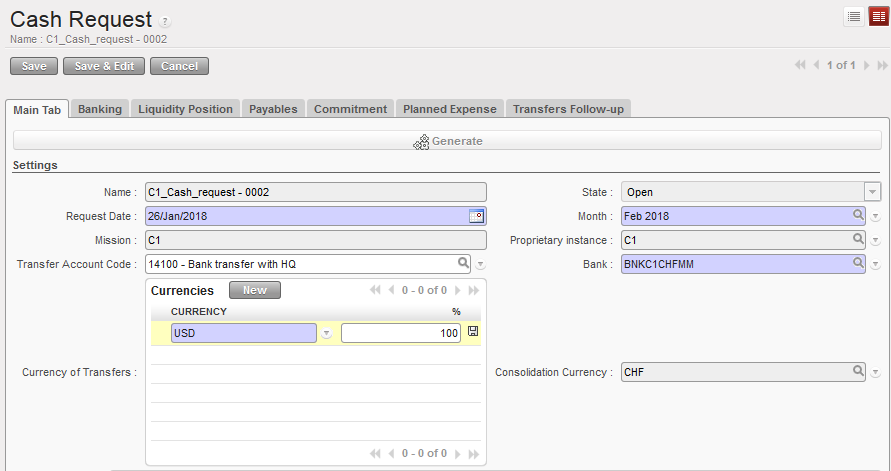 Main Tab with basic information filled in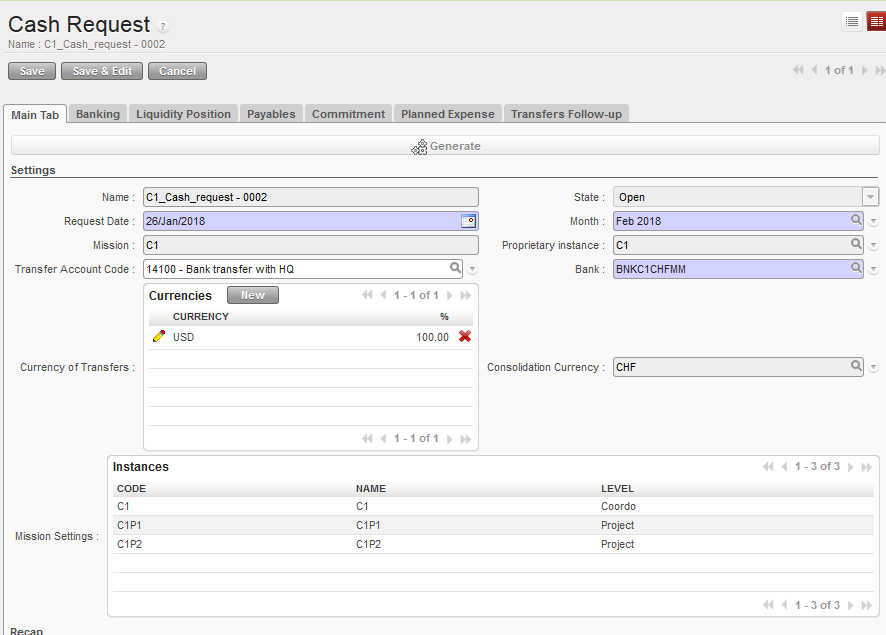
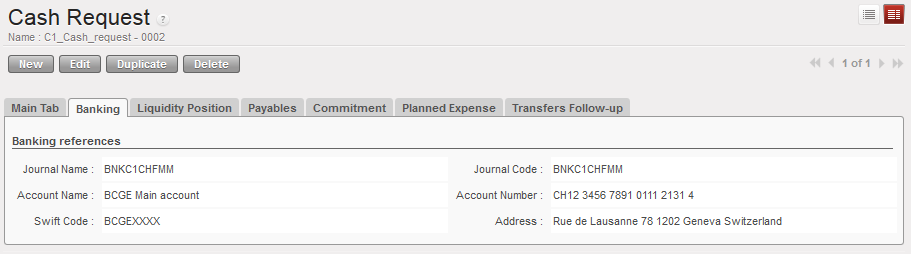 Data automatically filled in in {Banking} tab
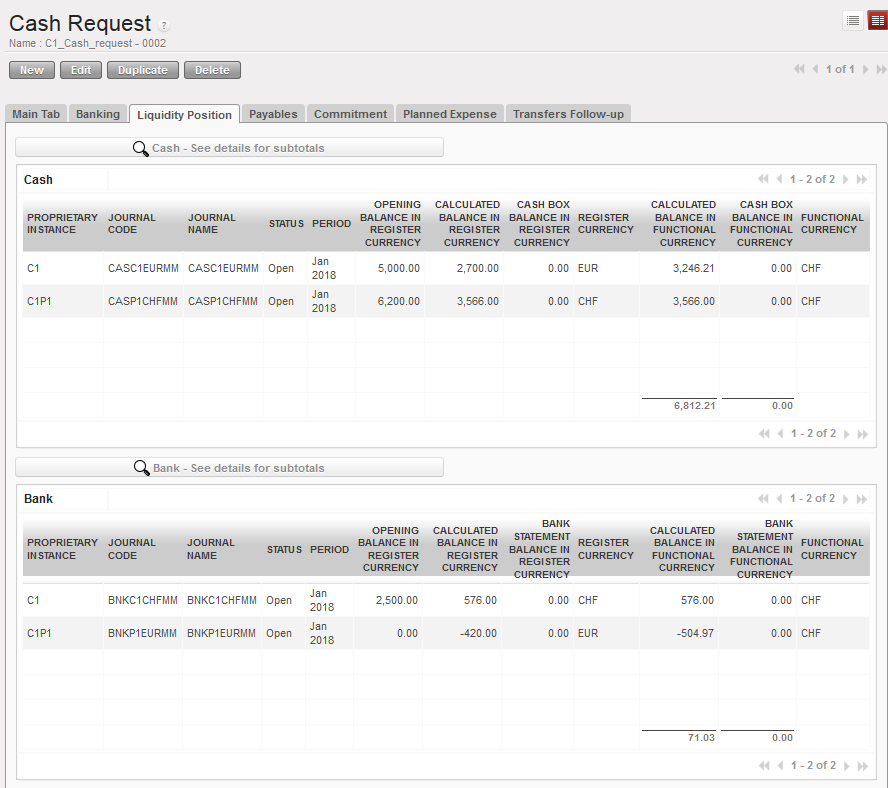 Data automatically filled in in {Payables} tab
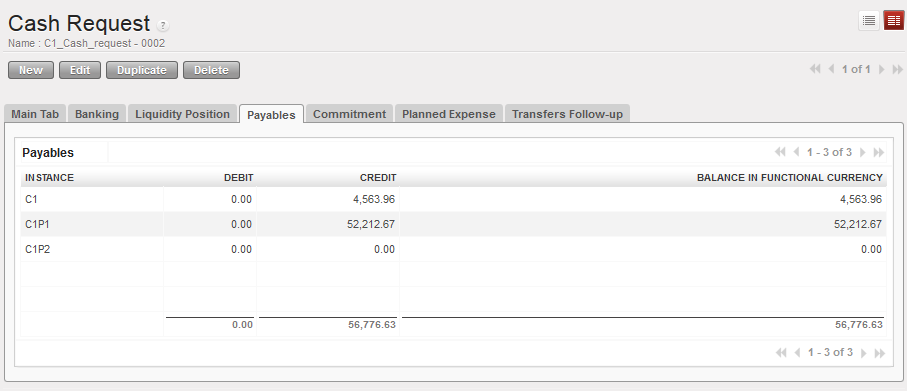 Data automatically filled in in {Commitment} tab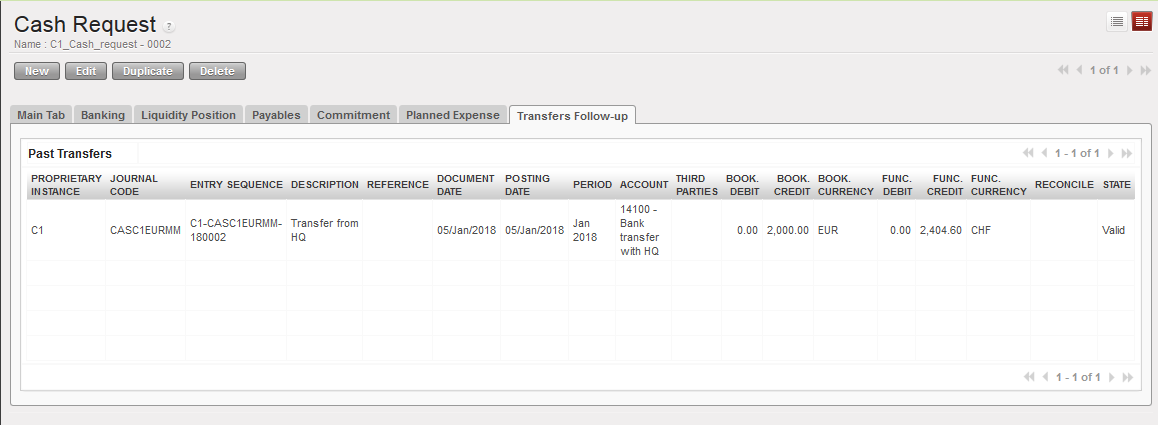
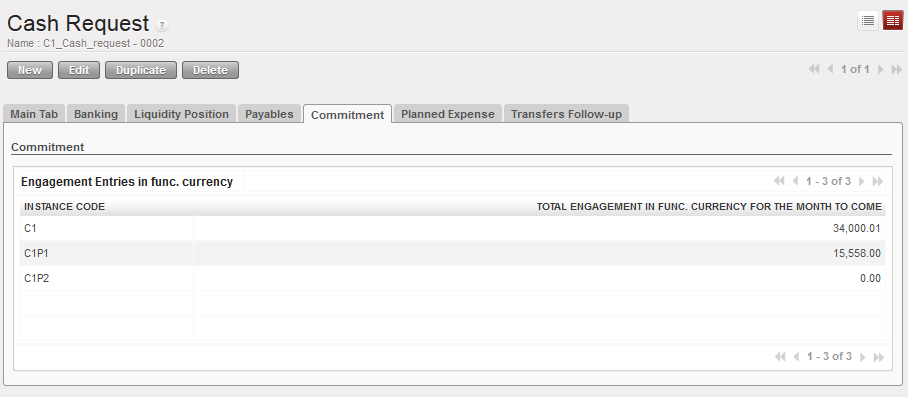 Data automatically filled in in {Transfer Follow-up} tab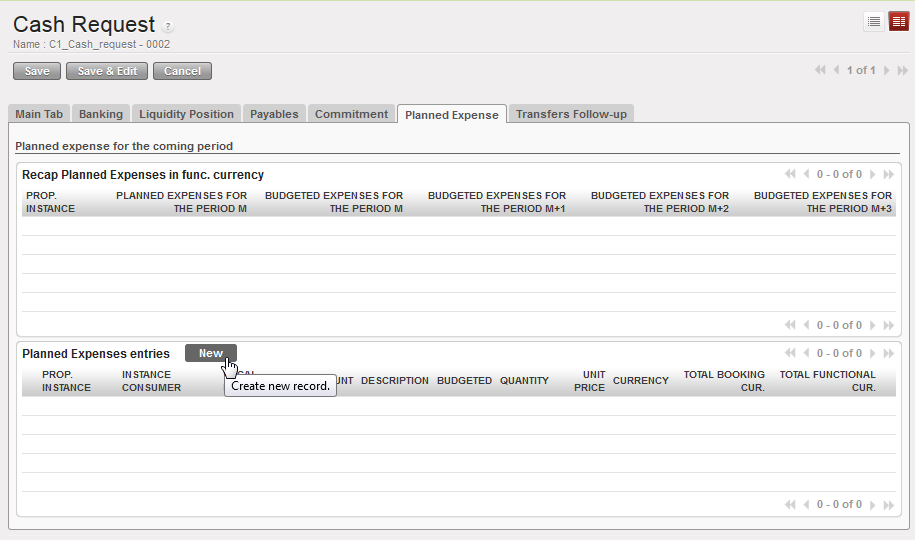
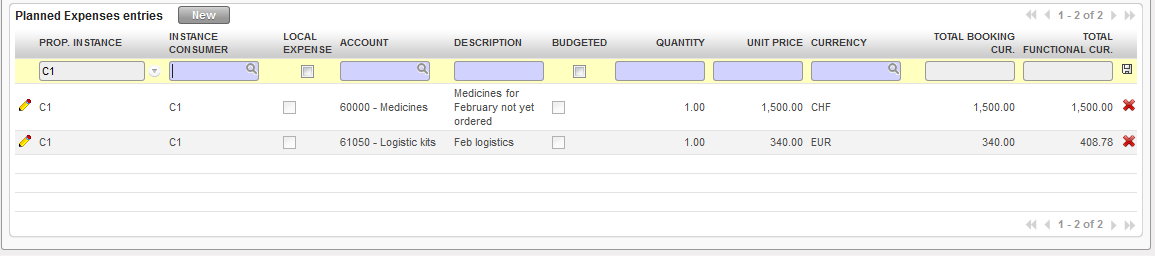 Adding planned expense lines at coordination level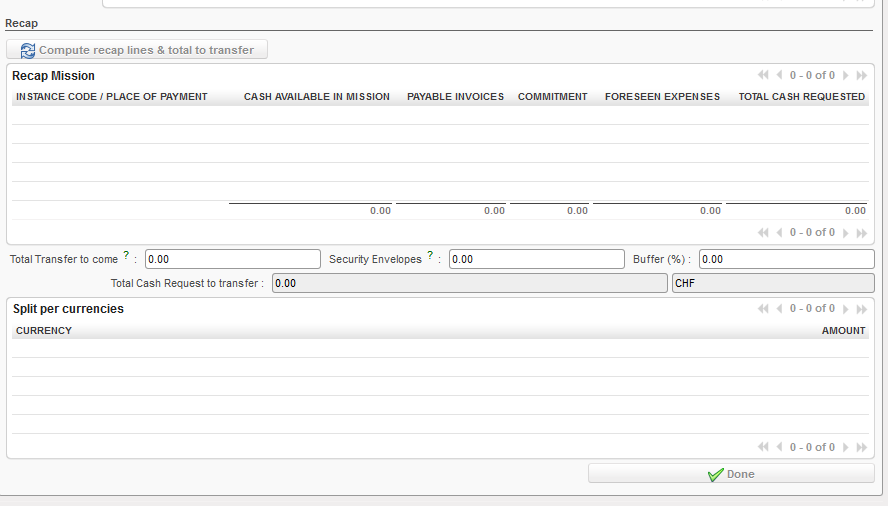
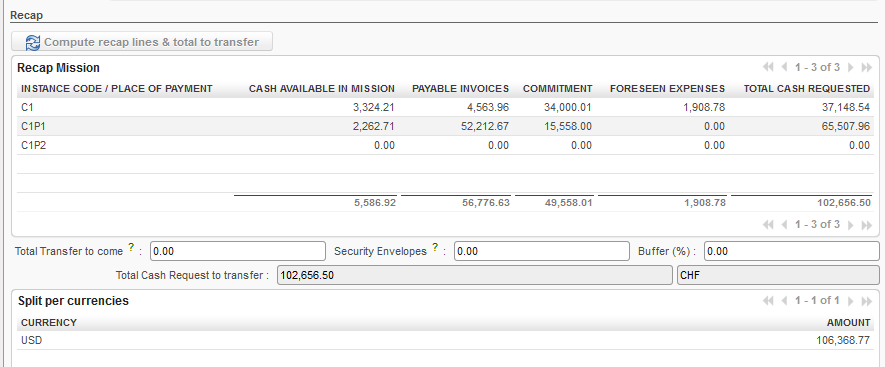 Total transfer amounts are computed without planned expenses from the projects
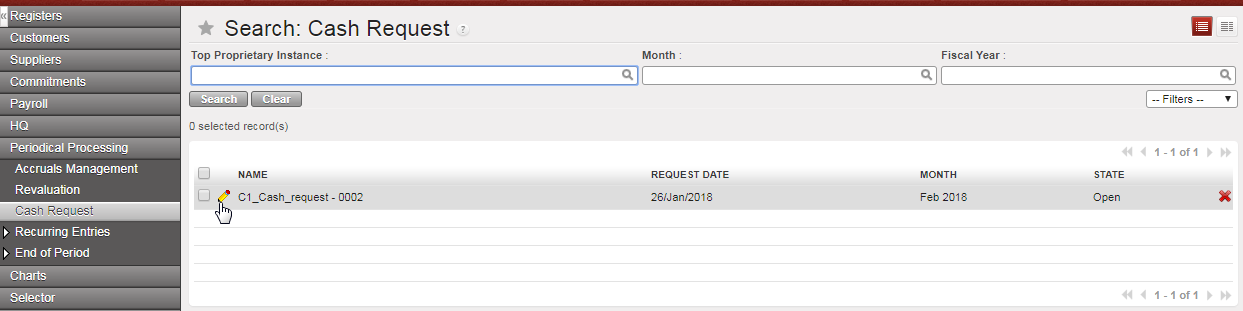 Cash Request at the project level with only {Main Tab} and {Planned Expense} tab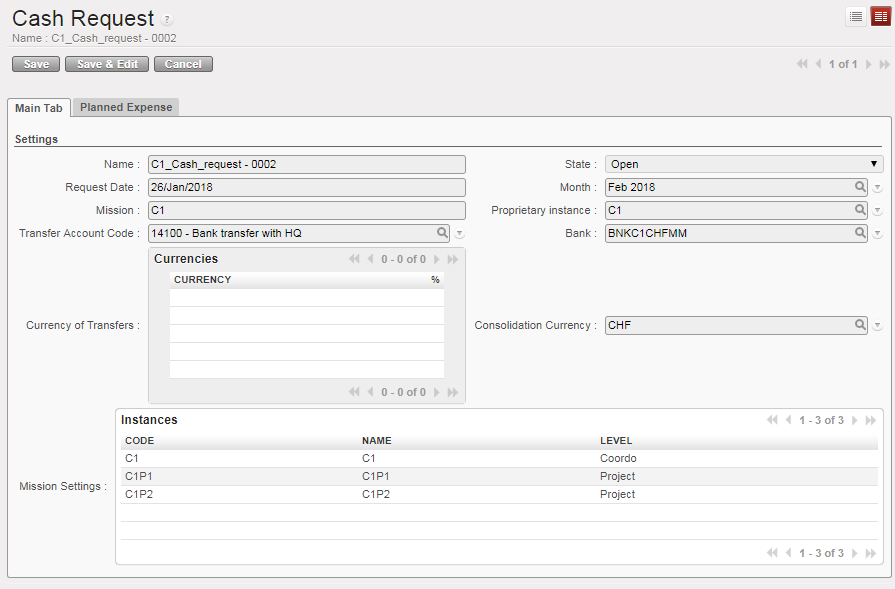
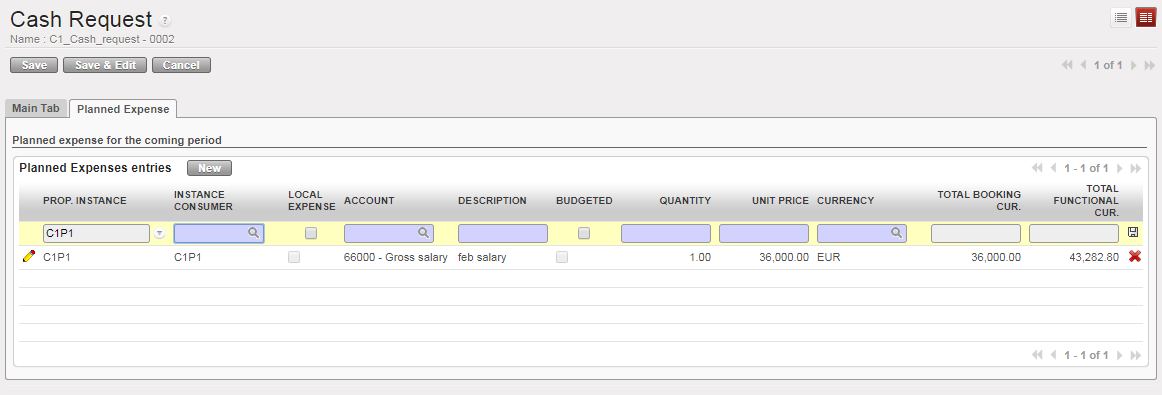
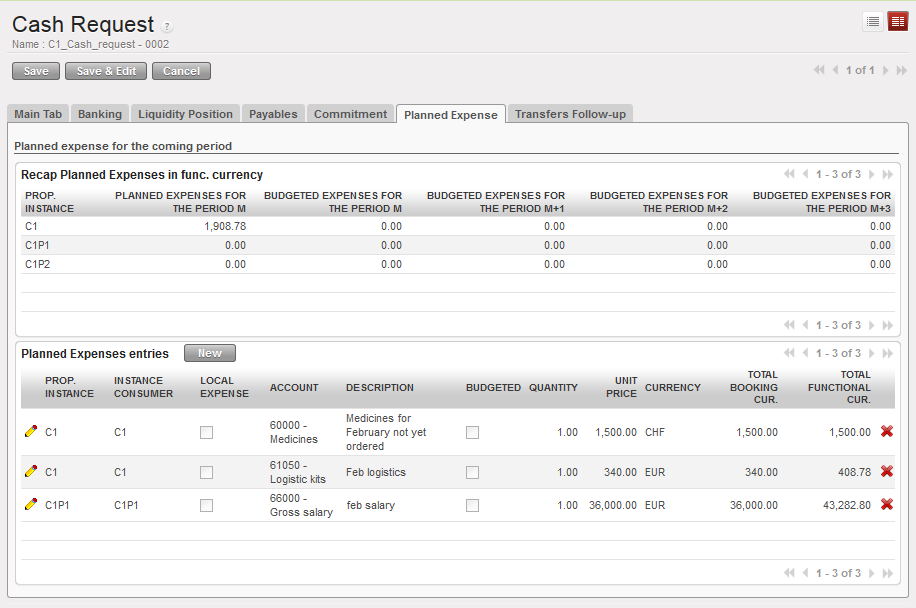
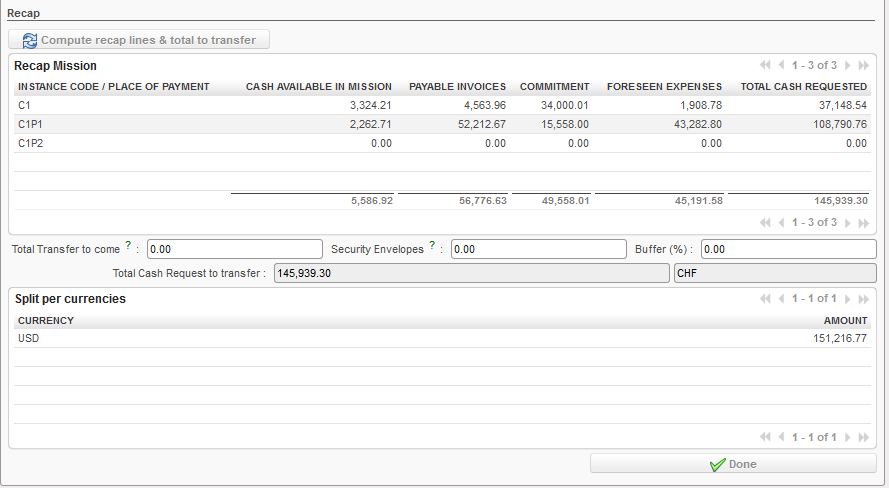

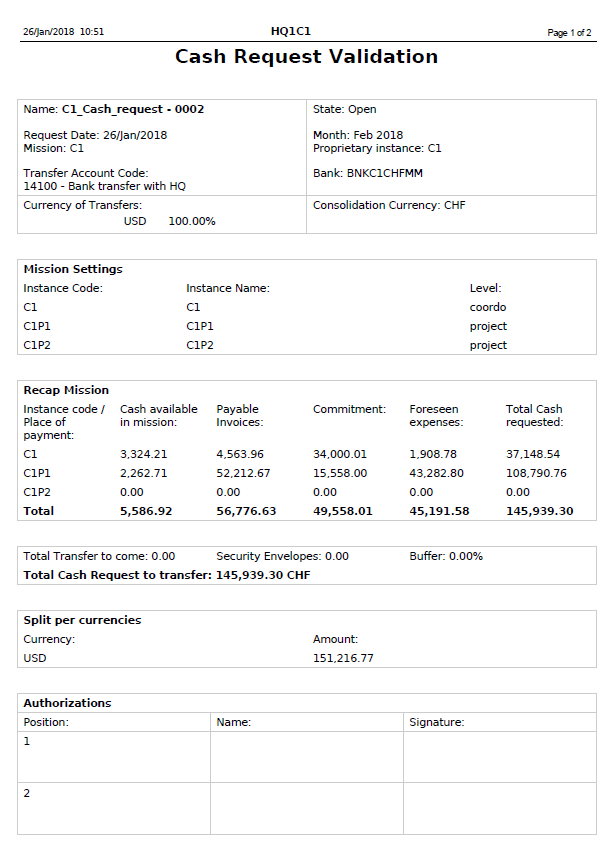
 Selecting the revaluation method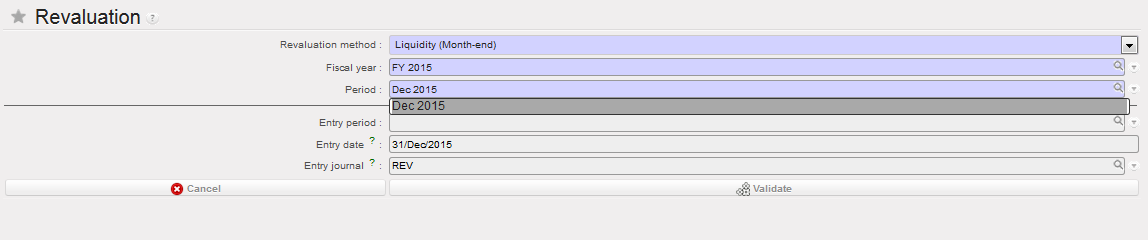
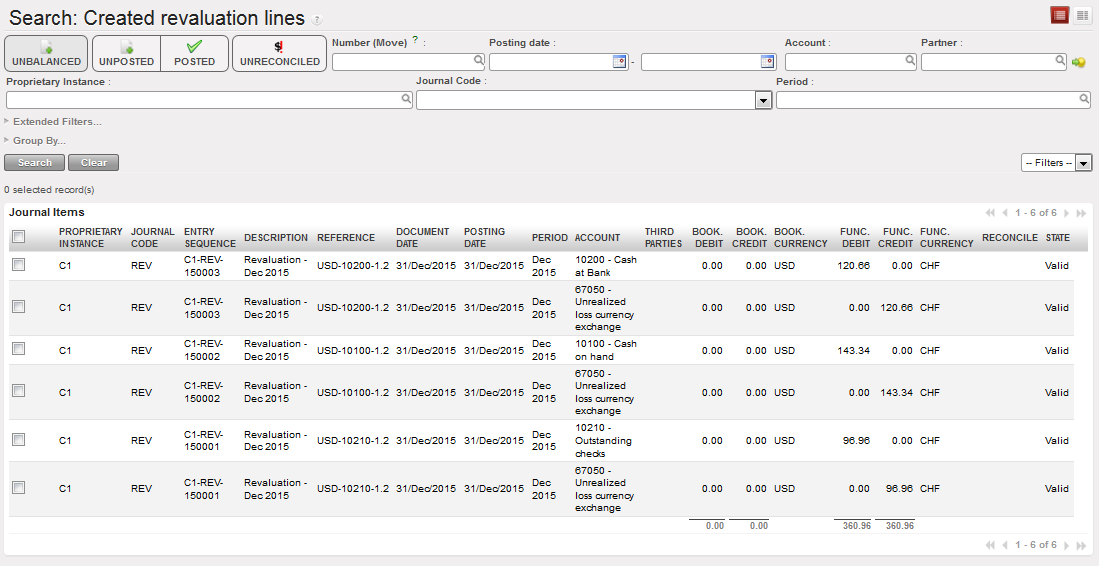
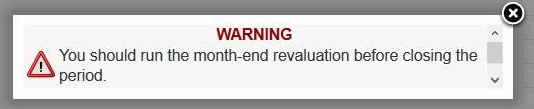
 Selecting the revaluation method
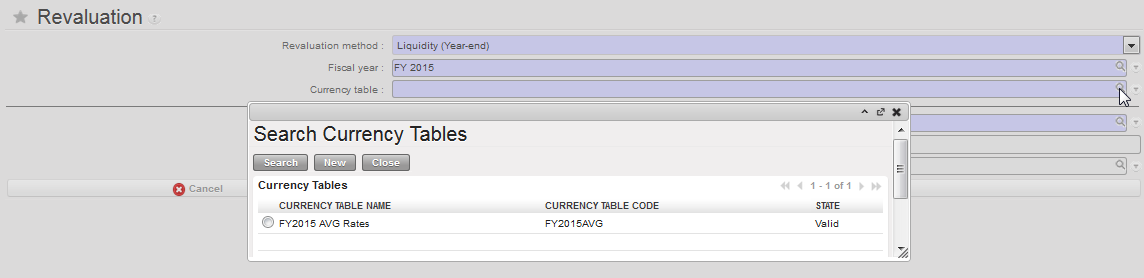 Selecting the currency table
 Selecting the period for year-end revaluation.
 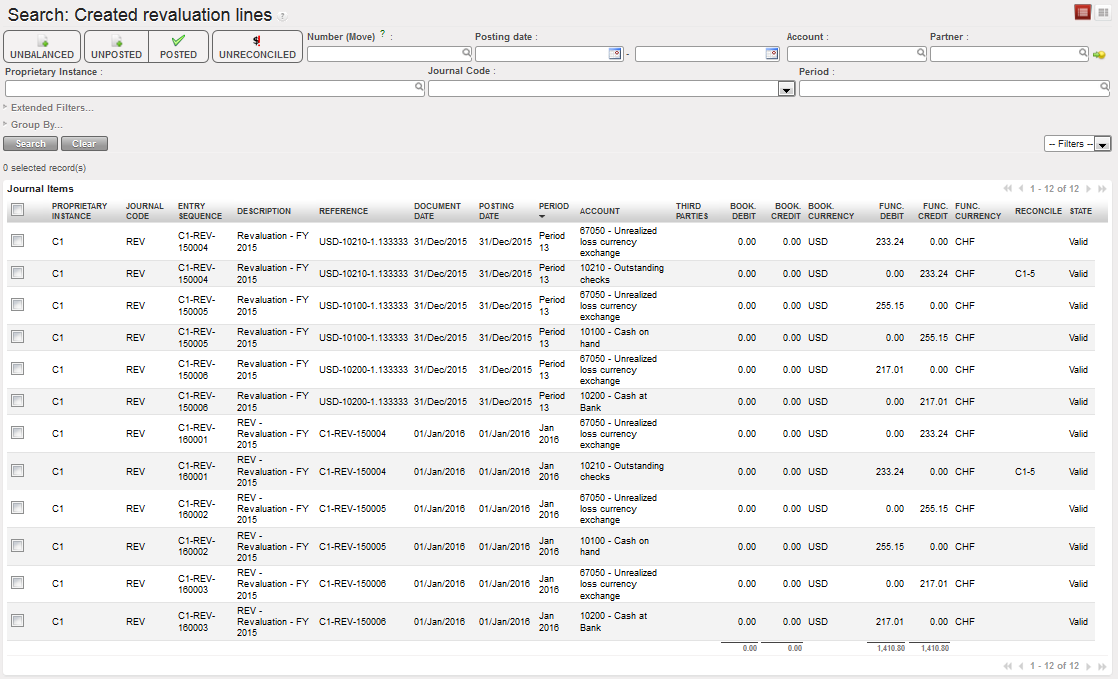 Revaluation entries and their reversals created in REV journal
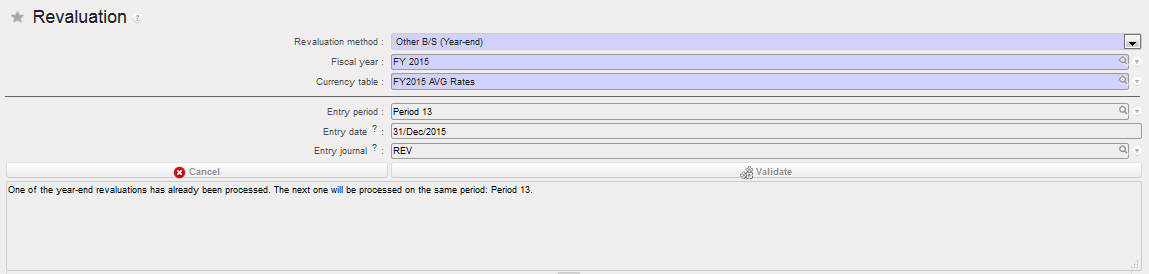 Period 13 will be used automatically, because it was used already in the first year-end revaluation
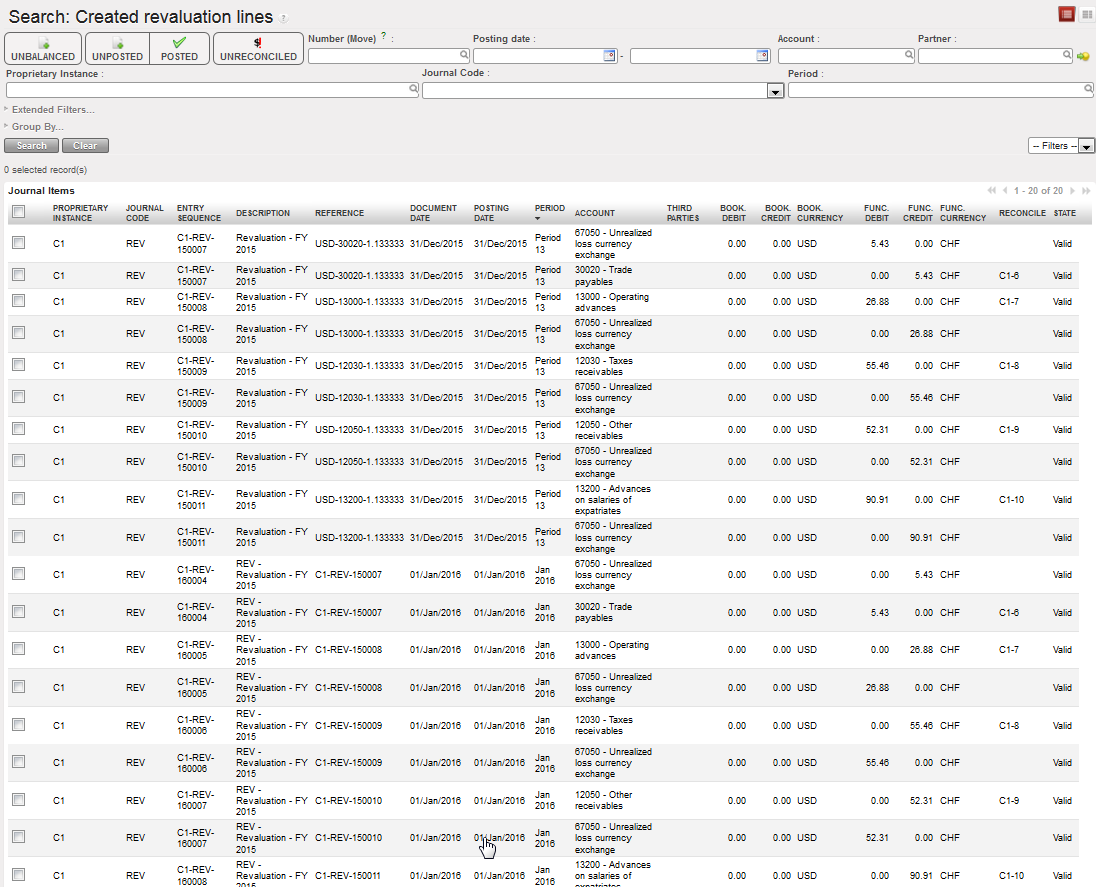 Revaluation entries and their reversals created in REV journal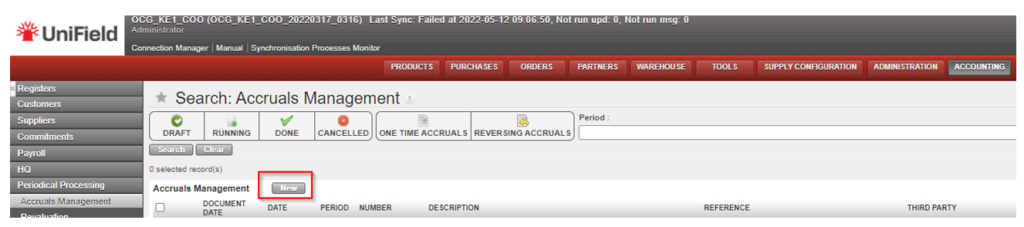

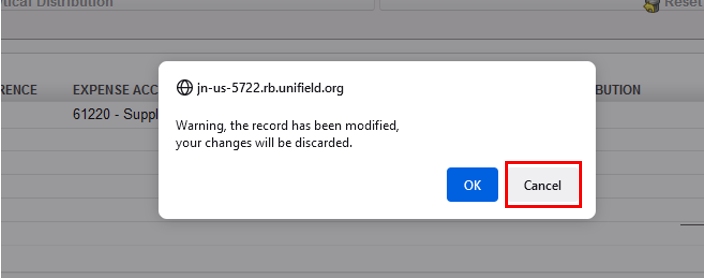

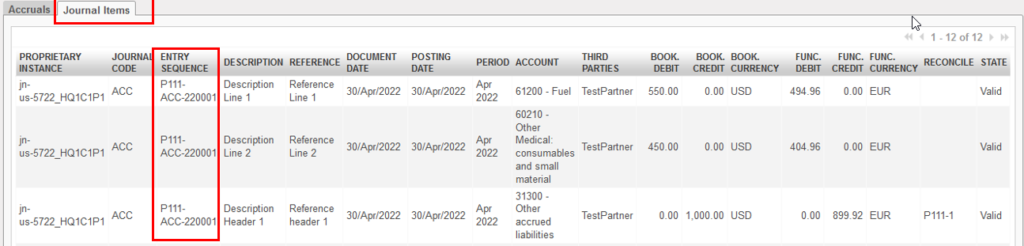



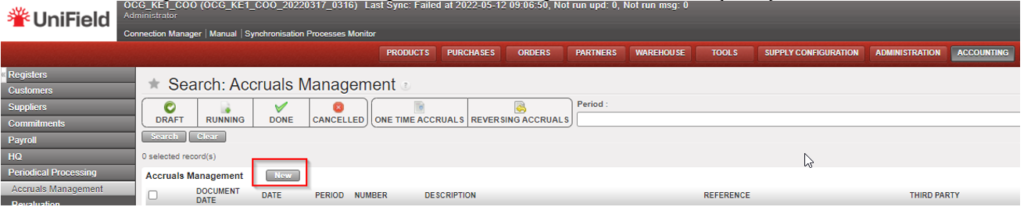

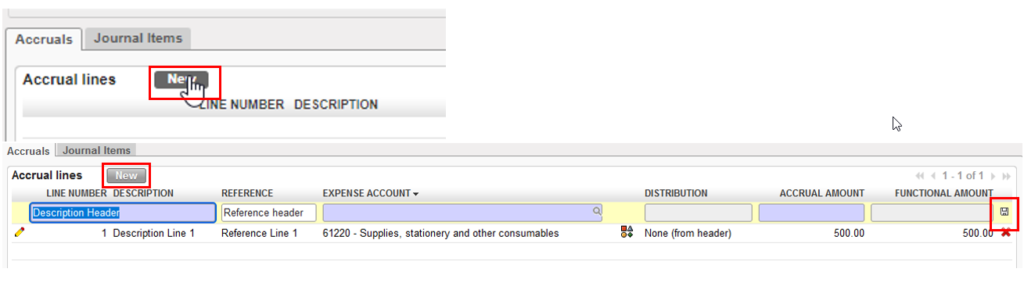
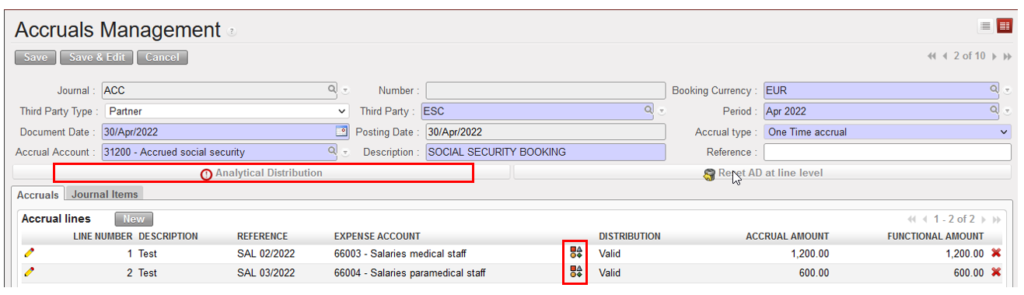

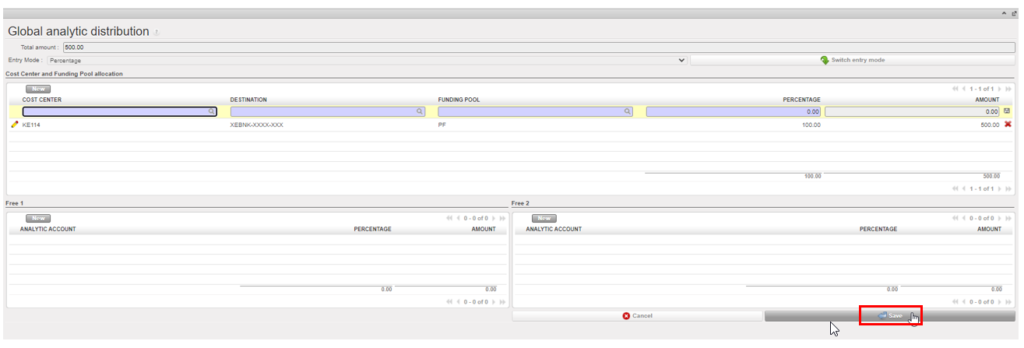




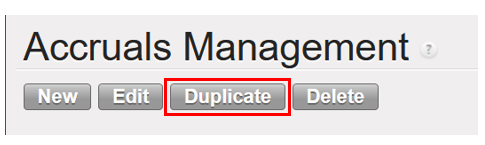
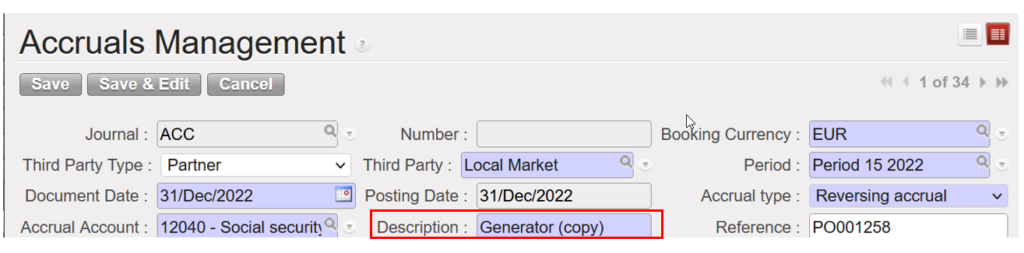
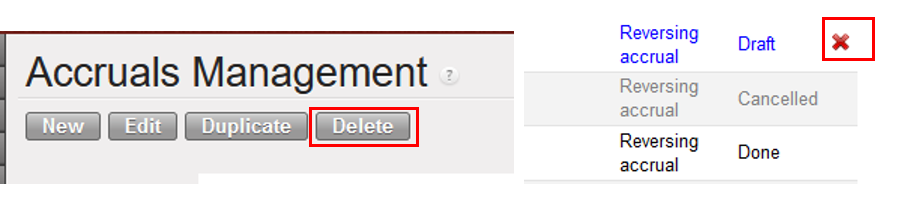

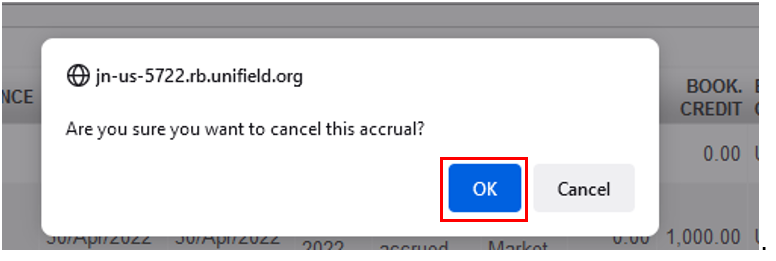
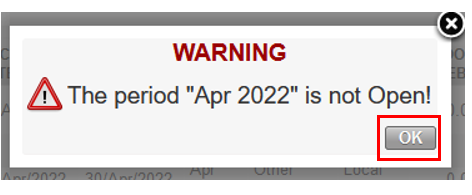


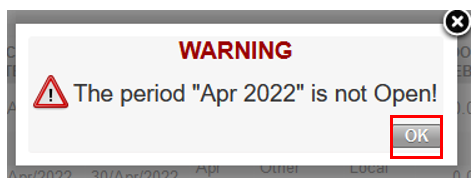


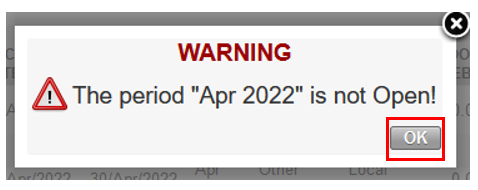



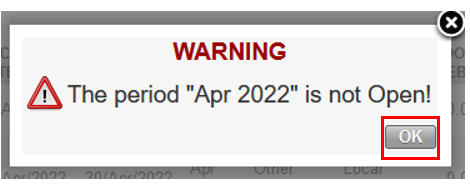

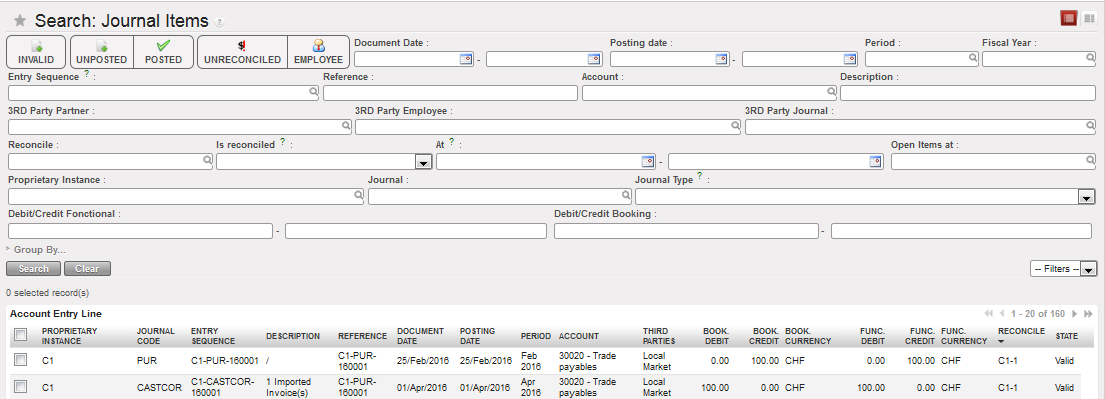
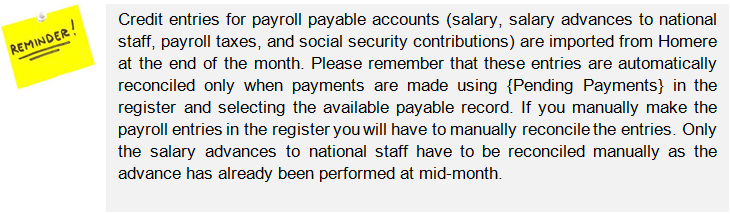
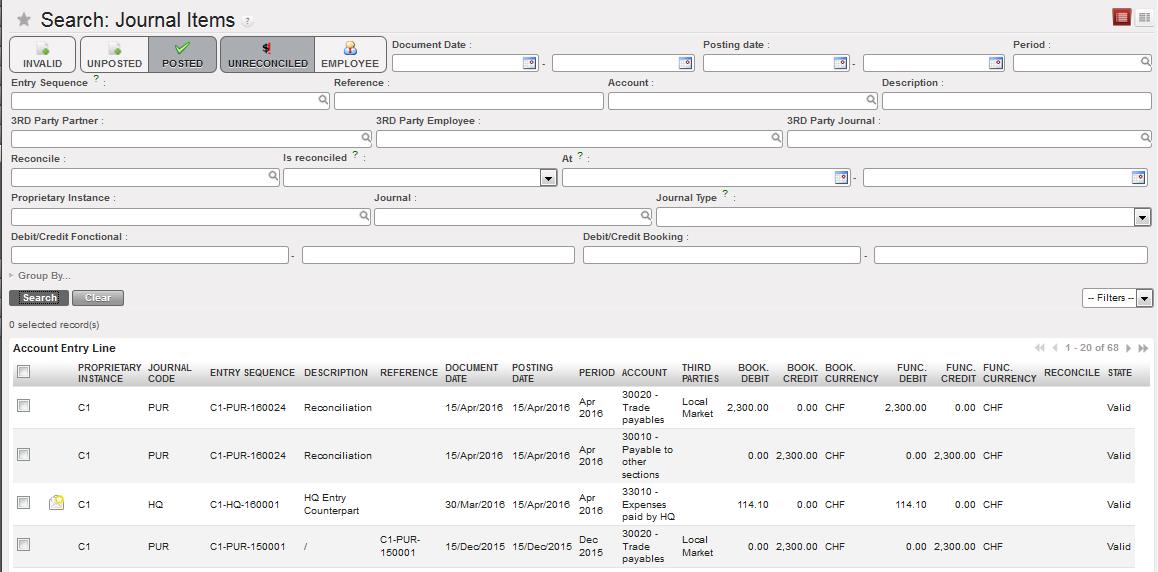
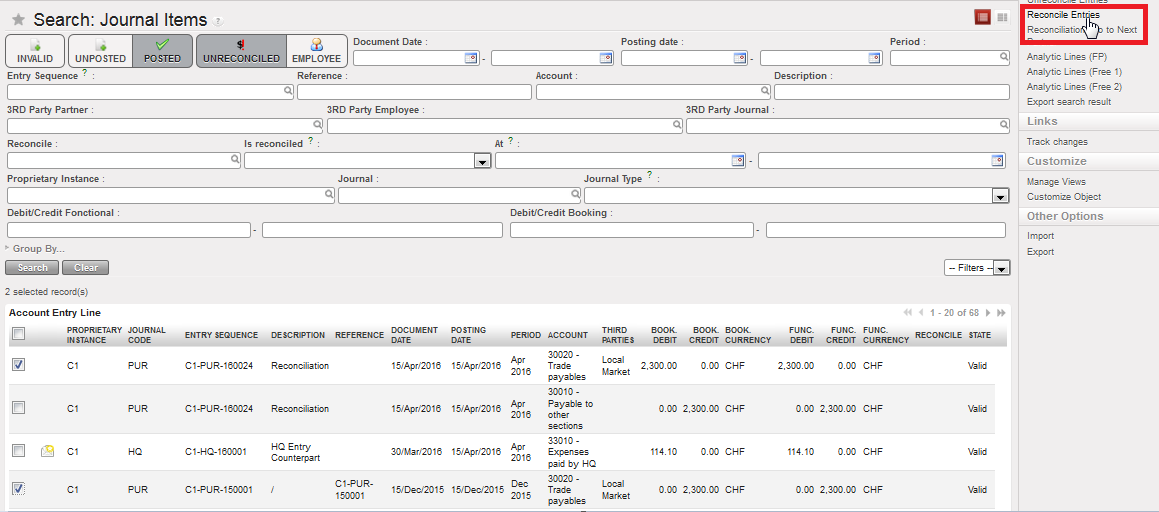 {Reconcile Entries} Menu
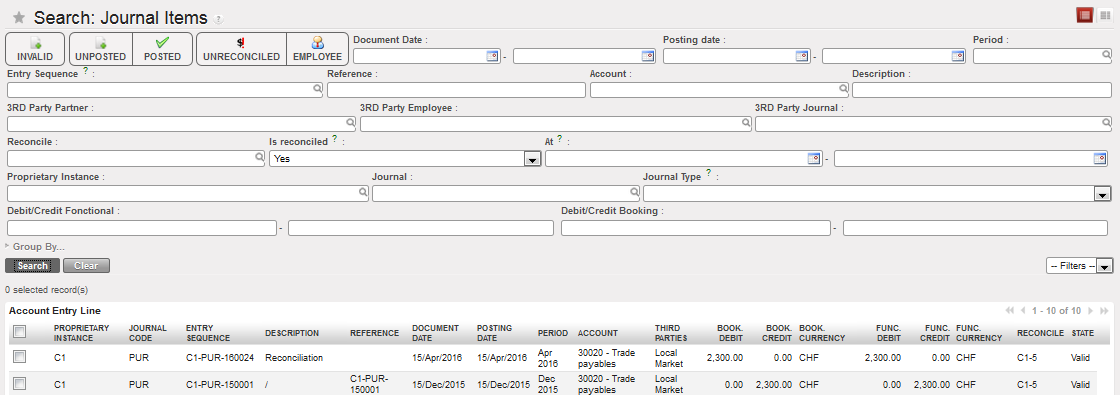 Search Journal Items view displaying Reconciled entries
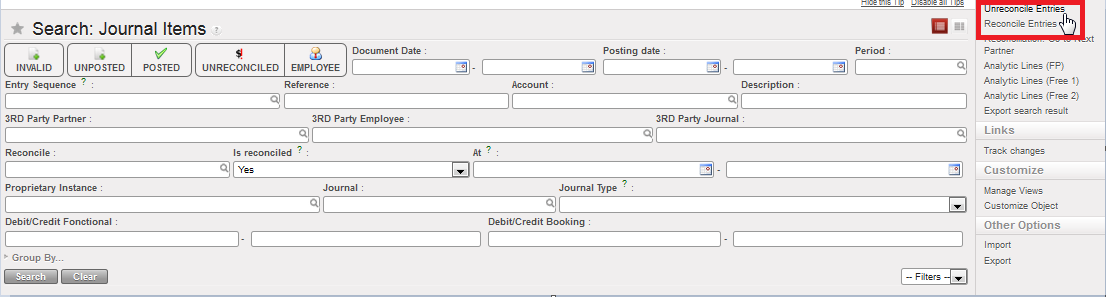 Unreconcile Entries Action
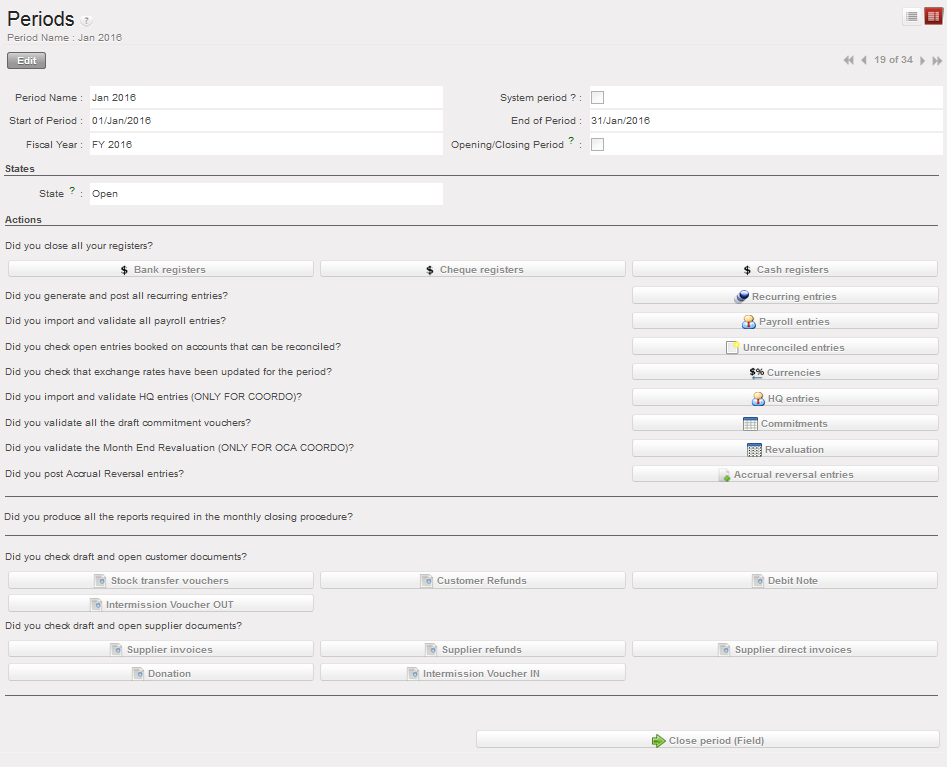 Close a Period Form view and associated actions
 Linking an action to a UniField object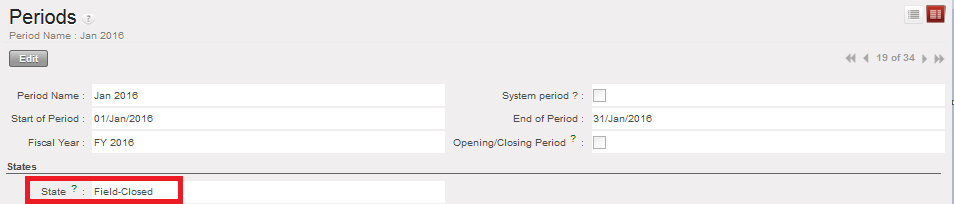
 {Period States} function in the Action menu
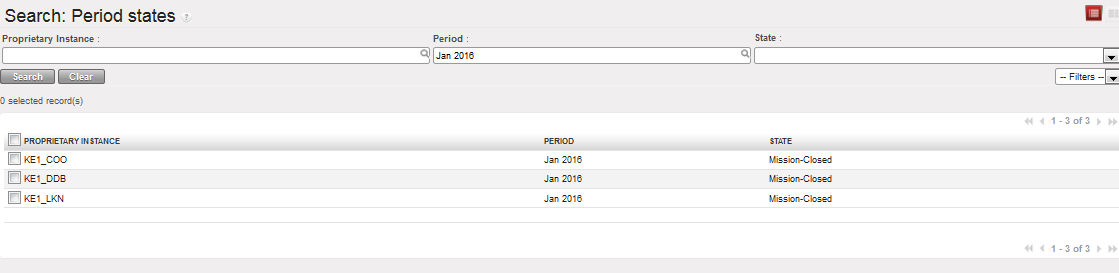 Period states of coordination and projects for selected period
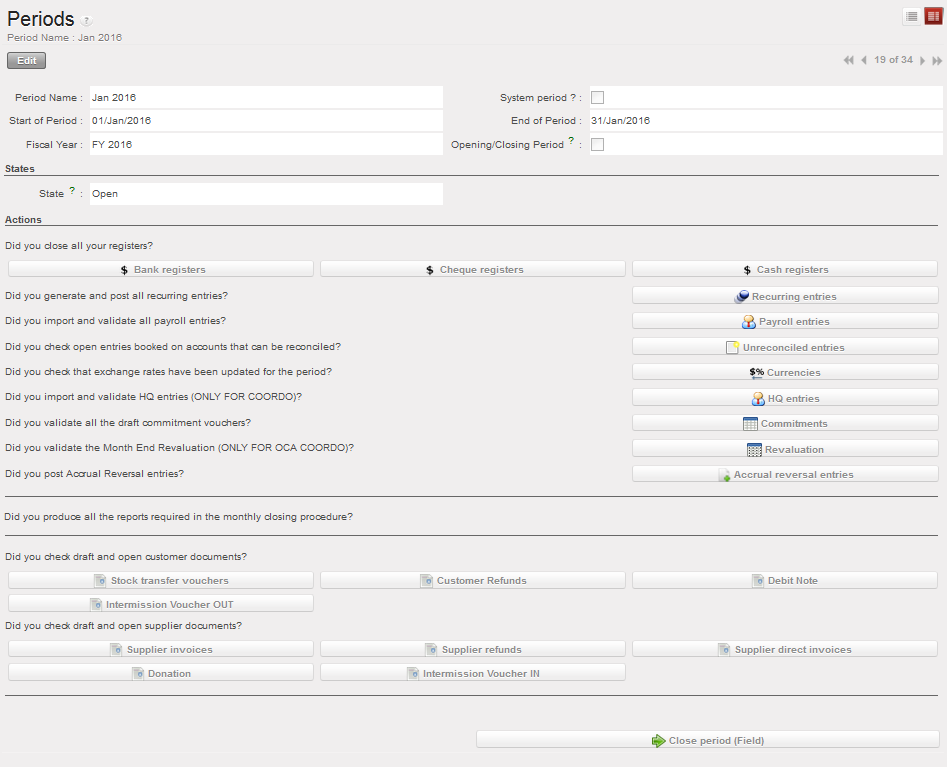 Close a Period Form view and associated actions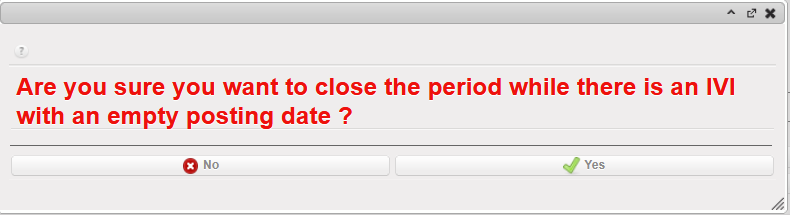
 Linking an action to a UniField object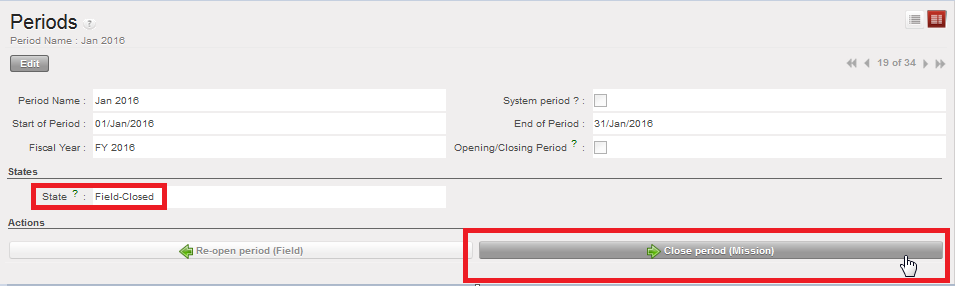
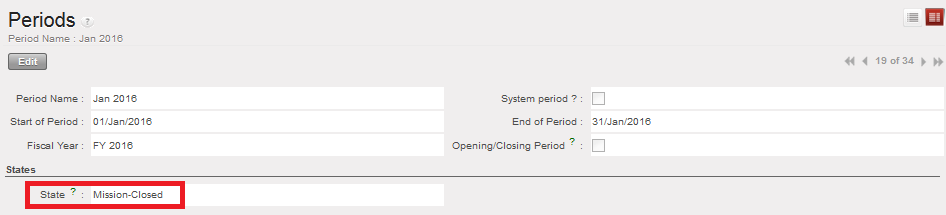
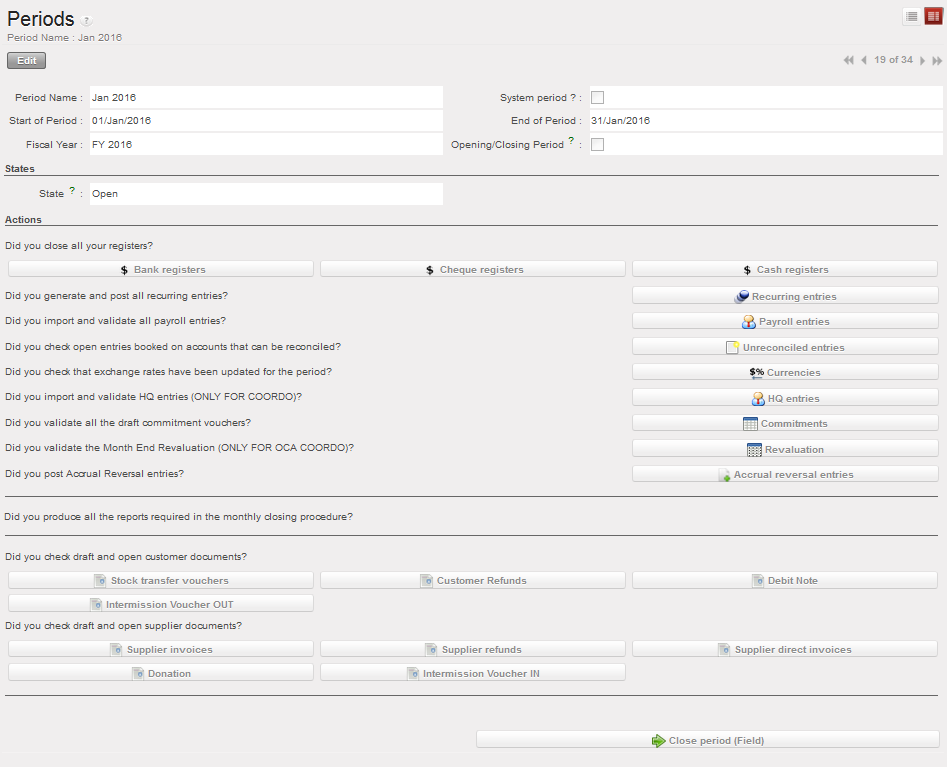
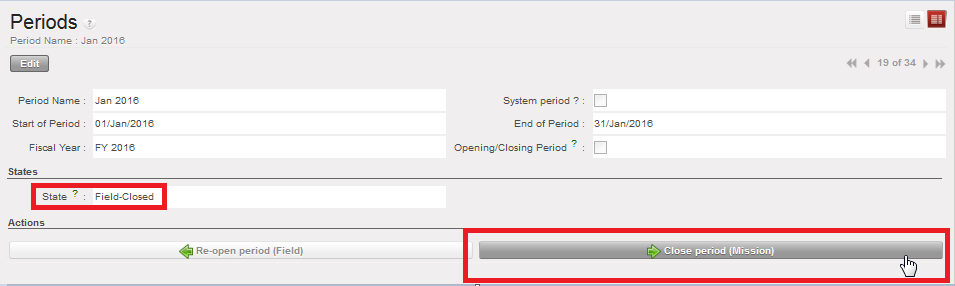
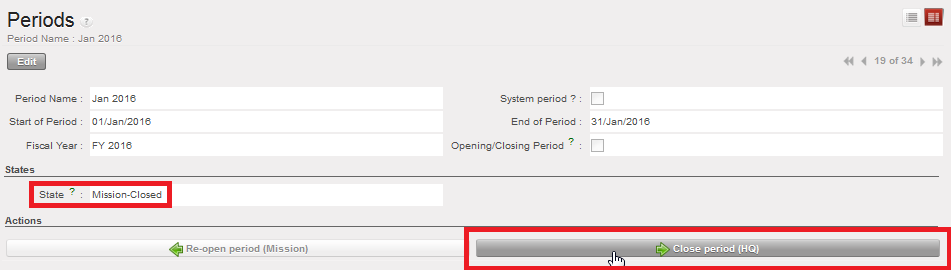
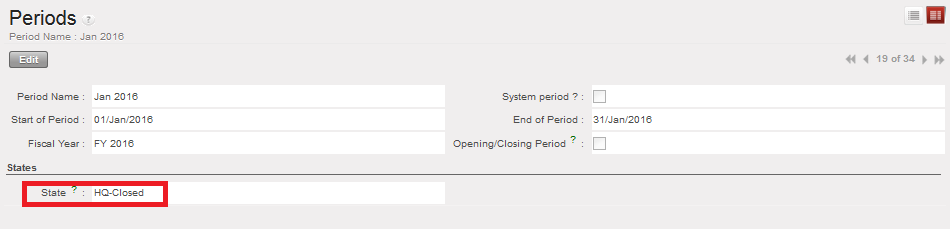

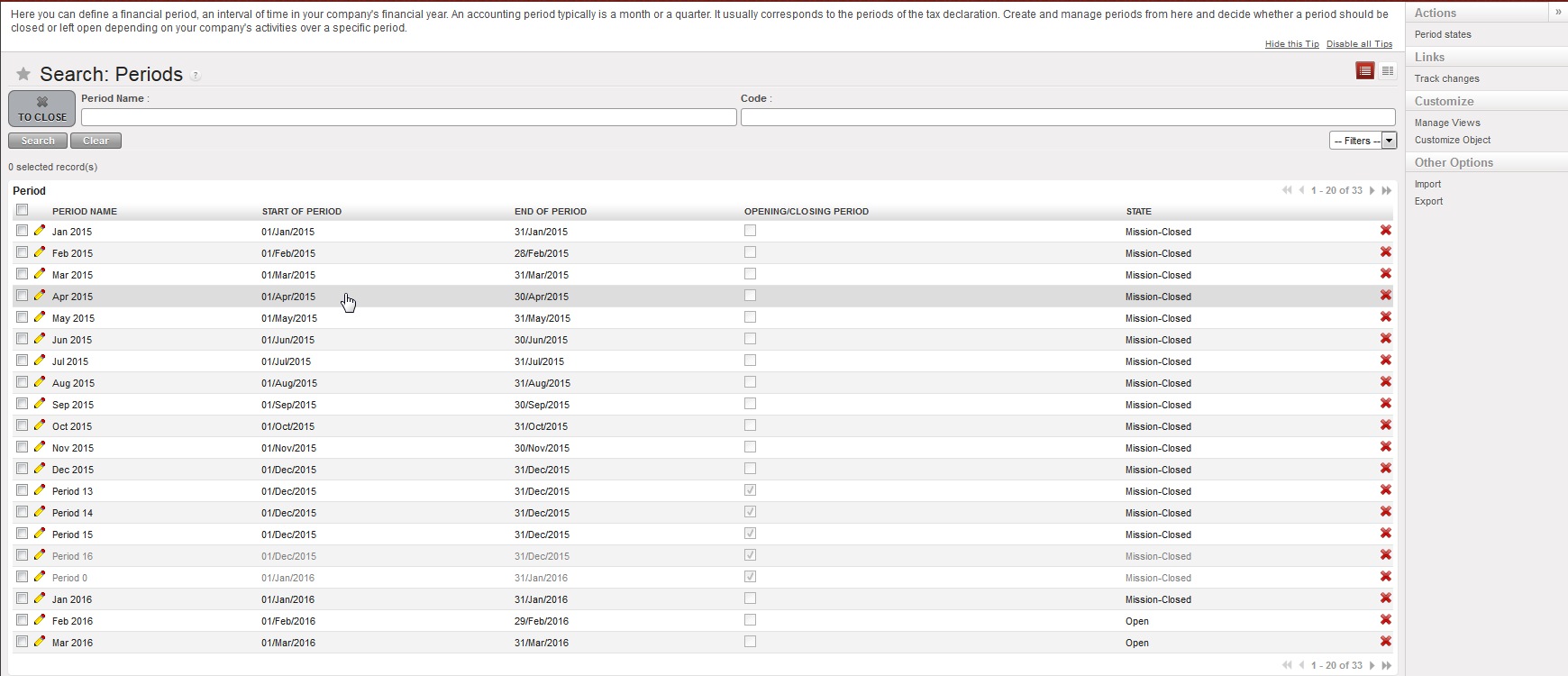
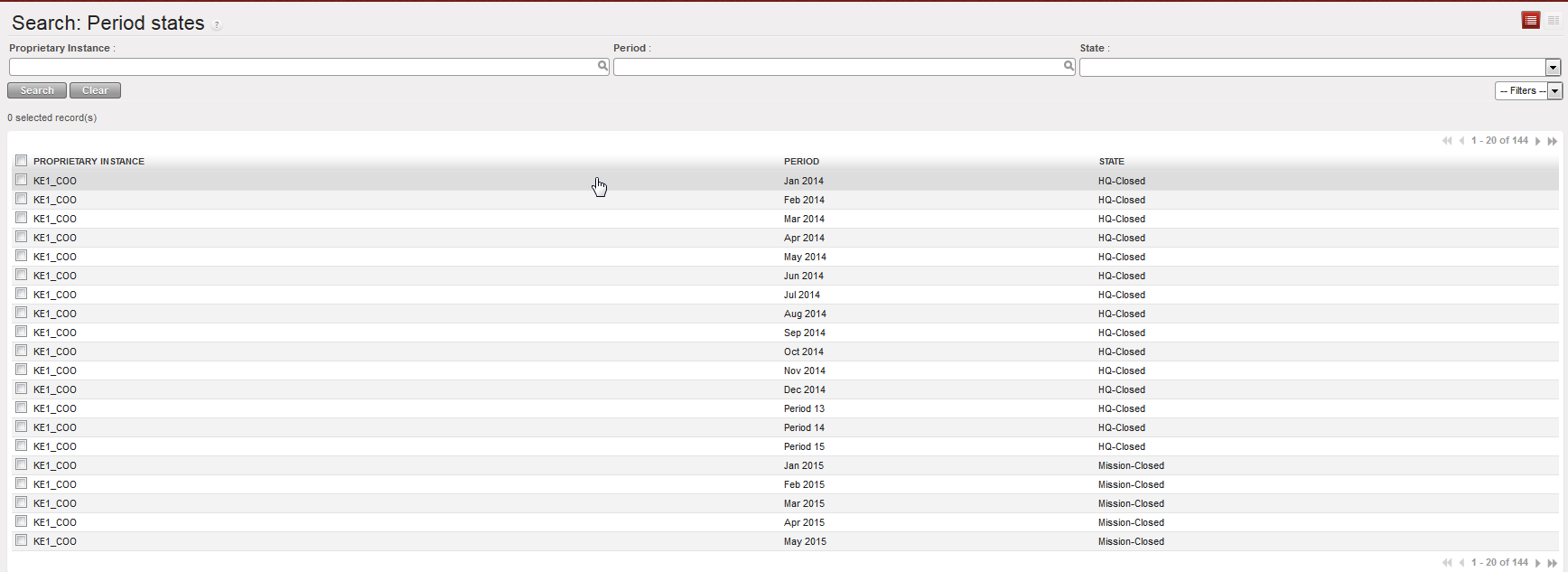
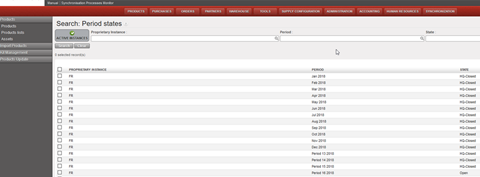
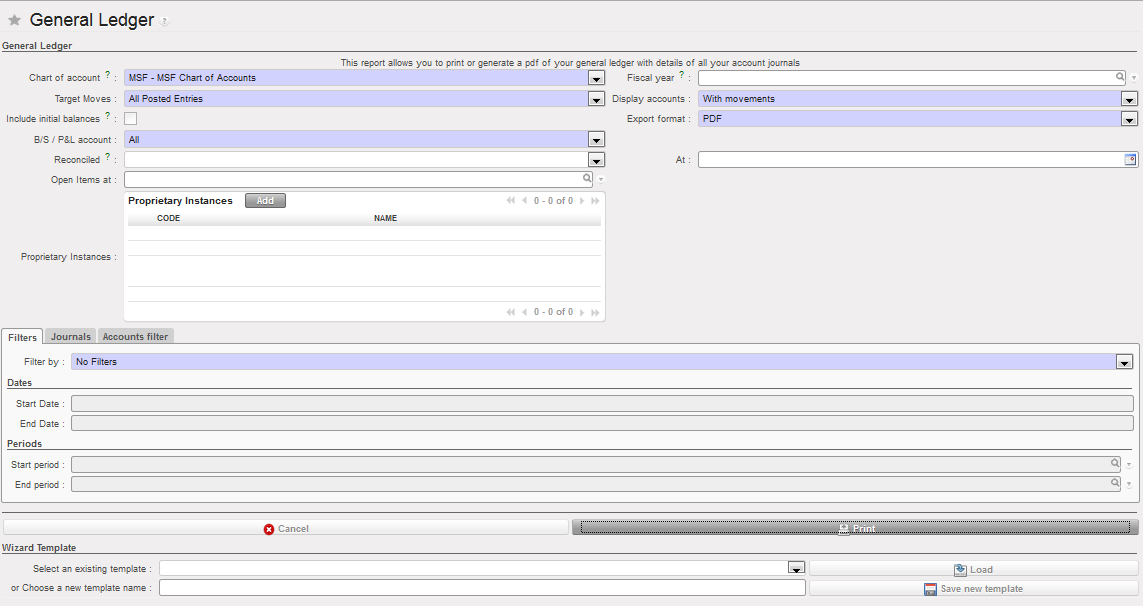 General Ledger report options
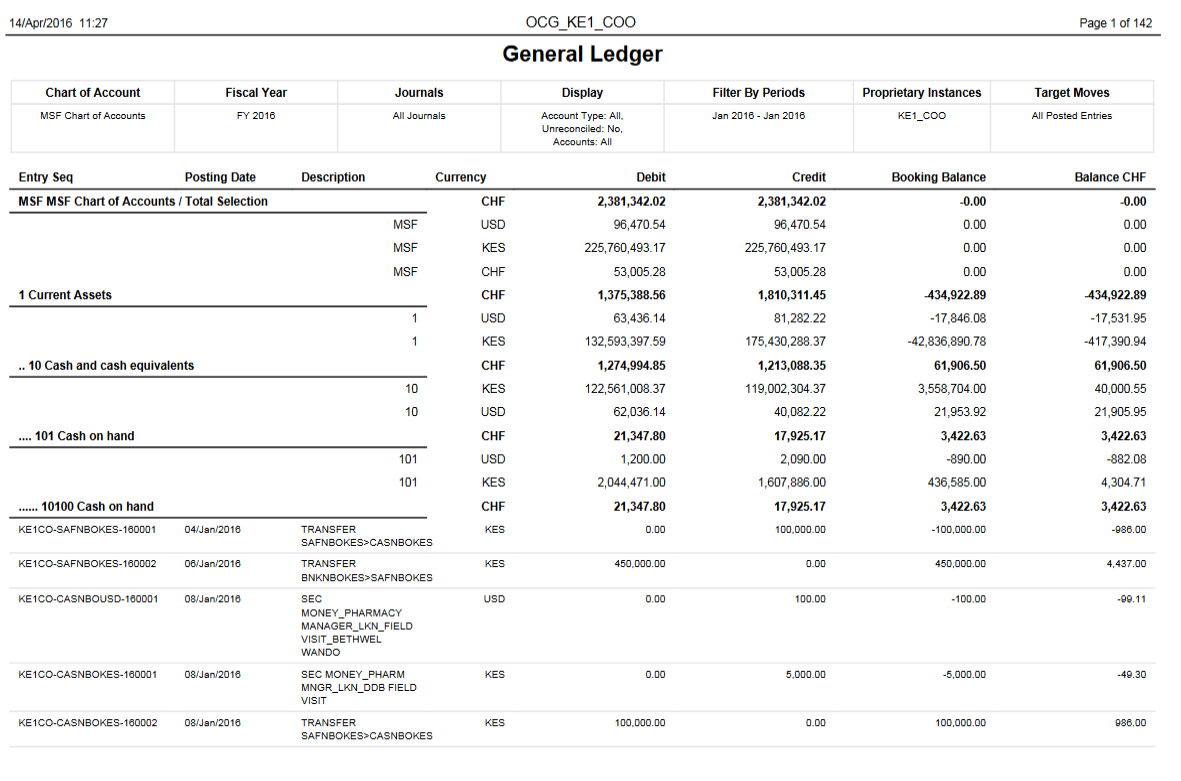 General Ledger report
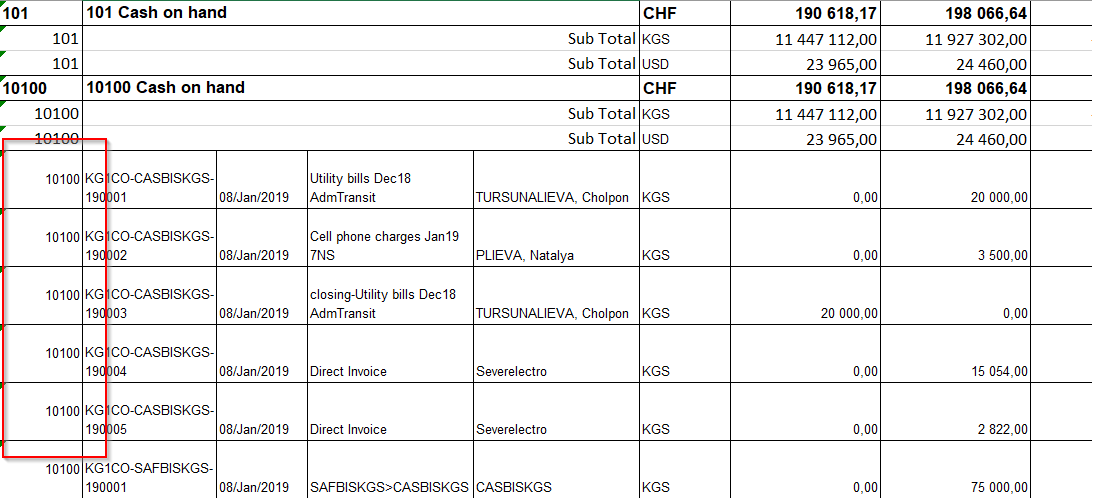 General Ledger report (including the accounting code for each line)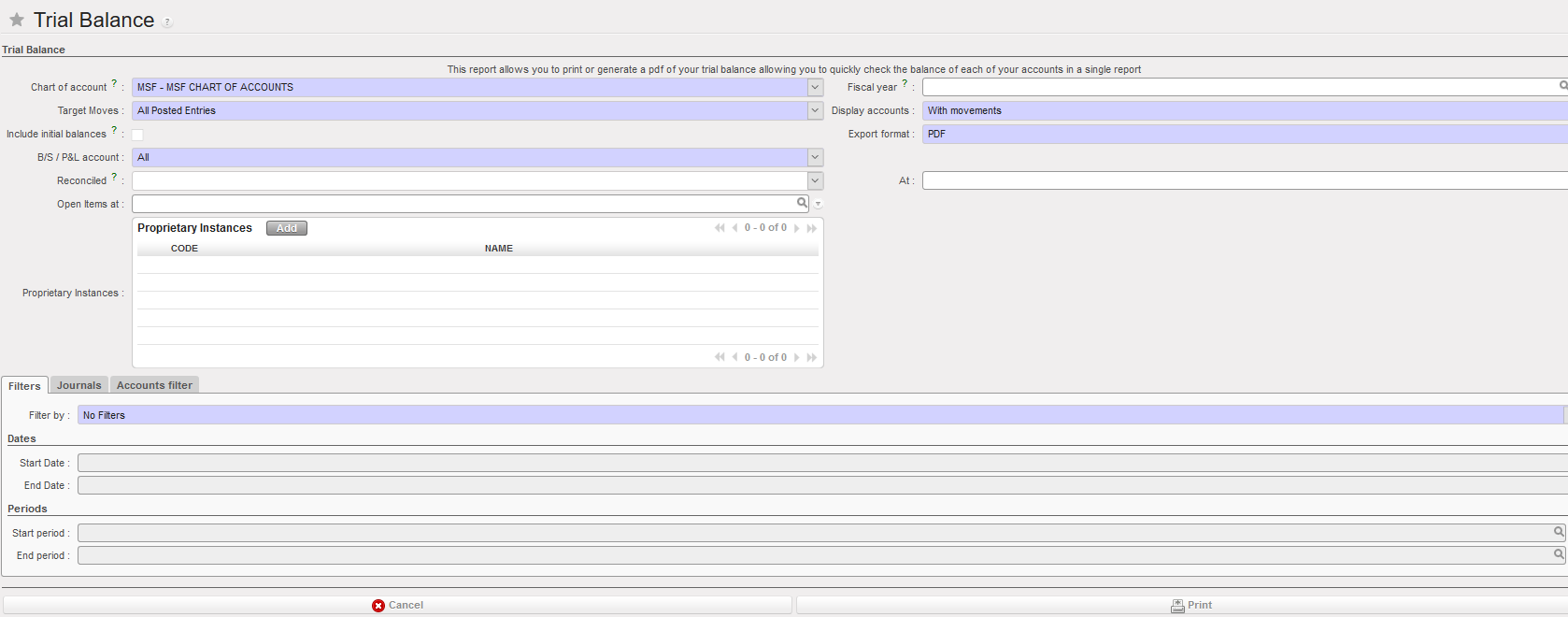
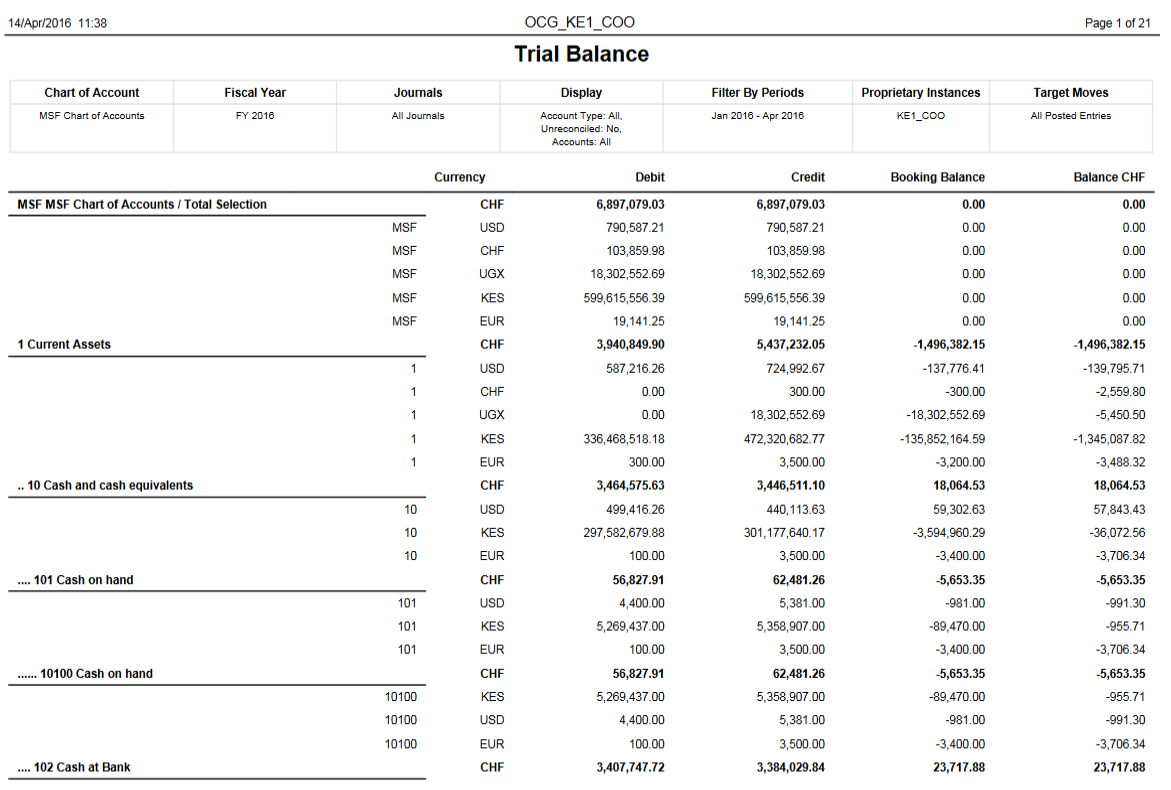
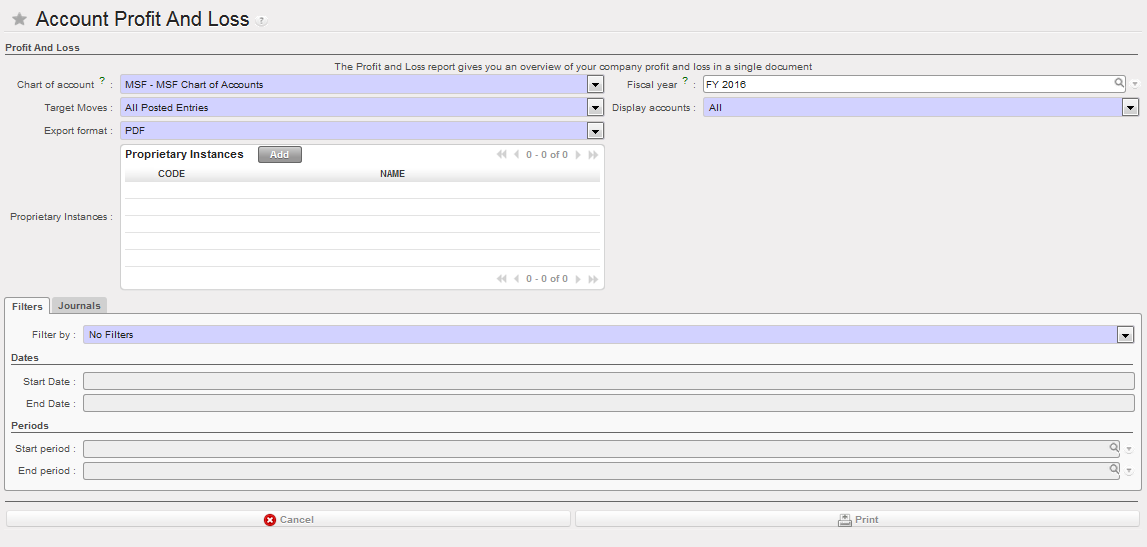
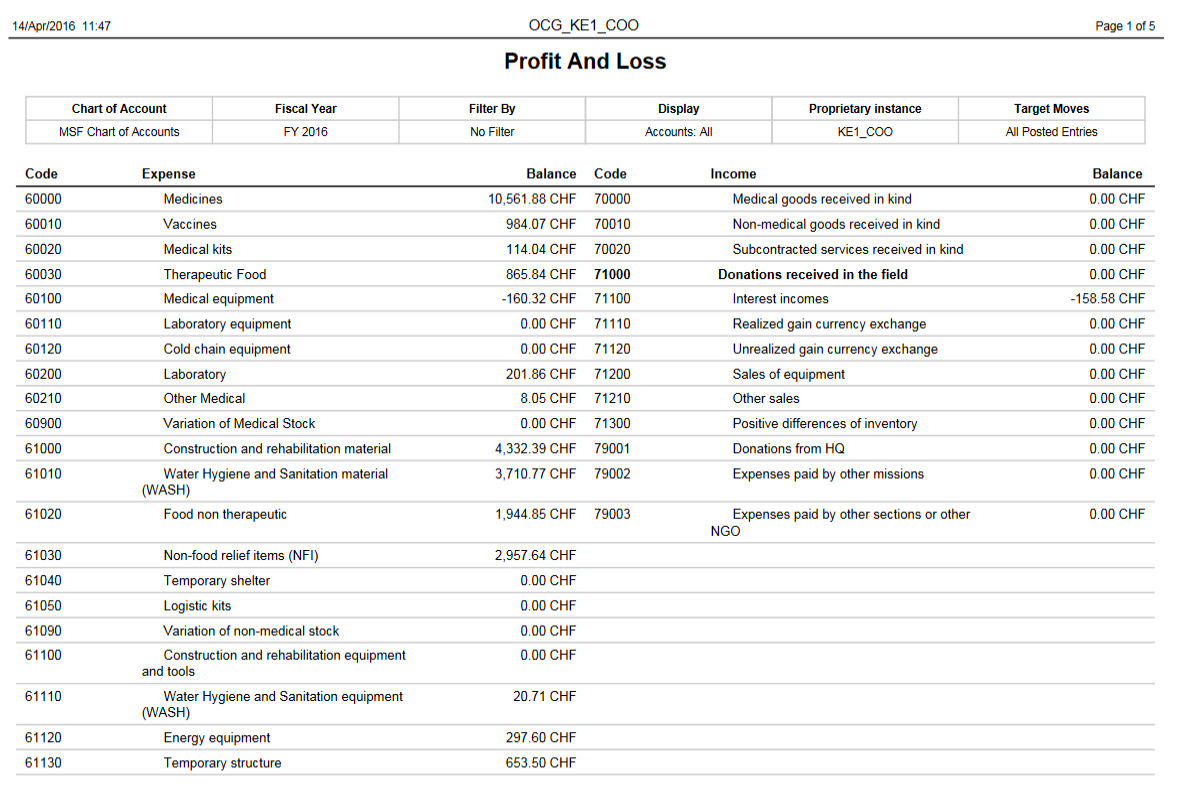
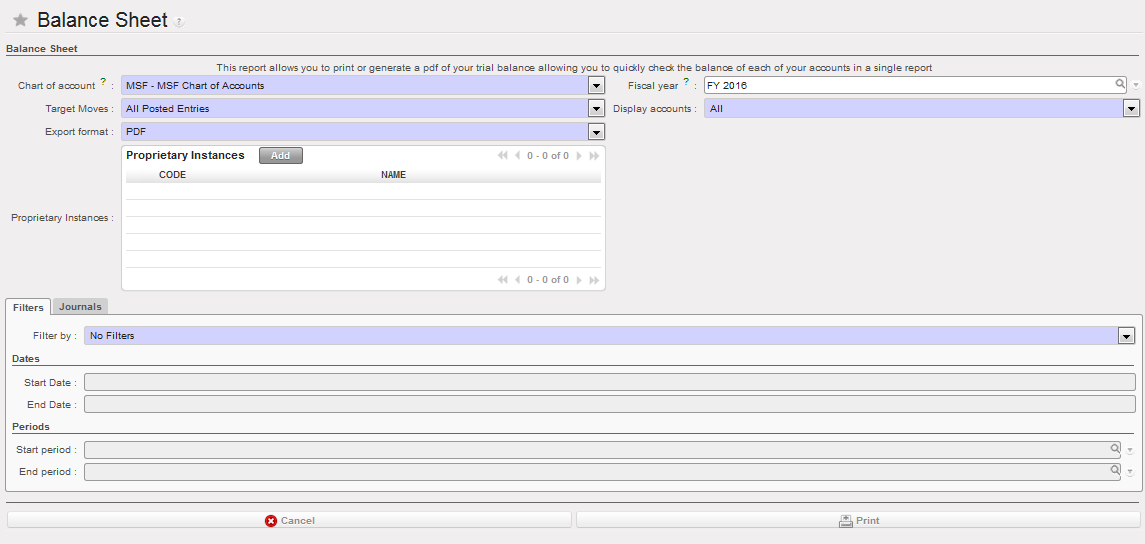
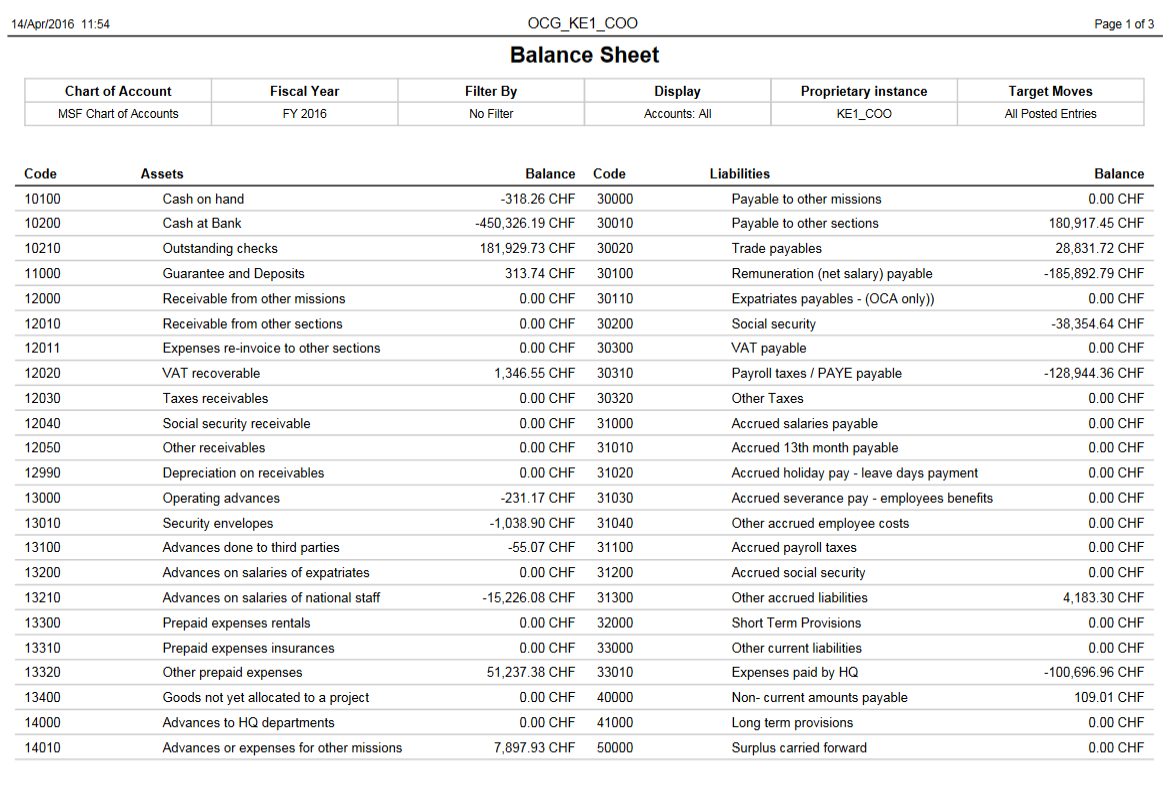

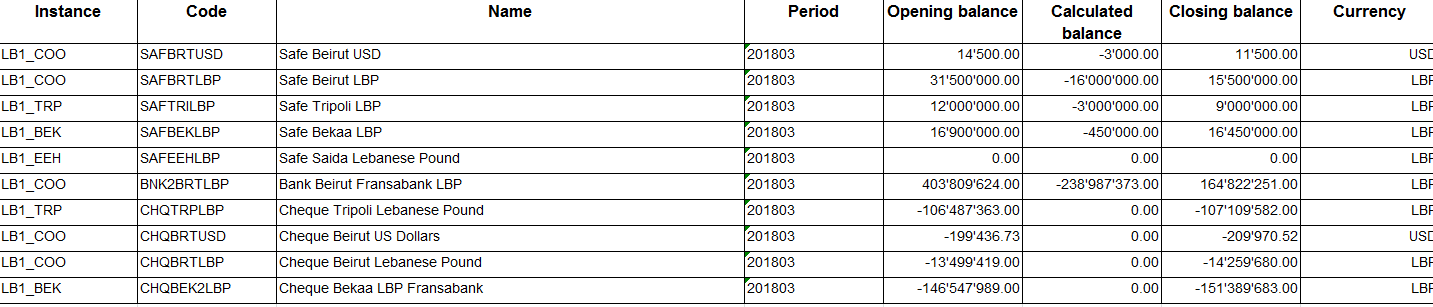 Liquidity Balances Report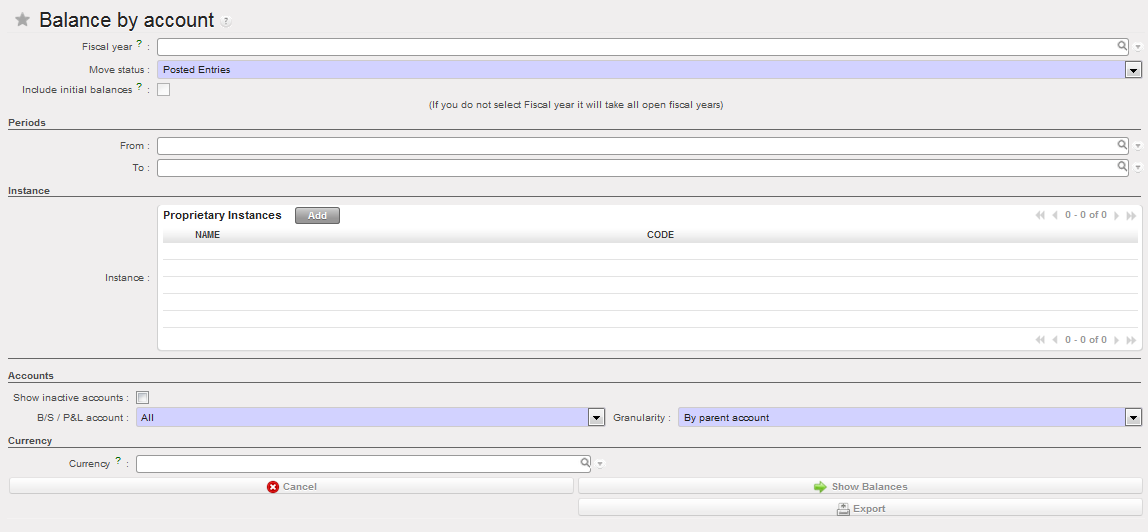
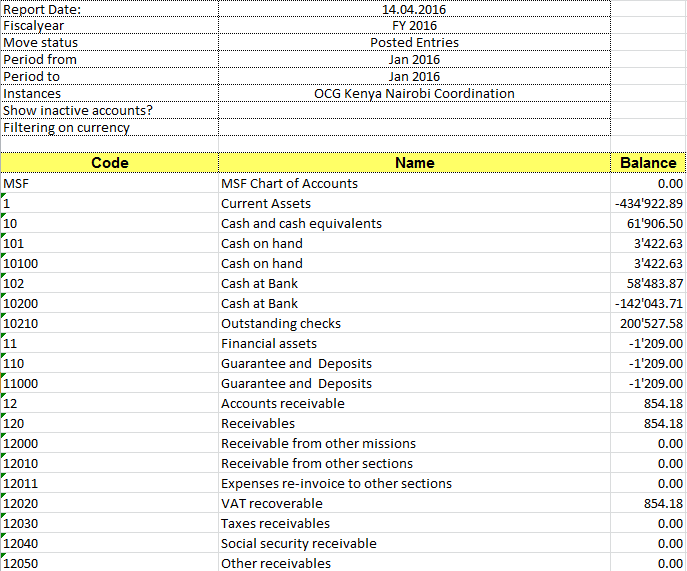
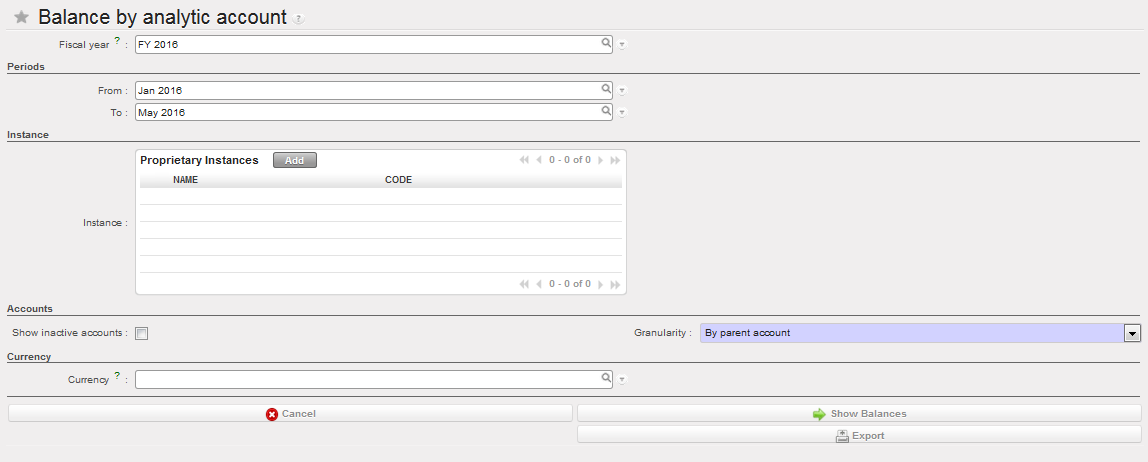
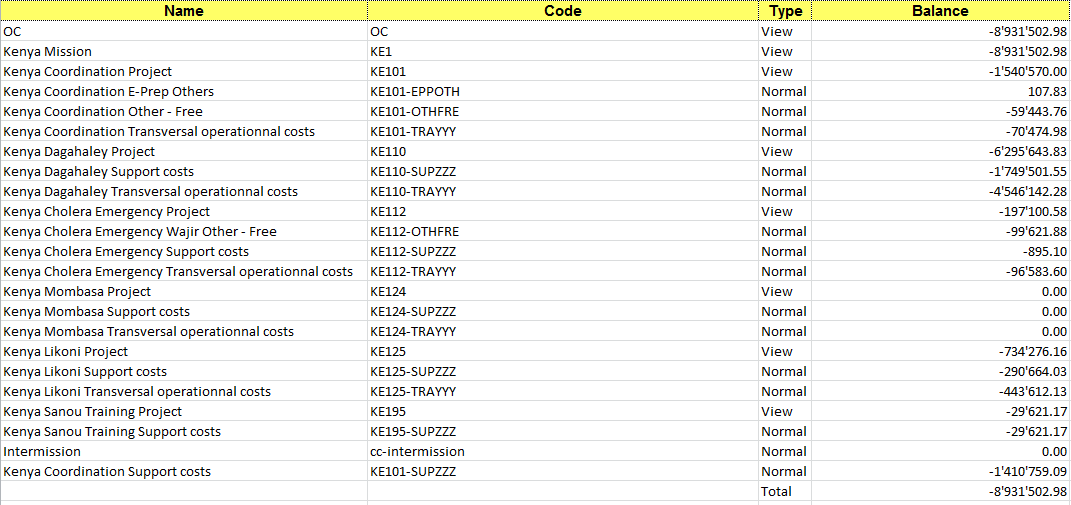 Cost center worksheet, displaying the balance per cost center. It reflects actual expenses per cost center.
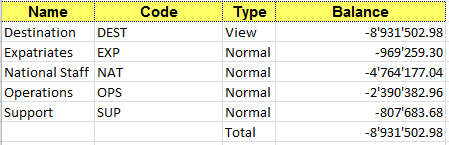 Destination worksheet, displaying the balance per Destination. It reflects actual expenses per Destination.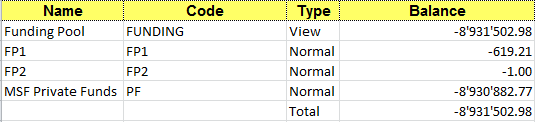
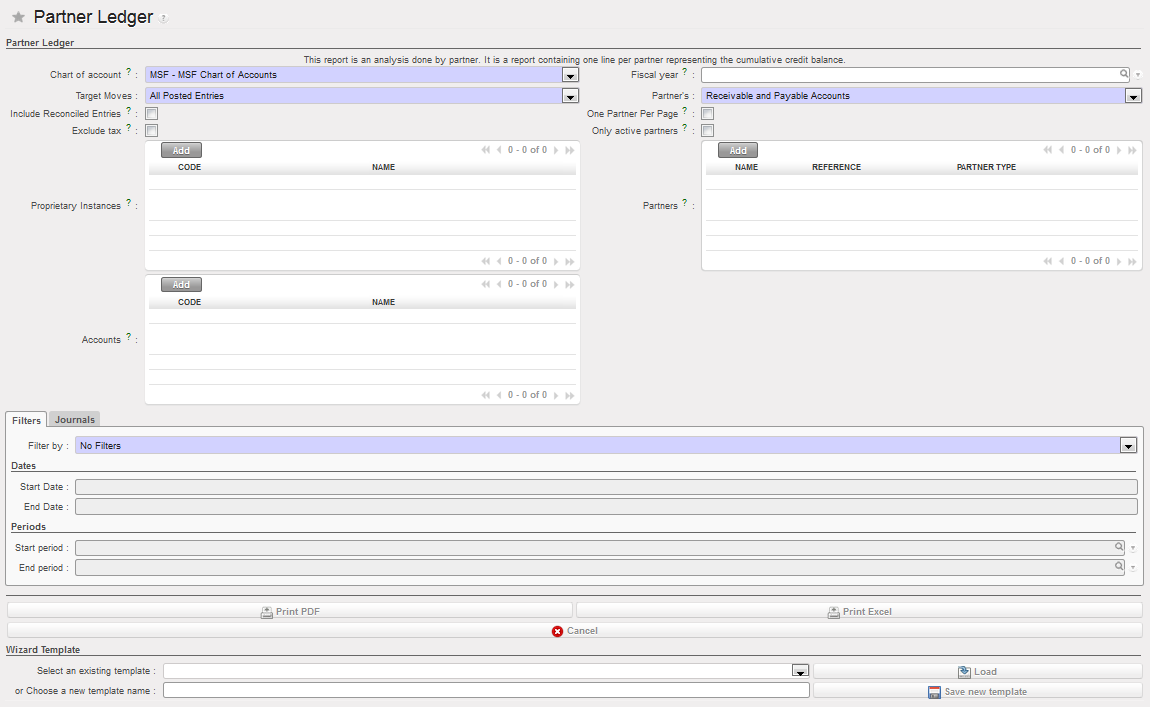
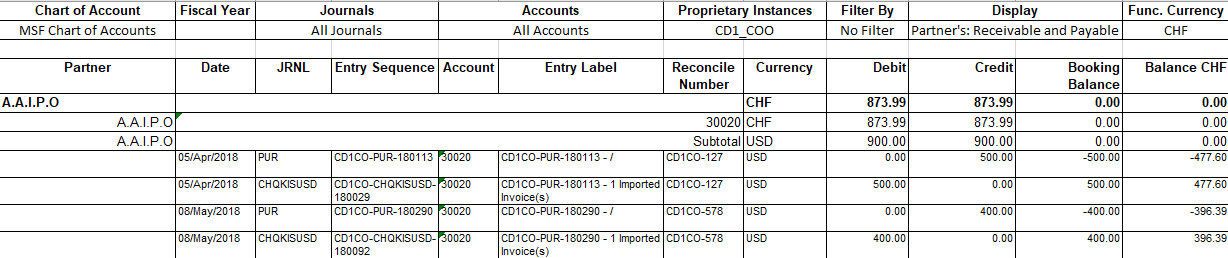
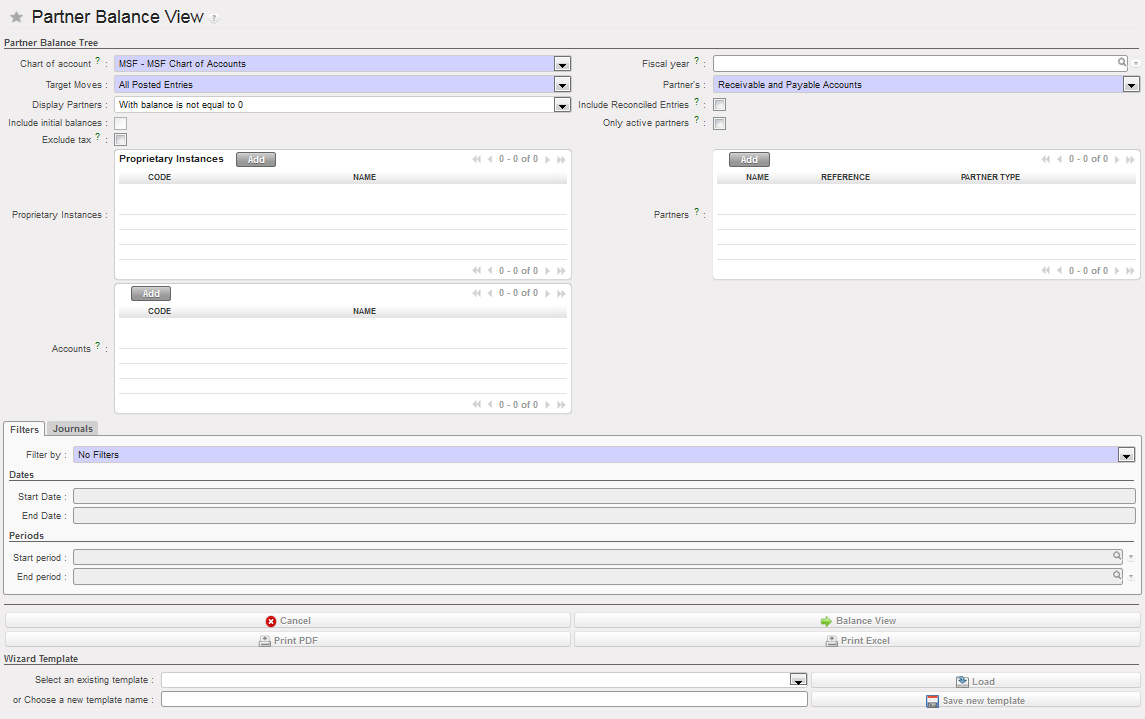
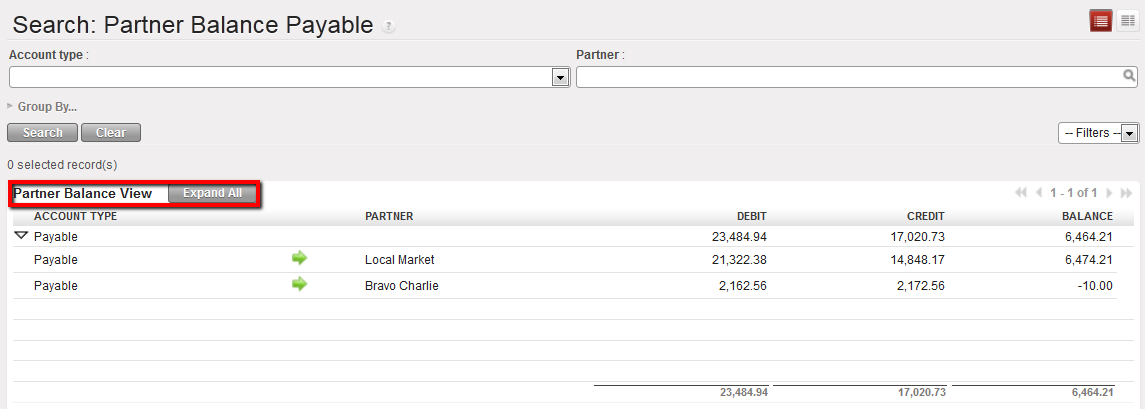 Balance View on Payable
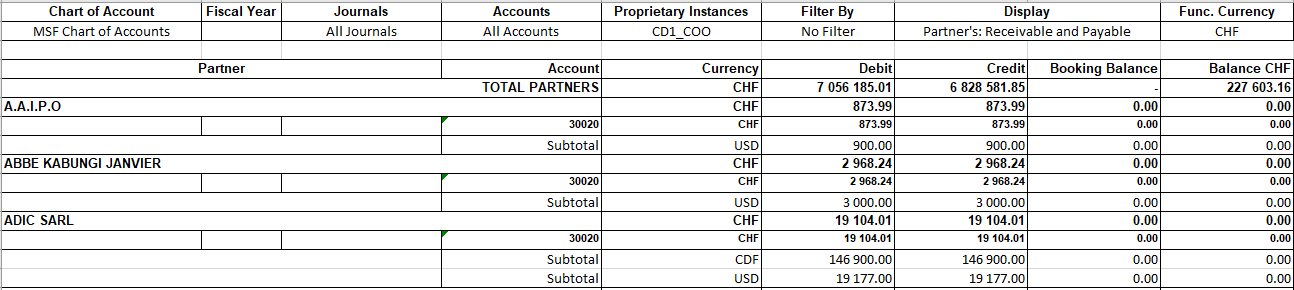

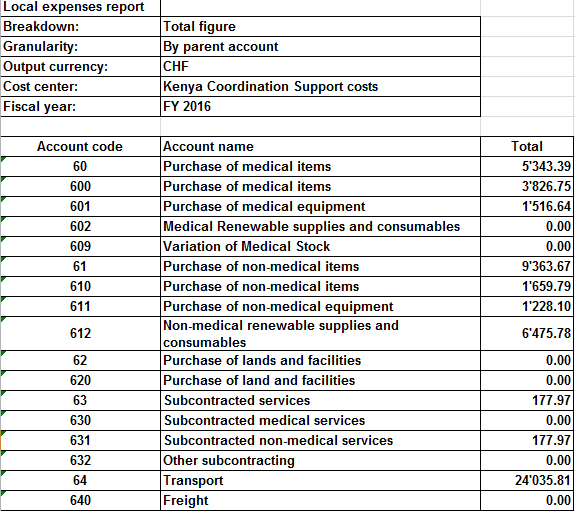
 A window Export to HQ system displays
 Field data export for January 2016

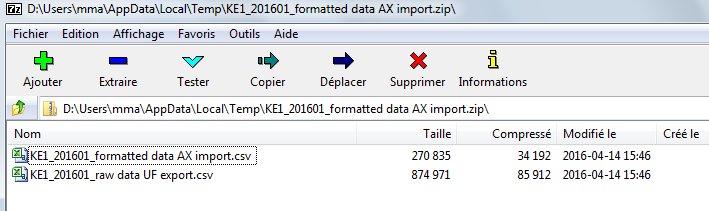

 Field data export for September 2014

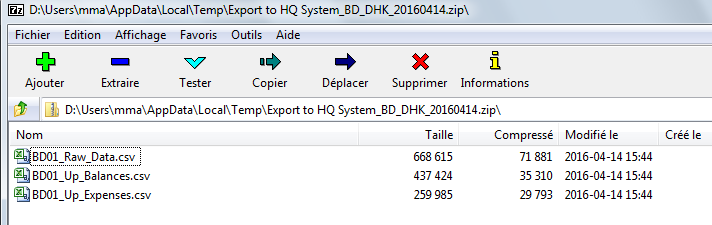
 Field data export for January 2016
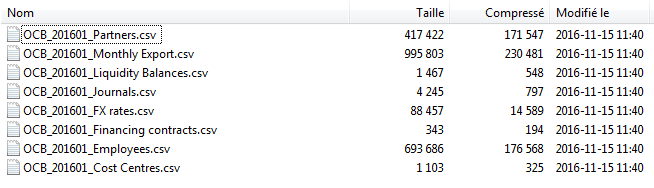


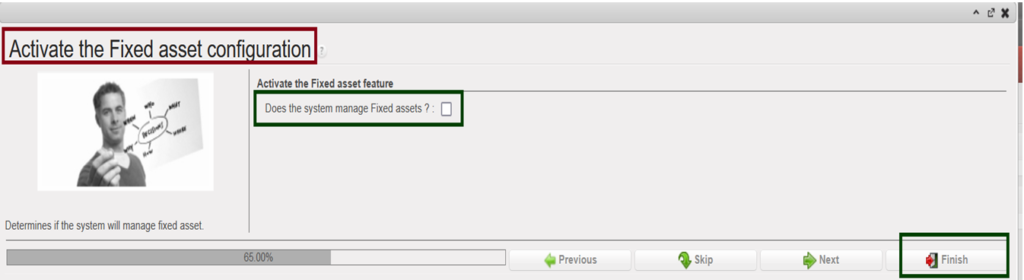
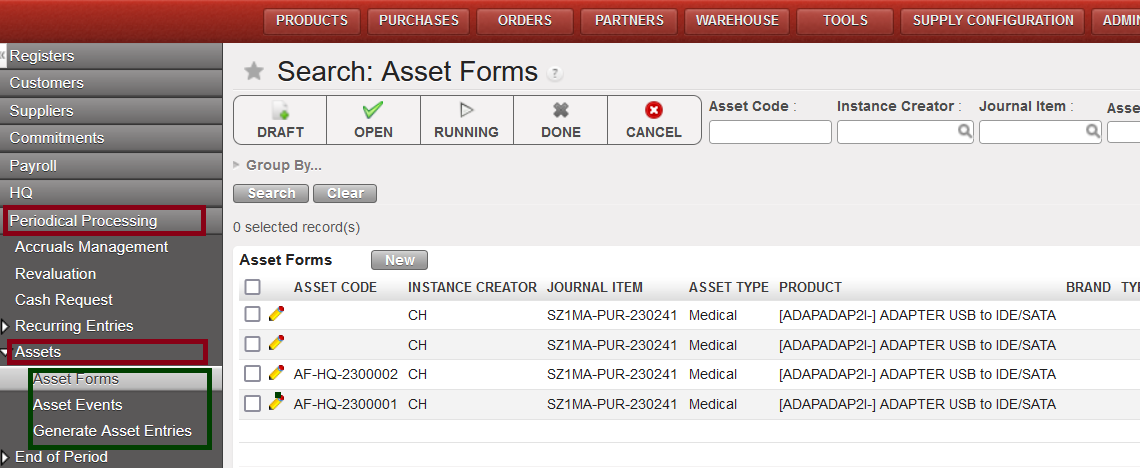
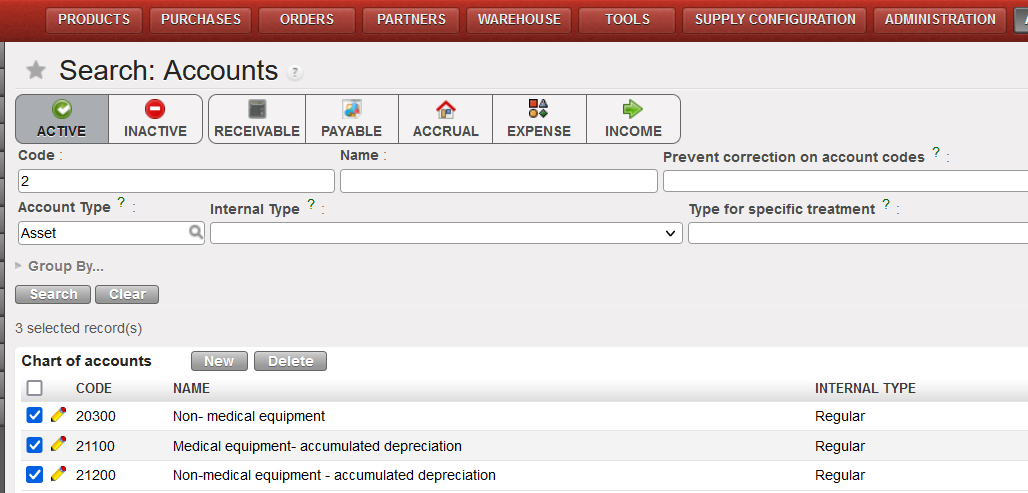
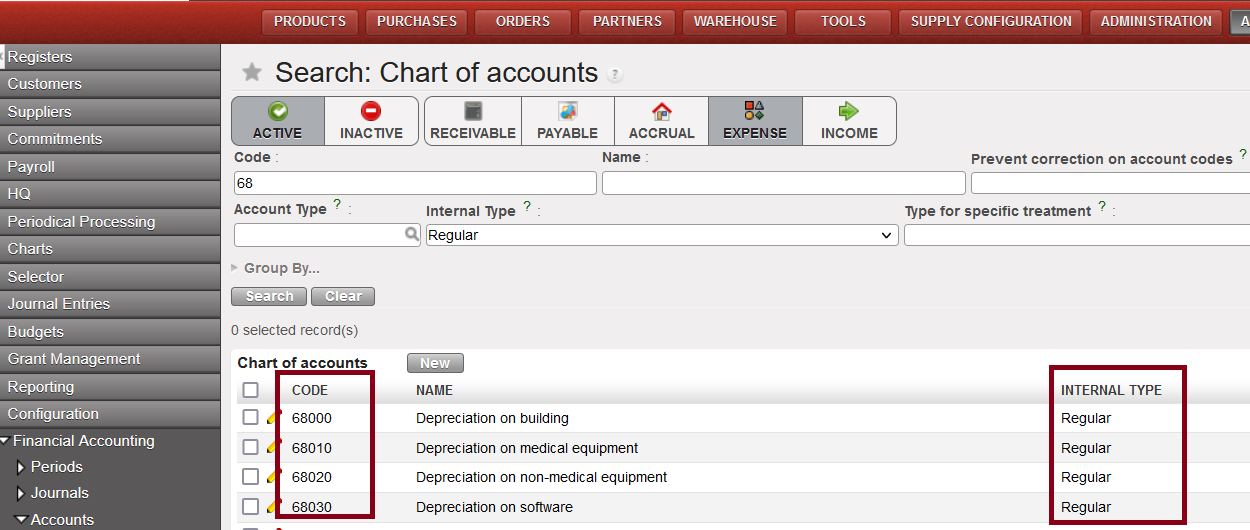
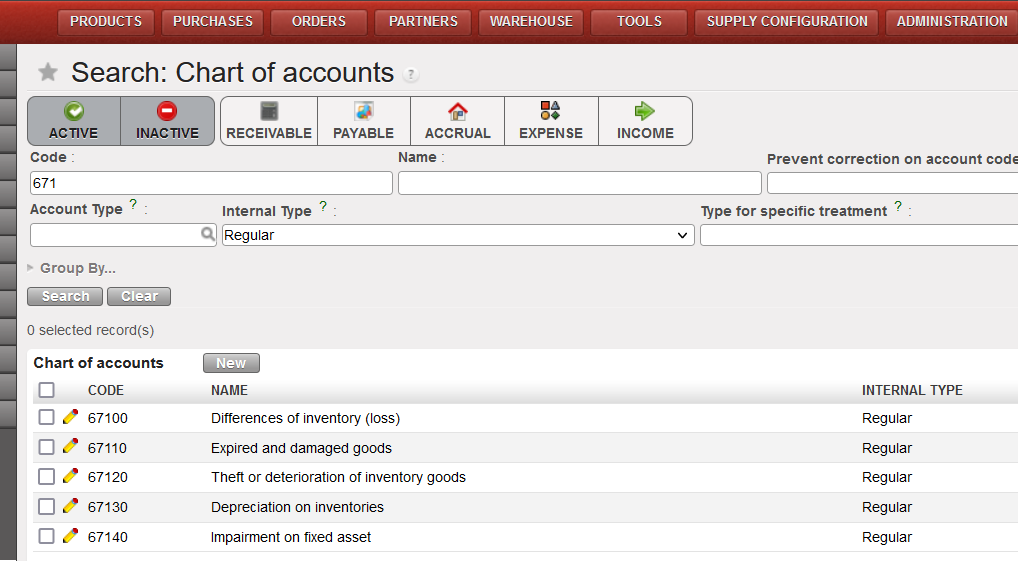
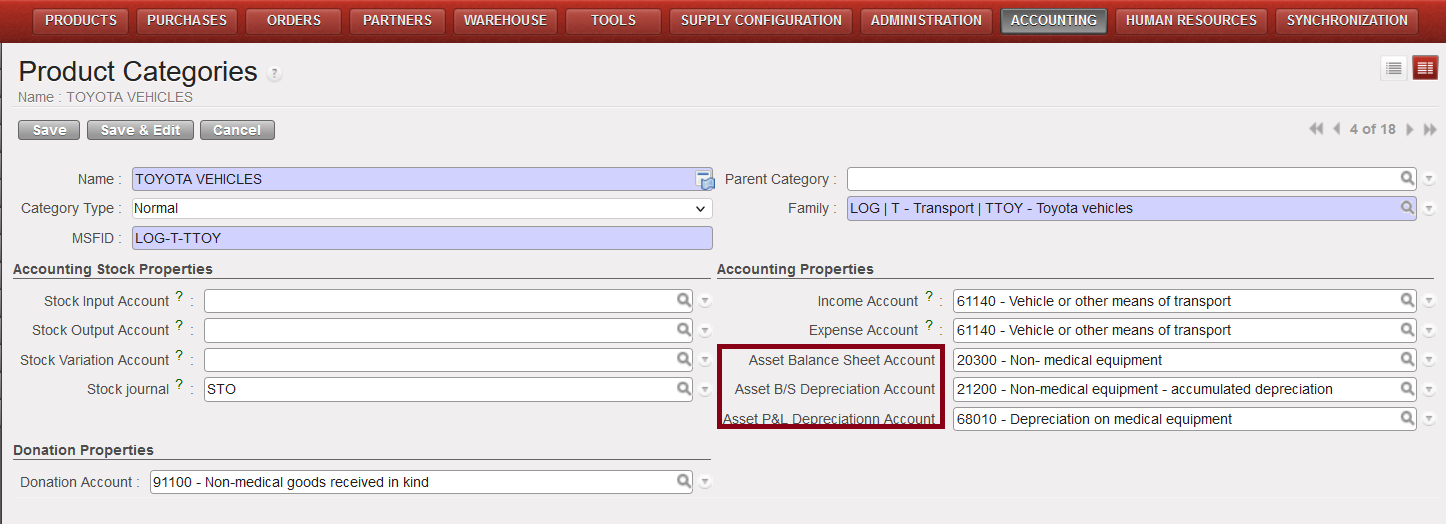
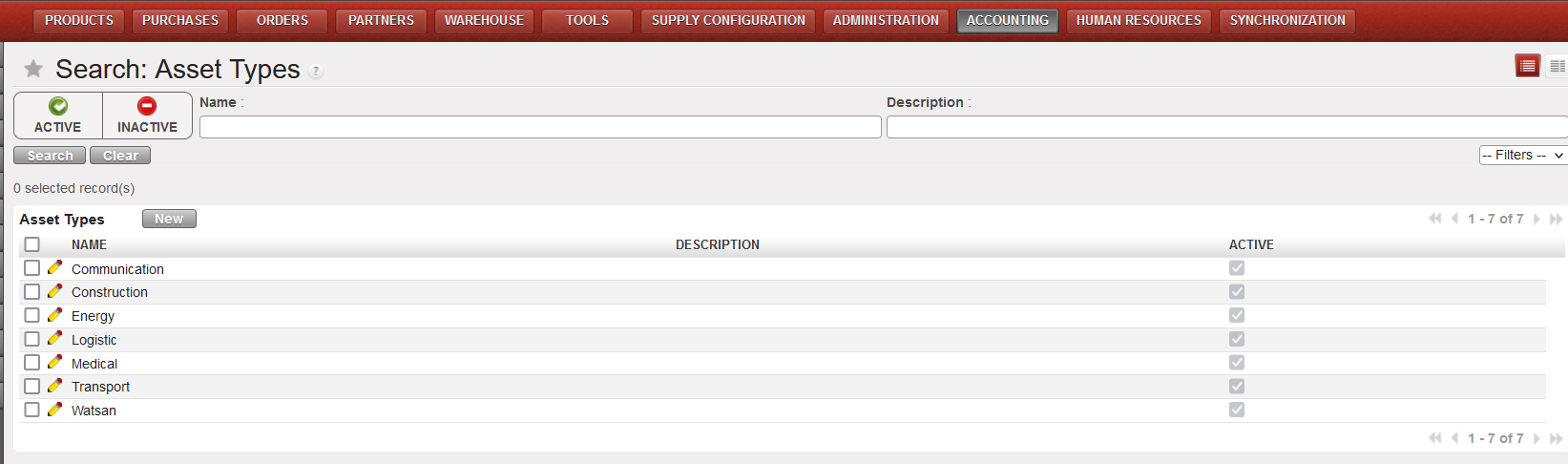
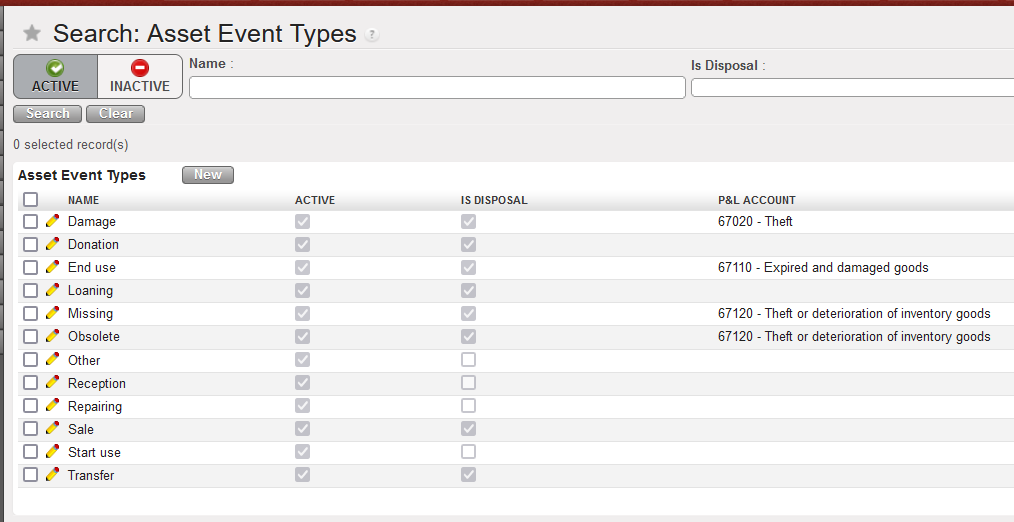
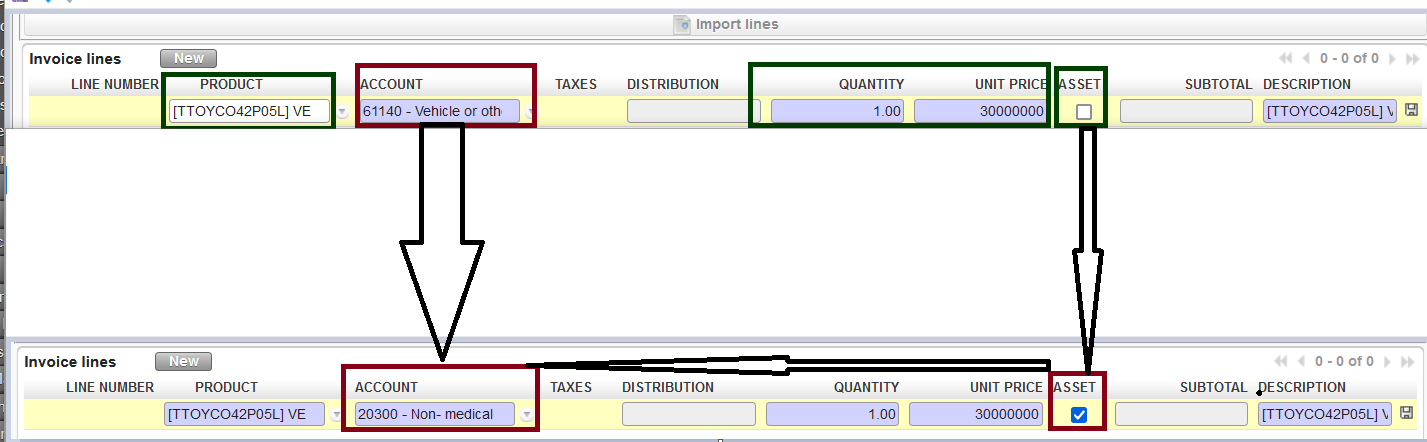
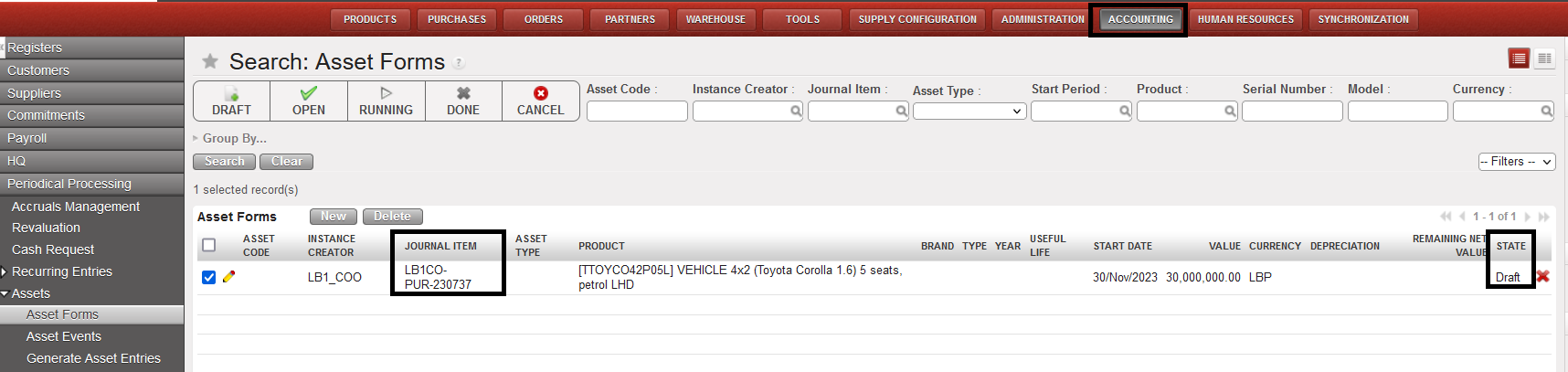
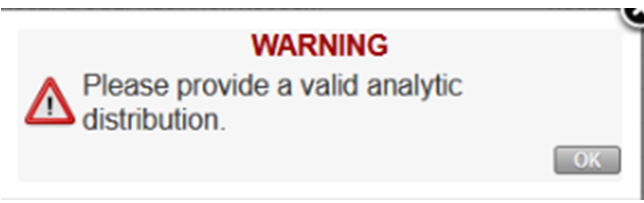
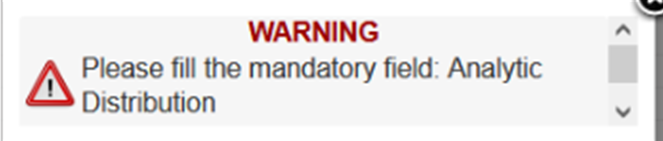
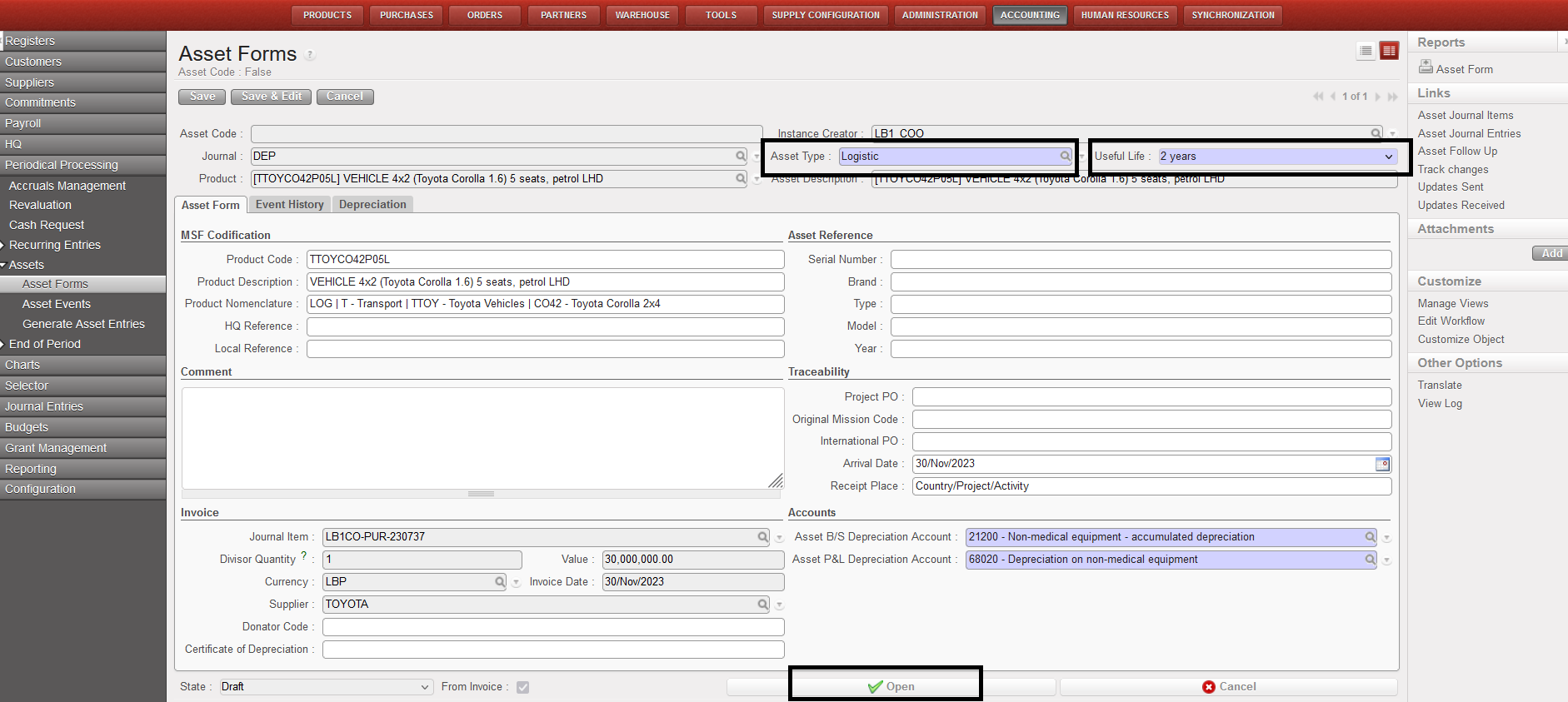

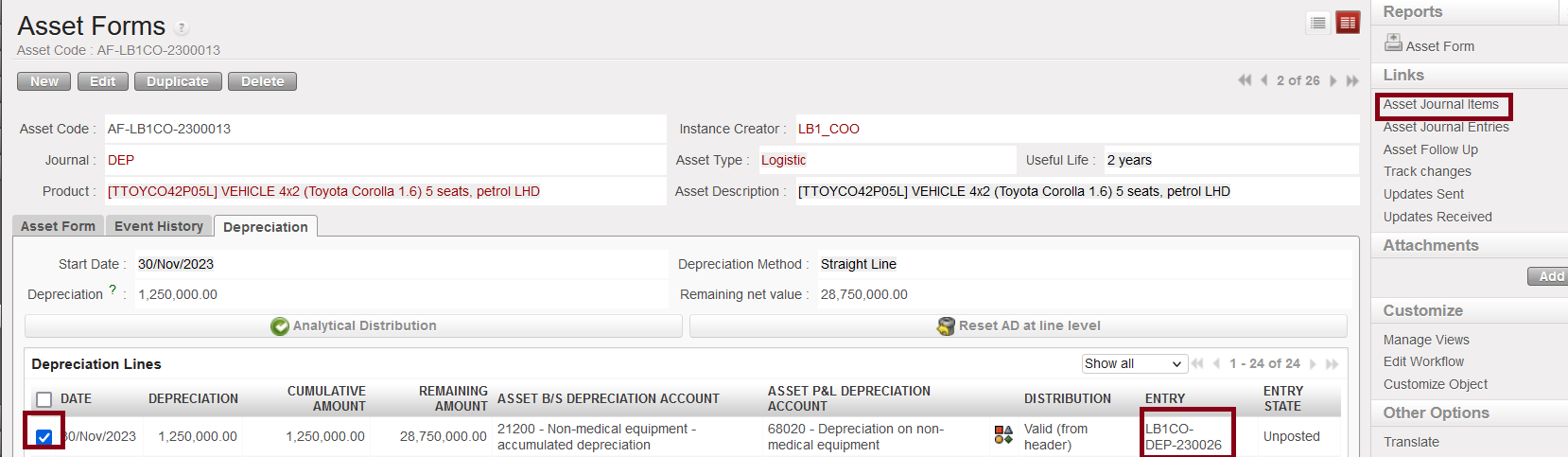
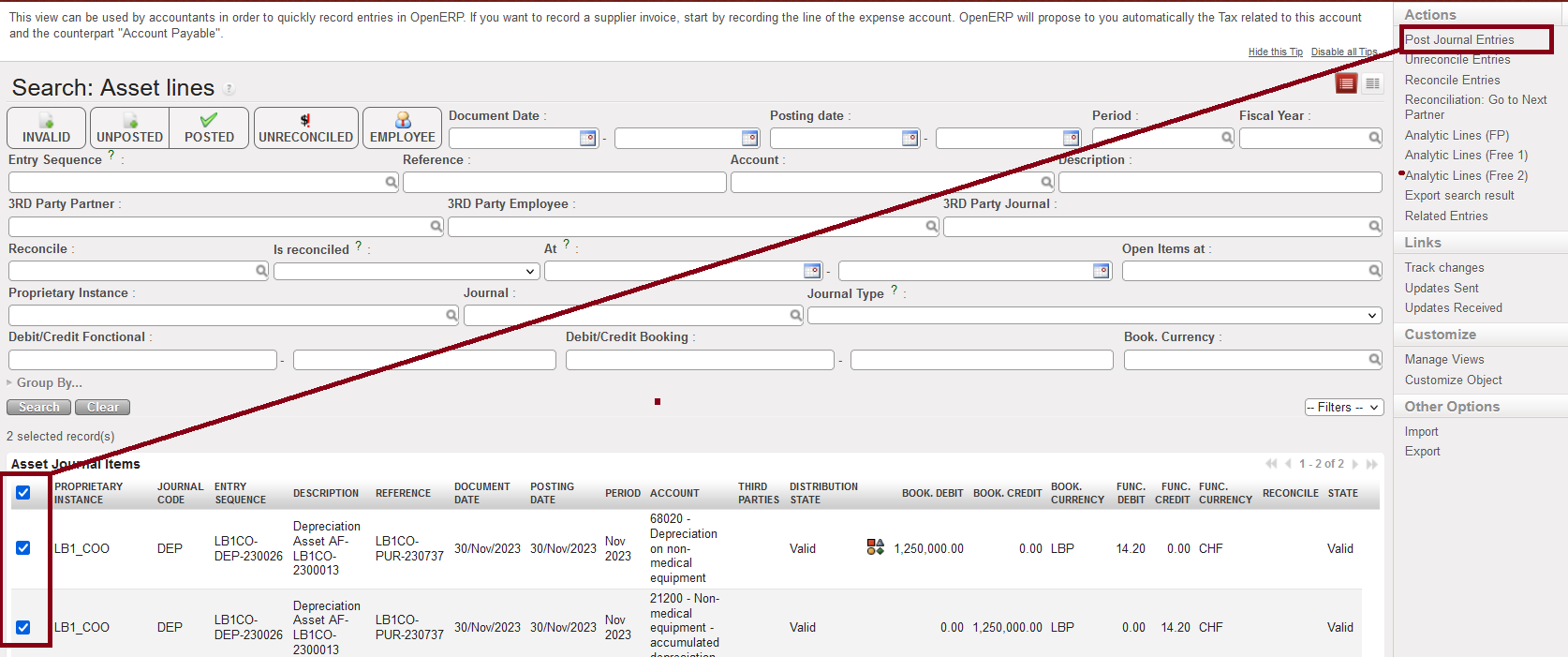
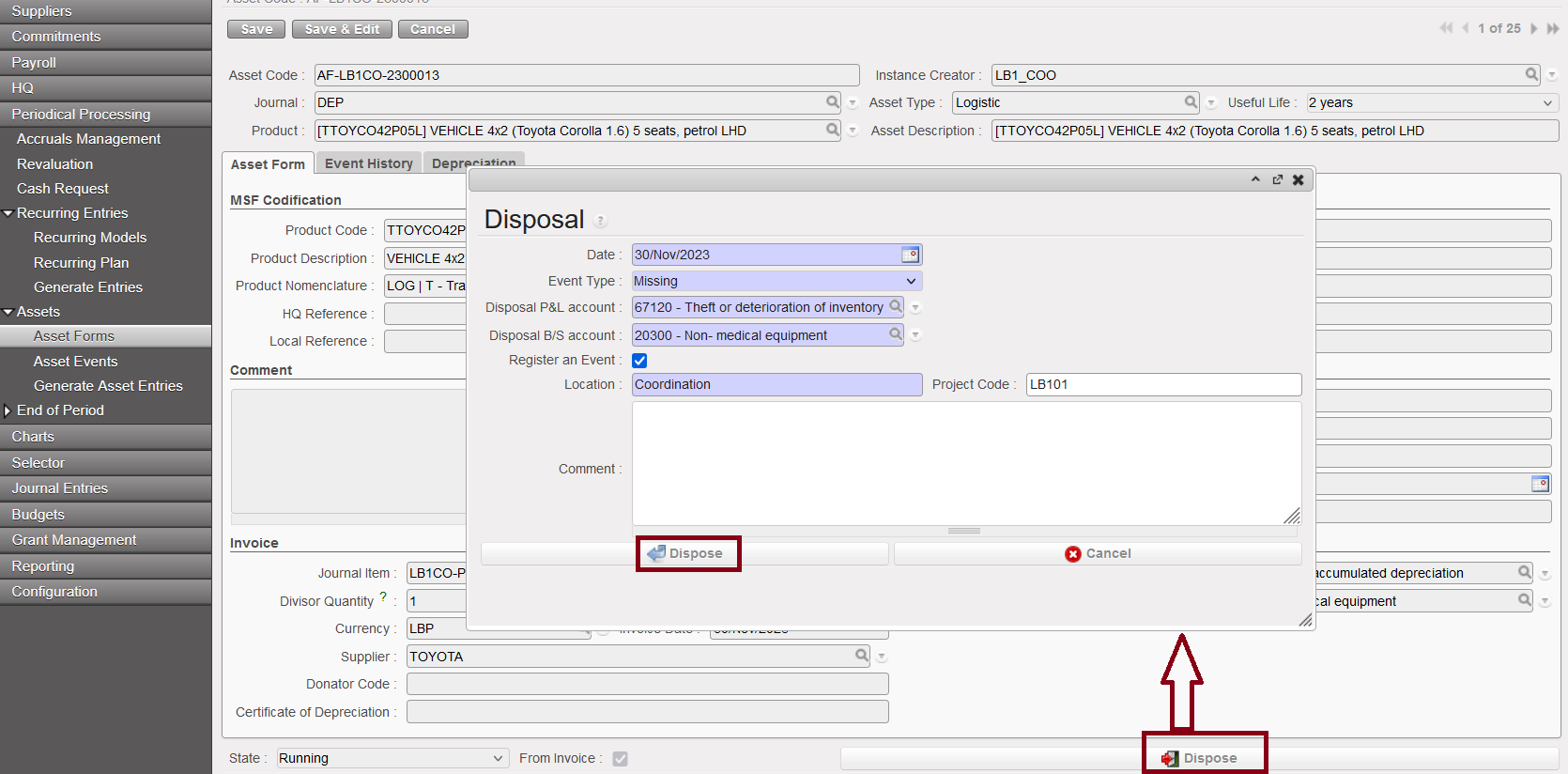
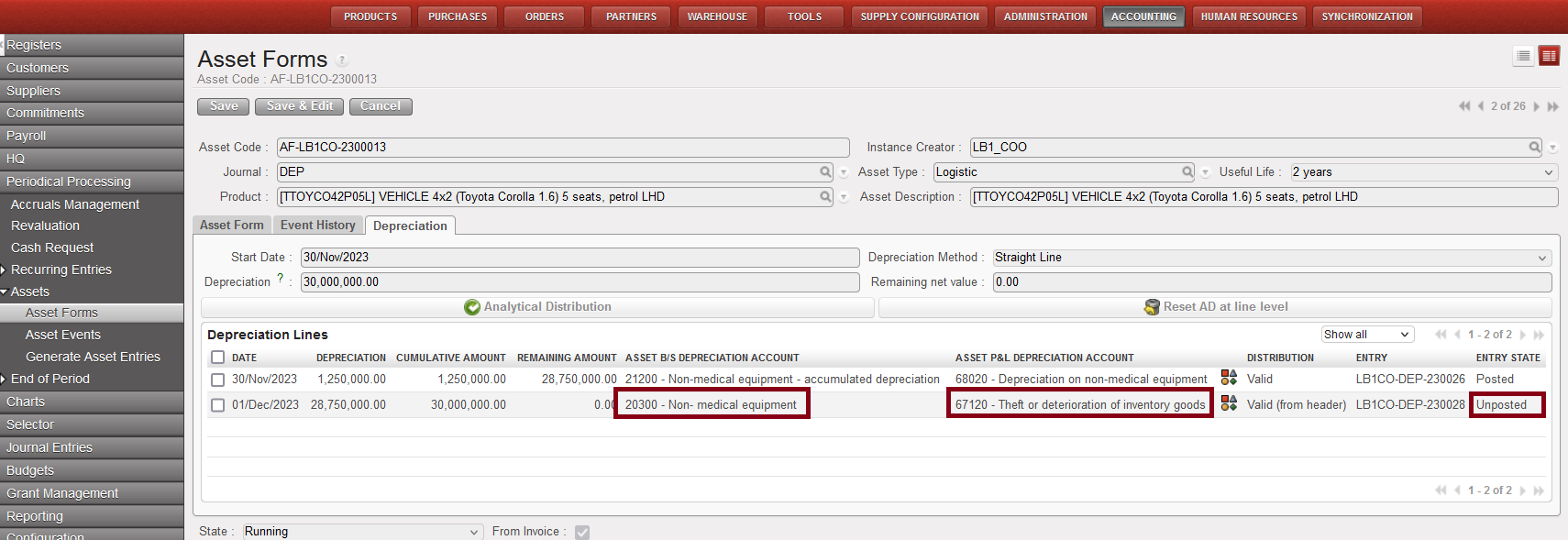
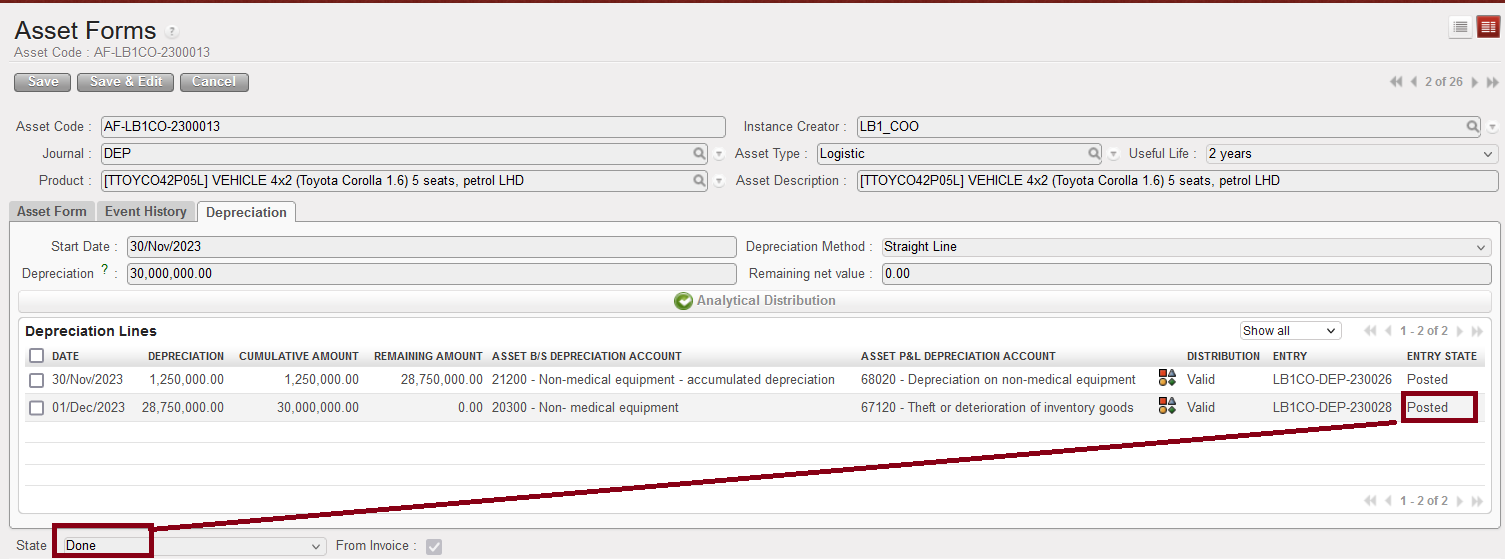
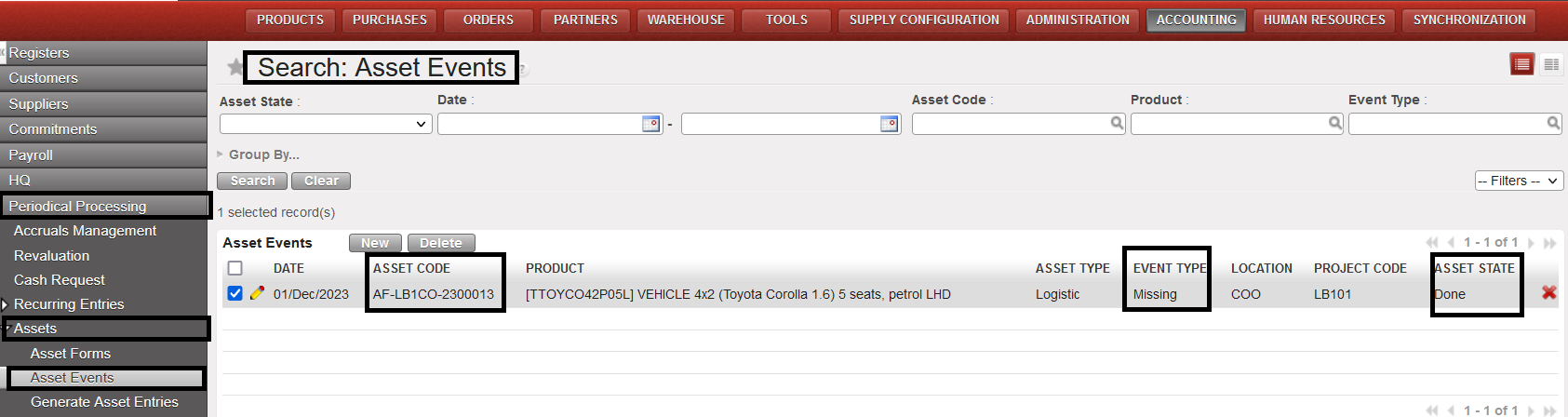
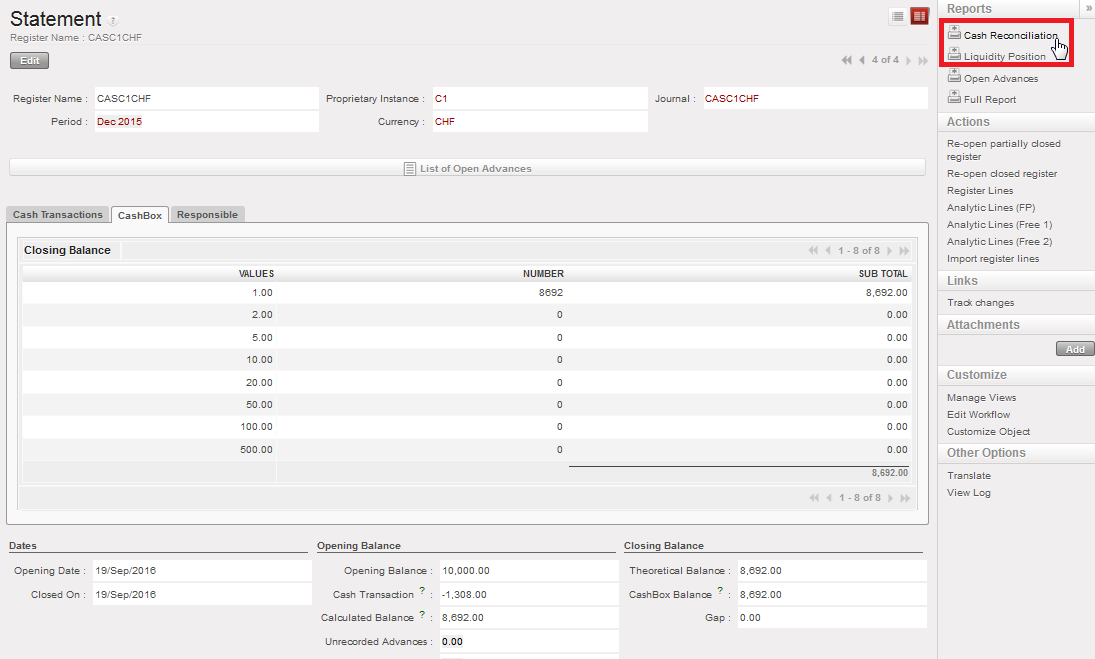 Cashbox view where the physical cash balance is reported and the location of Cash Reconciliation button
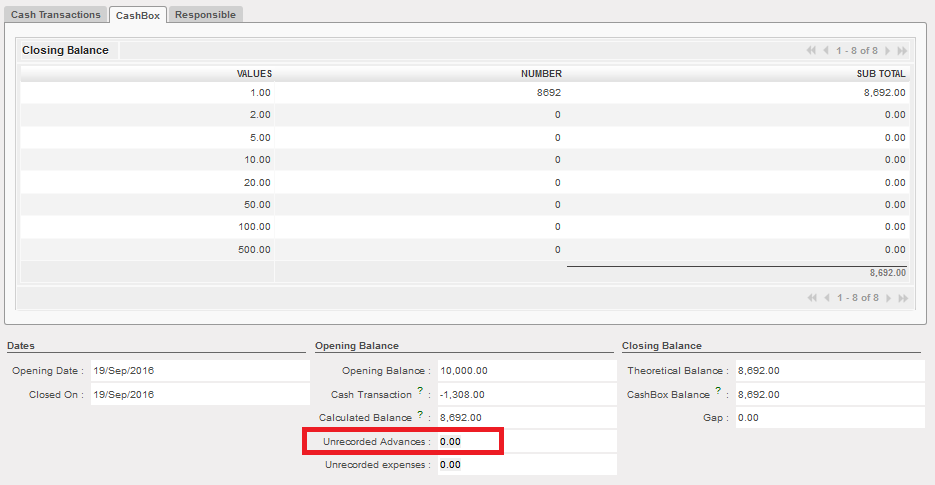 Field used to report {Unrecorded Advances} in the cashbox
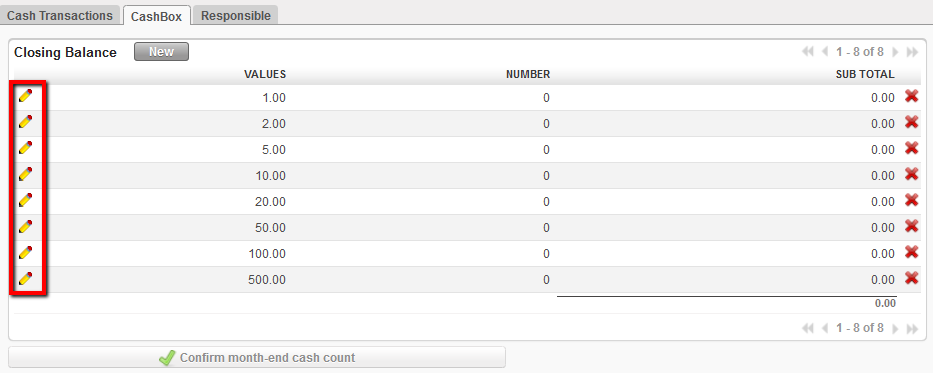 Use pencil icon to edit denomination lines
 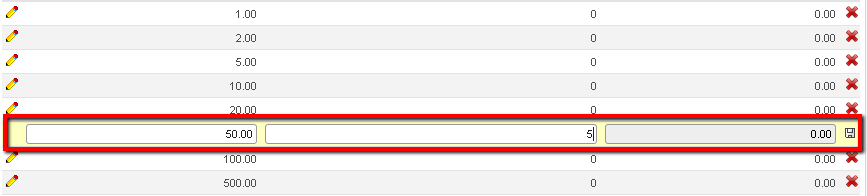 Enter cash count quantities
  ) each denomination line. Click {Save} at the top of the register form
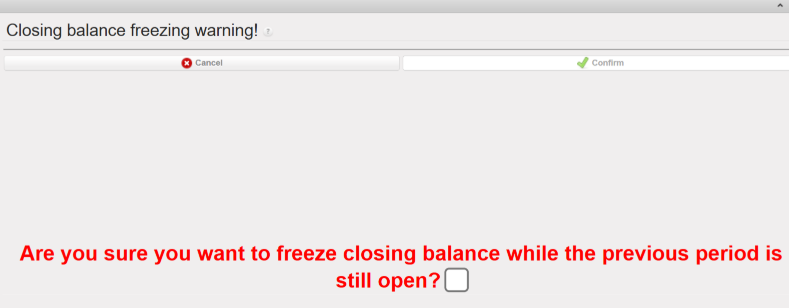



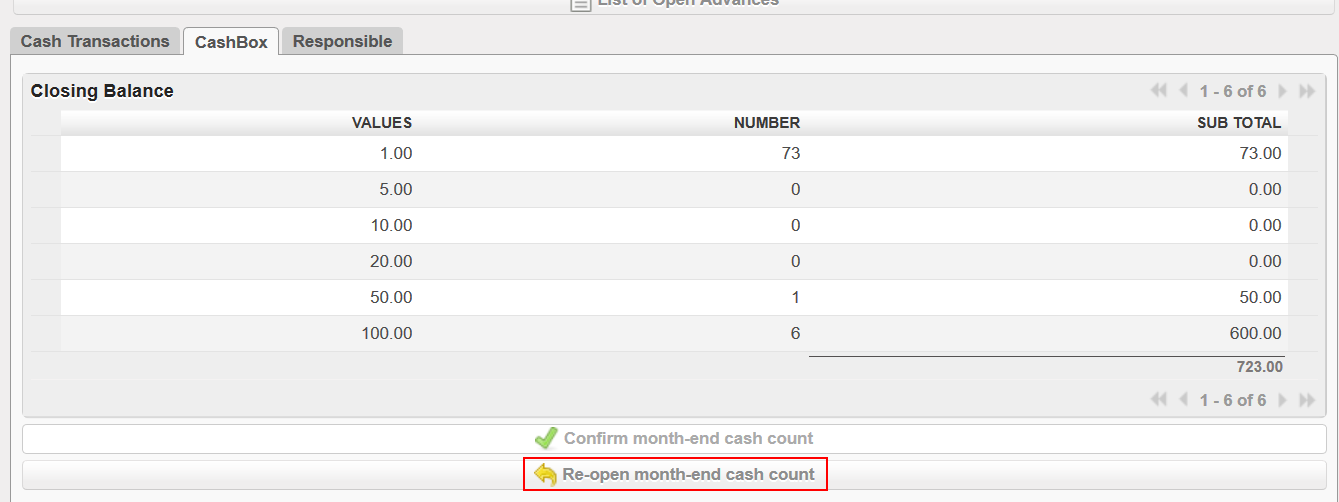


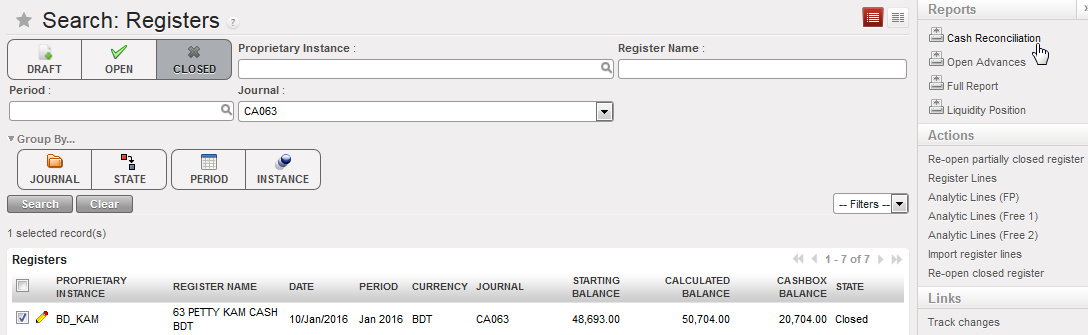 Cash Reconciliation Report Action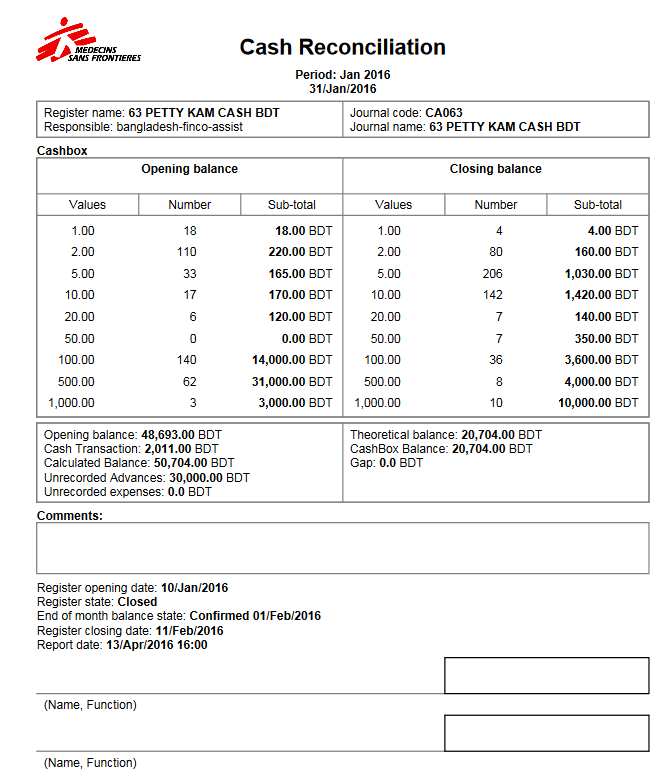
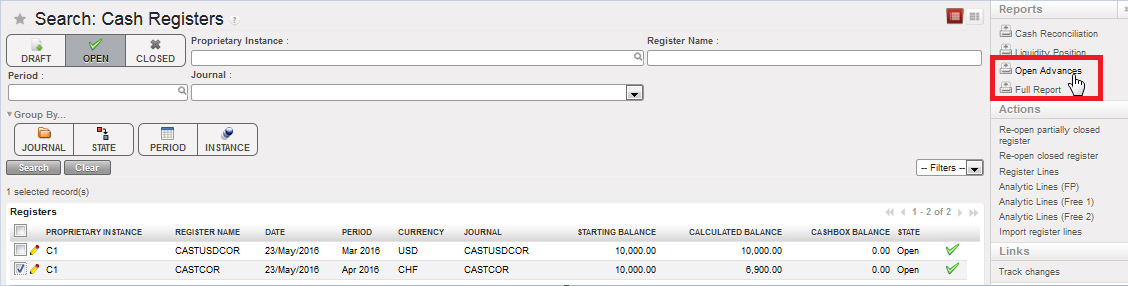
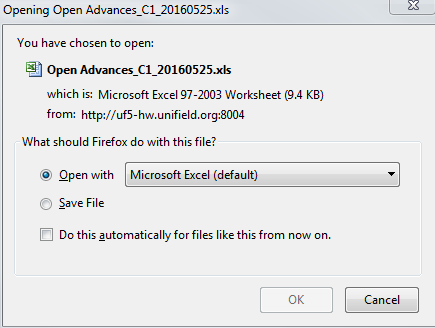


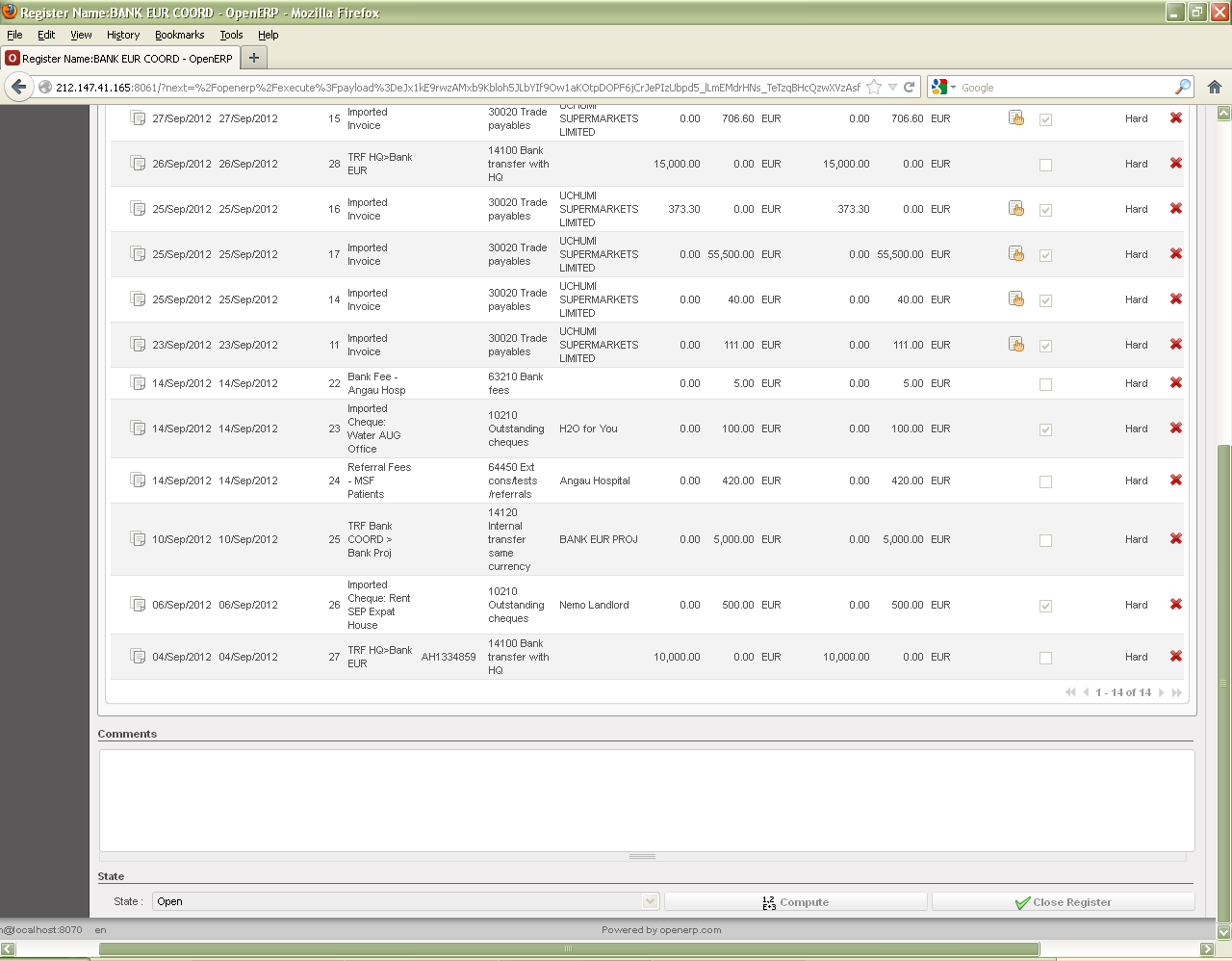

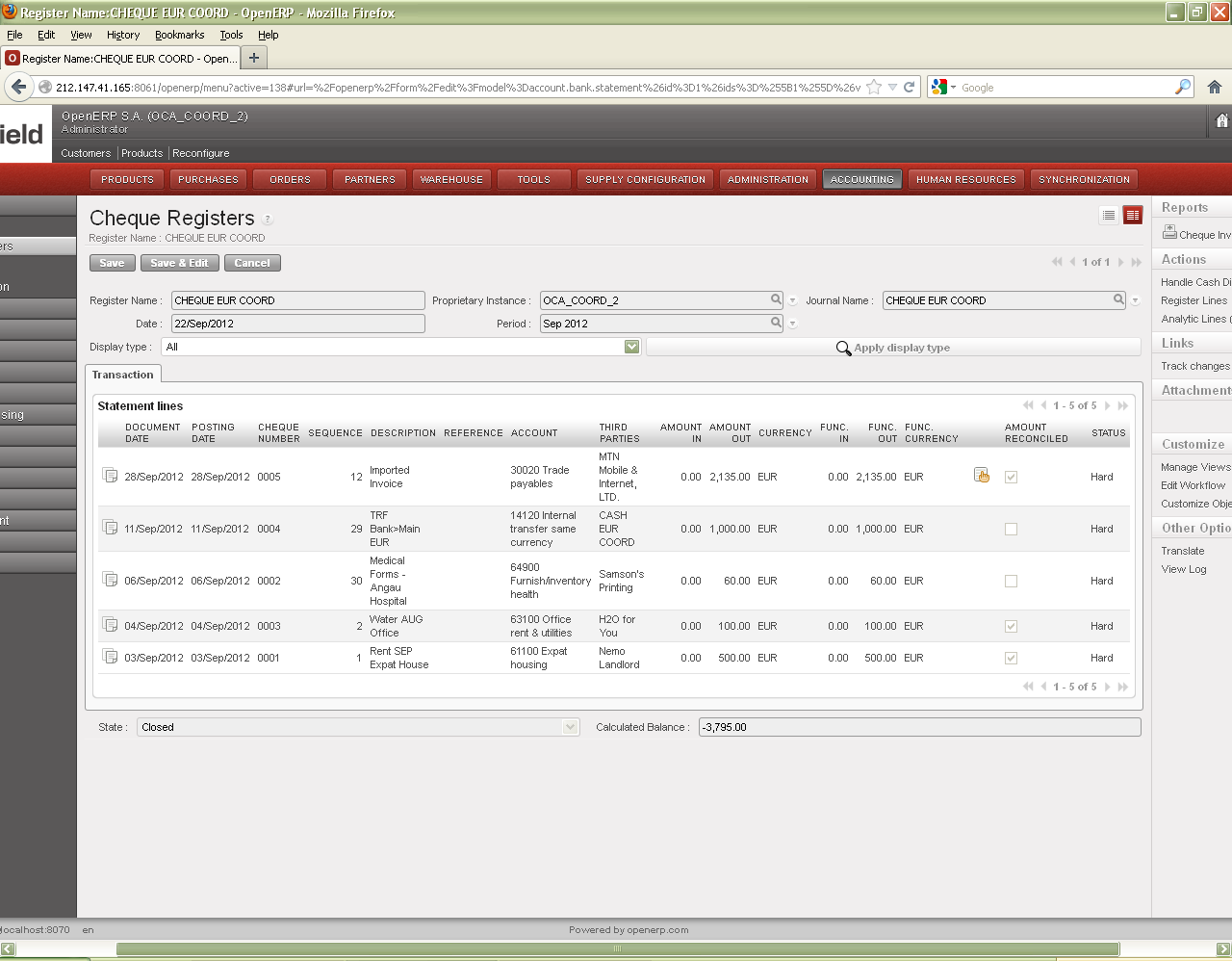

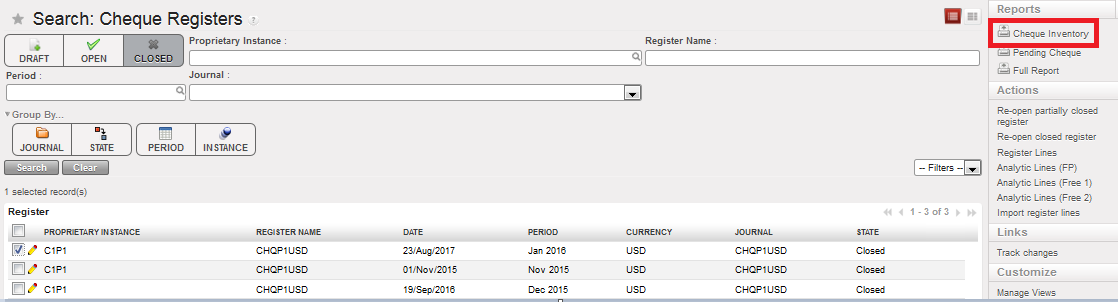 Cheque inventory report action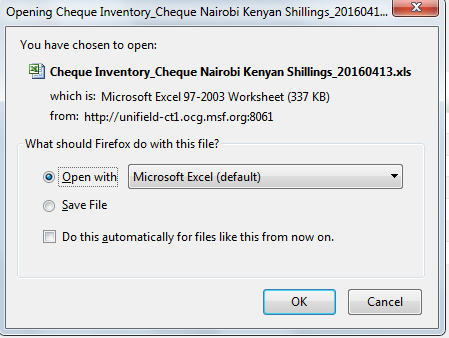
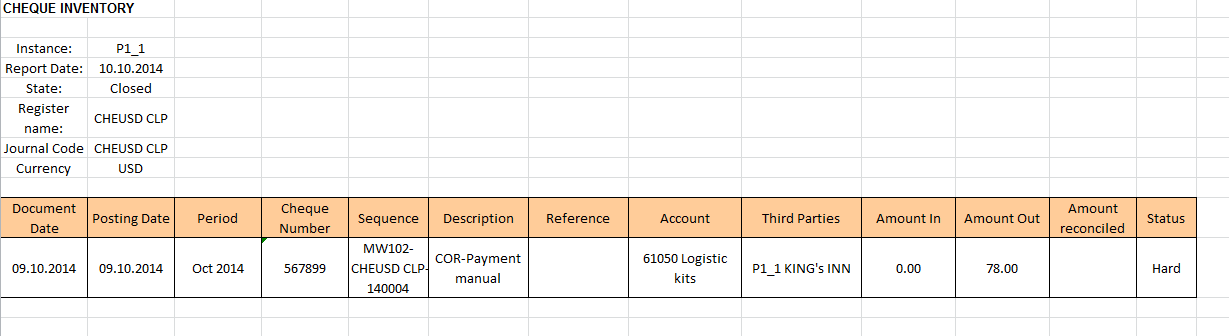

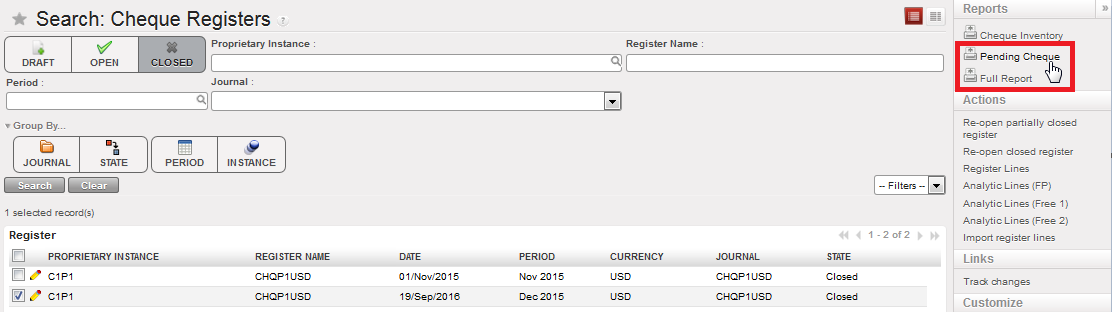 Pending Cheque report action
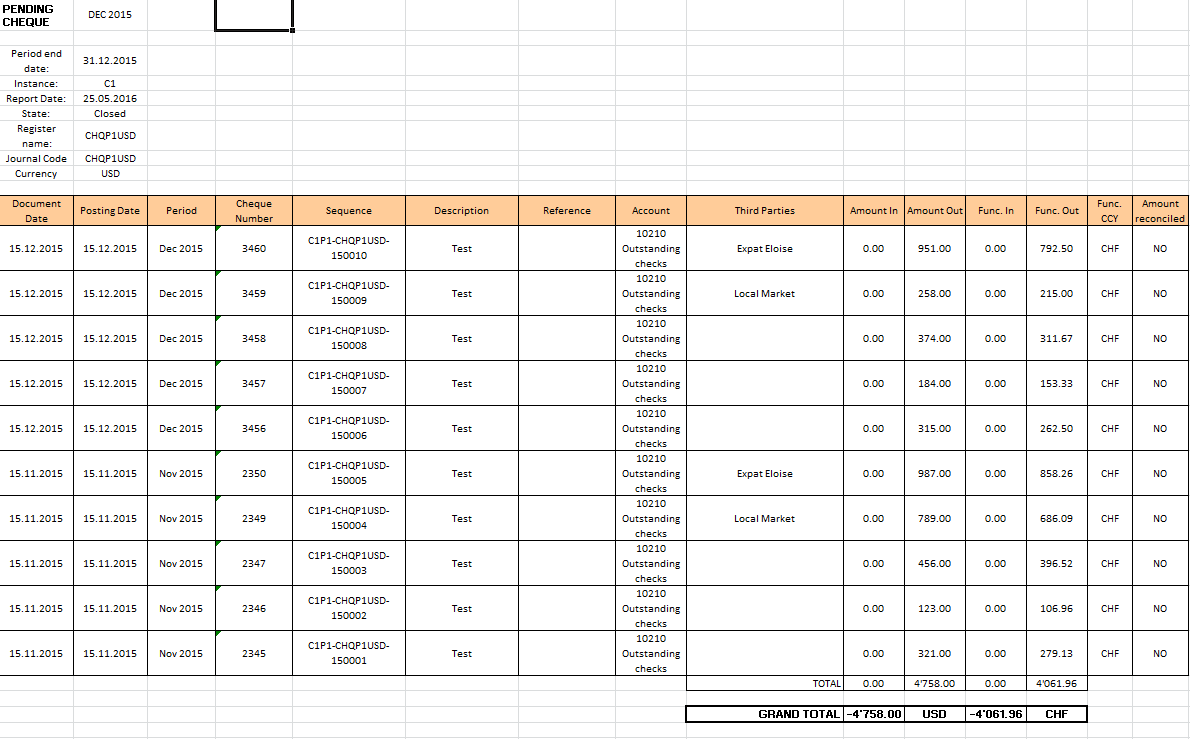

 and the calculated balance as well as the Gap field is updated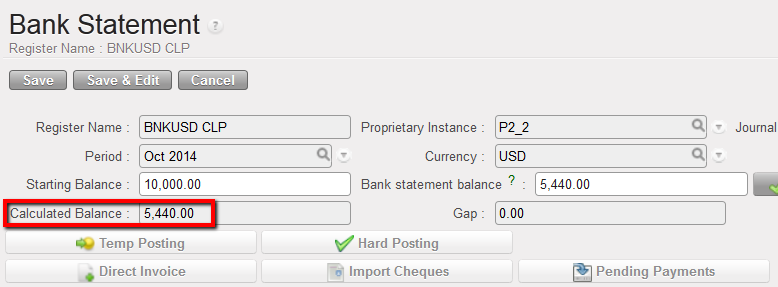
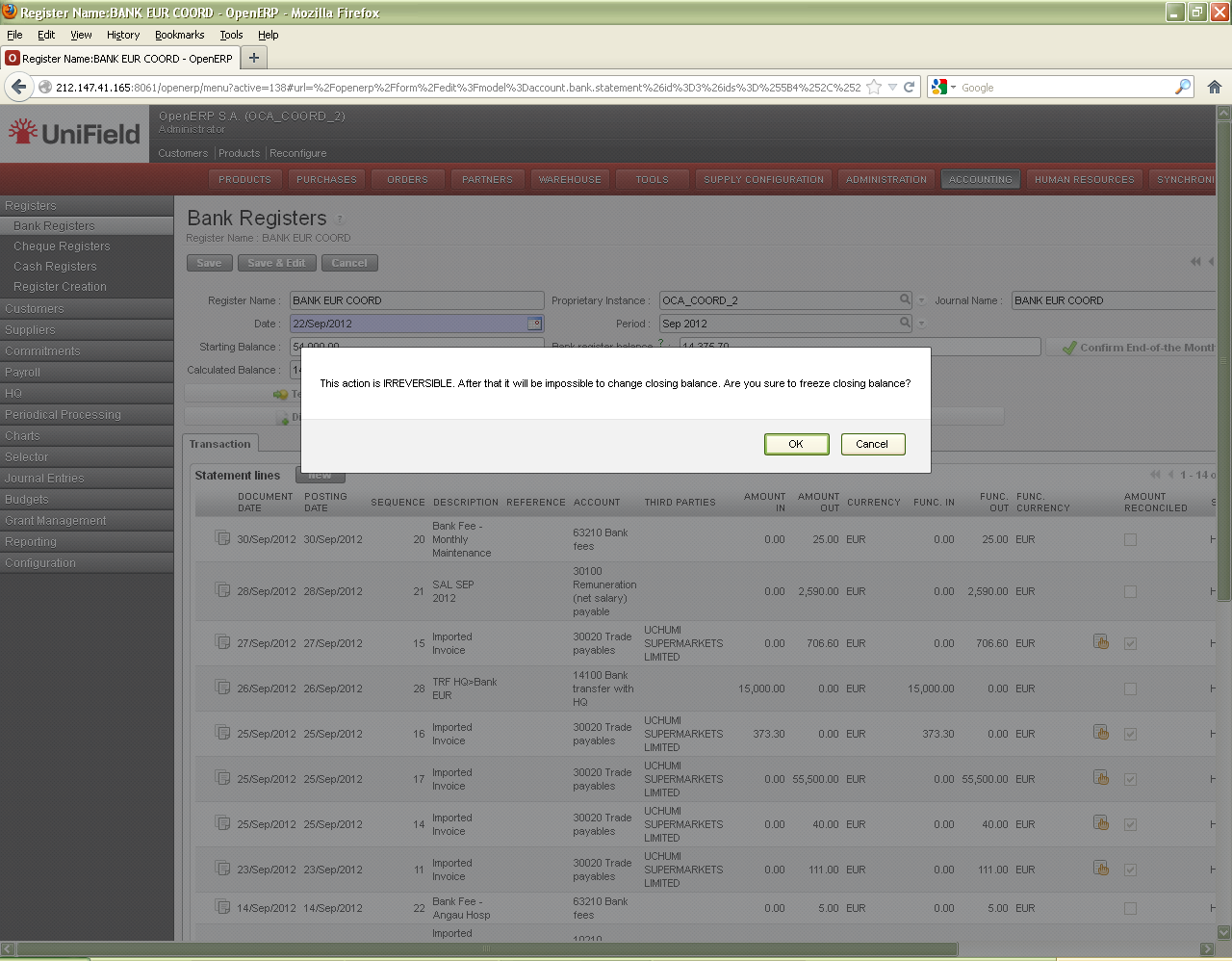
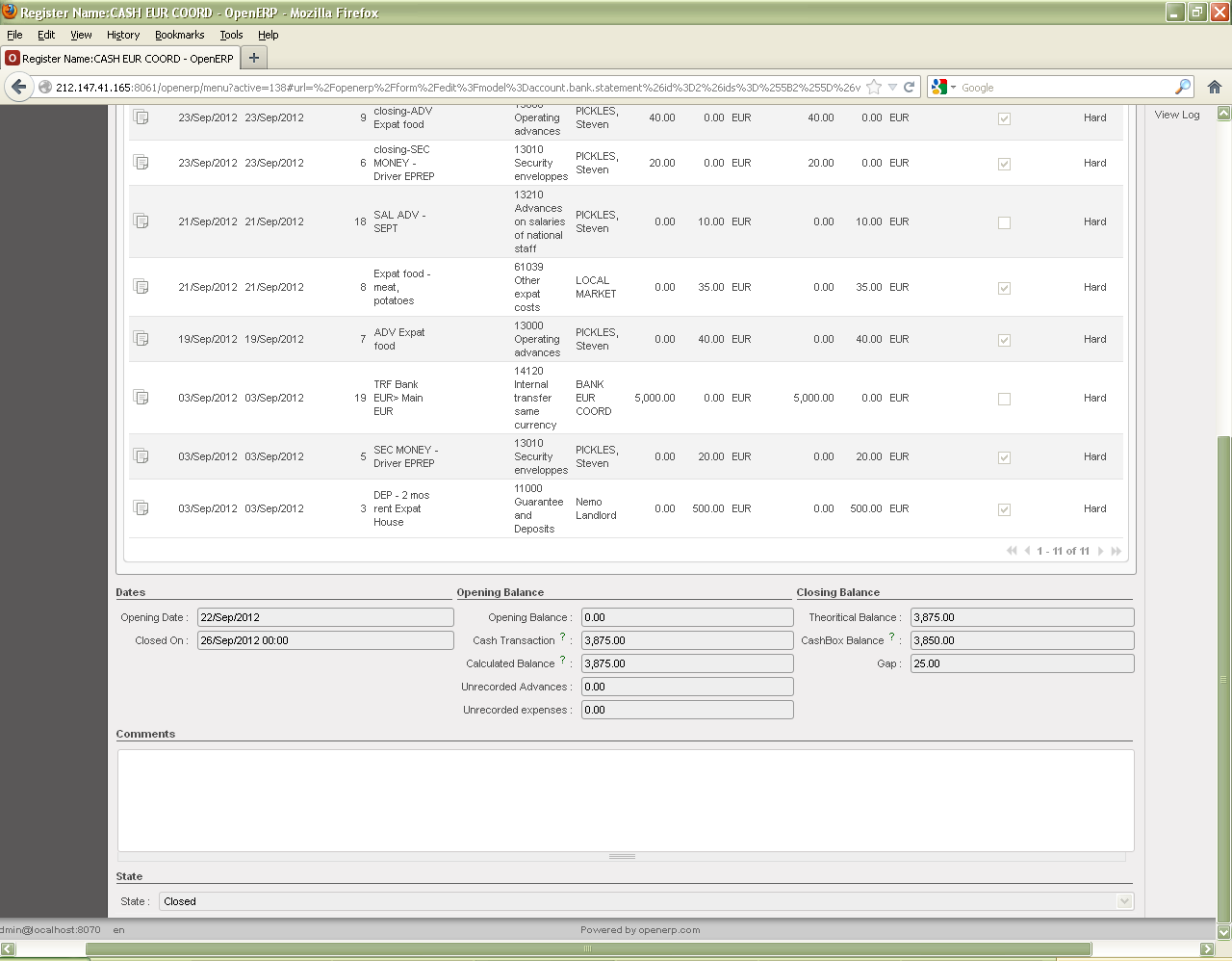

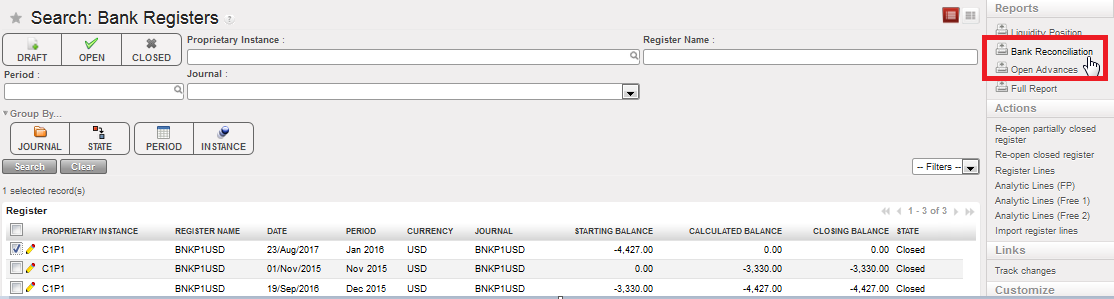 Bank reconciliation action
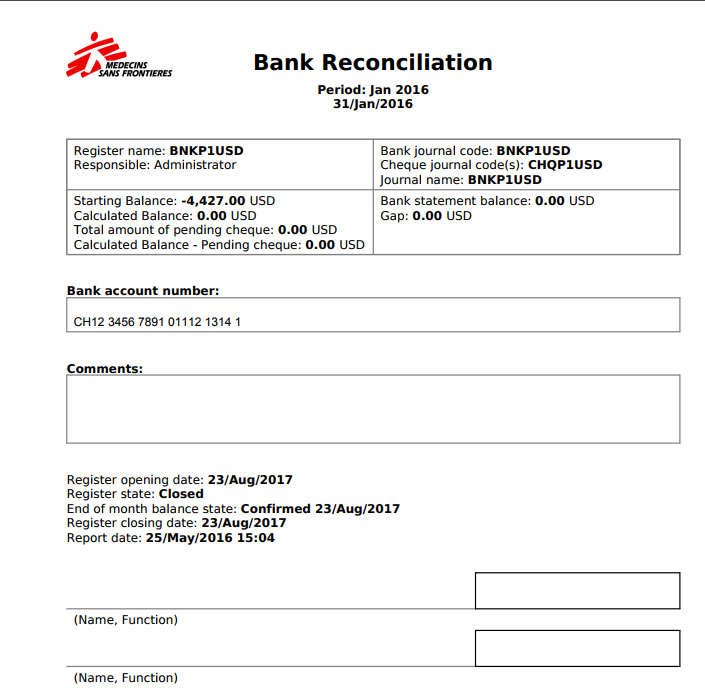
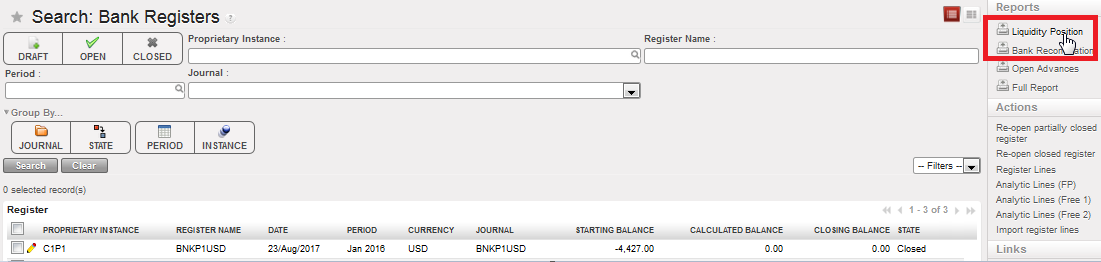 Selecting Liquidity position report when the report menu is expanded
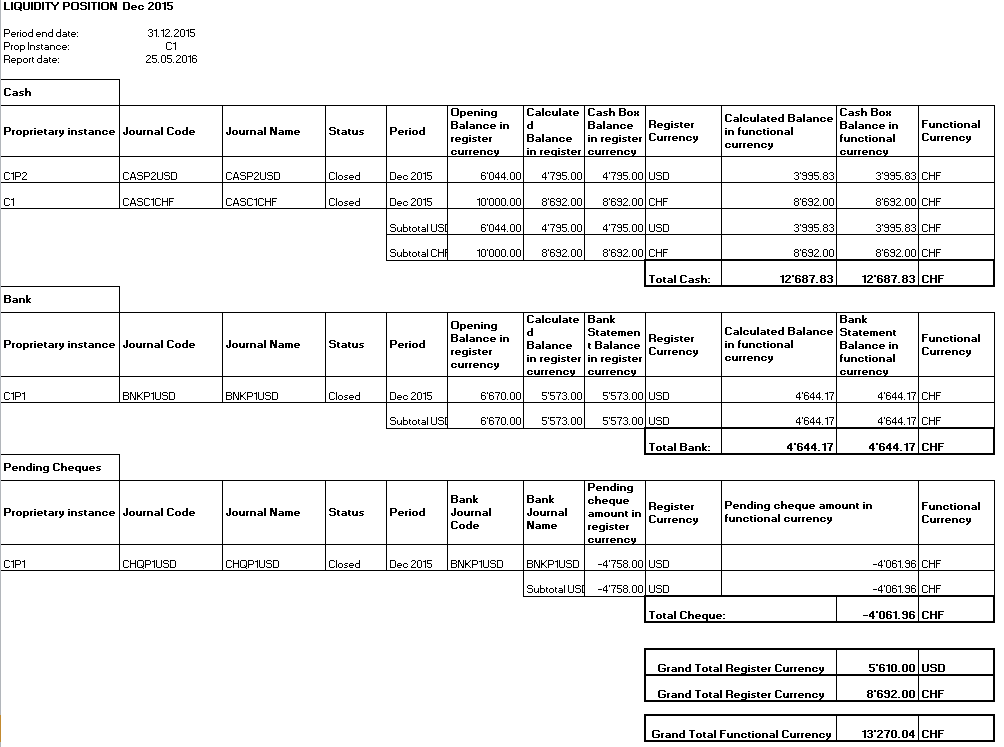
 Selecting Full Report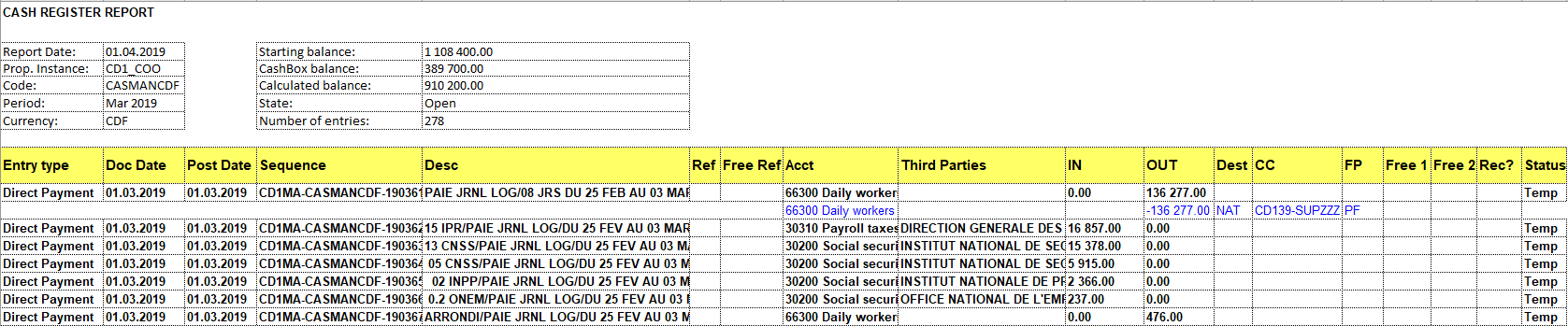

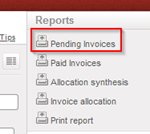
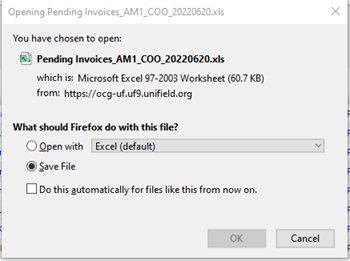

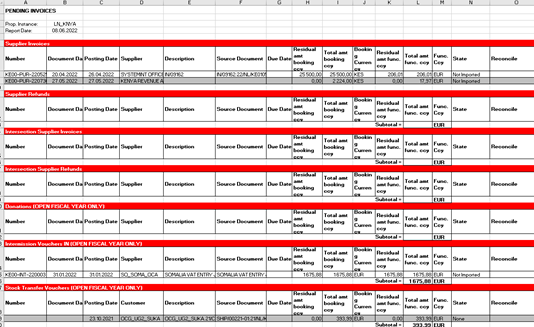
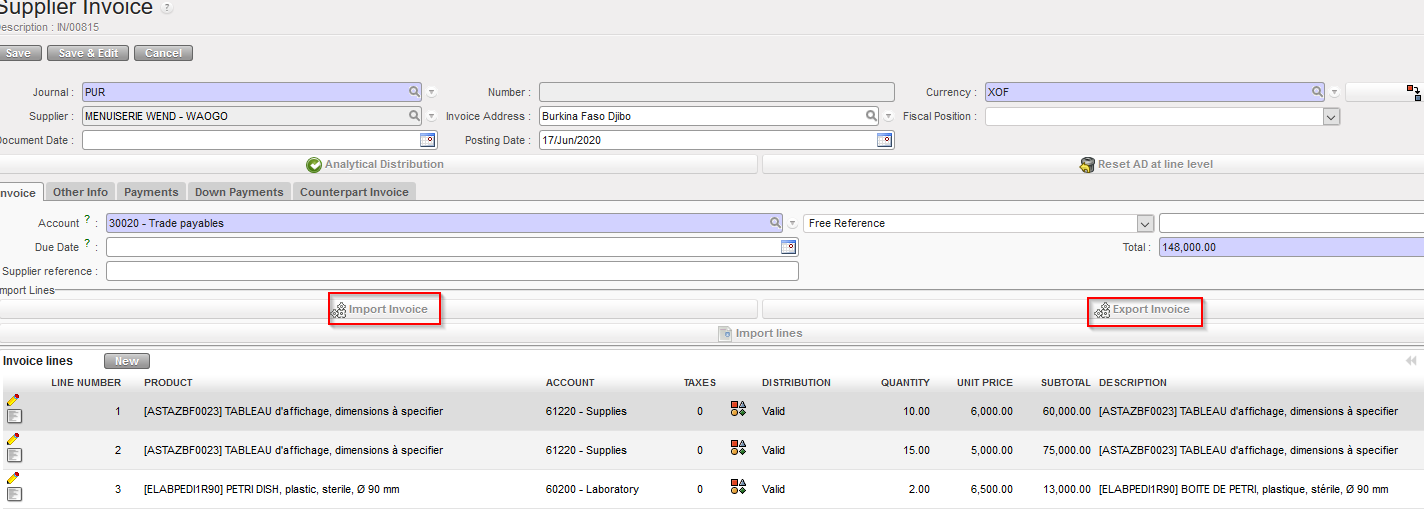
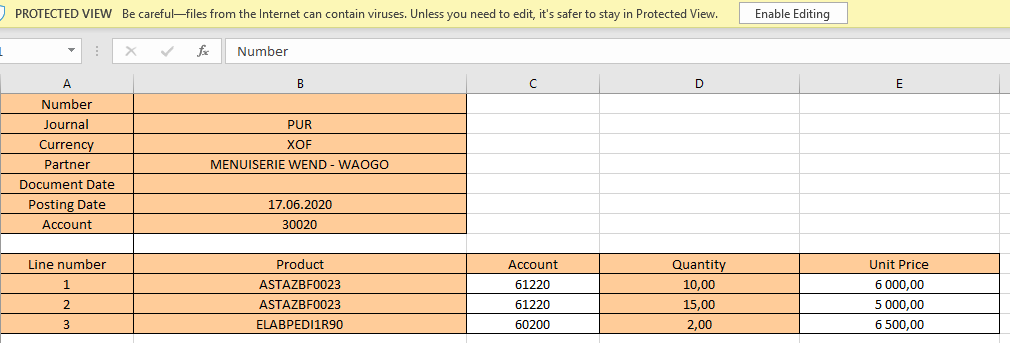
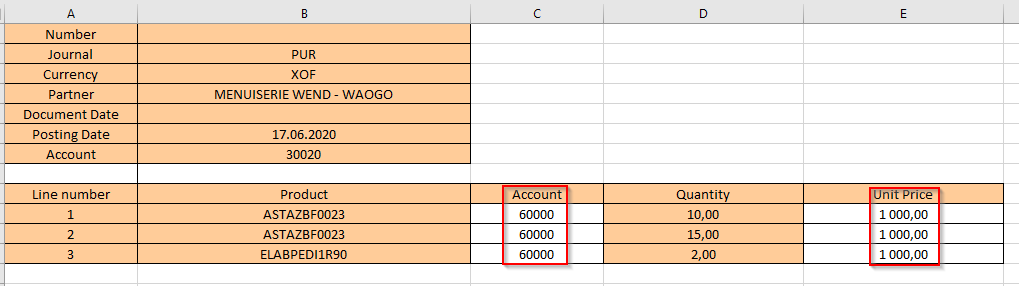
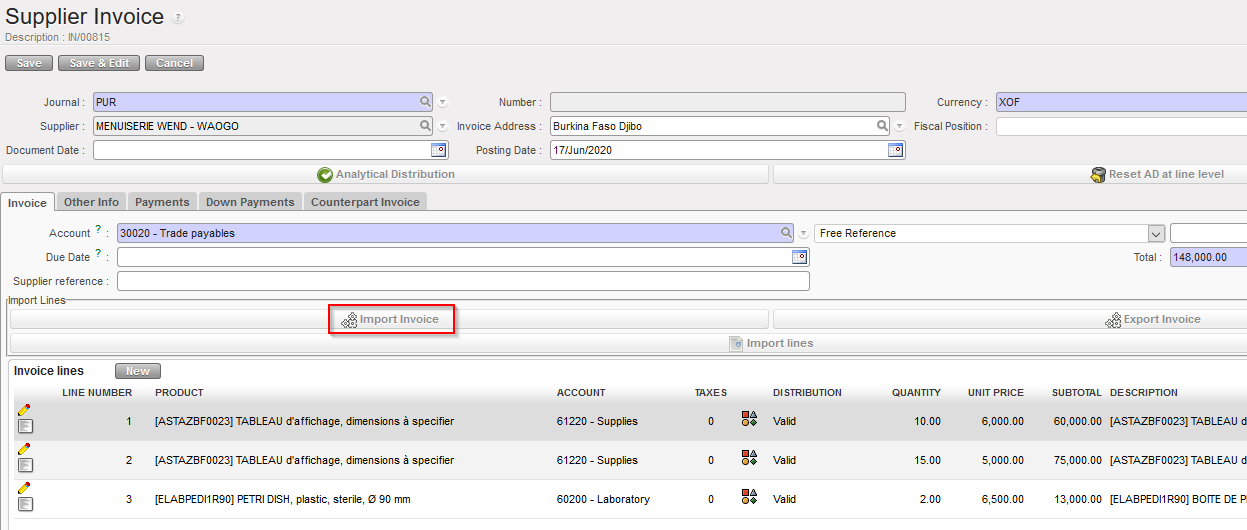

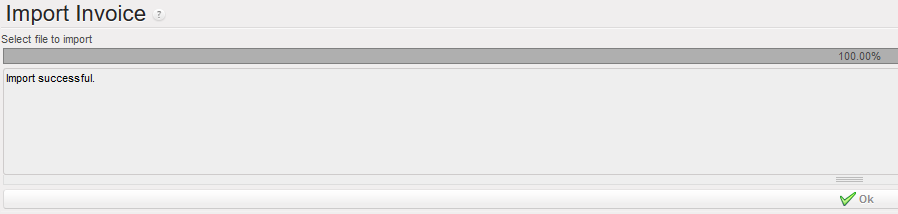
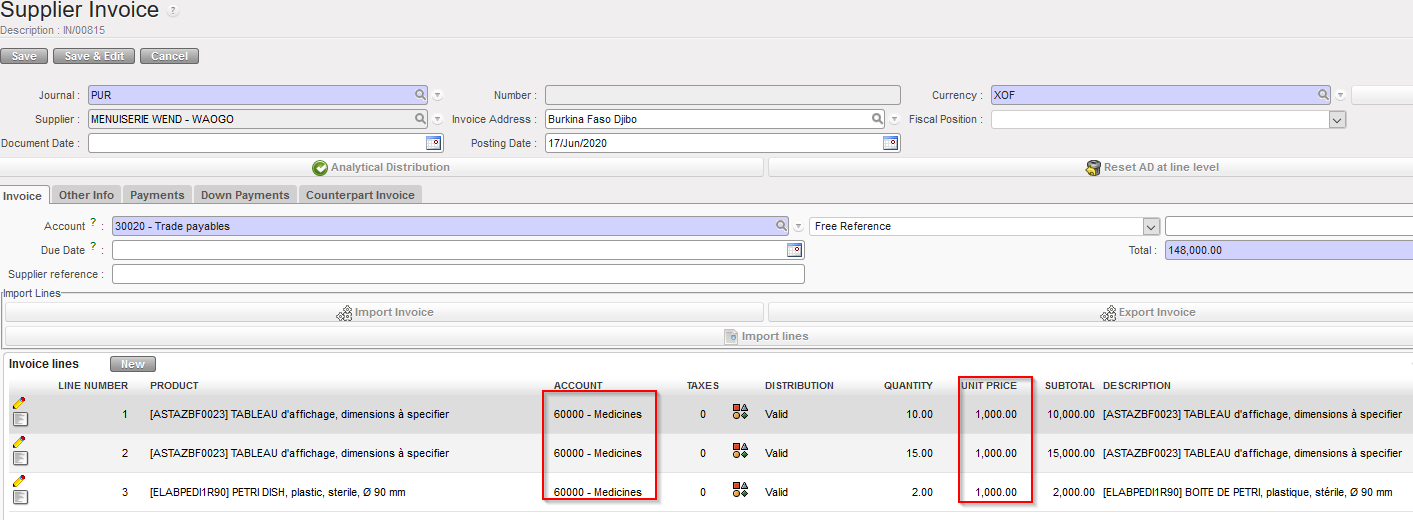
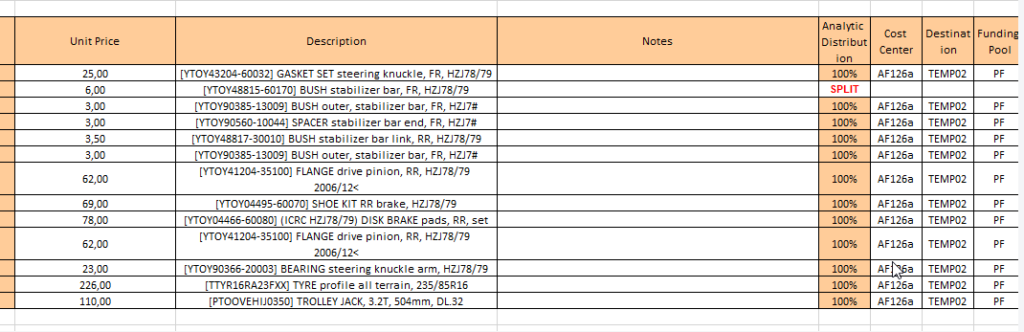

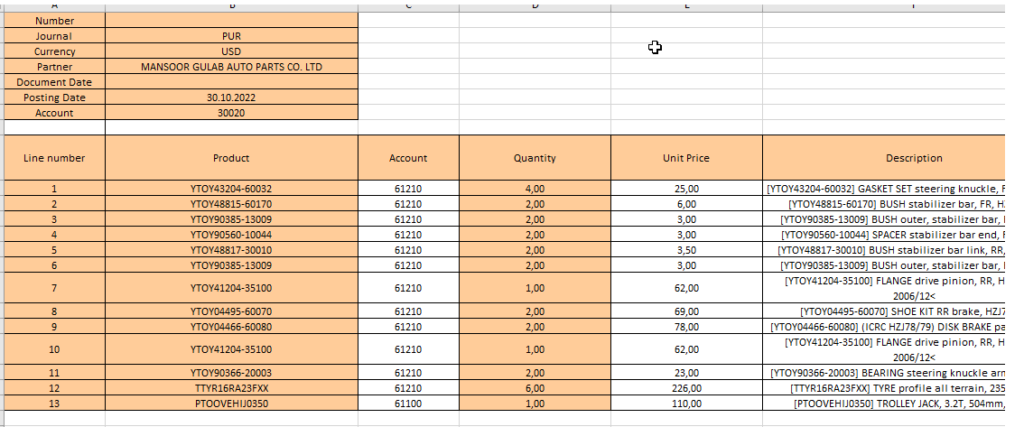
 ile:
ile: