This document will guide you on the process to follow when creating new production instance for its validation. The aim is to have a proper 4 eyes follow up and validation during the instances creation process and avoid unexpected behavior in production due to manual errors.
All the following steps need to be performed in Jira. A ‘Request’ type ticket will be created for each steps.
Please select the correspondent step under the “Purpose of the request” field.
Step 1 :
OCs to create a request for the checklist validation (attaching the checklist validation Excel file in SharePoint here).
Support Team (Finance) to validate the checklist
OC Finance referent to create prop instance in draft, Cost Centers (when not yet done) and do the mapping Cost Centers / Instances (add CC in the coordo prop instance and set the targets)
Support Team Finance to check prop instance mapping + close the request
Step 2 :
Support team IT to create a request for the groups creation
Support Team (IT) to create the groups in the SYNC_SERVER
For each new mission, create the 2 following groups
OCX_HQ_MISSION_XXX and add the instance HQ
OCX_MISSION_XXX
Close the request
Step 3 :
Support team IT to create a request for the instance creation in the Support Team server VM3
Support Team IT to create the “ocxxxxxxx_sync-user” in Keepass and in the SYNC_SERVER
Support Team IT to create the auto install file
Support team Finance to validate the auto install file (codifications, CC for fx/gain…)
To update UFautoinstall file into C:\Program Files (x86)\msf\Unifield
Support Team IT to launch auto instance creation and Validate the instance in the SYNC_SERVER + launch the initial sync. It will take a while. See automated instances creation procedure: https://doc.unifield.org/12-5automated-instances-creation/
When initial sync is finished, close the request and proceed to step 4
Step 4 : Support team IT to create a request ticket for the final checks of the instance.
Support Team Finance to check :
Products master data
Partners: Internal (check it is in Functional Currency and add its country) + Intermission (Check it is created at HQ and synced to the instance)
Prop instances + target CC
Company
Users/Groups
User Rights
Finance Master data
Periods/FY
GL Journals
CoA
Analytic Journals
CC
CC target FX gain/loss
Currencies + rate
Expats Employees
Check there is no “Hidden Menu“
Sometimes when creating instances, the module (menu option) “Hidden menu” appears. This menu should not be visible for users, so it is necessary to remove it . To remove this module, follow the internal procedure (as done in ticket US-13588).
Not runs
Support Team IT to disconnect connection manager, do a back up and share it with OC IT ref in OneDrive Backups Temp folder
Support Team IT to then untick silent upgrade, set auto sync to false, set auto back up to false. Only when the instance is restored in production and linked with the sync server, the instance can be dropped from VM3
The sync user login/password to the IT referent. IT referent will then use it when restoring the back up in the dedicated server when setting up the XML-RPC connection on the connection manager
Support Team to ask the IT referent to create a new ticket for the hardware id update
H. How to add one or multiple Analytical Distribution (AD) to Purchase orders Line/lines
This functionality enables users to add or update the Analytical distributions (ADs), (Cost Centers and Destinations) the Draft PO lines, users have 3 options to use for adding or updating the ADs:
1- Adding AD/ADs at the header level:
Go to:PURCHASES > Purchase Orders > Analytical Distribution
PO AD at header level
by clicking on the “Analytical distribution”, new screen will be opened, and then by clicking on “New” user can add one AD or more to be applied on all PO lines the same way “Global analytic distribution”
AD at header level
2- Adding AD/ADs at line level manually:
User can add the AD to the line manually by clicking on AD icon on the line level, new screen will be opened, and then by clicking on “New” user can add the AD to the line:
AD at line level
3- Adding AD/ADs by importing, this third option makes it easier for users to add 1 AD or multiple ADs to single line or to add different ADs to multiple lines in the same Draft PO, in case user wants to add different ADs to Different lines, Which means that not all lines have the same ADs, unlike the first option (adding AD at header level), this functionality could be done by using “Import ADs” button, 1 AD or multiple ADs (Cost Centre/s and Destination/s) can be added onto each line and must be separated by semicolon (;). The action to export / import templates are both via the “Import AD” button.
In case of splitted lines, when importing one or multiple ADs to the first line, the values entered in the first line will be used to fill all lines split from the same line number.
In the import file, only the AD values will be imported. No other information can be modified or added via the import file. Percentage must add up to “100%” and the total number of semicolons in the Percentage, Cost Center and Destination columns must be the same, and system will check that Line number and Product Code match those of onscreen PO.
If there is already an AD added in onscreen PO, exported template will show this. If at header level there are multiple ADs added, the exported template will show percentage values and ADs data. In the case that there are already ADs in the onscreen PO, it is possible to remove (delete) them by importing the file with blank AD values. At import, there is a check that AD values exist, but the main/secondary check will remain after import, when line/PO is validated.
I. LU-SU1101: How to create or convert to EPREP Location
For creating new configurable location with “EPREP” type, it will be flagged automatically as “EPREP” type, and automatic check will be made to the name to contain the word “Eprep” in Eng / Fr. in the first step “Select the Location usage“
“Location usage” must be “EPREP” in creating new EPREP Location, and the “Location name” should include the word “EPREP”.
Supply Configuration>Warehouse configuration>Regular Warehouse Management>Create new stock location
For converting per-existing intermediate location to be “EPREP” type, according to user rights via the menu:
Supply Configuration>Warehouse configuration>Regular Warehouse Management>Convert Intermediate Stock to Eprep
Once a location has been created as Eprep type or converted to it, this cannot be reversed. The Eprep type of location now is reflected as a sub type of location under Configurable Locations in the warehouse structure, and appears in pink. MSR report has an additional column which shows Eprep stocks qties.
D. How to add one or multiple Analytical Distribution (AD) to Field Orders Line/lines
This functionality enables users to add or update the Analytical distributions (ADs), (Cost Centers and Destinations) the Draft FO lines, users have 3 options to use for adding or updating the ADs:
1- Adding AD/ADs at the header level:
Go to:Orders > Field Order > Analytical Distribution
FO AD at header level
by clicking on the “Analytical distribution”, new screen will be opened, and then by clicking on “New” user can add one AD or more to be applied on all FO lines same way.
2- Adding AD/ADs at line level manually:
User can add the AD to the line manually by clicking on AD icon on the line level, new screen will be opened, and then by clicking on “New” user can add the AD to the line:
3- Adding AD/ADs by importing
This option makes it easier for users to add one or more ADs to a single line or to add different ADs to multiple lines in the same Draft FO. Unlike with the first option (adding AD at header level), this option can be used to add different ADs to different lines,
This can be done by clicking the “Import AD” button, exporting the template shown from the page that pops up and entering the Cost Centre, Destination and Percentage information for each line in the exported document. If a line has multiple ADs, the values in these three columns must be separated by semicolon (;).
If a line has been split and AD information is entered in the import document, the values entered in the first line will be used to fill all lines split from the same line number.
In the import file, only the AD values will be imported. No other information can be modified or added via the import file. Percentages must add up to “100%” and the total number of semicolons in the Percentage, Cost Center and Destination columns must be the same. The system will check that Line number and Product Code match those of onscreen PO.
If there is already an AD added in onscreen FO, the exported template will show entered values. It is possible to remove (delete) AD values that were already entered on screen by importing a file where the line’s AD values are blank. At import, there is a check that AD values exist, but the main/secondary check will remain after import, when line/FO is validated.
R. How to Cancel one specific Purchase Order line or multiple lines.
To cancel a specific line of a PO, click on the red cross (cancel) located on the right of the line you want to cancel and confirm the action on the pop-up screen
Cancelling a PO-line
Confirming the cancellation of a PO-line
The cancelled PO-line switches to the state “Cancelled“. Note that you have to use the filter located on the top of the “Linestable” to see the cancelled line.
Cancelled PO-line
To cancel multiple lines of the PO, select the lines you want to cancel from the right side of the lines, then click on “Cancel Lines”, and confirm the action on the pop-up screen
Cancelled PO LinesConfirm the Cancellation of the PO Lines
The cancelled PO-lines switches to the state “Cancelled“. Note that you have to use the filter located on the top of the “Linestable” to see the cancelled lines.
Cancelled PO Lines
A validated PO Lines can also be cancelled one by one or as a whole PO document, except if the PO supplier is an internal partner supplier (another instance). In this case, the cancel button won’t be available at the bottom of the PO screen and the cancellation should be done on the supplier instance.
It is possible to cancel / C&R multiple (Draft/validated) lines, in Draft-p / Validated/ Validated-P POs with supplier type ESC or external, (It is not possible to Cancel / C&R validated lines in PO with Internal/Intermission/Intersection type suppliers if they are beyond “Draft” status Because if PO lines are validated they may have been synced and should not be cancelled or C&R by the requesting instance.
4.9 LU-SU3301: Procurement Reporting D. How to use the Purchase Order Follow Up
09.March .26
(US-15117) Export PO Follow-up: Add line comment
4. Procurement
40.0
4.6 LU-SU3201: Purchase Orders (POs) – Generals -> F. How to Merge Purchase Orders.
09.March .26
(US-14434) Purchase Order (Merged) PDF not showing merged PO
IT configuration
40.0
11.2 Automated Vertical Integration
09.March .26
(US-14529) PO Auto VI: partial or failed email pushed
3. Products
40.0
3.6 LU-SU2105: Kits/Modules -> F. Kit Management: Compare KCL and TKC
09.March .26
(US-13049) Kit Management: Compare KCL and TKC
UF 39.0
File
Version
LU
Date
Modifications
Supply system documentation
39.0
5.5.2 Statuses of Field Orders (see also process flow document + Table of document and product line status)
02.Dec.25
(US-14296) Intersection flows – unblock the restrictions on local code
5. Warehouse
39.0
5.17 LU-SU4303: Management of Expiry Dates B. Products likely to expire
02.Dec.25
(US-14001) Products Likely to Expire Report – AMC Calculation Revision
4. Procurement
39.0
4.8 LU-SU3203: Tenders (CFTs) and Requests for Quotations (RFQs) How to update a sent RFQ via an import file
02.Dec.25
(US-12542) RFQ – new export / import to include header on excel file export
UF 38.0
File
Version
LU
Date
Modifications
3. Product
38.0
3.2 LU-SU2101: General Product Management: H. How to merge 2 Local products (Coordination only)
12.Sept.25
(US-13333) Merge 2 Local codes
3. Product
38.0
3.4 LU-SU2103: Products in Supplier Catalogues: E. How to configure auto-deletion of ESC supplier catalogue
12.Sept.25
(US-13069) a new feature to delete ESC supplier catalogues with validity dates older than 6 month
5. Warehouse
38.0
5.16 LU-SU4302: Stock Inventory Reports: J. Export Stock and pipe Report (HQ Only)
12.Sept.25
(US-13189) HQ tools improvements on Export Stock and pipe Report.
Digital Signature
38.0
Digital signature
12.Sept.25
(US-12722) E-Validation : drafting signature
5. Warehouse
38.0
5.2 LU-SU4101: Incoming Shipments: G. How to import Vertical Integration files on Incoming Shipments; 5.5 LU-SU4104: Shipment: C. HOW TO RETURN PARCELS FROM A “Ready to ship” shipment; D. HOW TO RETURN PARCELS TO STOCK FROM A “Draft” shipment
12.Sept.25
(US-9592) New Pack ID can be used in system
UF 37.0
File
Version
LU
Date
Modifications
4. Procurement
37.0
4.3 LU-SU3102: Orders Sourcing Tool (OST): B. How to source individually an IR/ FO line to a Purchase Order
03.Jun.25
(US-13952, US-13741) Supplier rankings information displayed in PMD / OST
4. Procurement
37.0
4.2 LU-SU3101: Internal Requests (IRs) B. How to create an Internal Request
03.Jun.25
(US-13308) IR: Change name of “Request Date” Field
3. Products
37.0
3.7 Products Reports: A. Report for product inconsistencies – Batch/Expiry Date D. Report – Product Status Inconsistencies
03.Jun.25
(US-11801) Modification of Product Inconsistency report and Product Status inconsistency report
5. Warehouse
37.0
5.17 LU-SU4303: Management of Expiry Dates B. PRODUCTS LIKELY TO EXPIRE
03.Jun.25
(US-11802) Change columns in the report ” Product likely to expired”
5. Warehouse
37.0
5.10 LU-SU4203: Consumption Reports E. HISTORICAL CONSUMPTION REPORTS
03.Jun.25
(US-13190) Historical Consumption Report – Include Customer Type Partners in RR-AMC
UF 36.0
File
Version
LU
Date
Modifications
5. Warehouse
36.0
5.2 LU-SU4101: Incoming Shipments D. How to create an Incoming Shipment from scratch
17.Mar.25
(US-13862, US-13476) New warning when document Category inconsistent with the product in document created from scratch ( IN/OUT/INT)
5. Warehouse
36.0
5.8 LU-SU4201: Internal Moves C. How to create and process an internal move
17.Mar.25
(US-13862, US-13476) New warning when document Category inconsistent with the product in document created from scratch ( IN/OUT/INT)
5. Warehouse
36.0
5.6 LU-SU4105: Delivery Orders C. How to create a delivery order from scratch.
17.Mar.25
(US-13862, US-13476) New warning when document Category inconsistent with the product in document created from scratch ( IN/OUT/INT)
5. Warehouse
36.0
5.6 LU-SU4105: Delivery Orders E. How to export an excel delivery order file
17.Mar.25
(US-13836) New function Export/Import for Delivery order (OUT)
5. Warehouse
36.0
5.6 LU-SU4105: Delivery Orders E. How to import an excel delivery order file
17.Mar.25
(US-13836) New function Export/Import for Delivery order (OUT)
5. Warehouse
36.0
5.6 LU-SU4105: Delivery Orders B. How to convert a picking ticket into a delivery order (simple out delivery / out); B.1. How to convert a delivery order (simple out delivery / out) into a picking ticket
17.Mar.25
(US-13836) New function Export/Import for Delivery order (OUT)
5. Warehouse
36.0
5.13 LU-SU4206: Inventories C. How to create a physical inventory
17.Mar.25
(US-13683) Physical inventory: Explicit message if the Unit of Measure (UoM) or Expiry Date is incorrect at the importation of the Counting Sheet.
UF 35.0
File
Version
LU
Date
Modifications
3. Products
35.0
LU-SU2103: Products in Supplier Catalogues. B.How to create a supplier product catalogue price list C. How to update a supplier product catalogue price list.
20.Dec.24
(US-12228, US-12912, US-13640) Possibility to add Supplier ranking directly in Catalogue + Track changes added
3.1 Products in UniField
35.0
A. Product in Unifield
20.Dec.24
(US-12228, US-12912, US-13640) Possibility to add Supplier ranking directly in Catalogue + Track changes added
4. Procurement
35.0
4.2 LU-SU3101: Internal Requests (IRs). D.How to import lines on an Internal Request. E. How to export an Internal Request.
20.Dec.24
(US-12415) New IR export/import template for Products in Product List
4. Procurement
35.0
4.4 LU-SU3103: Field Orders (FOs) L. How to follow-up Field Orders
20.Dec.24
(US-12564) Export FO Follow-up: Addition of line comment
5. Warehouse
35.0
5.6 LU-SU4105: Delivery Orders D. How to process a delivery order
We have developed and implemented the requested enhancement in the “Companies” menu under the “Configuration” tab*.* A new mandatory dropdown field named “Extra Accounting Behavior” has been added.
5. Searching, Correcting and Closing
39.0
LUFI-50301
21.11.2025
We have modified the error message when the cash register freezes. It is now larger
2.Finance Configurations
38.0
LUFI-20803 Inactivating a Partner
17.09.2025
Partner’s form: to add in the track changes the deactivation and activation of partners
M. Comment fusionner 2 produits UniData (uniquement HQ)
Dans l’instance du siège, il est possible de fusionner 2 produits UniData (produits dont le créateur est “UniData”). Ceci est possible pour n’importe quel produit de type UniData, même s’ils sont en stock ou dans des transactions ouvertes dans n’importe quelle instance. Le produit sélectionné est désactivé et, lors de la synchronisation, toutes les transactions en stock ou clôturées avec ce produit sont transférées de sorte qu’elles affichent désormais le produit actif (conservé) à sa place.
UniData est alors en mesure de mettre à jour le seul produit “actif” et ce produit peut être utilisé normalement pour toutes les missions / instances. La fusion des produits UniData ne peut être effectuée qu’au siège, et les deux produits doivent être “actifs” au moment de la fusion.
Si l’utilisateur essaie de désactiver un seul produit (pas via cette fonctionnalité de fusion) qui a des transactions ouvertes / du stock, cela est (toujours) bloqué.
Une fois que l’action de fusion a été effectuée pour les 2 produits UniData, le produit sélectionné sera désactivé dans le siège. Après la synchronisation, ce produit sera désactivé dans toutes les instances Coordo & Projet, et toutes les quantités en stock ou les transactions ouvertes ou fermées seront mises à jour afin que le produit “conservé” apparaisse à sa place. Dans tous les cas où il y a un conflit dans une instance en bas après que le produit ait été fusionné et synchronisé, un message “Non Executé” apparaîtra dans l’instance réceptrice.
La fonctionnalité de fusion sera disponible sur la fiche produit au niveau du siège sous la forme d’un bouton qui ne sera affiché que pour les produits de type UniData.
Pour fusionner un produit Unidata, allez a: Produits/ Produits :
1- Utilisez les outils de recherche pour filtrer les valeurs et trouver le produit que vous souhaitez fusionner / désactiver. 2- Cliquez sur la ligne du produit pour l’ouvrir 3- Cliquez sur le bouton “Fusionner Siège du produit”.
4- Sélectionnez le “Produit conservé” (le produit qui restera actif) dans la liste de tous les produits actifs de type UniData de l’instance. En cliquant sur la loupe, vous pouvez rechercher en utilisant les champs de filtre “Code”, “Description”, “Ancien code”, “Nouveau code”, et les 4 principaux types de nomenclature.
5-Cliquez sur “Fusion Produits” dans le pop up.
Le produit UniData désactivé sera remplacé par le produit UniData “conservé” sur tous les documents ouverts ou fermés (y compris les zones de stock et les mouvements) contenant le produit (similaire à la fonctionnalité originale de fusion des produits locaux où le produit activé remplace le produit désactivé).
Le bouton “Fusionner Siège du produit” sera toujours actif sur le produit “conservé” après la fusion. Cela signifie que le produit conservé peut être fusionné à nouveau avec un autre produit UniData. Cependant, la limite du nombre de fois qu’un même produit peut être fusionné est supportée pour un maximum de 2 actions de fusion (jusqu’à 3 produits fusionnés en un seul).
Après la fusion, le produit désactivé ne peut pas être réactivé et la fusion ne peut pas être annulée.
Lors de la fusion, plusieurs contrôles sont effectués sur la compatibilité des attributs des deux produits UniData afin d’assurer la cohérence après la fusion. En cas de divergence, un message (dans certains cas bloquant) doit être affiché pour demander à l’utilisateur d’aligner les attributs incohérents avant que la fusion puisse être effectuée.
Le message d’avertissement/blocage en cas d’incohérence dans le Type Principal, le Type de Produit, la Date d’Expiration Obligatoire, le Numéro de Lot Obligatoire ou l’Unité de Mesure par Défaut est : “Avertissement : Il y a une inconsistance entre les produits: <nom de l’attribut> doit être identique. doivent être identiques. Veuillez mettre à jour les valeurs <nom de l’attribut> d’un des produit UniData et recommencer la fusion.
Le message d’avertissement non bloquant (qui s’applique aux Nomenclatures: Groupe, Famille & Origine ainsi qu’à la Qualité: Article sensible à la température) est le suivant : “Avertissement : Il y a une inconsistance entre ces valeurs des produits <nom de l’attribut>. Voulez-vous tout de même exécuter la fusion ?
En général, les attributs du produit “conservé” prévaudront sur ceux du produit désactivé.
Les produits UniData désactivés auront une case à cocher nommée “UD Fusionné” qui sera cochée automatiquement une fois qu’il est désactivé par le processus de fusion.
La référence du produit désactivé sera renseignée dans le champ “Ancien code” de la fiche produit UniData nouvellement fusionnée. Dans la fiche du produit non conservé, le “Nouveau code” sera rempli avec le code du produit conservé.
Dans le suivi des modifications des deux produits, il y aura une indication du code de l’autre produit/de la identification du produit avec lequel il a été fusionné.
N.B. Il est reconnu que les règles de synchronisation pour les produits Standards et Non-Standards diffèrent de celles pour les produits Locaux Non-Standards. La décision de fusionner un produit doit être prise en accord et en ligne avec les processus du siège et d’UniData.
*N.B. : Le nouveau calcul du prix moyen effectué dans le cas où des produits conservés et non conservés sont stockés devrait donner un résultat précis basé sur les prix moyens actuels.
There are several points of initiation for order flows, all of which culminate in one or multiple Purchase Orders (POs) or, for goods sourced “from stock”, in picking/transport documents (INT, OUT, PICK). An order flow may be initiated with any one of the following objects: an Internal Request, a Tender, a Request for Quotation, a Field Order or a Purchase Order. A flow may be composed of a variety of these documents. These documents are composed tables with product lines. Each of the objects will pass through several statuses according to the validation and sourcing and stock availability stages. Following a major development integrated in UF7.0, Status at Line Level (SLL), document status and product line status can be different since product line can be managed/ progressed individually. The overall document status will always be based on the lowest product line status. Once progressed into the succeeding status, it is not possible to return to the preceding status. For the documents Internal Request and Field Order, these should be processed via the Order Sourcing Tool.
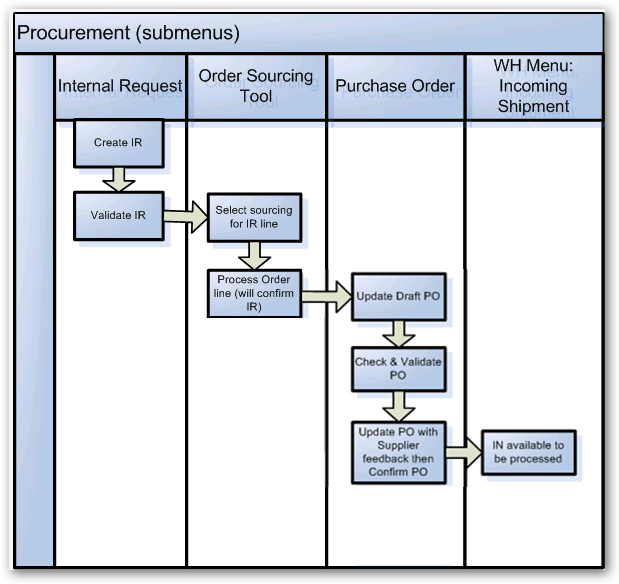
Example of simplified flow of Internal Request (IR-internal location), sourced via Order Sourcing tool to Request for Quotation (RFQ), then Purchase Order (PO). Product is received in Incoming Shipment (IN) and then is sent to requesting location via Internal movement (INT). For more detail on each stage, and status for each document, please see section on relevant document and process flow diagrams.
Also, below you can find the different Statuses that can be found in the system at document and at Line Level:
Table of document and product line status
5.1. Internal Requests
Menu Mapping: Orders > Orders > Internal Requests
Preceding documents
There is no document which can precede an Internal Request. Internal Requests can only be created manually or triggered by a Replenishment Rule (see Replenishment Rule chapter) to initiate a new order flow.
Successive documents
Internal Requests must always be sourced via the Order Sourcing Tool, and can be used to generate any of the following purchase documents: RFQ, Tender, or Purchase Order (PO and DPO). If the IR line(s) is sourced from stock then it will create the stock movement document directly.
Stock movement/transport documents will be automatically generated by the Internal Request; Depending on the Requesting location, either a Delivery Order (OUT) (for an external location,) or an Internal move (INT) stock movement (for an Internal location) document will be generated.
Fields common to all Internal Requests are listed in Field by Field document:
To add products – New and Add multiple lines, Import lines, Import from IR Excel Template. To delete multiple products delete lines – etc
5.1.1 Types of Internal Requests
The two main types of Internal Requests are “Internal” and “external”.
Internal: IRs which have an Internal location selected for the Location Requestor, can be considered as internal. An internal IR will generate an Internal movement (INT) document to move products from one internal location to another,
External: an IR will have an external flow if the Location Requestor is an external location. An external IR will generate a Delivery Order (OUT), which will move products out of the UF instance.
IR document flow depending on IR location and sourcing
5.1.2 Statuses of Internal Requests (see also process flow document + Table of document and product line status)
Draft – Initial status all modifications can be made, can be cancelled.
Draft-p – status when at least on product line is still in Draft while the others have a higher status
Validated – status after “Validate document” button has been clicked (manually). At this point, lines from IR will appear automatically in the OST, as they are ready for sourcing. Lines in validated IR can still be modified, and this will update lines in OST (although not recommended process flow). Lines can still be cancelled.
Validated-p – status when at least one product line is still in Validated status while the others have a higher status
Sourced – status after all IR lines have been sourced to Draft PO
Sourced-p – status when PO sourced from IR is in Validated state or at least one product line is still in Sourced while the other lines have a higher status
Confirmed – status is changed automatically to Confirmed when all lines of document have been sourced “on order” and PO has been confirmed. If all lines have been sourced from Stock then IR will be confirmed directly at this point of sourcing.
Confirmed-p – status when at least one product line is still in Confirmed while the others have a higher status
Closed – For Internal Requests with internal requestor, the status is changed automatically to Closed if all lines have been sourced “from stock” and INT is Closed or if all lines have been sourced “on order” then IR will change to this status when the PO is closed, which is triggered when Incoming shipment (IN) is closed.
For Internal Requests with external requestor, the IR will only change to Closed status when the related Delivery Order has been processed and Closed.
IR status will also be Closed if all lines from OUT, following PO sourcing with IN received, have been Cancelled (the rationale behind this status is that new product has been received in the instance; even if not delivered to the initial requestor).
Cancelled – IR can be Cancelled directly in IR when in status Draft/-p or Validated/-p.
Once in Status Sourced/-p IR can only be Cancelled or C&R’d from a Draft or Validated PO.
Once in status Confirmed IR can only be Cancelled or C&R’d if IN, OUT (sourced from Stock) or INT are Cancelled or C&R’d.
Note that Cancelled lines will not be displayed by default on IR form list (user will have to use the drop down list and select either “Show all” or “Show cancelled only” to see them).
All the statuses above are the one that can be found at PO document level, for further detail of statuses at PO product line level, please refer to the “Table of document and product line status” at the beginning of this chapter 5.
IR document status depending on other documents from flow
Direct Reports / Exports
Internal Request (PDF)
Internal Request excel export (XML) – lines only
Export to IR Excel template
Product exceptions / specifics
Internal Requests will behave in the same way for all types of products, with the exception that for Service and non-stockable products, no transport document (OUT/INT) will be produced. This is due to the agreed rationale that once received into an instance, non-stockable / service products are not stocked and so there are no further stock moves.
It is possible to add products by nomenclature in IRs, the nomenclature must be selected and then comment added.
Note that in addition to the track changes, there is a more user friendly interface to check changes on a product line. Indeed, if the “Changed” checkbox is ticket, user can now that a change has been done for this line and can click on product line magnifier to check the details of the changes on screen on the “Changes” section.
5.2 Purchase Orders
Menu Mapping: Purchases > Purchase Management > Purchase Orders
Preceding documents
A Purchase Order can be preceded by an IR or FO (via the OST) or RFQ or Tender. POs can be the initial document of a chain (PO from scratch/ stand alone).
Successive documents
A stock movement/transport document of an IN (Incoming Shipment) will be automatically generated by a PO line when it is status Confirmed (except for DPO type PO). At confirmation of POs line type standard, purchase list, and DPO, a finance document Commitment Voucher will be created, depending on Supplier type and configuration. For POs to internal type suppliers, no commitment is created. For POs to ESC type Suppliers, Commitment will be created optionally (according to configuration of instance – please see Finance documentation for more information). For POs to external Suppliers, commitment voucher is created.
Fields common to all Purchase Orders are listed in Field by Field document:
5.2.1 Types of Purchase Orders
Regular Purchase Order
For the Standard flow. This PO is as per previous general function description.
Direct Purchase Order (sync US-7617)
Different flow and documents generated. DPO can only be created via OST from an FO (cannot be created from scratch). No Incoming Shipment is generated in the DPO instance after PO confirmation. After synchronization of confirmed DPO, an “Available shipped” IN will be created in final destination (other instance). Following reception of this final IN (other instance) and a new synchronization, the DPO and FO will be Closed on main instance. A Supplier Invoice (Finance document) will be created. Related IN and PICK documents will be automatically created and Closed straight forward ( IN will use “Other Supplier” location by default while PICK will use “Stock” by default).
Loan
Loan type PO can be created from scratch or by synch triggered by a Loan type FO.
Synchronisation will create a mirror FO in the lending instance. Flow should be:
Instance A PO > Instance B FO, then (to return product automatic flow) Instance B, PO > Instance A FO.
Initial PO type loan will create FO type loan in other instance following synchronization. After sourcing “from Stock” (only sourcing option for FO Loan) the FO will be confirmed and will trigger creation of a counterpart PO type loan with Requested Delivery Date corresponding to loan duration. After Validation and synchronization of the counterpart PO, then the last FO loan will be created in initial instance. No analytical distribution needed for Validation. Loan type PO has extra field Duration in months, this decides Requested Delivery Date of counter Loan PO.
PO Loan can also be done to External partner; flow will be:
FO Loan to external partner => Confirmed => Autocreation of Counter part PO in same instance
In Kind Donation (IKD)
Supplier added for this type of Purchase Order must have Donation Account for relevant goods (MED / Non-MED). Incoming Shipment linked to this IN will request Donation certificate. This should be created from scratch (not from IR/FO). No analytical distribution needed for Validation
Purchase List
Default supplier added is local market but can be changed. To Confirm, value of Delivery Confirmed Date is not needed.
Standard Donation
Can be to internal supplier and external supplier also, and process started via FO / PO (except for intersectional supplier; as have to be from FO). No analytical distribution needed for Validation. FO sourcing only “from stock” only.
Donation before Expiry
Can be to internal or external supplier, and process started via FO / PO (except for intersectional supplier; as have to be created from FO only). No analytical distribution needed for Validation. FO sourcing “from Stock” only.
5.2.2 Statuses of Purchase Orders (see also process flow document + Table of document and product line status)
Draft – Initial status most modifications can be made; However if PO created via OST the supplier cannot be changed. Can be cancelled or cancelled & resourced. For POs from FOs, Requested delivery date may be in the past, in which case a message will be displayed (see Order dates mechanism for more details). Similar behaviour is expected with “Stock Take date”, which is only mandatory for ESC suppliers (“Stock Take Date” cannot be later than Order creation date).
Draft-p: same as Draft except that at least one product line is still in Drafts status while the other are at a “higher” status level (new added line at later stage, Validated, will have line status Validated-n – rather than Draft to avoid any inconsistency with general document status)
Validated – modification can still be made, but only to limited header information (Supplier cannot be modified) but if PO has already been synched, these changes may be redundant and not used by synch. In validated status, 2 buttons “Export validated PO” and “Import Confirmed PO” for Vertical Integration purposes are displayed – please see section on vertical integration. In order to be validated, PO lines must have Analytical Distribution for PO types Regular and Purchase List to be Validated.
PO to ESC supplier can only be Validated if there is a valid “Stock Take Date”.
In order to be Validated or Confirmed, POs must have subtotal for each line >0.00, or unit price must be more than 0.00. POs can be cancelled or cancelled & resourced.
Validated-p -: same as Validated except that at least one line needs to be in status Validated while the others are at a “higher” status.
VI import will only update Validated lines or create new Validated-n lines.
Sourced – PO cannot be modified, (currently, PO cannot be progressed, except via synchro Jira ticket outstanding for this US-152). Cannot be cancelled or cancelled & resourced (only as a consequence of a sync)
This status will only be possible for sync’d POs from a requesting instance.
Sourced-p -: same as Sourced except that at least one product line needs to be Sourced while the others are at a “higher” level.
Confirmed – no modification possible except for fields International transport, amount and CDD via VI, confirmation can be performed manually or via synch. In order to be confirmed, Delivery Confirmed date must be filled. Cannot be cancelled or cancelled & resourced (will have to be done at IN level).
Confirmed-p: same as Confirmed except that at least one line needs to be Confirmed while the others are Closed or Cancelled –.
Closed – No modification possible*
Cancelled – no modification possible
*If Po has a partner which is International, transport fields (Transport mode, amount & currency) will appear in PO and these can be modified in any state. This is so that for international orders for which transport is not clear at confirmation of order, a value can be added at a later stage when fees are known. These values can be viewed in the International Transport costs report.
All the statuses above are the one that can be found at PO document level, for further detail of statuses at PO product line level, please refer to the “Table of document and product line status” at the beginning of this chapter 5.
PO Category
Category of PO can be Medical, Logistics, Service, Transport, Other. If there is a previous order document with a category (FO) this will affect the category of the PO, and also according to the settings of the supplier. System will perform cross check that category corresponds to products lines and display message but this can be overruled and there is no block. PO categories are linked to following types of products:
Medical – Medical products
Logistics – Logistic products
Service – products with type Service with Reception
Transport – products with type Service with reception and Transport checkbox ticked
Other – all types of products, no check
Lines specificities
Products by nomenclature can be added to a draft PO, but PO cannot be confirmed unless product is replaced with existing product code. Order lines (from IRs and FOs) with products by nomenclature can be sourced to a PO, whether for an Internal Partner (including intermission and intersection) or external partner. If a PO includes a line which is a Service and transport (transport check box is ticked), then this will be taken into account in the report Local Transport costs (and as such can be viewed in the Local transport costs report).
Split lines with same product have to have different price or CDD or from different source doc.
New product lines added when PO is Validated/-p will have “Validated-n” status and if the PO comes from a sourcing process (IR or FO) the line will have to be linked to a “Source document” (that can be different from the initial IR/FO as long as it is not Confirmed nor Closed). In case the PO has been synched, the new added line might also have to be linked to the other instance source document (IR/FO – “Order in Sync. Instance”). Additionally the “Analytical Distribution”(AD) information might also need to be added. The line will be in red in case this information is missing.
Also while AD can usually only be added at Draft stage, there is one exception that needs to be kept in mind. For intersectional (IS) flow when AD are different between section, in case a new line is added on the FO then confirmed and sync’d , a NR will be created on the other section and related PO line AD will have to be updated manually while the line will remain in “Sourced” status. Once AD added to the new line, the NR can be run and line will be confirmed as well.
Note that in addition to the track changes, there is a more user friendly interface to check changes on a product line. Indeed, if the “CHG” checkbox is ticket, user can now that a change has been done for this line and can click the “notepad” icon to check the details of the changes on screen on the “Changes” section.
Updates from successive documents
PO document is only updated automatically if supplier is internal instance, in which case these changes will come via the synch from the relevant FO. PO will be split according to FO split, depending on how it has been sourced and subsequent document updates (see FO section).
Successive documents
Upon confirmation, PO document is succeeded by Incoming Shipment, and depending on Supplier type, a Commitment Voucher may be created. In the case of a DPO, synchronization will create Finance document Supplier invoice.
Direct Reports / Exports
Purchase Order
Purchase Order merged: 2 POs with same supplier can be merged when both in Draft and the further RDD will be taken by default.
Purchase Order Excel export
Product exceptions
Service product from FO cannot be sourced onto a PO, only to RFQ, Tender or Direct Purchase Order.
5.3 Tender
Menu Mapping: Purchases > Purchase Management > Tenders
Preceding documents
From scratch, or via Order Sourcing Tool (from IR/FO)
Successive documents
RFQs are produced by Tender as part of Tendering process, and succeeding document will be PO, DPO or just update of product data file with supplier.
Statuses of Tender (see also process flow document)
Draft – initial stage, all modifications possible, to change to next status (via button generate RFQs) at least 1 supplier must be added. Tender can be cancelled or cancelled & resourced at this stage
Comparison – As document changes to this stage, an RFQ document is generated for each supplier in Tender. Each RFQ must be processed (see RFQs below) and be in status updated or cancelled in order for button “Compare RFQs” to be active. If a product in an RFQ has “0” indicated as price, this supplier cannot be selected for the product. When supplier has been selected for each line, or line has been deleted, button “Continue sourcing” can be clicked which will create relevant POs. At this point, each product’s data sheet will be updated with selected supplier ranked as “-99”, to denote a preferred supplier. Clicking the “Update product” will only update the product data sheet and no PO will be created.
Tender can be cancelled or cancelled and re-sourced at this stage, however RFQs must be in updated or cancelled status for this to be possible. A warning message will inform that RFQ line will be Cancelled as well.
When Tender is in comparison status, it is possible to select a currency for the comparison. (either local currency, functional currency or a secondary local currency (like USD in DRC), limited to currencies already active in the instance.
At this stage it is also still possible to add a supplier if needed.
Closed – no further changes can be made to document.
Cancelled – no further changes can be made to document.
Lines/Products specificities
Where an extra product has been added to an RFQ, this new product can have a supplier selected and be taken through to PO stage. An added product does not need to have a supplier selected, in this case it will not be added to any PO. For any product added to an RFQ after sent stage, when the Tender is at comparison stage, the box “Created by RFQ” will be ticked. If a PO is created for this new product, a new line will be created on original FO sourced by the tender at tender PO creation step.
(See RFQs section for more details on RFQs)
Service products which originated from an FO can be sourced via Tender, but when Tender has been sourced, the resulting document will be a Direct Purchase Order, not a regular one
Updates from successive documents N/A
Direct Reports / Exports
Comparison RFQ
Tender Excel Export
5.4 Request for Quotation
Menu Mapping: Purchases > Purchase Management > Requests for Quotation
Preceding documents
From scratch, from Tender (part of tender process) or from Order Sourcing Tool
Successive documents
PO (or DPO)
Statuses of RFQs (see also process flow document)
Draft – initial stage, all can be modified, except for if RFQ generated from Tender, products cannot be removed only added. Can be cancelled at this stage. If unrelated to Tender but sourced form IR/FO then it can be cancelled & resourced.
Sent – As soon as “Send RFQ” button is clicked on, system automatically opens new tab on PDF of RFQ, and RFQ is in Sent status. In Sent status. RFQ can be updated with product information (price etc), and new products can be added. “Valid till” date field should be filled in order for status to be progressed to Updated. Can be cancelled at this stage. If unrelated to Tender, can be cancelled & resourced.
Updated – no further updates can be made except for RFQs which are not related to Tenders, which will have the active button “Continue Sourcing” to create a PO/DPO.
Closed– cannot be modified
Cancelled – cannot be modified
Lines/Products specificities
New products/lines can be added to RFQ when in Draft stage (if RFQ is from scratch) or at Sent stage. Products added at Sent stage will have checkbox “Created by RFQ” ticked.
Product lines can be added with an import file.
Any product line which does not have a value added before RFQ is processed to Updated status, cannot have supplier selected or consequently be sourced to a PO. For RFQs not linked to Tenders, if the line has 0 price value, line must be deleted before other lines can be sourced to PO. Modification of Quantity value is possible but this will not be taken into account for quantity shown on PO, as this PO will keep quantity as per original order (IR/FO).
Service type products originating from FO can be sourced via RFQ, but when updated and processed, the resulting document generated will be a Direct Purchase Order, not a regular one.
Updates from successive documents
Direct Reports / Exports
Request for Quotation (PDF)
Request for Quotation excel export
5.5 Field Orders
Menu Mapping: Orders > Orders > Field Orders
Preceding documents
From scratch, from PO via synchro, or (only for Loan type flows) from loan PO
Successive documents
All via sourcing tool: PO, DPO, RFQ, Tender, PICK
Field Orders represent the mirror image of Purchase Orders for the case of UniField flows. The flow of Purchase Orders and Field Orders between instances is one of the main ways in which Supply flows rely on the synchronisation engine. The “Pull” flow is the more regularly envisaged flow and is reflected by the case of Project creating PO and synching to Coordo. After PO is validated and synched, FO is automatically created at Coordo showing same details. The “Push flow” is that where Coordo (or other instance) creates FO in order to trigger the flow, and after synch this will create a Purchase Order at the project (or other instance) side.
It is not possible to create a push flow FO for intersection demand, for this, the request (validated PO) must come from the actual requesting instance. The AD will not be synchronized to the intersection FO and in order to be validate the FO , the AD must be added manually.
The Partner of an FO can be either internal (in which case it will be either via Push or Pull flow) or it can be an external partner, in which case no mirror PO will be created.
The currency of the FO where the partner is internal used to be by default the Functional Currency of the instance and used to be enforced by the system but it can now be a local currency provided that it is the same on the overall mission. For FOs with other partners, the currency can be changed as well.
For all FOs created in draft status, the initial price displayed will be that of the product according to the product data sheet of the instance. The price of any preceding PO (from synch) is not kept.
5.5.1 Types of Field Orders
Loan
Loan type FO can be created from scratch, by synch triggered by a Loan type PO, or by a PO type Loan in the same instance.
If FO is created from scratch, Synchronisation will create a mirror PO in the lending instance. Flow should be:
Instance A PO > Instance B FO then (to return product automatic flow) Instance B, PO > Instance A FO.
Initial FO type loan will create counterpart PO type loan. When confirmed, FO type loan will create PO type loan with Requested Delivery Date corresponding to loan duration. No analytical distribution needed for Validation of FO/PO. Loan type PO/FO has extra field Duration in months, this decides Requested Delivery Date of counter Loan PO.
Standard Donation
Can be to internal or external supplier, and process can be triggered via FO / PO. No analytical distribution needed for Validation: Linked to this Free Gift certificate PDF is available in shipment and Delivery Order transactions.
Can only be sourced from Stock.
Donation before Expiry
Currently only to internal partner, and process started via FO / PO. No analytical distribution needed for Validation. Linked to this Free Gift certificate PDF is available in shipment and Delivery Order transactions.
Can only be sourced from Stock.
5.5.2 Statuses of Field Orders (see also process flow document + Table of document and product line status)
Draft – initial status, created by synch (from PO) or from scratch. Line information can be modified & changed. Can be cancelled. (however if sourced to PO, change of price will not be carried on to PO but PMD price will be taken)
Draft-p – same as Draft with at least 1 line is Draft status while other lines are at a “higher” status
Validated – lines can still be modified, lines from validated FO appear in Order Sourcing Tool. In order for FO to be validated, all lines must have an Analytical Distribution except for FOs of type Loan or Donation. The subtotal for lines must be more than 0.01 in order to validate (and confirm) except for FO types Loan or Donation. For FOs created by the synch, any AD added to the original PO will also pull through into the FO. Validation of FO and synch will cause any linked PO to be updated with modifications, or in the case of push flow, for a PO to be created in the other instance with Validated status.
At validation of PO/FO, System will check the products, and raise a non-blocking warning message if for Intermission PO/FO any Local products are included, and for POs/FOs to Intersectional partner the system will raise a non-blocking warning message if any Local, ESC or ITC products are included.
Validated-p – lines can still be modified, lines from validated FO appear in Order Sourcing Tool. In order for FO to be validated, all lines must have an Analytical Distribution except for FOs of type Loan or Donation.
Sourced – lines have been sourced on order, cannot be modified manually but updates on products/lines from successive documents are made. Cannot be cancelled and resourced.
Sourced-p – lines have been sourced on order, cannot be modified manually but updates on products/lines
Confirmed – lines have either been sourced from stock, or on order and PO has been confirmed. Cannot be modified manually, but updates on products/lines from successive documents are made. Cannot be cancelled and resourced.
Confirmed-p – lines have either been sourced from stock, or on order and PO has been confirmed.
Closed – all lines shipped (OUT/SHIP closed status) no modifications of any kind can be made. Cannot be cancelled & resourced.
Cancelled – no further changes can be made to document.
All the statuses above are the one that can be found at PO document level, for further detail of statuses at PO product line level, please refer to the “Table of document and product line status” at the beginning of this chapter 5.
Lines/Products specificities
Service type product on FO cannot be sourced on order onto PO, only DPO and RFQ & Tender.
FO containing product by nomenclature cannot be sourced either from stock. Product with existing code should replace product by nomenclature. This can be done in Draft or Validated FO.
New added line to a sync’d FO can also be directly linked to the source document from related instance (IR/FO). The field “Order in sync. instance” that can be found at line level will enable to keep the link between these documents and make the updates automatically (see US-5037)
Note that in addition to the track changes, there is a more user friendly interface to check changes on a product line. Indeed, if the “Changed” checkbox is ticket, user can now that a change has been done for this line and can click on product line to check the details of the changes on screen on the “Changes” section.
5.8 Updates from successive documents
FO will be updated from the following documents: PO Validated and Confirmed (product, price, qty) and Closed Expedition documents like SHIP and OUT (See process flows for more details)
Direct Reports / Exports
Field Order Excel export
Field Order (PDF)
5.6 Incoming Shipment
Menu Mapping: Warehouse > Warehouse management > Incoming Shipments
Preceding documents
From scratch, Purchase Order, Incoming Shipment (if partial reception then back order), Claim with Replacement
Successive documents
Internal move is created after IN has been processed for order originating from POs or from Internal Requests with Internal Requesting locations. IN back order process will create new IN for partial receptions. Supplier Invoice may be created (see Finance for more details of this). Delivery Order is updated by IN, Pick is also updated by IN, and sub pick will be created specifically for goods received, and will reflect the quantity received and any changes in products etc.
5.6.1 Statuses of Incoming Shipment (see also process flow document)
Draft- status only available if Incoming Shipment is created from scratch and not from Purchase Order, Can be cancelled.
Available – results from PO being Confirmed. Products will be the same as those in Purchase order, or in the case of partial reception, the balance of those still unreceived based on purchase order. It is possible to modify product lines – products, qtys received, product unit price), and to add relevant information where appropriate (see product exceptions for batch mandatory etc products). Possible to save as Draft any changes made before IN is processed (see section below).
Document can be Cancelled or Cancelled & Resourced.
Available Shipped – results from purchase order (sourced to internal supplier) being confirmed and supplier instance having shipped goods & synched. This status can only be triggered by synchronisation. Goods in this document status will reflect actual goods (products, quantities, batch numbers & expiry dates) which were sent (and synched) in Supplier instance’s Shipment/Delivery Order. Product lines can still be modified.
Available updated – results from automated Vertical Integration import IN (from ESC) file (see VI auto import chapter). No manual update can be done (except on quantity).
Closed – No further modifications possible, for INs where kit type products have been received, an icon will be visible linking possibility to create Kit Composition List. Closed status of IN where relating to synched flow will cause Shipment to pass to “Delivered” status.
For Closed IN related to a DPO sync flow, the related DPO on other instance will be Closed and will generate a Supplier Invoice (FO will be Closed as well).
Cancelled – No further modifications possible.
5.6.2 Functionalities for Incoming Shipment and other transport documents
Back order mechanism
In the case that only a partial qty of the initial qty (on PO or from scratch) is processed, the processed IN will take the next IN reference number available, and the outstanding unreceived qty will stay with the original IN reference, and the “Back Order of” field will be filled with the reference of the processed (Closed) IN. There is no limit to the number of partial receptions which can be processed, and each will have a unique IN reference number. The same mechanism is in place for Internal moves and Delivery Orders.
With the introduction of the Status at Line Level (SLL), there can be several INs created for the same PO (regardless of the partial reception). Indeed, an Available IN is created as soon as a line is Confirmed in a PO. If several lines are confirmed at the same time they will of course be in the same IN. Also if later a new line from the same PO is Confirmed and there is still an IN in Available Status, then this new line will be added to this Available IN. However, if the previous INs have been processed (Closed), then a new IN will be created for this newly confirmed line.
IN link to Picking ticket/ Transport document
For INs which are coming from POs created via FOs, as soon as an FO line is confirmed (= related PO line confirmed), a Picking document will be generated as Draft Not available. When the IN is processed, the corresponding lines on the Pick will become available with the received quantity (i.e.: for partial reception, only the partial quantities will be made Available).
As long as the Pick is Draft, any new Confirmed or received lines will update this PICK. However, in case the PICK has been processed (Closed), the new Confirmed or Available lines will be create a new PICK. Finally, in case the initial PICK has been Converted to an OUT, that is still Draft/Confirmed or Available status, the new Confirmed or received lines will be added to this OUT.
From the IN processing screen, it is now possible to import a VI file to PICK/PACK and SHIP product lines directly to draft ship (see chapter on Vertical Integration)
IN link to Internal move
It was deemed necessary in the original specification for the reception of goods to be a 2 step process. Therefore, the Incoming Shipment is the 1st step, and will send goods bound for the internal instance to the Input location. Then for the 2nd step, via an Internal move, goods are moved from the Input location to the relative internal stock location (LOG/MED/configured internal location). Incoming shipments for internal locations are directly linked to the Internal movement, which is generated with exactly the same product lines. Originally this was a 2 step process where the user would first process the IN, then the system would automatically create the Internal move for the products which the user would also need to manually process. Upon request from OCs, it is no longer necessary to process the documents separately, and in the IN (Products to process window) there is now the checkbox “Direct to Requesting location” which is by default ticked. If user does not manually untick/change this, then as soon as the Incoming Shipment is processed, the corresponding Internal move will also be processed and closed. Otherwise, IN will be Closed and a new Available INT will be created to be processed later by the user ( as per previous behaviour).
For goods which are bound externally, this will not be a two-step move, so they will be directed into the Cross-docking Location directly in the Incoming Shipment.
Saving Draft
There is the recent possibility to save changes made to the ”Products to process” screen for Incoming Shipment. This means any changes (product, quantity, batch no / Expiry date, split line etc) will be saved, and user will again see these changes when re-opening and processing the IN. The IN in list and form view in available / available Shipped status will appear as per pre-modification stage, so it is only when the “Products to process” screen is displayed that the changes can be viewed. There is the possibility to make further changes and save these, or to process the IN (to Closed status) or to re-set the changes already made so that the original information is displayed.
Destination type
In the Incoming Shipment, this field is in the “Products to process” screen, the default setting will be either “To Cross-Docking”, for goods linked to an FO or external IR or “To Stock” for goods from a scratch PO or an Internal Request linked to internal location. The 3rd Option “Other Types” is for lines which originate from a variety of the above mentioned type of flows. It is possible to change the default selection, and, if one of the first 2 options is chosen, then the destination of the products will be the newly chosen location, with the relevant accompanying documents (INT) created.
Display in red
If the expected receipt date of the Incoming Shipment has already passed, in list view, the IN will be displayed in red. This is true also for Delivery Orders and Picking documents.
Product price change
In an Available Incoming Shipment. the price of product line(s) can be changed. This can be done in the “Products to process” Window of the Incoming Shipment. Originally this was requested for the case where one product is exchanged/replaced for another at the stage of processing the IN, and consequently a new unit price is relevant. However, it can also be used where the same product has changed price after PO has been confirmed. The changing of the product price in the IN will only impact the value of the stock for Supply, the new price will be considered in the recalculation of the average cost price of the product, and will affect the value of stock, but it will not impact Finance transactions in any way – Supplier Invoice will remain with unit price of confirmed PO. This was of importance to Finance that no change to Supplier invoice price should be possible in Warehouse transactions. Where a product price has been changed at reception, a symbol will be displayed next to that product line in the Closed IN.
Replace product
It is possible when processing the Incoming Shipment to change the product being received using the icon. A pop up will show original product with field to select new product. The PO will remain unchanged, but any linked / successive document (Internal move / Pick / OUT / FO-) will be updated with new product.
Claim with replacement
When an Claim with replacement is raised related to an existing closed IN, a new IN type “IN- replacement” will be automatically create to receive the goods replacing the damaged ones (which will be sent back via an OUT-return/ PICK-return) .
Split lines
It is possible to split a product line into two or more lines. The icon will mean a pop up window is displayed to enter the split qty of the line. A second line will appear in original document. The only limit to the number of times a line can be split is the total number of the quantity. This was originally designed for the purpose of receiving several batches / expiry dates for the same product, but it is possible for all types of products. It can be used for asset type products in order to split the quantity into one line per product in order to be able to add an asset reference for each asset product.
Forced Reception lines
Even though it is not especially recommended, option has been left for users to Force reception on Available IN coming from an MSF Supplier. That is to say that users can receive products before these goods have actually been sent by the system from the customer instance. Practically, IN in status “Available” is received before the IN is updated to “Available shipped” as per recommended process. A non-blocking message will remind the user that this IN is part of a synchronized flow and that s-he should wait that the IN is updated to “Available shipped”. Thanks to this message user is perfectly aware of his/her action.
In that case, when afterward, the products lines are actually sent on the system, a non-blocking Not Run will be created, informing user that the product line has already been processed. Note that this Not Run can be run without execution since it is purely informative.
Regarding forced reception of a product line which is later sent in the same shipment but in different PPL as another product line of the same IN, then no NR will be created for this forced line because the message needs to be executed to update the other line to Available Shipped.
The case of forced partial reception for now enable to receive more than the initial quantity since no NR is generated for these cases. This is partly enabled by the fact that it has been arbitrated so far that IN can receive higher quantity than the initial one (see US-8175). Related to this issue forced cancellation is also enabling some debatable behaviour (US-8175).
Lines/Products specificities
Non-stockable products – these products are received via a normal Incoming Shipment and will be sent by default to Virtual location Non Stockable. The exception is if they have been ordered for an FO, in which case they will be directed towards cross-docking location to be dispatched to other instance.
Service products – these products are received via a normal Incoming Shipment, and they will be sent by default to Virtual location Service products.
Batch Number mandatory – where products have this attribute, the batch number field must be filled (mandatory). This can be with an existing Batch number or user can open window to create new batch number record directly from Incoming Shipment transaction.
Expiry date mandatory – where products have this attribute, the Expiry date field must be filled (mandatory). This can be with an existing Internal batch number or user can select a date directly on the product line to create new internal batch number with this date as Expiry date
CC/DG/CS – For products which have these attributes activated (Cold Chain, Dangerous Goods, Controlled Substances) the system will display alert when processing (and on PDF reports) indicating nature of goods being received and sent.
Asset – Products with this attribute must have this field filled with Asset Form master data. Where multiple asset type products are being received, line can be split and then asset Form added per line (but this is not mandatory). Asset Form can be created via pop up window from IN document, or existing Asset Form reference can be chosen. (A Jira ticket is open to add a pop up window to select multiple asset forms (UTP-280)
Kit – Products with this attribute can be received as per standard product. When IN is in closed status, icon will appear which will open window to create Kit Composition list, but this is not mandatory.
Updates from successive documents
The Incoming shipment is not updated by any other documents which follow. See description on Back Orders for more details on mechanism for partial receptions. Updates are made by preceding documents only, POs and shipments. (see statuses section above)
Direct Reports / Exports
Reception (PDF)
XML export (see entry for Real Consumption report for more on this)
(see section on vertical integration for reports linked to this)
NB: additional information on IN are described on the Vertical Integration chapter below in this document
5.7 Internal movement
Menu Mapping: Warehouse > Warehouse Management > Internal moves
Preceding documents
From scratch, Incoming Shipment, via OST from Internal Request, following PICK Cancellation, Manage expired Stock function.
Successive documents
No successive documents but has same back order mechanism as for Incoming Shipments.
Types of Internal moves
Internal move – the standard Reason type for an Internal move will by default be “Internal move” if created from scratch or “Internal Supply” if coming from an IN from FO linked PO
Internal move can be created from scratch also for Destruction of goods – for this virtual location “Destruction” should be selected as destination location. Reason type will automatically change to 14.Other.
Claim – Internal move when “Register a Claim to Supplier” checkbox has been ticked takes the Reason type “Internal move” and Claim form and event is created. (see claim for more information), location where products will be moved depends on type of claim.
Following request to have a closer follow up of the pipeline, an additional “technical” type of INT has been developed: SYS-INT (US-2709). This SYS-INT is generated when PO with Destination = Input are confirmed (therefore it is created at the same time as the Available IN instead of when IN is Closed which enables to update the pipeline a bit sooner). This document is by default hidden to the user but can be displayed just by activating a filter. It should not be updated by the user and will be automatically Closed/ Cancelled at reception of the related IN (while the other standard INT will still be Created an Closed).
Internal move transaction has button to change destination location of all product lines.
US-8389 will prevent selection of Virtual locations (selection of External location has already been removed)
5.7.1 Statuses of Internal Moves (see also process flow document)
Draft – status when created from scratch. Document can be changed or cancelled
Confirmed – status when if created from scratch, document has been manually confirmed, or if created from an IR and sourced from stock, this means lines/products not available (or at SYS-INT creation). Document can be changed, cancelled or cancelled & resourced (except for SYS-INT).
Available – IR has been sourced from stock or sourced on order and products/lines are available in source location (or force availability has been used). Line can be changed, and document can be cancelled or cancel & resourced.
Closed – movement has been made, products/lines now in destination location. No modification possible
INT specificities
As per Incoming Shipment for Batch Mandatory and Expiry Date mandatory products, these fields must be filled in for products with these attributes.
For products which are Assets / Kits no further information is required or can be entered.
Internal moves are not and cannot be created for Service type or non-stockable products.
A Claim can be raised from an INT document (see detail on the Claim chapter)
Updates from successive documents
The Internal move is not updated by any other document, but the lines contained may change availability due to stock arriving (e.g. via an Incoming Shipment) into source location.
Direct Reports / Exports
Internal Move (PDF)
Internal Move Excel Export
Traceability>Destruction report)
5.8 Delivery order
Menu Mapping: Warehouse > Warehouse Management > Deliveries>Delivery Orders
Preceding documents
From scratch, Internal Request (external location), converted Picking ticket (from FO), Real Consumption Report
Successive documents
N/A
Types of Delivery Orders
Standard – created for all documents except for OUT triggered by Real Consumption Report
Type “Conso” – created and processed automatically when a Real Consumption report has been processed.
5.8.1 Statuses of Delivery Orders (see also process flow document)
Draft – Initial status for created from scratch, or for IR/ FO, confirmed status (sourced on order)
Available – at least some lines/products are available (or Force availability has been used). Can be modified, can be cancelled or cancelled & resourced.
Confirmed – no lines/products available yet
Dispatched – stock movement processed, products no longer in stock of instance. This is the automatic state OUTs created by Real Consumption reports.
Received – This status is triggered either by the synchro (if receiving internal instance has processed Incoming Shipment) or can be achieved manually by clicking “Confirm Delivery” button.
OUT functionalities
There are two different functionalities available for expediting goods from the instance to either an external partner or to another internal instance. These are: Delivery Order/OUT which is a one step simple process, and Pick/Pack/SHIP which offers several stages and the chance to reverse the flow (see section on PICK etc for more detail on this).
The decision as to the default shipping process used by the instance for FOs is taken during configuration.
Standard configuration is as follows: Delivery Order/ OUT is by default created by the flow starting with IR (external location). For the flow triggered by an FO, a Pick is created by default.
Converting OUT to PICK and PICK to OUT
The OUT can be converted into the Pick using the “Convert to picking ticket” button (and vice versa) while the OUT is in Draft status. This can be for a complete OUT, or for a back order out. All lines in the document will be converted into the new document.
OUT Back orders
As per Incoming Shipments, if only some or partial lines are processed, the Back order (outstanding) OUT will keep the original reference, and the newly created closed OUT will take the next sequential reference. The “Back Order of” field of the outstanding open document will be filled with the reference of the OUT which has been processed.
Lines/Products specificities
Service products – it is not possible to create any stock movement for these products (they will be received in the “Service” stock location)
Non-Stockable products – it is not possible to create any stock movement for these products (they will be received in the “Non Stockable” stock location)
Batch mandatory and Expiry date mandatory products – for products with one or both of these attributes, the relevant fields must be filled. The system will fill automatically using the FEFO principal, splitting lines automatically if necessary. System will only choose expired batches if no others are available. It is possible to manually change the batches which the system has automatically assigned. For batches which have expired, line will show as available, but batch will not be displayed, therefore user must manually search for and add for any expired batch/ED. Expired Batches/Expiry date lines will be displayed in red.
Assets – for products with this attribute, Asset Form reference must be added (mandatory). Line can be split manually if qty is more than one.
Updates from successive documents
The OUT document is not updated by successive documents, however the product lines will change their availability status depending on products available (e.g following processing of an Incoming Shipment), and in turn this may affect the overall status of the OUT, (e.g. some or all lines become available, therefore the status of the OUT will change from Confirmed to Available)
Direct Reports / Exports
Delivery Order (PDF)
5.9 Pick / Pack / SHIP process (last update with US-5859)
5.9.1 Picking List/ ticket
Menu Mapping: Warehouse > Warehouse Management > Deliveries >Picking
Preceding documents
Field Order, Internal Request, Delivery Order
Successive documents
Packing, Delivery Order
The Picking process is a 2 stage process where products are first automatically added to a PICKING List (or main Pick) after confirmation of the product line from Source document; then after selection of the requested products to Pick, a Picking Ticket (or sub-Pick) is created and will be have to be Validated to move to the packing stage. This 2 steps process enables to add an extra validation control between the Warehouse manager and the storekeeper and ensure that what is requested in the system does match the real stock.
PICK reference type
PICK/XXXXX is used for the references of the Picking List/main PICK
PICK/XXXXX-YY is used for the references of the Picking ticket/ sub-PICK
PICK-return, PICK-surplus,… which are created by claims (see specific Chapter on Claims)
5.9.1 Statuses of Picking (see also process flow document)
Draft – Initial status of Picking List after confirmation of FO, or conversion from OUT of IR. If “Create Picking” button is clicked on, available products or partial quantities of available products can be processed directly to the Picking ticket.
At this stage, document can be converted into simple out Delivery Order.
Also in Draft stage, the flow can be changed from a “Full flow” (Picking list> Picking ticket > PPL> SHIP) to a “Quick flow” (Picking List> Picking Ticket >Draft Ship – PPL will still be created but in the background and Closed automatically)
If products have been returned from a Draft SHIP, then these will be re-added to the original parent Picking List. Can be cancelled or cancelled & resourced.
Note that the main PICK has 2 status fields displayed at the bottom of the document: Status of the PICK = Draft (as long as all lines haven’t been Shipped or Cancelled) and status of the Picking lines: Available (all lines are Available in the Source Location after Reception of the IN or if already in Stock); Partially Available (some lines are Available in the Source Location after Reception of the IN or if already in Stock); Not Available (none of the lines are Available yet in the Source Location)
Available –Picking ticket has been created, so document will be a “child” of the main Pick, (which remains in Draft status until all lines closed/processed). At validation of Available Picking ticket, lines can have total available quantity or part of the available quantity processed. In case of validation of partial quantity of available Picking ticket lines, the remaining quantities will be added back to the Parent Picking List.
If the Available Picking ticket is cancelled, the lines will be re-added to the Parent Picking, so can be processed later.
Closed – When available Picking ticket has been validated, lines will have passed to the pre-packing list and Sub picking will be Closed.
Parent Picking List is Closed when all lines have been shipped (or cancelled). No further modification can be made to this document in Closed status.
Cancelled – When available Picking ticket is Cancelled all lines are sent back to the Main Picking list.
When Picking list is Cancelled, user have the option to simply Cancel the document with all its lines or to Cancel the document and its lines and create a INTernal Move to Send the goods from Cross Docking to Stock ( this option will be available for FO sourced to PO). The lines will then be Cancelled at FO level.
In case Cancellation of Picking list is done on a Pick related to an FO sourced from Stock then the related FO lines will be Cancelled.
PICK specificities
Products with Batch Number, Expiry Date or Asset attributes must have these values filled in order for Draft pick to be progressed to Available pick.
As per with the Delivery Order mechanism, if there are several different batches or expiry dates, the system will use the FEFO principal, splitting the line if necessary. User can still deselect batch/Expiry date and manually choose another one. If a line is showing as available but no Batch number is shown, this indicates the batch has expired. User must manually search for and select this batch in order to send it.
It is always recommended to use the “Check Availability” button to ensure that the saved information is still up to date.
It is possible to “Force Availability” at line or document level, however, the Picking ticket could only be processed for non BN/ED otherwise the system will display a blocking message informing that products cannot be processed since they have 0 Stock.
Updates from successive documents
The Parent PICK will have its lines updated if any packs are returned at a later stage (e.g. from the Shipment or from PPL). Picking list or related lines will be Closed when SHIP or related lines are Dispatched.
The lines of the Pick may also be updated according to availability of the stock.
Direct Reports / Exports
Picking Ticket PDF
5.9.2 Packing (PPL)
Menu Mapping: Warehouse > Warehouse Management > Deliveries >Packing
Preceding documents
Picking.
Successive documents
Shipment
Statuses of Packing (see also process flow document)
Available – initial stage of Packing after Pick has been validated and is in closed status.
At this stage there is still the option to return product to Stock, i.e.: to the previous main Picking list that will be updated consequently.
Closed – When PPL has been validated and lines have been passed to Shipment transaction.
Lines/Products specificities
As per with picking, all BN and ED products should have relevant information.
Lines will be added to a Pack, by default all lines in the PPL will be added to one pack “P1”.
However lines can also be assigned to different packs.
Split lines functionality can be used to create further lines.
Where there are multiple packs for the same line, the system will assume that the quantity of the line is split equally between the packs. For example, if a line has a qty of 30 and it is assigned from packs 1-3 then each of these packs will contain Qty 10 of the product. Packs on the same line will always contain exactly the same goods.
In this example, 10 is an integer but it can happen that quantities are split to non-integer number (decimals); in that case, the PPL can still be processed forward. However, a warning message will inform user that these pack range(with decimal quantity) cannot be processed separately at a later stage. Meaning that all the boxes from the same pack range cannot be shipped separately or sent be to stock separately (nor from PPL neither from SHIP).
Multiple lines can be added to the same packs, as long as the contents of the range of packs on the same line are an exact match. For example,
product/line A assigned to packs 1-3
product/line B assigned to packs 1-3
product/line C assigned to packs 1-2
This is not possible as it means packs 1 & 2 will have different contents to pack 3 (because pack 3 does not include Product C)
Product/line C must either also be assigned to packs 1-3 or it should be assigned to a new pack – e.g. product/ line C assigned to packs 4-4 or 4-5 etc
Updates from successive documents
N/A
Direct Reports / Exports
Packing List available directly from Ship transaction
5.9.3 Shipment
Menu Mapping: Warehouse > Warehouse Management > Deliveries >Shipment
Preceding documents
Packing
Successive documents
N/A (Finance Document – IVO/STV)
As per the Picking, the Shipment is a 2 stages process: the initial document created in Draft after the PPL is the Shipment List (or main Ship) which will be followed by the creation of the Shipment (or sub Ship in “Ready to Ship” status) after the Shipment List validation
5.9.3.1 Statuses of Shipment (see also process flow document)
Draft – initial status of Shipment. Each line represents a line of packs (PPL) as defined in the Packing (see previous entry). Each PPL line can represent the products of an FO, or a partial delivery of an FO. There can be multiple PPL lines in a Shipment and they can be from differing FOs, or from the same FO.
For a Draft Shipment to exist it must contain at least 1 PPL. If other Packings are progressed and have the same exact destination address, their lines will be added to this existing Draft Ship.
If there is no such existing Draft Shipment List, then a new one will be created and the PPL line(s) added. “Create Shipment” button will progress lines to the sub Shipment document in “Ready to ship” status. “Return packs to stock” button will offer option to send PPL lines back to original Pick. The smallest unit which can be returned to stock is one pack.
Packs to be processed forward can be selected individually to move forward for delivery or sent back to stock. Along with the Description, Weight and Volume, this is the only update that can be done at this stage (apart from the Transport and Document information)
As stated above for the PPL, in case the packs to return are partial pack from a PPL range with decimal quantities, then a blocking message will prevent to send the packs back to Stock. It will indicate user that all packs from the PPL pack range have to be sent back to Stock (or all processed forward).
Ready to ship – status of created Shipment. Lines will be displayed for each PPL line (see previous explanation). Lines can be returned from ship, and selected lines will be added to Draft SHIPment List. Any returned packs will still have line displayed in “Ready to Ship” Shipment in red with Closed status and the checkbox “returned” will be ticked.
At this status, changes that still can be made are about Volume and Weight, if not added previously at PPL stage. Also, other possible change is that items and/or PPL can still be added to this Shipment.
In order to process non-closed lines and complete Shipment, “Validate” button should be clicked, and this will set Shipment to “Dispatched”.
Dispatched – When Ship is in this status, no further changes can be made except for progression of status to Delivered. When Ship is in “Dispatched” status, all details of delivery are ready for synchronisation to consignee, if internal instance. If consignee is external partner, the button “Validate Delivery” can be manually clicked to progress Ship to Delivered status.
“Dispatched” Shipment will update the related source Documents FO/IR and will trigger synchronisation messages to be sent (for MSF Customer flow). It can also trigger some financial documents such as Intermission Voucher Out or Stock Voucher Out.
Delivered – This status reached usually via an update from synchronisation and indicates that the consignee has received the goods (and processed the Incoming Shipment). However, it is also possible to manually progress a Closed Ship to this statement via the “Validate Delivery” button (see entry above). No further changes or updates can be made.
Cancelled – This status did appear on few occasions but resulted from bugs, that have been corrected. There should be no Shipment “Cancelled”(this status remained in the code for previous technical constraints)
Updates from successive documents
Draft Shipment will be updated with any lines returned from Ship in Shipped status.
Dispatched Shipment will be updated to Delivered status via Synchro if internal consignee has processed Incoming Shipment.
Direct Reports / Exports
Freight Manifest
Packing List – PDF
Packing list XML
Free Gift Certificate
5.10 Analytical Distribution
This functionality was developed specifically for MSF. Please see Finance documentation for more detailed information. For Supply, the Analytical Distribution (AD) is a set of codes which can be applied to Purchase Orders and Field Orders. According to PO/FO ADs, they are used in Finance transactions to trace activity / usage of products, and revenue and expense per project. Analytical Distribution is mandatory in the system to validate most PO and FOs, with the exception of PO/FO types Loan, IKD, Standard Donation and Donation before Expiry. For these exceptions, AD can still be added but it is not mandatory.
The Analytical Distribution codes need to be allocated for these categories:
Destination (operations, support, national staff, expatriate staff)
Cost Centre (OC / Mission / Project / Activities)
AD Destination is created at the point when an Instance is configured, then the destinations must be linked to accounts. Cost centres need to be imported at configuration of HQ, as it must be determined at this point, which cost centres are relevant for each project/instance and which are preferred for POs/FOs. For Supply, these account master data should already exist when instance is operational.
For Intermission flows, there is a particular Intermission cost centre which will need to be added in the PO’s Analytical Distribution.
Regarding Inter section flow, after synchronization of the PO, the FO at supplying instance will have to be updated with valid AD of the other section. The AD is not automatically populated after sync as it is usually for other flows.
Each product is linked to a specific Destination according to its family/category (from nomenclature). Where the AD is added at line level, the specific Destination will appear by default, and can be modified to other destinations valid for that product. Where AD is added at header level, both fields are blank, so AD must be manually chosen. If AD Destination is not consistent with product(s) category, which is possible if AD added at header level, system will display AD symbol with “invalid from header” at line level. When document is validated, the system will automatically change to valid ADs for the lines where the Destination did not correspond.
5.11 Order Sourcing Tool (OST)
The OST was a functionality built specifically for MSF’s needs and so is not native to OpenERP. The Order Sourcing tool allows incoming orders (IRs, FOs) to be sourced on a line by line basis. Lines will appear in the sourcing tool as soon as the order lines (IR/FO) are in validated status. Lines in the OST can be updated individually or several lines together. In order to be sourced, each line should have sourcing details filled: procurement method, PO/CFT- type of procurement document (PO, DPO, RFQ, Tender), Location, Supplier. If procurement method “On order” is chosen, one of the procurement documents must be selected. If any procurement method is selected with the exception of Tender, then a Supplier must be selected. When “On order” has been selected, the location field will not be active. If the procurement method “from stock” is selected, then all fields relating to “on order” (PO/CFT and Supplier) will not be active, but a location must be selected in order to source line (or default “Stock” will be selected).
Lines in the OST can be grouped by 2 statuses:
Needs sourcing: line is from a validated IR or FO, not yet sourced,
Sourced: line has been sourced and relevant document is available. Procurement documents will only be created for orders whose Requested delivery date falls within the planning horizon determined by the scheduler range for that instance, which by default is 80 days at configuration, but can be changed.
Lines which have been sourced on order in the OST but for which not all the lines of the IR/FO have been sourced, will create the successive document in Draft. As long as this successive document is still in Draft (or Available for OUT, INT), the next lines of the IR/FO which will be sourced the same way (same supplier, same Requested Delivery date, Supplier’s Order Creation mode) will be added to the same successive Draft document. However, if the successive document is no longer in Draft (or Available for OUT, INT), then a new successive document will be created over sourcing of the remaining IR/FO lines.
General default behaviour of the OST is that it will gather IR/FO line with same RDD and same Supplier in the same PO draft document. However, this behaviour will have exceptions in case the “Order creation mode” linked to the Partner is different from “All requirements”. All the other mode related to Project, Category, Category and Order or Order will limit automatic merging of PO even if the product line has the same Supplier and same RDD (i.e.: it will have to have same Project, same Category, Same Order as well).
Sourcing group
There is also the possibility to source the lines of the same source document to 2 different POs with the same supplier and RDD but with a different “Sourcing group”. This “Sourcing group” option is not mandatory and can be defined for ESC suppliers. User will be able to create different groups depending on different taxes for example to have separate POs created for the same order for the same supplier (see US-1160)
Order state
If the “Procurement Method” is “from Stock”, then the state of the FO/IR line will pass from “Validated” to “Confirmed”.
If the “Procurement Method” is “on order/ tender” the state of the FO/IR line will pass from “Validated” to “Sourced”. The FO line will pass to the “Confirmed” state only once the related PO line is “confirmed
While FO and IR are in validated status, these documents can have product line information (e.g. qty, alternative product etc) modified, and these modifications will be displayed in the OST.
The OST will suggest suppliers for products, if products have Suppliers in their data sheet. If no Suppliers in product data sheet, OST may suggest Supplier that the product has previously been procured from. A product may have one or more suppliers in its data sheet because: i) Suppliers have been added manually in datasheet, ii) product is in Supplier Catalogue, iii) Supplier has previously been chosen for this product via a Tender. The ranking of the Supplier given in the product datasheet will determine, if there is more than one supplier, which Supplier will be recommended for the product in the OST. The lower the value of the ranking, the more highly the Supplier is prioritised. -99 is the best ranking (assigned automatically via Tender), 0 is lower (assigned for catalogues). Any other manually assigned number (1,2 etc) would be assigned manually). OST will suggest Supplier with -99 ranking first, if this does not exist then the next highest number (0, then 1 etc) will be chosen.
For POs generated, if Supplier with -99 ranking due to Tender is selected, the PO generated will display prices based on the average cost price in the product data sheet, prices will not be based on the prices in the Tender. This is as Tender may have been for a bulk order etc therefore prices may not be valid for other orders.
For POs generated for Supplier with catalogue, the price will automatically correspond to prices in Catalogue.
For all other POs generated, the price in the PO will be the ave. cost price of the product data sheet.
Lines / Products specificities:
Service products cannot be sourced from stock, and if on an FO, cannot be sourced via a normal PO, only via DPO, or RFQ or Tender which will create DPO.
Non-Stockable products cannot be sourced from stock, only on order.
Internal Requests with internal Location Requester cannot be sourced from stock from the same location.
Sourcing restrictions will be applied according to Status of product (Active, Phase Out etc)
Products by nomenclature cannot be sourced from stock.
Products from FO type loans can only be sourced from Stock and cannot be purchased
Stock Quantities displayed (OST).
Real stock is the real quantity in stock (in MED or LOG by default and will be updated if other selected location), so this figure in the system should reflect the quantity of products physically present in the warehouse. Therefore, it is the balance of what has been received minus what has left the location. It does not take account if some of the qty is already earmarked for a shipment etc… and considers this as still in the location.
Available stock reflects the real stock quantity less the quantity which is already earmarked for a stock movement. When a picking / transport document exists (e.g.: a Picking ticket, OUT or INT) in status “Available” then these products in the stated location will no longer be considered as available there.
Virtual stock is the quantity of the product which is Available (so not earmarked / available in a transaction) plus any quantity of the product which is due to enter into the location according to existing open documents. E.g. if an Incoming Shipment has “Available” as its status, the quantity of the products will be considered as due to enter, and therefore included in the Virtual stock calculation for the location where they will be received.
Improvement ticket US-7927, will change this behaviour by assimilating the “Virtual stock” notion to the “Pipeline” notion and include the product lines starting from PO Validated.
While initial state of the OST only enabled to source an IR to a PO with supplier MSF Customer, the last developments now enable to source an FO to another internal MSF partner Instance, whether it is an InterMission or an InterSection one. This process is called re-synchronisation. The initial scope of these first re-synchronisation developments has been limited to regular PO flow (no Loans, no Donation…) and can only involve a maximum of 3 instances (meaning that only 1 FO in the flow can be sourced to an Internal partner).
This first scope also includes the possibility to source the FO from the last instance to an External Partner from Direct Purchase Order (DPO).
Once this first scope is entirely covered, some new development should be expected for other non-regular PO type flows.
Example of sourcing flow from IR to Purchase Order and IN
For Supply, products are the key master data and are used in all Supply objects in each flow.
The right to create and modify products in UniField is restricted according to user rights and type of product (product creator) at different levels. Generally most products should be created in UniField via the interface from UniData. UniData is the master data management system used by MSF movement for managing products in general and their status in particular. UniData sends to UniField all updates regarding products and their statuses through an interface called the Linkage.
Each OC can modify their products before products are loaded into Unifield via UniData. Only product that are OC subscribed and with a “Valid” status will be created and sent to UF. The linkage between UD and UF also enables the updates of products attributes, statuses and de/activation. These products will be loaded to UF HQ, and then will be synched down to all Coordinations and projects of that OC. For other products (local), these can still be created at Coordination and will be synched to that mission’s project (downward synch). However, transition has been initiated so that all local products (NSL) can now be managed via Unidata and HQ, hence reflecting the long term goal. The Field Access Rules (one of group of files considered collectively as User Rights) defines which product fields are created and updated by synch, and which ones can be modified manually.
Different attributes affect the way the products are managed by transactions in the system.
Attributes in product data sheet which affect system treatment, or are impacted are as follows:
Product Code – this has been left flexible for user to create (or to be created via import), so it is not limited / structured according to nomenclatures. This is consistent with original agreement and Unidata principals. Unidata provides guidelines on how to structure code creation. One recent exception has been added with the obligation to have a “Z” in the local product code name created in UF.
In order to facilitate the work on product codes by Unidata (matching and de-duping also called “écrasement”) an extra “hidden” product code has been developed in Unifield to act as a unique identifier for each product – this is the XML_ID code. This code is created for each product at point of creation. By default, it will take the same code as the product code (which is visible in the Product Code field). However, the product code can be changed and updated, but the XML_ID code will always stay the same and cannot be created in duplicate. It is never visible to users except in the files for importing or updating products. It is for Unidata together with OCs to define how this process will work, and which Unifield fields in the product data sheet should be used to facilitate process (e.g. fields Old code and new code, product status, Form Fit & function etc).
2.1 Types of Product
Stockable product, product can be purchased, managed in stock and dispatched for duration of supply chain. If product is Stockable then Product Sub Type must also be selected.
Non-stockable products can be purchased but stock management is limited. If received into IN originating from PO or Internal Request, products will be directed by default into the virtual non-stockable location. For products ordered as part of a synch flow (FO – PO), the goods will by default be received into the cross-docking location and can be dispatched as per the OUT / PICK /PACK /SHIP process, but when received in the consignee instance, will be directed to default non-stockable location (as above). Other warehouse stock management tools such as inventories, internal moves, consumption, reports etc will not be applicable for these products.
Service with reception, as per non-stockable products, these can be purchased but not managed using Unifield stock transactions and tools. At Incoming Shipment, product is directed towards service virtual location. It is not possible to receive service products into Cross-Docking location. For Service products ordered via FO/PO flow (including via RFQ/Tender), PO generated will be type Direct Purchase Order (check done at OST level or when generated from RFQ/Tender which was from FO). Products which are designated as services can also have checkbox “transport” ticked, and when this product is present in POs, this cost will be considered in the Local Transport costs report.
2.2 Product Sub Type
Field & options will appear if Product type has been selected as stockable
Single item, standard sub type.
Kit/Module, can be treated as single item, but in addition, kit functionalities are available (non-mandatory) – Kitting order, Theoretical Composition list, Kit Composition list, etc…
Asset can be treated as a single item but system will require additional information. Asset functionalities are mandatory in some transactions when product managed / moved. This does not affect purchasing stages, but as soon as Incoming Shipment is processed, and for many warehouse transactions after, further information (Asset Form) must be added. An asset form is to be completed for Asset reference to be generated, and this reference is mandatory for Incoming Shipments, Consumption reports, Pick/ Pack/Ship and OUTs. However it is not mandatory for Initial Stock Inventory, Physical inventory or Internal moves. Identification of asset products with mandatory Asset reference is only enforced for transactions where products are entering or leaving the instance, not for internal movements. If sub type of asset is selected in product data sheet, new field Asset type appears and must be filled.
2.3 Costing Method
– Average Price: (this option should always be chosen). This is calculated from the Moving Average Cost of a product and displayed in “Cost Price” field. This means the price will be updated at every reception of the product. The price will not change when product leaves the instance. This price will be automatically populated every time the price is displayed for a newly added product (e.g. IRs, FOs, and for POs this will be displayed except if there is an active supplier catalogue for the product and supplier), and of course this price can be modified. Also described as Average cost price. The price is not updated by the synchronisation engine after the first synchronisation. Each instance can have a different price for the same product.
Product price history can be monitored using the “Track changes – product prices” from the Product action menu. This export is updated at creation/ import of product; Initial Stock Inventory; IN received or following Cost re-valuation.
– Standard Price: this option indicates that the price of the product is fixed and doesn’t change. It means that the cost value of products in stock, and those procured over time will always be the same. This option should not be used, as agreed, but is not blocked.
2.4 Product Creator
This indicates who created the product. Certain rules will be applied according to this.
UniData – synchronised down to COO and Projects via HQ after OC subscription in UniData. Cannot be created at Coordo level or below. To be imported and updated via Unidata/UF linkage, with OC input.
ITC – UniData product ancestor – should not be created anymore even though some ITC products may remain despite cleaning (used to be common to all HQs and missions). Most of these products have been updated to UD or “écrasé”.
ESC – UniData product ancestor specific to ESCs – should not be created anymore even though some ESC products may remain despite cleaning (used to be common to all HQs and missions who use the ESC). Most of these products have been updated to UD or “écrasé”.
HQ – UniData product ancestor specific to HQs – should not be created anymore even though some HQ products may remain despite cleaning (used to be specific to HQs). Most of these products have been updated to UD or “écrasé”. They are now specifically subscribed by one OC from UD.
Local – UniData with Standardization level NSL (Non Standard Local) product ancestors. Should not be created anymore (Used to be created in Coordination instance and synchronised within the mission – down to projects) but still technically feasible providing the right User Rights. Some of these products may remain despite cleaning done by merging (see §2.2.7 below). This product cannot be ordered from or to Intersectional partners.
Temporary – only synchronised within the instance
No product should be created at Coordination (not anymore) or project level.
2.5 Standardization Level
This indicates the nature of the product. Certain rules will be applied according to this.
Standard – product used and validated by all OCs
Non Standard – product used and validated only by certain OCs
Non Standard Local – mission specific products that can be used by several OCs
2.6 Active and de-activation of products
The active checkbox will be by default ticked at creation of product and means product can be used and managed in system.
A product can be de-activated by clicking the De-activate product button, which will trigger the system to check if product is present in stock or any open orders. If one of these is the case, the system will show in pop up window which or both, and if in open documents, the reference of the documents will be displayed. If cross check is successful, product will be de-activated
Another way to deactivate a product is via the UD Linkage: product will automatically be de-activated following an update from UD. In case the product is Unsubscribed in UD or has status “Archived” the “UF Status” will be updated to “Archived” and Deactivated in case there is no Stock nor pipeline in the HQ Mission Stock Report (MSR).
However, in case there is still stock or pipeline in the MSR, the checks will lead to a product “Not Run update” with a clear message as why the product has not been de-activated. Product will remain Active with a “Phase out” status until there is no more stock or pipeline. A scheduler ( set in “Administration> Configuration> Scheduled actions> HQ deactivate UD products” in UF) will check regularly at HQ level that there are no more product in stock or pipe and then will de-activate the product in HQ and synchronize to all missions.
Please note that in case there are still open documents at mission level, the product will not be deactivated and a clear NR update message will inform user (at mission level) that product could not be deactivated because of open document. User will have to clean the issue and then deactivate the product manually.
In case of synched flows between Instances with different products (e.g. Intermission or Intersection), when PO or FO is created by synch and includes a product which does not exist in the receiving instance, there is now a message onscreen on the relevant document (PO or FO) a clear Not Run message created, warning the user that a product code could not be created.
Deactivation is not a final step and can be reversed (except for Local UF products, Z code, which are inactivated automatically after merged with a UniData product – one shot). Inactive products cannot be added to transactions. Inactive products will be hidden when searched for from transactions, and in order to see them, the filter button ”Active” must be cleared while “Inactive” will be toggled on.
Tools > Product Status Inconsistencies (US-1167)
This report is only meant to be generated at HQ and COO (US-6796).
This report has been developed to identify any inconsistency when launched on HQ instance compared to COO (while launch on COO will raise inconsistencies between COO and projects). It is comparing UniField status/UniData status/active-inactive status of products present on HQ with the statuses of these products on the various coordination instances. If a difference is spotted, the product is displayed in the report.( e.g. A product is active at HQ but inactive at COO).
The number of project instances linked to the COO is limited to 10 for display purposes.
Please note that given recent synchronisation rules and the UniData Linkage these inconsistencies should not happen as often.
2.7 Product merge (US-7353)
Merging Local product (Z code) to Non Local Standard products at UF Level
This specific function has been developed in UniField to smooth the transition of management of Local product from UF(Z code) to UD. While local products used to be created and managed at mission level by Coordination in UF there are now created and managed from HQ level via UD. Creation and update will be synchronized down from HQ to the missions.
Merge of a local UF product to a UD product is a one-shot action that can only be done on a one to one basis. The “Merge” button is only displayed on UF local product (Z product) at Coordination only.
Please note that the UD product to be merged can be Standard, Non-Standard or Non-Standard Local (NSL). The NSL products are synchronized down from HQ to Missions as inactive.
Merging with NSL UD products can only be done on inactive and never activated NSL products. Therefore, the default display of product to be merged will list all NSL inactive products.
In order to display the Standard and Non-Standard UD products, a checkbox will need to be ticked. Then the list of all active Standard and NS UD products will be selected.
In addition to this filter, some checks will be done so that UD products should not have any history or presence in a Mission Stock Report. A clear blocking message will be raised in that case.
A blocking warning message will also be raised if the products have differences regarding the following attributes: Expiry Date Mandatory; Batch Number Mandatory; Type, Sub-Type and Default Unit of Measure. This message will urge user to update the attribute on the Local UF product. Non-blocking message will be raised for discrepancies between these attributes: Main type or Temperature sensitive. Any other discrepancies on other attributes will be overwritten with the attributes of the UD product.
Upon merging, the UF local product is deactivated and all its historic data is merged to the new UD product meaning that the code of the new active UD product will replace the old UF product on all existing open and closed documents. Therefore, the only trace left of the UF local product will be in the “Old code” field (and track changes) and in Old Products Field in any Products lists where the product is existed.
Merging done in Coordination will be automatically synchronized down to the project’s mission. Not Run messages can be created in case discrepancies exist between project and Coordination (i.e: product exists on an open transaction at project).
2.8 Stocks section
Stock quantities are calculated by the system and cannot be edited. These fields in the product data sheet only calculate and display quantities for products in the main warehouse, so configurable locations are not taken into account.
Real Stock: quantity computed in real stock (LOG and MED)
Virtual Stock: quantity computed in virtual stock (and children) (see section on Virtual stocks/products for more information on this)
Monthly consumption: view of stock consumed (or which has left the system) for one month during the past 3 months
Forecasted Monthly Consumption: This is the estimation of the quantity of the product which will be consumed over a month. This information is calculated according to the monthly consumption report
2.9 Expiry Date Mandatory:
Where this is activated in product data sheet, this information must be recorded manually at the time of arrival of the product(s) in the system. This information will then be mandatory for all stock management transactions until the product leaves the system. For products which are only Expiry Date mandatory (and not Batch number mandatory) at the point of selecting an expiry date, an internal batch number form will automatically be created with a sequential reference MSFBN/XXXXX which will be linked to the batch reference and the product, and this Batch number data sheet becomes system master data.
2.10 Batch numbers
Where checkbox “Batch Number Mandatory” is ticked, the Expiry Date mandatory checkbox will also be ticked automatically (i.e.: a product flagged with BN mandatory should always be flagged ED mandatory as well). When a product is first received into the warehouse module of the system (e.g. via incoming shipment or initial inventory), this information will be mandatory for every stock management transaction until the product leaves the system. The Batch number given will be linked to the selected expiry date and the product and saved as a Batch number data sheet as part of the system’s master data.
Both Batch number data sheets (BN & ED) will accompany products which are BN/ED if they are sent via a Delivery Order or Shipment to another internal instance via synch, and consequently will also be created in receiving instance.
Product BN/ED Mass update (US-6468)
This functionality enables to update BN/ED product attributes from HQ and sync’ their information down. This feature can be used for a minimum of 2 products.
When changing Non BN/ED products to BN/ED product, the products already in use at mission level will have their value updated to “BN = TO-BE-REPLACED” and “ED = 31/12/2999” on all existing documents and Stock. It is recommended that these default values should be manually changed later by the users.
For the other way around, where products “lose” these attributes, the BN/ED information will simply be deleted and products quantities aggregated in Stock.
For ED Product moving to BN/ED, the BN reference will be switched to “TO-BE-REPLACED” while if product moves from BN/ED to ED only then the BN reference will be an internal one (MSFBN/XXXXX)
Tools >Product Inconsistencies report (US-279)
This report has been developed in the past to help identify any BN/ED vs non BN/ED product inconsistencies (i.e.: a BN/ED product is missing BN/ED information or a non BN/ED products actually has a BN and an ED) However, since last development with Product BN/ED mass update these inconsistencies should not happen anymore since document and stock are automatically updated (see paragraph above).
2.11 Short Shelf Life
(check box in the “Dates” tab), if this is ticked in a product, when this product is ordered (PO/FO), the system will alert user with top of screen message that accuracy should be checked. If Short Shelf life checkbox is ticked then Product Life Time field will be active. Product Use Time if entered should be less than the Product Life time.
Product Alert time is a period of time set for a product when, if it is in stock, the system will alert user about this batch / group of products.
2.12 Temperature Sensitive
Items (“Specific info” tab), where products are indicated as Thermosensitive item or cold chain
2.2.13 Controlled substance
This (dropdown list in “Specific info” tab), if active will be shown as ticked in warehouse transactions (IN, OUT etc).
Dangerous Goods (dropdown list in “Specific info” tab): If active will be shown as ticked in warehouse transactions (IN, OUT etc).
2.2.14 Restricted in the Country
(checkbox in “Specific info” tab) if this is active then Country Restriction can be selected from master data of Country restrictions activated if the instance has been configured with one or more restrictions
2.2.15 Form, Fit & Function fields (“Specific info” tab)
These fields were added on request of the Unidata/Codification project. They have no technical or functional impact on other transactions. The original value will be synched with the product as will any update (as per synch rules in IT documentation).
This field will indicate all lists and sublists where the product appears.
2.2.17 Suppliers tab
Suppliers may be added to a product datasheet because: 1) Supplier has Supplier Catalogue for this product 2) Supplier has been selected in a Tender for this product or 3) because supplier has been added manually. The Sequence number indicates a rating: the lower the number, the better the rating, so “1” is considered a better supplier than “2” and “-1” is better than “1”. When a supplier has been selected to supply a product via a tender process, the supplier will automatically be added to the product sheet with the ranking of -99. If a Supplier is added due to having a catalogue with this product, the sequence will be 0. All sequences can be changed manually. The lowest sequence value will become the preferred supplier for all sourcing in the Order Sourcing Tool and will be the default supplier for POs created due to Replenishment rules. (Bug here – US-420)
Counter-Part Locations Properties Section – see section on locations (Internal, virtual and partner) for more information on this concept.
2.2.18 Accounting tab
The Accounting tab is relevant to the Finance domain. Please see Finance documentation for information on this.
All information entered in the Product data sheet, in the Accounts tab will take precedence over the information in the Product Category (this is in the Information tab, which pulls from the Family classification selected in the Nomenclature tab).
2.2.19 Product Mass Update
Products > Product Mass Update (US-1080)
Most of the products attributes mentioned above can be updated by mass. Even Activation and Status of products can be managed for several products at once from HQ via an import file.
Please note that mass update will apply the same type of updates to several products ( for example, update them all to the same status – you cannot update some products to a status and some with another one; you will have to perform another mass update for the other status).
2.3 Product Status and Linkage with UniData (US-7158)
2.3.1 Product Status (UD)
Menu Mapping: Supply Configuration > Product > Status
As mentioned above, the UniData Linkage is playing a huge role in the product status maintenance. While historically the UD status used to have no impact on the UF status, the last developments changed this behaviour: updates of statuses coming from UD are now triggering UF statuses updates.
In the Product Master Data sheet, user can still see 2 distinct fields to differentiate these statuses: “UniField Status” vs “UniData status”.
The “UD Status” will be automatically populated with information coming from the Linkage to UF HQ instance. This update of the “UD Status” will trigger the update of the “UF Status” thanks to a pre-established mapping table ( see below) and will then be synchronized down to UF Missions. These fields will therefore not be editable for UD products.
The “UF Status” remains the one with a direct functional impact in UF product usability (i.e.: for instance depending on their status some products can still be ordered or not). Mapping table below will also present the status impact.
There are now 4 “UF status” while UD presents 7 statuses:
UF status: Valid, Phase Out, Archived and Forbidden
Valid – Can be used as a normal product; can be ordered, stocked and consumed (Active)
Phase Out – Can be stocked and consumed normally, but ordering is limited to only internal partners (i.e: excluding as well ESCs) (Active)
Archived – cannot be ordered, stocked or consumed (Inactive)
Forbidden – cannot be ordered, stocked or consumed in the field. To move to quarantine/Destruction (or Internal FO from Stock) (Active)
UD status: Preparation, Valid, Out dated, Discontinued, Forbidden, Rejected and Archived.
Preparation – Article proposed being discussed, tested or considered
Valid – MED: Article is validated according to medical framework LOG: Article is validated based on the 3F+ details, may be used Archived – cannot be ordered, stocked or consumed (Inactive)
Outdated – Can still be used, but either the need has evolved , or there is a replacement, or it is not commercially available anymore
Discontinued – Outdated at least 3 Years, Can still be used.
Forbidden – Forbidden to be used in the field
Rejected – Preparation article that was never validated for use
Archived – Not used, can be reactivated
Each of the active statuses can be applied to any product and will affect how the product can be used in the system. The status names were updated in accordance with request for more consistency with Unidata statuses.
2.3.2 OC Subscription/ Unsubscription
Menu Mapping: Supply Configuration > Product > OC Subscription
UniField products with “Creator” = UniData need to be first OC subscribed at UD level before being created. Only these products will be sent from UD to UF via the Linkage and therefore created in UniField.
2.3.3 Merging UniData products at UD level
UniData can take the decision that multiple existing UniData products actually only match with 1 product, and therefore there is a decision to “merge” these products so that only one is considered the “true” valid product. This “valid” product might need a new code and description (écrasement).
If the affected products exist in UniField, the following happens:
UniData contacts the OC to raise the necessary “merge” with listed duplicate products via a multiple truth message (e-mail) sent to the OC focal point.
OC checks if these products are in stock / open transactions / Product list and communicates this to UniData. Then:
The code, description and other attributes of 1 of the products are updated by UniData. The code remains active and valid in UniField (“écrasement”). UniData fills attribute “Old Code” with the codes of all Products affected by the merge.
The other products affected by the product merge need to be deactivated (or phased out if there is still stock, open document or pipeline). The attribute “New Code” contains the code of the merged Product.
In the case the un-necessary code/s is not in stock, in pipeline or in a product list, the UniField mechanism is able to deactivate the code.
Some limits of this process have been raised (US-8055):in case one of the old product is Phased out (because of Stock, pipeline,…) then the merge still cannot be done since there should only stay one product Valid and Active the other product need to be Inactive (not phased out active).
If user tries to add / manage product in forbidden action, system will display warning and block action (e.g if user tries to source product with “phase out” status to external supplier, system will display message and prevent sourcing.)
Products with no status will be treated as valid, however this situation should no longer exist with UD linkage (all UF status = empty should have been updated to Valid)
Searching for documents for specific Product:
In the Products/PMD Action menu, there are links to see the relevant documents for selected (ticked) product. Links are displayed: Field Orders – Internal Requests – Purchases- RfQ’s – Tenders – Incoming Shipments – Internal Moves – Delivery Orders – Picking – Packing.
Menu Mapping: Tools > Export Stopped Products (US-1671) (name will probably be changed to “Export Phase Out products” with US-8067)
A report has been developed to spot all products with “Stopped” (Phase out) status that are still in Stock or in the pipeline in order to identify them per instance and help with an expected cleaning.
Following linkage with UniData, this “Stopped” status is not meant to exist anymore and should have been replaced by “Phase Out”.
This report is to be generated only at HQ level.
This report in excel will display all products where the UniField status in an instance = Stopped (Phase Out) AND there is either a qty in stock OR qty in the pipeline.
If there is no instance for which product meets both these criteria, only header should be displayed (i.e.: product is only “Stopped” Phase Out at HQ)
For Qty in stock or in pipeline any qty <>0 will be considered.
If in an instance product UF status is “Stopped” (Phase Out) but the Qty in stock and in pipeline is 0 then this will NOT be displayed.
The system will only show on an instance basis where both of these conditions are met.
The system is not expected to calculate / filter anything according to “UniData status” of product.
2.4 Units of Measure
UniField supports several Units of Measure (UoM). The same product can be expressed in different units of measure. All the units of measure used for a product must be in the same UoM category. It is not possible to convert something which has a UoM of Kg into cm as these 2 UoMs belong to different categories. If a product has a UoM which belongs to a weight category, it can only be converted into another weight category UoM. Once a product has been saved with a certain UoM (default and exchangeable) it will no longer be possible to change it to a UoM of a different category.
Samples of Units of Measure (UoM)
Units of measure selected in the product data sheet are pulled from Units of Measure master data. In the definition of a Unit of Measure, there is a “rounding precision factor” which shows how amounts are rounded up or down after the conversion. A value of 1 would be rounded to the level of one unit. 0.01 means the product would be rounded to one hundredth of a unit.
2.5 Nomenclatures
Each product in Unifield will have several levels of nomenclature which act as a classification of the product. The nomenclature levels are type, group, family and root. The system also provides optional levels which are classes. The nomenclatures do not relate to the product code, which was a deliberate decision. The family level of nomenclature chosen for a product is directly linked and displayed in the Product data sheet “Category” field also. This has an impact on the expense / income accounts in Finance, and so also affects the Analytical Distribution Destination associated with this product. See Finance document for more details on this.
The nomenclature creation and management is done at UD level upon request from OCs. Note that Nomenclature level can help define which products are BN or ED mandatory.
Where a product code is not known or does not exist for a product which needs to be requested/ordered, it is possible to create an order for a “product by nomenclature” which means selecting the 4 levels of nomenclature to define the product. This is possible in Internal Requests, Purchase Orders and Field Orders.
The “Main Type” : MED, LOG or Service will determine where the products will be received when the default location is “Stock”.
2.6 Product lists
Product lists & sub lists are not part of Supply order flow, but product lists can be used to select/add products to the following objects via the add multiple button. In addition if not all products of a list will be needed, surplus products can be deleted via delete products button functionality.
1)Product list 2)Product sub list 3) Theoretical kit composition 4) PO lines 5)RfQ lines 6)Tender lines 7)Claim Products 8)FO lines 9)IR lines 10)Supplier catalogues lines 11)manual IN lines 12)INT lines 13)manual PICK lines 14)manual Delivery Order lines 15) Replenishment Rules 16)Physical Inventories 17)Initial Stock Inventory 18)Real Consumption Report 19)Monthly Consumption Report
20)Products Situation Report
21)Product Cost revaluation
22)Product Mass update
23)Product BN/ED Mass Update
2.6.1 Types of Product lists
List – List of products not specifically designated for any location, can act as a parent list to one or more sub-lists
Sub-List – can have parent list. If Parent list is attached, products which can be added to Sublist are limited to those in parent list (currently bug US-417)- Sub-list must have warehouse or stock location attached (mandatory).Sub-list can act as parent list to other Sub-lists.
If checkbox “Standard List” is ticked, list will be synchronised down.
Products tab displays products currently in list, and Old products tab shows products which were previously on list but which have been removed, displayed with their removal date.
5.6 Statuses of Product lists N/A
5.8 Updates from successive documents N/A
5.9 Direct Reports / Exports
Product List Excel Export
Product List/Sub List
2.7 Partners – customers, suppliers and manufacturers
Given their very nature, Partners are at the heart of UF as well and are used by Supply as much as by Finance. Therefore, their management needs to be thoroughly coordinated between both departments. (The specifications below are more Supply oriented and can be completed by having a closer look at the Finance specifications)
Partners represent important master data for Supply as they are used in order flows.
Partners can be Internal (within the MSF UniField network) or external (all entities, MSF or not, not on the UniField network). Some Internal Partners will be created automatically via the synchronisation. Some partners created by the synch will need to be activated (active checkbox ticked) or else they will remain hidden from standard list view except if “Show inactive” filter button applied.
2.7.1 Types of partners include:
Customers (project or any requesting instance – used in FOs)
Suppliers (any entity internal or external, which supplies the instance with goods – used in POs, RFQs, Tenders)
Manufacturers can be added to product data sheet in relation to Supplier(s)
Transporter – a sub-type of supplier, developed primarily to be used in Shipment document to identify carrier.
At partner creation the default values “Customer” and “Supplier” will automatically be flagged (checkboxes ticked).
The type of partner selected will trigger the system to request specific information, and will also impact processes which partners are involved in. A partner can be:
Internal, MSF entities which are part of UniField network within the same MSF mission (1 Coordo and 1 or more projects) are considered Internal customers/suppliers, and will be created via the synchronisation.
Intermission, these will already exist, as soon as the new instance has been created (and synchronised) but will need to be activated when needed.
Intersection, MSF missions belonging to other sections within the UniField network are also considered customers/suppliers. These will need to be created manually, at HQ, but only on a needs basis. It is important to name them in exactly the same way as their instance is named, in order to be recognised by the synchronisation engine.
External, refers to all suppliers and customers outside of the UniField network. Some may need to be created / imported manually.
ESC, European Supply Centres such as MSF Logistique and MSF Supply are considered suppliers. They are created in the same way as External partners. And usually should be created at HQ and synched down to Coordo and more recently to project as well (as inactive).
2.7.2 Partner Attributes
A partner can be created manually, via import or via the synch. A partner can have multiple addresses with contact information added. These addresses will be displayed in the relevant documents (PO, FO, Tender, Incoming Shipment, Delivery Order and Shipment). (at shipment level, if the address is different, the main Shipment will be different as well even if the Customer is the same)
To avoid creation of duplicate partners, check is done at partner creation on Name + City. In case the combination Name/City is the same an error message will prevent creation of the new partner.
Checks on partner name also prevent edition/writing on any partner which have a name that already exists in the instance (set as intermission or intersection). However, there are 2 exceptions to this rule: in case the partner name equal to the current instance name or in case the partner is Internal. (US-3166 and US-2014)
Language selected for partner will impact language of document generated for orders – ie Purchase Order sent to Supplier with “French” selected will be in French. Default language is English so this needs to be changed manually if different. All documents related to this partner will be printed in this language. If not, it will default to English.
Zone selected will impact whether PO is considered as National or International. If PO has a Supplier which is international, it will contain extra fields for Transport cost details. Any International transport costs added to POs can be seen via report International transport costs. ESC type Suppliers will have International zone selected by default.
Order creation mode selected will affect how lines which are sourced to the supplier are grouped on the procurement document. Lines will always be grouped onto PO by Supplier and Requested Delivery Date, but there can be additional ways to separate lines according to the Order Creation Mode selected:
All requirements – is default value (except for ESCs). This means all lines from different orders (IRs & FOs including from different projects) will be grouped onto one draft purchase document.
Requirements by project- is default value for ESCs, and means lines from different project orders will be added to separate draft purchase documents. This option was deemed necessary mainly for ESCs who prefer to receive individual Purchase Orders per project
Requirements by category – means only lines from orders with the same category (Log, Med, Other etc.) will be grouped onto the same draft purchase document
Requirements by category and project – means lines from orders with same category and for same project will be grouped together
Requirements by order – the most restrictive option, meaning only lines from the same order (IR/FO) will be grouped onto the same draft procurement document.
In Categories: It is possible to link a supplier or customer to partner categories. Multiple categories can be selected for the partner. If this field is completed, partner can be retrieved using the Categories filter in the Suppliers Search view.
Purchase and Field Order Default currencies will by default be the Functional Currency. But can be changed for internal instances. For ESCs, these currencies should always be the OC’s functional currency and the system blocks all other currencies.
In any case, both PO and FO default currency need to be the same when saving partner.
Also regarding PO >FO flow, currency needs to be the same between both documents, otherwise a NR will be raised.
Supplier Lead time: By default 0, but can be changed. This will affect all calculations of order lead times for this supplier (orders & replenishment rules)
Catalogues – Any catalogues existing for a Supplier will be displayed with information.
Claims – Any Claims existing for a Supplier or Customer will be displayed
Accounts Receivable & Accounts Payable, are, other than the Partner name, the two main fields which are mandatory to be added at partner creation. See Finance for more details of impact on Finance transactions.
Donation payable Account – this field must be filled (mandatory) if Partner is a Supplier which will be involved in In-Kind Donation flows. When created from higher instance, this field will be synchronized down.
Fiscal Position – this field can be filled with taxes status applicable for this Supplier which should link to product (s) see Finance for more detail.
A partner can be de-activated. If the “Active” checkbox is unticked, the system will hide the partner from view, so that it cannot be selected or used in any new transactions. In order for a partner to be de-activated, it should not be actively being used in any open transaction. If the partner is being used in an open transaction, the system will not allow it to be de-activated.
2.8 Supplier Catalogues
Menu mapping: Partners / Suppliers / Supplier Catalogues
The Supplier catalogue functionality is linked to the supplier data sheet and is a list of products with prices and relevant information such as minimum qty. Creation of a Supplier catalogue will by default add the ranking/sequence of 0 to each product’s data sheet for the Supplier concerned. Any product lines sourced via the order sourcing tool to a PO/DPO to this Supplier will automatically take the catalogue price indicated, as long as relevant to ordered quantity. Catalogues can be created at any instance level, and will always be synched down as Active to the lowest level as long as the supplier is Active (for ESC at project level for instance). Catalogues can be updated by the synch (note that catalogue deactivation is also synchronized down). Only one valid catalogue can exist per Supplier for a given time period.
Coordination catalogue will be created at Coordination level and synchronized down to the projects mission but cannot obviously be used as a supplier within Coordination instance itself.
Statuses:
Draft – initial status, all modifications can be made, but catalogue will not be considered active for order process or to be synched.
Completed – catalogue information will actively be used in orders. Manual modifications cannot be made, but those from the synch will be accepted. This status can be reset to draft for all manual changes and then re set to completed.
Pack types can be created for an instance which can then be used in the PPL as a pack with standardized dimensions.
We use cookies to ensure that we give you the best experience on our website. If you continue to use this site we will assume that you are happy with it.

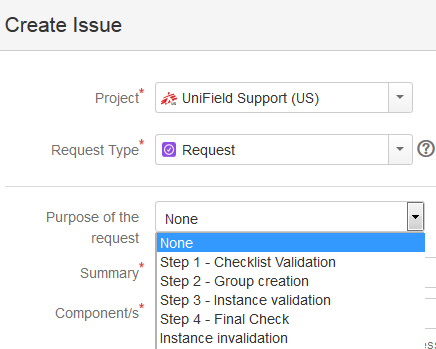



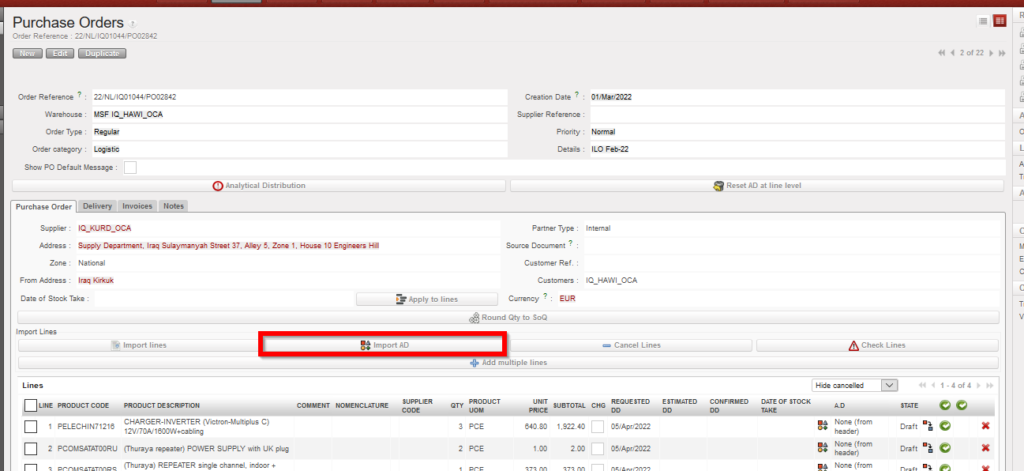
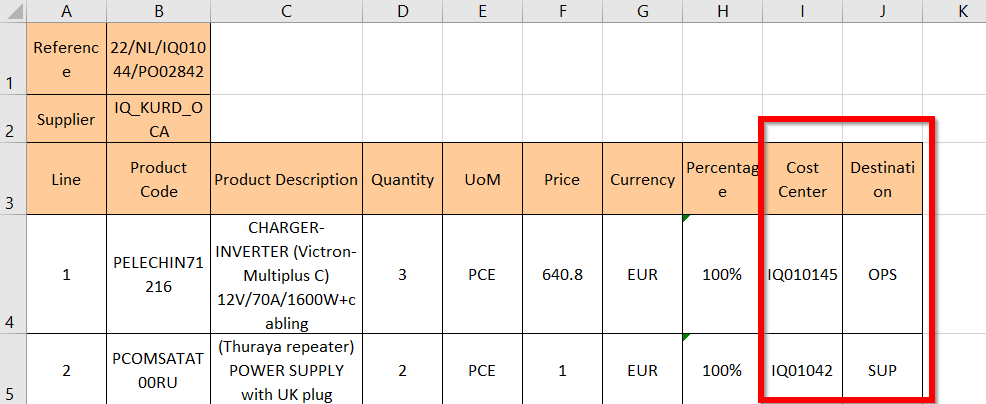



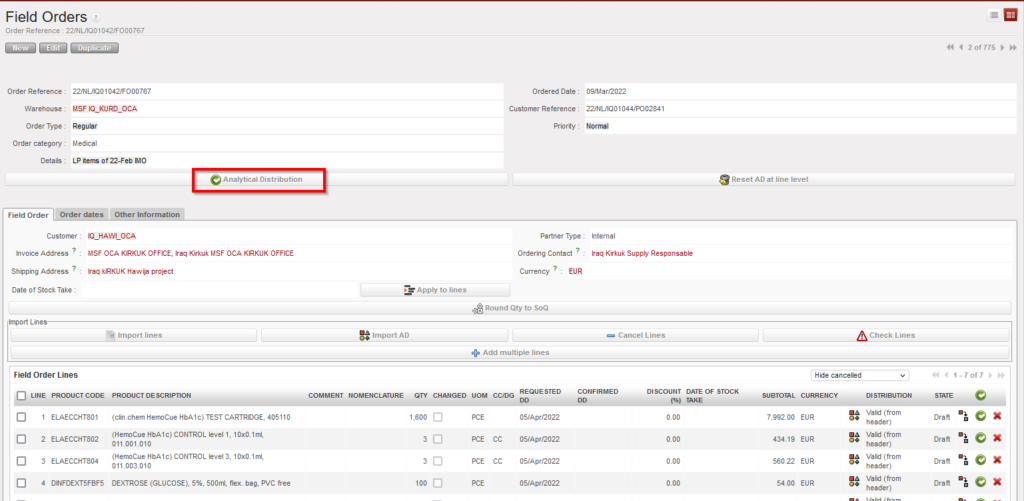

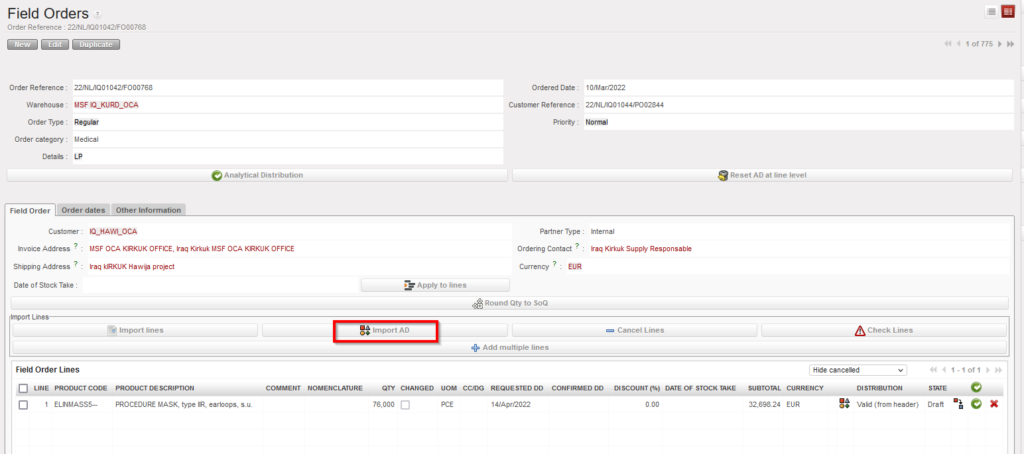




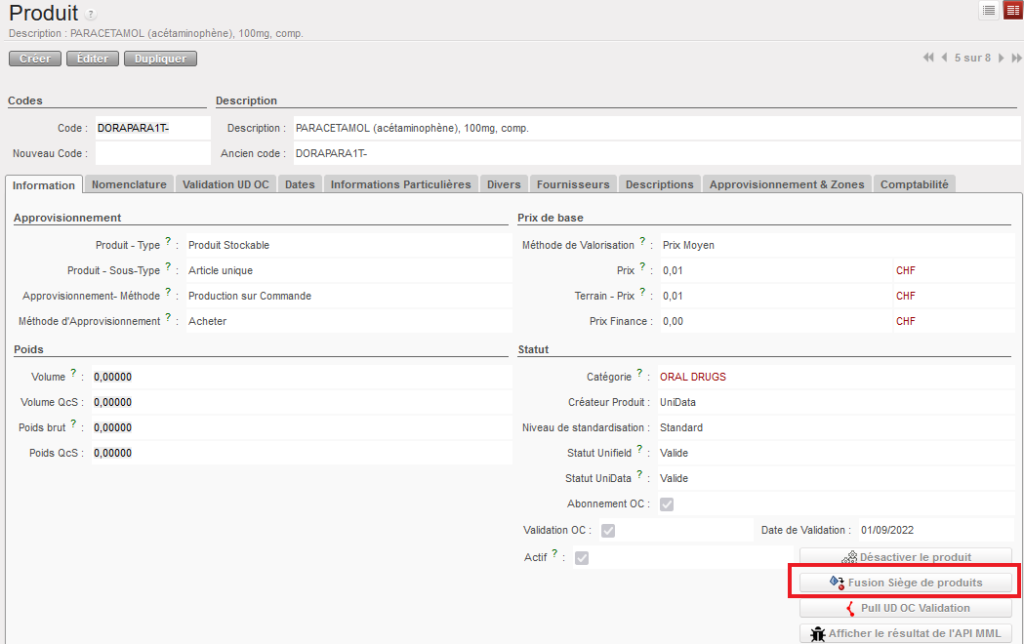
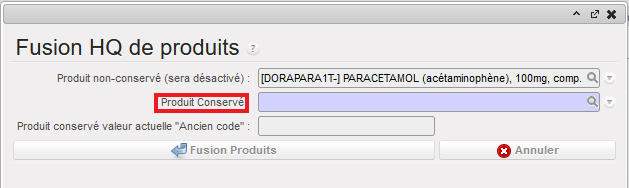
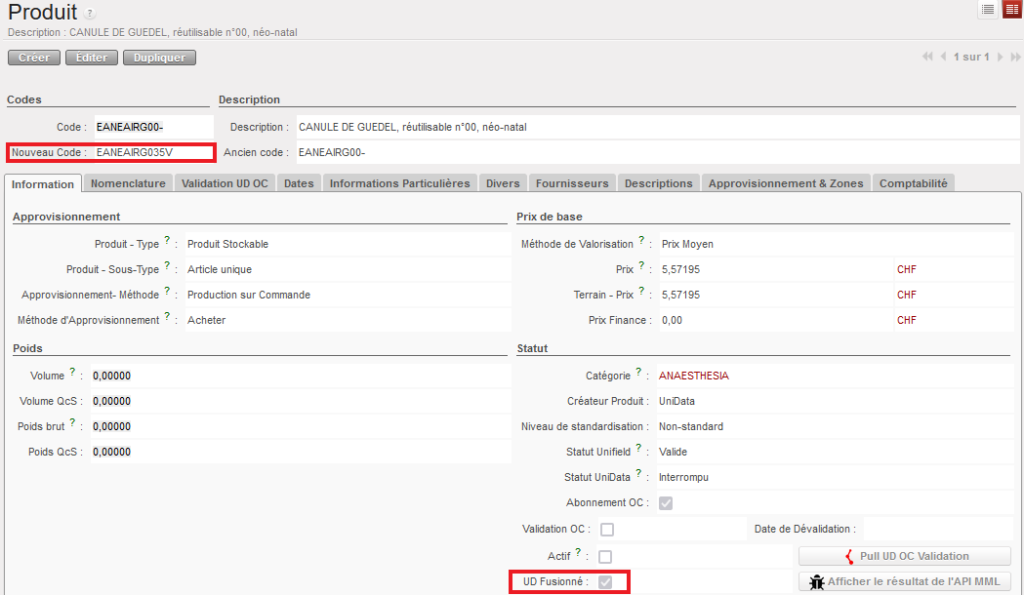


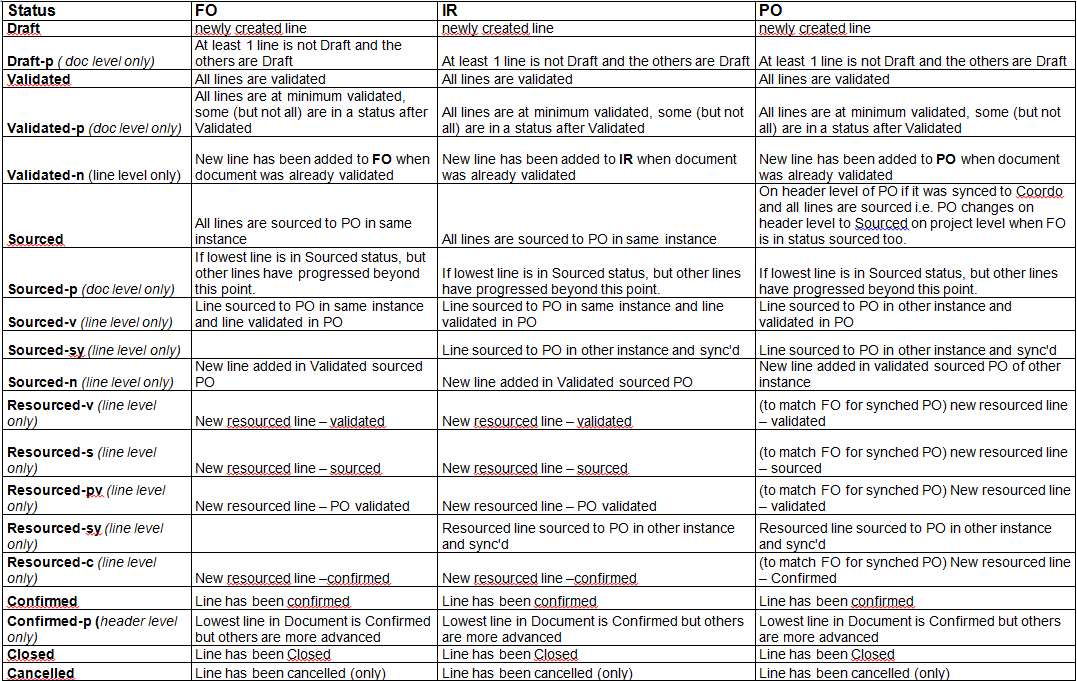
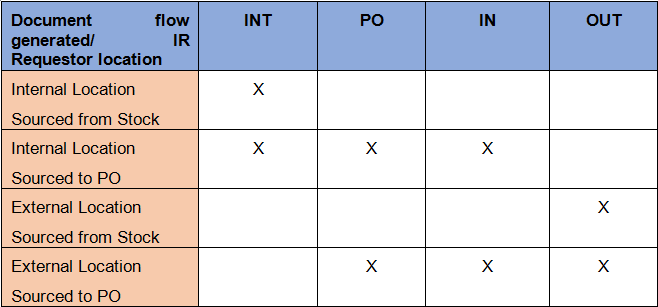
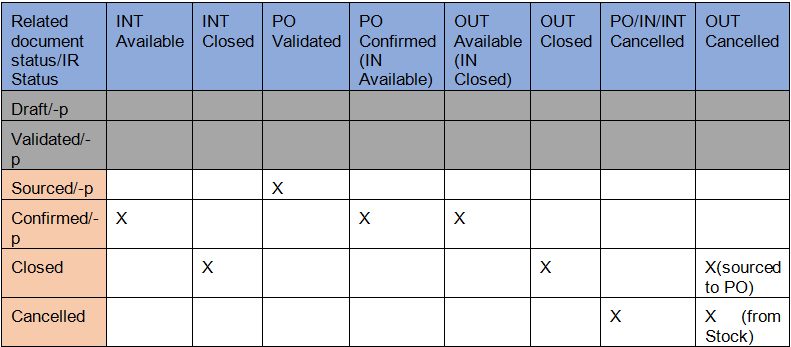
 to check the details of the changes on screen on the “Changes” section.
 “notepad” icon to check the details of the changes on screen on the “Changes” section.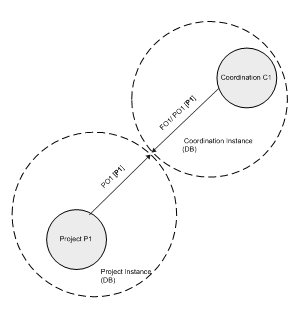
 will be displayed next to that product line in the Closed IN.
 icon. A pop up will show original product with field to select new product. The PO will remain unchanged, but any linked / successive document (Internal move / Pick / OUT / FO-) will be updated with new product.
 will mean a pop up window is displayed to enter the split qty of the line. A second line will appear in original document. The only limit to the number of times a line can be split is the total number of the quantity. This was originally designed for the purpose of receiving several batches / expiry dates for the same product, but it is possible for all types of products. It can be used for asset type products in order to split the quantity into one line per product in order to be able to add an asset reference for each asset product.